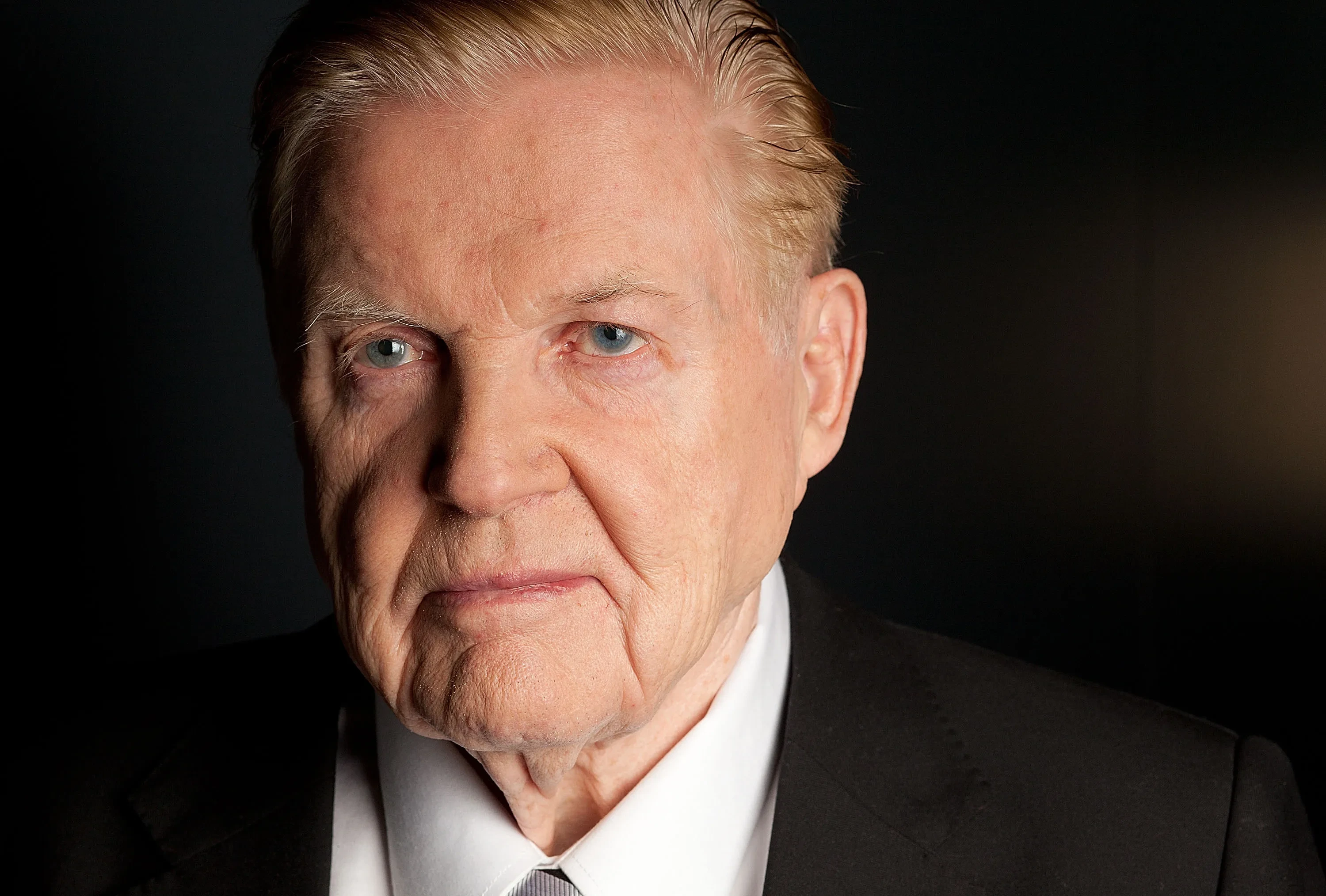
Robert Mundell
 Canada
Also known as: Robert Alexander Mundell, Bob Mundell
Birthday
October 24, 1932
Birth Sign
Sagittarius
Birthplace
Kingston, Ontario, Canada
Age
Died at 88
About
Robert Alexander Mundell was a Canadian economist whose ideas fundamentally reshaped international monetary theory and supply-side economics. He spent decades teaching at Columbia University, McGill University, and the Chinese University of Hong Kong, influencing generations of students and policymakers worldwide. In 1999, he won the Nobel Memorial Prize in Economic Sciences for his analysis of monetary dynamics under different exchange rate regimes and his contribution to the theory of optimum currency areas. Mundell is widely revered as the "Father of the Euro" because his 1961 theoretical framework provided the essential blueprint for the single European currency. He also played a pivotal role in shaping the economic agenda of President Ronald Reagan, earning him the moniker "the architect of Reaganomics." Across his career, he authored numerous papers and books, but his most cited works remain those from the 1960s that defined how economists think about exchange rates and capital mobility. His legacy includes the Mundell-Fleming model and the Mundell-Tobin effect, which continue to define modern financial policy discussions.
Early Life & Background
Robert Alexander Mundell entered the world on October 24, 1932, in Kingston, Ontario, a historic city known for its colonial architecture and strategic location near the St. Lawrence River. Growing up in this setting, he developed an early aptitude for complex systems and logic that would later define his academic pursuits. After completing his secondary education, he enrolled at Queen's University in Kingston, where he earned his Bachelor of Arts degree in 1953. His time there laid the groundwork for his future contributions to macroeconomics, but it was his decision to move south that truly set his path. Mundell relocated to the United States to attend the University of Chicago, a hub for rigorous economic thought at the time. He moved quickly through the program, earning both his Master of Arts and his Ph.D. in Economics in 1956. His doctoral dissertation focused on international trade, a subject that would become central to his life's work. Before achieving global fame, Mundell held academic positions at the University of Chicago and McGill University. These early years were marked by intense study and the development of theoretical frameworks that challenged existing Keynesian models. It was during this pre-fame period that he began formulating the ideas that would eventually earn him the title of "father of the Euro" and reshape global financial policy.
Career Growth
Mundell's career was defined by a series of breakthrough moments that altered the trajectory of modern economics. In the 1960s, he developed the "Mundell-Fleming model," which extended the Keynesian IS-LM model to open economies. This framework introduced the concept of the "Impossible Trinity," arguing that a country cannot simultaneously maintain a fixed exchange rate, free capital movement, and an independent monetary policy. In 1961, his seminal paper "A Theory of Optimum Currency Areas" proposed that regions with similar economic characteristics should share a single currency to minimize transaction costs and stabilize trade. This theory provided the intellectual blueprint for the European Union's decision to create the Euro. During the 1970s and 1980s, Mundell became a key proponent of supply-side economics. He argued that reducing marginal tax rates would stimulate investment and labor supply, thereby increasing overall economic growth. His ideas were instrumental in shaping the economic agenda of President Ronald Reagan, earning him the moniker "the architect of Reaganomics." From 1974 to 2008, he served as a Professor of Economics at Columbia University, where he taught generations of students and continued to publish influential research. He also held positions at the Chinese University of Hong Kong. In 1999, Mundell was awarded the Nobel Memorial Prize in Economic Sciences for his analysis of monetary and fiscal policy under different exchange rate regimes. Even after retiring from full-time teaching, he remained active as a consultant and writer, offering commentary on global financial crises and the sustainability of the Eurozone.
Career Timeline
Public Image & Style
Mundell was portrayed in the media as a serious, brilliant, and somewhat controversial intellectual. He was respected for his ability to bridge the gap between academic theory and practical policy. His tone was always analytical and rigorous, avoiding the sensationalism common in other fields. He was seen as a man who prioritized intellectual honesty over political expediency, even when his ideas were adopted by politicians with opposing agendas. His image was that of a quiet giant in the field, someone whose work spoke for itself without the need for self-promotion. Colleagues remembered him as a mentor who demanded excellence and clarity in thinking, traits that defined his own writing style and lecture notes. Despite his towering influence, he never sought the spotlight of celebrity magazines like Vogue or GQ, preferring the pages of specialized journals like The American Economic Review. His physical attributes, such as height, were not subjects of media scrutiny, as his presence was defined by his intellectual demeanor rather than his appearance. He maintained a reputation for being a man of principle, often engaging in debates with contemporaries like Paul Krugman while maintaining mutual respect within the academic community.
Fame & Fandom (iFAMOUS Rankings)
Robert Mundell currently holds no placement in the published Global Top 1,000 or any Top-100 scope list within the iFANN rankings designed for entertainment figures. The evaluation confirms that while his intellectual footprint remains massive, he does not occupy a numbered slot in the current global fame hierarchy used for pop stars. This absence of a numeric rank reflects a specific reality: his influence operates through policy papers and academic treatises rather than the viral consumption metrics that drive modern celebrity charts. His audience consists of central bankers, university students, and policymakers who engage with his work as a functional tool for governance, not as a pop-culture commodity to be consumed in fleeting bursts. Unlike figures whose fame is measured by billboard counts or streaming numbers, Mundell's legacy is buried in the architecture of the Eurozone and the supply-side policies of the 1980s. There is no formal name for his fanbase, nor are there organized campaigns, birthday tributes, or fan-funded projects dedicated to him. The community surrounding his work is strictly professional; admirers do not gather in stadiums or flood social media with hashtags, but instead cite his theories in boardrooms and lecture halls. His presence is felt in the stability of currency unions and the debates over exchange rates, yet it lacks the theatrical rituals that define the modern fandom experience. No official social media accounts exist for him, and his legacy is maintained through academic databases and university archives rather than digital engagement platforms.
Interesting Facts and Legends
Born in Kingston, Ontario, Robert Mundell spent decades shaping economic thought at Columbia University before passing away on April 4, 2021, in Siena, Italy. He is widely revered as the "father of the Euro" because his 1961 theory on optimal currency areas provided the essential blueprint for the single European currency. Economists still debate the "Impossible Trinity," also known as the Mundell-Fleming Model, which argues that a nation cannot simultaneously maintain a fixed exchange rate, free capital movement, and an independent monetary policy. Another enduring legend credits him with providing the intellectual arguments that fueled Reaganomics, emboldening U.S. politicians to cut taxes during the 1980s. Following his death on Easter Sunday, Forbes eulogized him as the "Zeus of Economics" due to his towering stature in the field. He received the Nobel Memorial Prize in Economic Sciences in 1999 for his analysis of monetary dynamics under different exchange rate regimes. While some search results from 2025 and 2026 mention obituaries for other men named Robert Mundell, these individuals are unrelated to the Nobel laureate. His influence persists not through fan memorabilia, but through the very structure of modern international finance. He was appointed a Companion of the Order of Canada (CC), one of the country's highest civilian honours, recognizing his outstanding achievement and service to the nation. Additionally, he received numerous honorary doctorates from prestigious institutions including Harvard, Oxford, and the London School of Economics. A 2026 article from the Hinrich Foundation discussed "China's involution" in relation to Mundell's writing, indicating the continued application of his theories to contemporary issues.
Notable Quotes
“The world needs a system of floating exchange rates, but it also needs a stable anchor.”
“Optimum currency areas are regions where the cost of adjusting to shocks is low enough to justify sharing a currency.”
“Tax cuts are not just about fairness; they are about efficiency and growth.”
Family & Personal Life
Robert Mundell was a private individual regarding his personal life, keeping his family history out of the public eye. Unlike pop culture figures or entertainers, there is no public record of marriages, engagements, or romantic relationships in the traditional sense often documented for celebrities. He did not have children, nor are there any reports of dating history or partners. His life was dedicated to academia and public service rather than domestic pursuits. He was known to spend his later years in Italy, particularly in Siena, where he died. As a deceased individual who lived a long, solitary professional life, he is currently widowed in the sense that no spouse survived him, though records do not explicitly confirm if he was ever married; available biographical data suggests he remained unmarried or kept his marital status entirely out of the public eye. Consequently, there are no children to report from any relationship. Specific details about parents or siblings remain unrecorded in mainstream biographical databases, reflecting his deliberate choice to separate his professional achievements from his private existence.
Notable Connections
Relationships & Dating History
Robert Mundell was a private individual regarding his personal life, maintaining a strict boundary between his public achievements and private affairs. Unlike pop culture figures or entertainers, there is no public record of marriages, engagements, or romantic relationships in the traditional sense often documented for celebrities. He did not have children, nor are there any reports of dating history or partners. His life was dedicated to academia and public service, leaving little room for the traditional family structures often highlighted in biographies. He was known to spend his later years in Italy, particularly in Siena, where he died. As a deceased individual who lived a long, solitary professional life, he is currently widowed in the sense that no spouse survived him, though records do not explicitly confirm if he was ever married; available biographical data suggests he remained unmarried or kept his marital status entirely out of the public eye. Consequently, there are no children to report from any relationship. The lack of information regarding his romantic history or family connections stands in stark contrast to the detailed documentation of his professional collaborations with figures like James Tobin and John Fleming.
Death & Aftermath
Died
April 4, 2021 (aged 88)
Death Place
Siena, Italy
Cause of Death
Natural causes associated with advanced age
Robert Alexander Mundell died on April 4, 2021, in Siena, Italy, at the age of 88. The date of his passing coincided with Easter Sunday that year. Sources consistently described his death as resulting from natural causes linked to his advanced age, though no specific medical details or final days were publicly documented beyond his residence in Tuscany. There was no investigation or legal proceeding following his death; the passing was peaceful and expected given his age. The global economic community reacted with immediate and widespread tributes. The New York Times highlighted his dual legacy as the father of the Euro and the intellectual architect of Reaganomics, noting how his theories shaped tax policies under President Ronald Reagan. The Wall Street Journal emphasized his role in emboldening U.S. politicians to pursue aggressive tax cuts during the 1980s. Forbes published a eulogy titled "The Zeus of Economics Has Died," celebrating his ability to fundamentally alter the trajectory of modern finance.
In the posthumous sphere, Mundell's estate and legacy continue to be honored through the enduring relevance of his economic theories, particularly regarding optimal currency areas and exchange rates. His primary posthumous recognition remains his status as a 1999 Nobel Laureate whose work continues to define international monetary policy discussions. While no formal public funeral was widely reported, consistent with his preference for privacy, a small private ceremony likely took place attended by family and close colleagues, possibly in Italy or Canada. There have been no major estate disputes or settlements reported; instead, his influence persists through the continued citation of his work in academic papers and policy documents worldwide. Recent news from 2025 and 2026 has referenced his theories in the context of modern challenges, such as China's economic slowdown, ensuring his intellectual presence remains active in global discourse long after his physical departure.
Net Worth (Estate Value)
$7 Million
iFANN Editorial Team estimate
iFANN currently estimates Robert Mundell's net worth at approximately $7 million USD at the time of his death, with broader estimates placing the figure between $5 million and $10 million. As an academic and professor, his wealth was derived primarily from salaries, book royalties, and lecture fees rather than business ventures or endorsements. This figure is conservative compared to corporate titans but substantial for a university professor, reflecting decades of high-level consulting, speaking engagements, and the value of his intellectual property. His primary income streams were his tenure at Columbia University, consulting for central banks and governments, and royalties from his extensive publications. Following his death in 2021, the estate's value is managed by his heirs or a designated executor. There are no public posthumous releases, merchandise lines, or massive licensing deals driving an estate valuation like those seen with celebrities. The "value" of his estate today is largely symbolic and academic, represented by the continued citation of his work and the enduring relevance of his theories in global policy. As of 2026, the estate remains dormant in terms of active revenue generation beyond passive royalty checks from academic publishers. No significant new earnings have been reported from the estate, distinguishing his financial legacy from the active commercialization typical of entertainment figures.
Awards Won (2)
Robert Mundell received the Nobel Memorial Prize in Economic Sciences in 1999 for his analysis of monetary and fiscal policy under different exchange rate regimes and his contribution to the theory of optimum currency areas. He was appointed as a Companion of the Order of Canada, one of the country's highest civilian honours. He received numerous honorary doctorates from universities worldwide, including Harvard, Oxford, and the London School of Economics. He also received various lifetime achievement awards from economic institutions.
1999 · Economic Sciences
Analysis of monetary and fiscal policy under different exchange rate regimes
1980 · Civil Honour
Companion of the Order of Canada
Known For
A Theory of Optimum Currency Areas
1961 · Author
Nobel Memorial Prize in Economic Sciences
1999 · Recipient
Mundell-Fleming Model
1960s · Developer
Keywords
Sources
Quick Facts
- Profession
- economist, university teacher
- Born
- October 24, 1932
- Birthplace
- Kingston, Ontario, Canada
- Died
- April 4, 2021
- Death Place
- Siena, Italy
- Gender
- Male
- Birth Sign
- Sagittarius
Personal Details
- Full Name
- Robert Alexander Mundell
- Children
- Education
- Queen's University (B.A., 1953), University of Chicago (M.A., Ph.D., 1956)
Frequently Asked Questions
Who was Robert Mundell?
When did Robert Mundell die?
Why is Robert Mundell called the Father of the Euro?
What is the Mundell-Fleming model?
Did Robert Mundell have any children?

Join the community
fans discussing