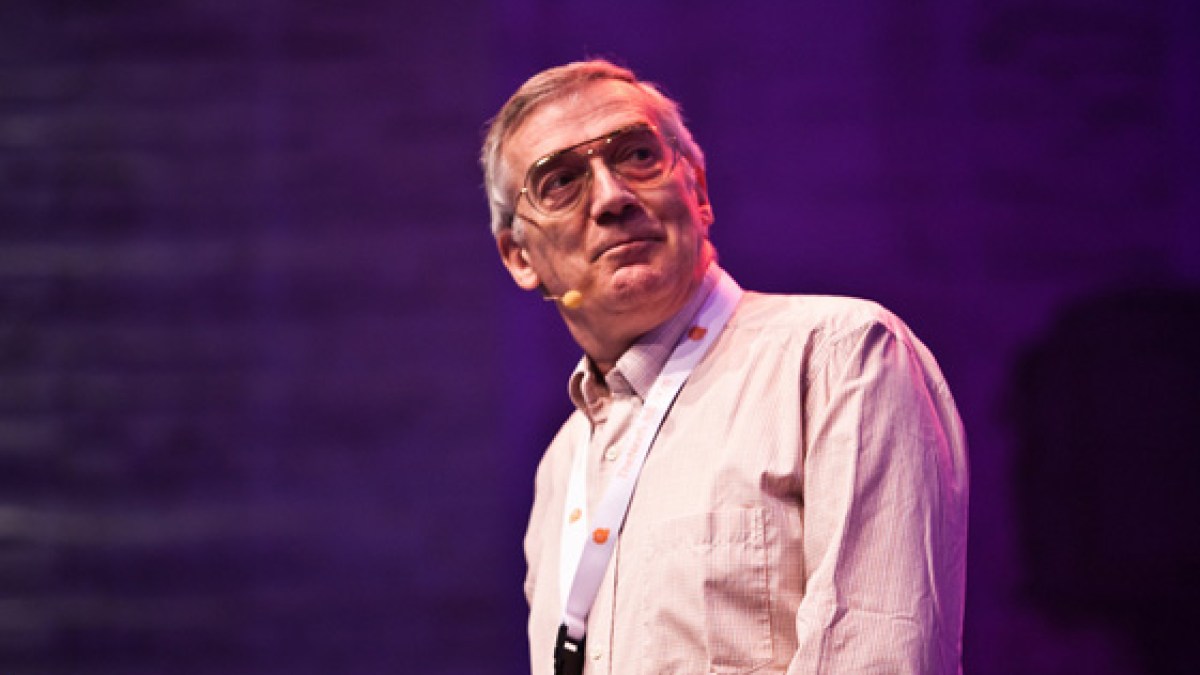
Robert Cailliau
 Belgium
Birthday
January 26, 1947
Birth Sign
Aquarius
Birthplace
Tongeren, Belgium
Age
79 years old
About
Robert Cailliau is a Belgian informatics engineer and computer scientist, best known as the co-inventor of the World Wide Web alongside Tim Berners-Lee. Born on January 26, 1947, in Tongeren, Belgium, he proposed the first hypertext system at CERN in 1987, which directly led to the web's creation. Cailliau designed the original WWW logo, built the first Macintosh web browser, and organized the first International World Wide Web Conference in 1994. He co-authored the book 'How the Web Was Born' with James Gillies, the definitive account of the web's early days. His contributions earned him the ACM Software System Award, shared with Berners-Lee, and induction into the Internet Hall of Fame. Today, Cailliau remains a sought-after speaker and advocate for the web's open standards, reflecting on its evolution with a mix of pride and vigilance.
Early Life & Background
Robert Cailliau grew up in Tongeren, a small city in the Belgian province of Limburg. After finishing secondary school, he enrolled at the University of Ghent, where he earned an engineering degree in 1969. His interest in computing led him to work with early mainframes and programming languages, a path that eventually brought him to CERN, the European particle physics laboratory, in 1974. At CERN, Cailliau worked on accelerator control systems and developed a reputation for his meticulous approach to software engineering. In 1987, he proposed a hypertext system for CERN's internal documentation, a project that would eventually merge with Tim Berners-Lee's ENQUIRE concept. That proposal, initially met with some skepticism, laid the groundwork for what would become the World Wide Web. Cailliau's persistence and technical insight were key in convincing CERN management to support the project, setting the stage for the web's breakthrough.
Career Growth
Cailliau's collaboration with Tim Berners-Lee began in earnest in 1990, when they worked together to refine the World Wide Web's architecture. He wrote the first web browser for the Apple Macintosh, which helped expand the web's reach beyond NeXT machines. In 1993, Cailliau designed the iconic WWW logo, a simple but memorable mark that still represents the web's early spirit. He organized the first International World Wide Web Conference at CERN in 1994, bringing together developers and researchers from around the world. In 1995, he played a key role in transferring web development from CERN to the newly formed World Wide Web Consortium (W3C), ensuring the web's continued growth under an open standards body. Cailliau also co-authored 'How the Web Was Born' with James Gillies in 2000, chronicling the web's creation. His later career included roles as a speaker and advocate, often discussing the web's future and the importance of preserving its open nature.
Career Timeline
Public Image & Style
Robert Cailliau is often described as unassuming and modest, a stark contrast to the monumental impact of his work. He is not a household name like Tim Berners-Lee, but within the tech community, he is revered as a pioneer. Cailliau's public persona is that of a thoughtful, meticulous engineer who values precision and clarity. In talks and interviews, he comes across as warm and approachable, often using humor to demystify complex topics. He is a passionate advocate for open standards and has warned against the commercialization and fragmentation of the web. Fans of internet history appreciate his candid recollections and his willingness to correct misconceptions about the web's origins. Cailliau's legacy is that of a quiet but essential force behind one of the most transformative technologies of our time.
Fame & Fandom
Robert Cailliau sits outside the global spotlight that swells around pop stars and tech billionaires, a deliberate absence that mirrors his own unassuming nature. The iFANN Global Fame Engine evaluated his standing in August 2026 and determined he currently holds no placement in the published rankings, meaning he does not occupy a spot within the Global Top 1,000 or any specific scope list. While he lacks a formal fanbase with rituals or organized campaigns, his legacy commands a profound, quiet reverence among historians and engineers who study the architecture of the modern world. He is not celebrated for viral moments or crowd hysteria but for the foundational work that made the internet possible. His influence is measured in code, conferences, and the enduring utility of the World Wide Web rather than search volume or media consumption metrics. There is no documented fandom name attached to his persona; instead, he is honored by institutions like CERN and the Internet Hall of Fame as a pivotal figure whose contributions are studied rather than fanned. The narrative surrounding him has shifted from obscurity to recognition, with recent years seeing a concerted effort to correct the historical record and acknowledge him as the co-inventor alongside Tim Berners-Lee. This shift represents a cultural correction rather than a surge in celebrity worship. He remains a figure of intellectual respect, where the audience consists of those who understand the weight of his technical achievements rather than fans seeking autographs or meet-and-greets.
Interesting Facts and Legends
Robert Cailliau possessed a unique knack for naming things, insisting on the catchy moniker 'World Wide Web' over alternatives like 'Mesh'. He designed the web's original logo, a simple green-and-black graphic that predates the modern Consortium insignia. Fluent in Dutch, French, and English, he leveraged this linguistic skill during his international tenure at CERN. Colleagues recall his dry sense of humor, particularly a joke about the internet being 'creepingly slow' because it interfaces with the brain. In his spare time, he documents history through photography, capturing countless moments at CERN. Despite his pivotal role, he often accepts the label of 'the forgotten co-inventor of the web' with grace, preferring to focus on the work itself. A legendary moment in tech history occurred when he proposed the first hypertext system at CERN, a critical precursor that directly enabled the web's creation. Another iconic milestone was his production of the first web browser specifically for the Apple Macintosh, which democratized access beyond Unix systems. These verified events form the core of his legend, distinguishing him as the essential collaborator who believed in, defended, and persuaded others to adopt the new technology.
Notable Quotes
“The web was not a matter of technology, it was a matter of society.”
“I was not the only one, but I was the one who pushed it through.”
“The internet is creepingly slow because it interfaces with the brain, and one cannot look at it.”
Family & Personal Life
Details about Cailliau's family are scarce, as he has kept his personal life private. He was born in Tongeren, Belgium, to a family that valued education and hard work. His parents encouraged his early interest in science and engineering, which led him to the University of Ghent. Cailliau has mentioned in interviews that his family's support was crucial during his early years at CERN, though he rarely discusses them publicly. He has never been married and has no children, according to available records. In his later years, Cailliau has spoken fondly of his Belgian roots, often returning to Tongeren for visits. He maintains a close circle of friends, many of whom are former colleagues from CERN, and enjoys sharing stories about the early days of the web over a good Belgian beer.
Notable Connections
Robert Cailliau is most closely associated with Tim Berners-Lee, with whom he co-developed the World Wide Web. Their partnership, which began in 1990, was instrumental in turning Berners-Lee's initial concept into a global reality. Cailliau also worked alongside James Gillies, co-authoring 'How the Web Was Born', which remains a definitive history of the web's creation. At CERN, he collaborated with numerous engineers and physicists, including Mike Sendall, who supported the early web project. Cailliau's name is often mentioned in the same breath as other internet pioneers like Vint Cerf and Bob Kahn, though his contributions were specifically focused on the web's hypertext and information-sharing aspects.
Relationships & Dating History
Robert Cailliau has kept his personal life remarkably private, and there is no public record of any romantic relationships, marriages, or children. Throughout his career, he has been dedicated to his work, often spending long hours at CERN. In interviews, he rarely discusses his personal life, preferring to focus on technical topics. As of 2026, Cailliau's relationship status is unknown, and he appears to have never been married. It is possible that he has chosen to remain single, or that he has had relationships that he has kept out of the public eye. Given his modest and reserved nature, it is not surprising that little is known about this aspect of his life. Fans and historians alike respect his privacy, focusing instead on his monumental contributions to the web.
Salary, Net Worth In 2026
$10 Million
iFANN Editorial Team estimate
Per iFANN's editorial analysis, Robert Cailliau's net worth stands at $10 Million as of 2026. Precise figures remain elusive given his relatively low-profile career compared to commercial tech moguls. Unlike many peers, Cailliau did not commercialize the web or launch a startup. His wealth originates primarily from his long tenure as a senior engineer at CERN, where he served for over three decades. This steady employment provided a comfortable salary and pension. Additional income stems from various awards, speaking fees, and royalties related to his book 'How the Web Was Born' and his induction into the Internet Hall of Fame. He has also worked as a consultant and advisor on web-related projects. While he never amassed fortune directly from the web itself, his prudent financial management and consistent earnings have secured a comfortable retirement. His current net worth reflects a lifetime of dedicated contributions to science and technology rather than entrepreneurial ventures.
Awards Won (2)
Robert Cailliau has received several prestigious awards recognizing his role in creating the World Wide Web. Most notably, he and Tim Berners-Lee jointly won the ACM Software System Award in 1995 for their work. In 2012, he was inducted into the Internet Hall of Fame, a honor reserved for the pioneers of the internet. He has also received honorary doctorates and other distinctions from academic institutions, though specific details are not widely publicized. These accolades reflect the global impact of his work, even as he remains a relatively unsung hero compared to his more famous collaborator.
1995 · Software System
World Wide Web
2012 · Pioneer
World Wide Web
Known For
World Wide Web
1990 · Co-inventor
How the Web Was Born
2000 · Co-author
WWW Logo
1993 · Designer
Keywords
Sources
Quick Facts
- Profession
- computer scientist, engineer
- Born
- January 26, 1947
- Birthplace
- Tongeren, Belgium
- Gender
- Male
- Birth Sign
- Aquarius
- Education
- University of Ghent
- Awards
- ACM Software System Award, Internet Hall of Fame
Personal Details
- Education
- University of Ghent (engineering degree)
Frequently Asked Questions
Who is Robert Cailliau?
When was Robert Cailliau born?
What is Robert Cailliau known for?
What awards has Robert Cailliau won?
Is Robert Cailliau still alive in 2026?
Similar People

Join the community
fans discussing