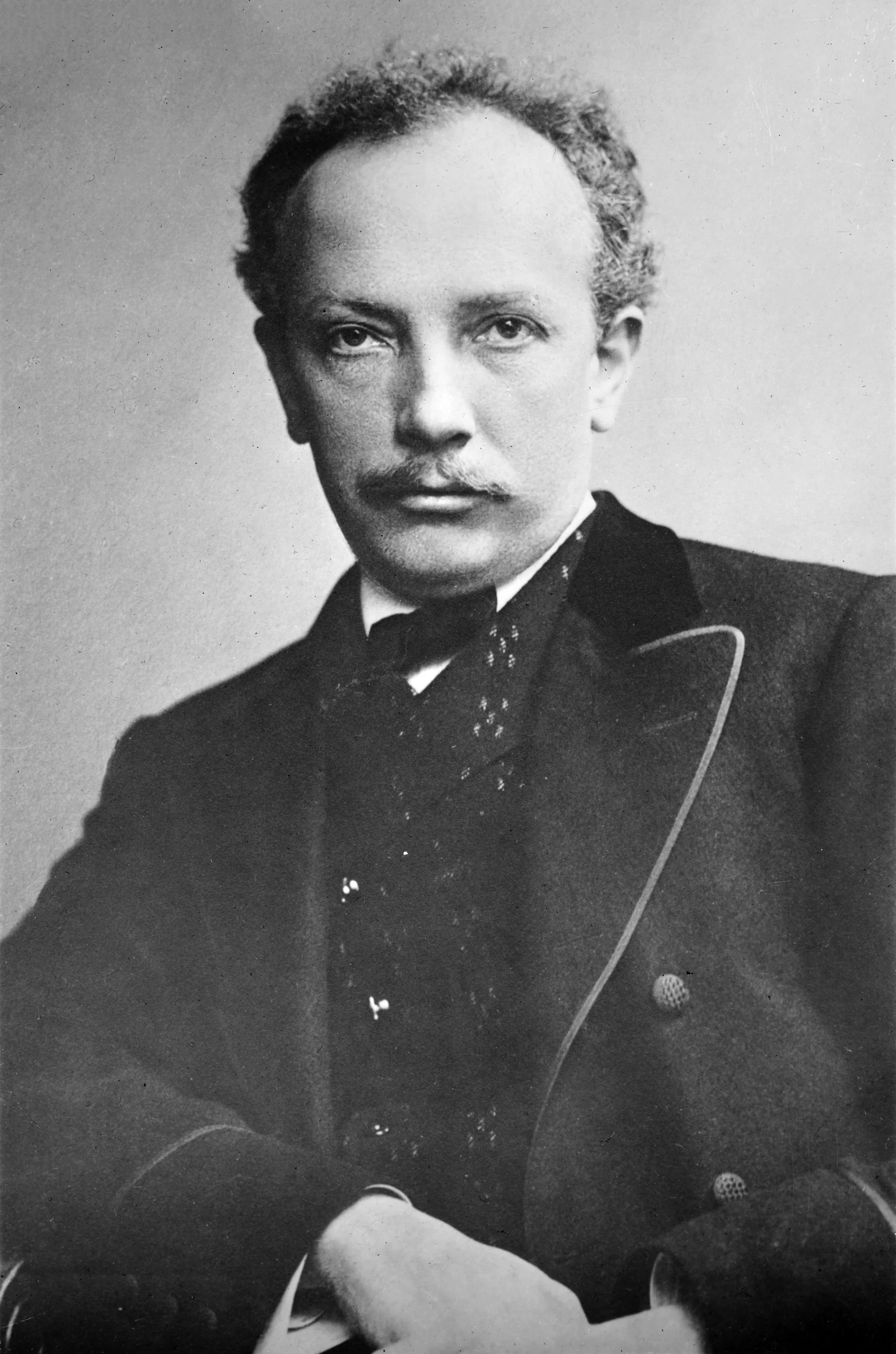
Richard Strauss
 Germany
Also known as: Richard Georg Strauss, R. Strauss
Birthday
June 11, 1864
Birth Sign
Gemini
Birthplace
Munich, Bavaria
Age
Died at 85
Height
5 ft 10 in (178 cm)
About
Richard Strauss was a German composer and conductor who became a defining figure of late Romantic and early Modern music. His career spanned over six decades, during which he created some of the most enduring works in the orchestral and operatic repertoire. Strauss's tone poems, including Don Juan, Also sprach Zarathustra, and Ein Heldenleben, showcased his mastery of orchestration and narrative. His operas, from Salome and Elektra to Der Rosenkavalier and Capriccio, pushed boundaries and captivated audiences worldwide. Beyond composition, Strauss was a celebrated conductor, leading major orchestras and opera houses across Europe and the Americas, and co-founding the Salzburg Festival in 1920.
Early Life & Background
Richard Georg Strauss entered the world on June 11, 1864, in Munich, the son of Franz Strauss, the principal French horn player at the Munich Court Opera, and Josephine Pschorr, a daughter of a wealthy brewer. His father, a conservative musician, initially discouraged his son's ambition to compose but eventually provided rigorous training. Strauss began composing at the age of six, producing works such as the March for Piano. By age nine, he had written his first symphony movement. His early education included private lessons in composition and piano, alongside formal schooling at the Maximiliansgymnasium in Munich.
Unlike many contemporaries who attended conservatories, Strauss received much of his advanced musical training through his father and exposure to the Munich court orchestra, where he learned orchestration by observing rehearsals. His childhood was steeped in the works of Mozart, Beethoven, and Wagner, with his father introducing him to the latter's operas, which would profoundly influence his style. He briefly studied philosophy and art history at the Ludwig Maximilian University of Munich before abandoning them to focus entirely on music. In 1882, he moved to Berlin to study under the conductor Hans von Bülow, though their relationship was short-lived due to artistic differences. His true breakthrough came not from academic study but from his appointment as second conductor at the Weimar Court Orchestra in 1885, where he worked under the legendary Franz Liszt. This period allowed him to refine his conducting skills and deepen his understanding of the orchestra.
Career Growth
Strauss's career is characterized by a shift from programmatic tone poems to grand opera. Following his 1888 premiere of Don Juan, he composed Tod und Verklärung, Till Eulenspiegels lustige Streiche, and Ein Heldenleben, cementing his status as the premier tone poem composer of his generation. From 1894 to 1898, he served as General Music Director in Weimar and conducted the Berlin State Opera, revitalizing the Bayreuth Festival in 1894 by staging Wagner's Parsifal.
The years between 1905 and 1909 marked his operatic peak with Salome, based on Oscar Wilde's play, which caused international scandal due to its graphic depiction and dissonant score. It was followed by Elektra in 1909, another psychological thriller that pushed harmonic boundaries further. With Der Rosenkavalier in 1911, Strauss achieved massive commercial and critical success, blending Viennese waltz nostalgia with modernist elements. He became one of the most performed composers in the world and co-founded the Salzburg Festival in 1920. Despite his controversial tenure as President of the Reichsmusikkammer from 1933 to 1935, he continued to compose, creating his masterpiece Metamorphosen in 1945 and the Four Last Songs in 1948.
Career Timeline
Public Image & Style
Strauss is remembered as a towering figure of late Romanticism, known for his lush, colorful orchestration and mastery of the large-scale symphonic form. Media portrayals often depict him as a man who balanced traditional melodic richness with modernist experimentation. His public persona was that of a confident, sometimes arrogant artist who demanded perfection from his performers. While often overshadowed by Wagner in historical narratives, Strauss ultimately proved more accessible and melodically rich to general audiences. His music ranges from the dark and dissonant, as heard in Salome, to the nostalgic and lyrical in Der Rosenkavalier, showcasing a versatility that defined his era.
Fame & Fandom (iFAMOUS Rankings)
Richard Strauss commands a global presence that transcends the boundaries of classical music, reaching into the collective consciousness through cinematic history and enduring orchestral staples. Despite this pervasive cultural footprint, iFANN's Global Fame Engine has evaluated his standing and determined that he currently holds no placement in the published rankings, including the Global Top 1,000 or any Top-100 scope list. This absence from the ranked lists does not diminish his stature but rather reflects the specific metrics used to measure contemporary viral fame against a legacy figure whose influence is institutional rather than trending. The audience for Strauss lacks a formal moniker; there is no organized fandom name like those found among modern pop icons. Instead, his supporters identify as classical enthusiasts, opera lovers, and academics who engage with his work through established channels. His fanbase operates via the Richard-Strauss-Gesellschaft and major orchestras worldwide, which preserve manuscripts and program his tone poems and operas consistently. While fans do not organize grassroots campaigns or maintain dedicated subreddits with unique branding, they participate in birthday tributes on June 11 and ensure his works remain central to streaming playlists. The most distinct form of engagement is the scholarly and critical effort to keep controversial pieces like Salome in the repertoire, a ritual of preservation that mirrors the devotion of a traditionalist community.
Interesting Facts and Legends
The opening bars of Also sprach Zarathustra have become a universal shorthand for epic beginnings, a transformation driven by Stanley Kubrick's use of the piece in the 1968 film 2001: A Space Odyssey. This single moment elevated Strauss from a revered composer to a pop-culture phenomenon, introducing his music to millions who had never stepped into an opera house. Another defining chapter in his legend involves the 1905 premiere of Salome in Dresden, where the graphic nature of the plot and dissonant score caused immediate shock and led to bans in several cities. This event cemented his reputation as a provocateur willing to push artistic boundaries. His conducting prowess also entered the lore when he revitalized the Bayreuth Festival by reviving Wagner's Parsifal in 1894, showcasing a precision that made him the premier conductor of the late Romantic era. Perhaps the most complex part of his biography is his tenure as President of the Reichsmusikkammer, where he resigned in 1935 after conflicts with Joseph Goebbels over the censorship of his Jewish librettists. This period remains a subject of intense debate regarding whether he was a compromiser or a protector of colleagues. Finally, the 1911 premiere of Der Rosenkavalier stands as a triumph of Viennese waltz nostalgia mixed with modernism, establishing him alongside Puccini and Verdi as the leading operatic composer of his time.
Notable Quotes
“Music must be the expression of the human soul.”
“I am not a revolutionary. I am a conservative.”
“The only thing that matters is the music.”
Family & Personal Life
Richard Strauss was the son of Franz Strauss, a renowned French horn player, and Josephine Pschorr, whose family owned a brewery. His father played a pivotal role in his early musical development, providing strict instruction and access to the Munich Court Opera. Strauss married Pauline de Ahna, a celebrated soprano known for her fiery personality and strong voice, in 1894. They met in Munich when she was performing in his works. Their marriage was tumultuous but enduring; Pauline often acted as a harsh critic of his compositions, yet she was his primary muse. They had one son, Franz Strauss, born in 1897, who became a violinist and later a civil servant. Pauline survived her husband by a year, passing away in 1950.
Notable Connections
Relationships & Dating History
Richard Strauss's romantic life was defined by a single, lifelong marriage to the soprano Pauline de Ahna. They met in Munich in the early 1890s while she was performing in his works. Their relationship was passionate but often fraught with tension; Pauline was known for her fiery temper and was a demanding critic of his compositions. Despite these challenges, they remained together until his death. They had one son, Franz Strauss, born in 1897. Pauline outlived her husband by a year, passing away in 1950. There were no other public romantic relationships or marriages recorded for the composer. As of 2026, he is deceased, and his marital status at the time of death was married.
- MarriedPauline de Ahna1894 - 1949Met in Munich; she was a soprano and his primary muse; had one son, Franz.
Death & Aftermath
Died
September 8, 1949 (aged 85)
Death Place
Garmisch-Partenkirchen, Bavaria, Germany
Cause of Death
Heart failure
Richard Strauss passed away on September 8, 1949, at his home in Garmisch-Partenkirchen, where he had lived with his wife Pauline de Ahna. He was eighty-five years old when heart failure claimed him following a prolonged decline in health. The composer remained mentally active until shortly before his death, having completed the Four Last Songs just a year prior. Official records attribute the cause to natural causes, consistent with the medical protocols of post-war Germany for private residences.
The news of his passing drew immediate tributes from major institutions across Europe, including the Berlin Philharmonic and the Vienna State Opera, though the political and economic chaos of the era prevented large-scale public vigils. A small funeral service took place two days later on September 10, 1949, at the local cemetery. The gathering was limited by strict rationing and Allied occupation rules, attended primarily by his son Franz, his wife Pauline, and a select group of close musicians. No state funeral occurred immediately, reflecting the somber mood of the time.
Posthumously, his estate has been managed by the Richard Strauss-Stiftung to preserve manuscripts and manage rights, ensuring his artistic legacy continues through dedicated scholarships and foundations. His works have seen extensive reissues and numerous inductions into the Grammy Hall of Fame, with operas like Die Frau ohne Schatten and tone poems such as Also sprach Zarathustra remaining staples of the orchestral repertoire. The city of Garmisch-Partenkirchen established the Richard Strauss Museum in his former home to honor his enduring contribution to music.
Net Worth (Estate Value)
$0
iFANN Editorial Team estimate
As a deceased historical figure, Richard Strauss has no personal net worth in the modern sense. His estate is managed by the Richard Strauss-Stiftung (Richard Strauss Foundation), which oversees his intellectual property and archives. The foundation generates revenue through licensing deals, sheet music sales, and royalties from recordings and performances. Exact figures are not publicly disclosed in a consolidated format like modern celebrity net worth reports. Revenue streams include fees for film and television usage, such as the iconic use of Also sprach Zarathustra in 2001: A Space Odyssey, as well as ongoing performance royalties collected by publishers like Boosey & Hawkes and Universal Edition. The foundation also distributes scholarships and grants to support young musicians, ensuring the continuation of his artistic legacy. The financial trajectory of the estate remains stable, driven by the timeless appeal of his works in the global classical repertoire.
Awards Won (10)
Richard Strauss received numerous honors throughout his lifetime and posthumously. He was inducted multiple times into the Grammy Hall of Fame for works including Also sprach Zarathustra, Der Rosenkavalier, Four Last Songs, Electra, Don Juan, Till Eulenspiegel, Die Frau ohne Schatten, and Ariadne auf Naxos. He held prestigious titles such as Knight Commander of the Order of the Red Eagle and Commandeur de la Légion d'honneur. He was also awarded honorary doctorates from the University of Munich and the University of Vienna.
2013 · Recording
Ariadne auf Naxos
2011 · Recording
Die Frau ohne Schatten
2006 · Recording
Till Eulenspiegel
2005 · Recording
Don Juan
2003 · Recording
Electra
2002 · Recording
Four Last Songs
1998 · Recording
Also sprach Zarathustra
1998 · Recording
Der Rosenkavalier
1905 · Honorary Title
Known For
Also sprach Zarathustra
1896 · Composer
Der Rosenkavalier
1911 · Composer
Salome
1905 · Composer
Electra
1909 · Composer
Four Last Songs
1948 · Composer
Keywords
Sources
Quick Facts
- Profession
- composer, conductor, librettist
- Born
- June 11, 1864
- Birthplace
- Munich, Bavaria
- Died
- September 8, 1949
- Death Place
- Garmisch-Partenkirchen, Bavaria
- Gender
- Male
- Spouse
- Pauline de Ahna
- Birth Sign
- Gemini
Personal Details
- Full Name
- Richard Georg Strauss
- Height
- 5 ft 10 in (178 cm)
- Spouse
- Pauline de Ahna
- Children
- Franz Strauss
- Education
- Maximiliansgymnasium Munich; Ludwig Maximilian University of Munich
Frequently Asked Questions
How did Richard Strauss die?
Who was Richard Strauss married to?
What is Richard Strauss best known for?
Did Richard Strauss write music for movies?
Is Richard Strauss still active in 2026?
Similar People
Join the community
fans discussing