
Richard Courant
 Poland
mathematician•university teacher•physicist
Birthday
January 8, 1888
Birth Sign
Capricorn
Birthplace
Lubliniec, Prussia (now Poland)
Age
Died at 84
About
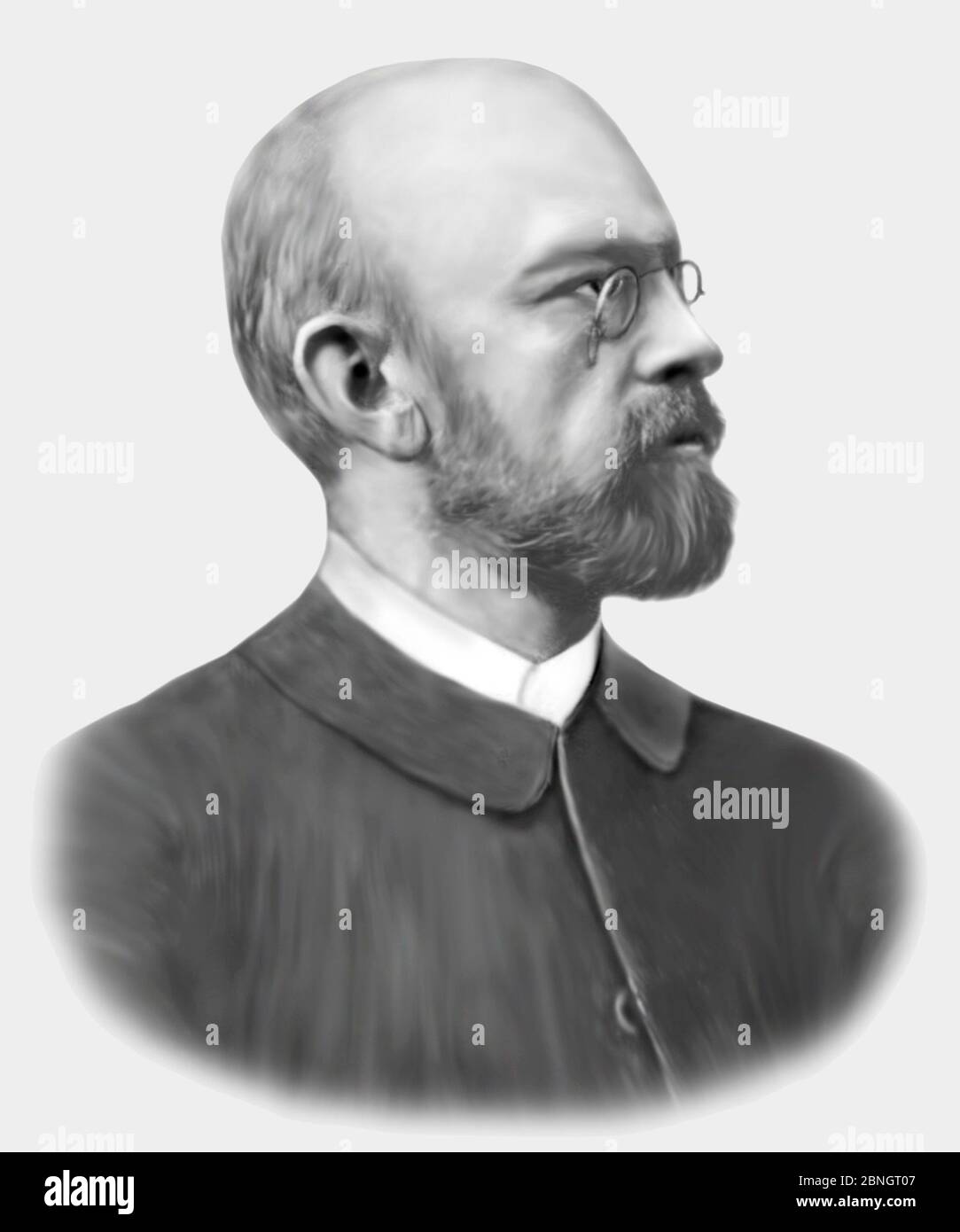
Richard Courant was a German-American mathematician who transformed applied mathematics and built one of the world's great research institutes. Born on January 8, 1888, in Lubliniec (then Prussia, now Poland), he fled the Nazis and settled in the United States, where he founded what is now the Courant Institute of Mathematical Sciences at New York University. He died on January 27, 1972.
Courant's research spanned real analysis, mathematical physics, calculus of variations, and partial differential equations. He co-wrote the landmark textbook Methods of Mathematical Physics with David Hilbert and What is Mathematics? with Herbert Robbins, a book that opened advanced ideas to general readers. His textbooks have educated generations of scientists and mathematicians.
Today, the Courant Institute stands as a leading global center for applied mathematics and computer science, a direct legacy of his vision. Courant's influence is felt not only through his own work but through the institution he built and the many students he mentored.
Early Life & Background
Richard Courant grew up in a Jewish family that moved frequently. His father Siegmund had a checkered business career, and the family lived in Glatz and Breslau before settling in Berlin in 1905. As a boy, Courant struggled in school, he was even poor at arithmetic, but he eventually attended the König-Wilhelm Gymnasium in Breslau, where his talent for mathematics emerged.
He studied at the University of Breslau, the University of Zurich, and finally the University of Göttingen, the epicenter of German mathematics. There he became an assistant to the legendary David Hilbert and earned his doctorate in 1910. His early work already showed a strong interest in the practical applications of mathematics, a stance that set him apart from many pure mathematicians of his era.
Courant served briefly in World War I but was wounded and discharged. After the war, he returned to Göttingen and began building his career. During the hyperinflation of the early 1920s, he showed remarkable resourcefulness, securing support from industrialist Carl Still to keep the mathematics institute afloat.
Career Growth
From 1920 to 1933, Courant directed the mathematics institute at the University of Göttingen, turning it into a world-class center. During this period he co-authored Methods of Mathematical Physics with David Hilbert (first published in 1924), a text that remains a cornerstone of the field. He also began developing what later became the finite element method, first publishing a version in 1922.
As a German-Jewish refugee, Courant emigrated to the United States in the 1930s. In 1946, he founded the Institute for Mathematics and Mechanics at New York University, which later became the Courant Institute of Mathematical Sciences. Under his leadership, the institute attracted brilliant mathematicians and secured major government funding for research in wave propagation, detonations, and other applied problems, raising NYU's profile in mathematics.
Courant retired in 1958 but remained active. His book What is Mathematics? (1941) became a classic, selling hundreds of thousands of copies and inspiring countless readers. The finite element method, which he pioneered, is now essential for solving partial differential equations in engineering and physics.
Career Timeline
Public Image & Style
Richard Courant is remembered as a rigorous yet practical scholar who championed applied mathematics and built strong institutions. His public image is that of a brilliant organizer and mentor, someone who could attract talent, secure funding, and create a collaborative environment. He was known for his clear, accessible writing style, especially in What is Mathematics?, which made him one of the few mathematicians to reach a broad general audience.
Within the mathematical community, Courant is revered for his textbooks and for founding the Courant Institute. His insistence on connecting theory with real-world problems helped shape the modern identity of applied mathematics. There is no fandom name or fan culture around him, but his name lives on through the institute and the many mathematicians he trained.
Fame & Fandom (iFAMOUS Rankings)
Richard Courant commanded a global stage of profound influence, yet his reach remained strictly within the corridors of academia rather than the roar of pop culture. The iFANN Global Fame Engine has evaluated this towering figure of 20th-century science, but he does not currently hold a placement in the published rankings, including the Global Top 1,000 or any Top-100 scope list. His legacy is defined by the quiet power of institutional building and rigorous scholarship, not by viral metrics or chart positions. While he shaped the very language of applied mathematics through works like *Methods of Mathematical Physics* and *What is Mathematics?*, no formal fanbase emerged to rally behind his name. There is no documented fandom name associated with Courant; the audience that revered him were students, colleagues, and scholars who encountered his ideas through textbooks and lectures rather than celebrity worship. Unlike modern icons who generate organized campaigns or birthday billboards, Courant's interactions were professional and intellectual. His followers sought understanding, not autographs, and the community that grew around the Courant Institute at NYU operated as a center for discovery rather than a cult of personality. The absence of a named fandom reflects the nature of his fame: it was earned through the enduring utility of his equations and the strength of his mentorship, leaving no room for the performative adoration that defines contemporary stardom. Even decades after his death in 1972, the reverence for Courant remains academic, focused on the mathematical structures he helped codify rather than the man himself.
Interesting Facts and Legends
Richard Courant's cousin was Edith Stein, a student and assistant to philosopher Edmund Husserl. Stein became a Catholic nun, was murdered at Auschwitz, and was later canonized as a saint by the Roman Catholic Church. He was wounded and discharged from the German army shortly after enlisting in World War I. Despite his later fame as a mathematician, Courant struggled with arithmetic as a child. Courant believed that empirical evidence could never establish mathematical existence, only a rigorous proof could ensure that a mathematical description of a physical phenomenon was meaningful. The Courant Institute building at NYU, dedicated in 1965, was the first in the United States built specifically for mathematical research. A historical account notes his role in building the mathematical sciences at NYU, sometimes referred to in academic history as the "Courant Hilton" regarding the institution's growth. As of November 2025, NYU established a new school named in his honor: the "Courant Institute School of Mathematics, Computing, and Data Science," signaling the continued high regard for his contributions to science and technology.
Notable Quotes
“Empirical evidence can never establish mathematical existence nor can the mathematician's demand for existence be dismissed by the physicist as useless rigor. Only a mathematical existence proof can ensure that the mathematical description of a physical phenomenon is meaningful.”
Family & Personal Life
Richard Courant was the eldest son of Siegmund and Martha Courant. Siegmund's business dealings were often troubled, creating tension in the family. Courant's cousin, Edith Stein, became a noted philosopher and later a Catholic saint.
He married Nelly Neumann in 1912, a fellow student from Breslau. They divorced in 1916, and Nelly was murdered by the Nazis in 1942. In 1919, Courant married Nerina (Nina) Runge, daughter of Göttingen professor Carl Runge and sister of applied mathematician Iris Runge.
Notable Connections
Courant worked closely with David Hilbert at Göttingen, co-authoring a seminal textbook. He collaborated with Herbert Robbins on What is Mathematics?. His father-in-law was mathematician Carl Runge, and his sister-in-law was applied mathematician Iris Runge. His cousin Edith Stein became a Catholic saint. Warren Weaver, head of the OSRD's Applied Mathematics Panel, was a colleague and supporter.
Relationships & Dating History
Richard Courant married twice. His first wife was Nelly Neumann, a fellow student from Breslau, whom he married in 1912. The marriage ended in divorce in 1916. Nelly Neumann was later murdered by the Nazis in 1942. In 1919, Courant married Nerina (Nina) Runge, the daughter of mathematician Carl Runge. They remained together until Courant's death in 1972.
- MarriedNelly Neumann1912 - 1916Married in 1912, divorced in 1916. Nelly was later murdered by the Nazis in 1942.
- MarriedNerina (Nina) Runge1919 - 1972Daughter of mathematician Carl Runge. They were married until Courant's death.
Death & Aftermath
Died
January 27, 1972 (aged 84)
Death Place
New York City, New York, USA
Cause of Death
Natural causes
Richard Courant, the renowned German-American mathematician and founder of NYU's Courant Institute of Mathematical Sciences, died on Thursday, January 27, 1972, at the age of 84. He was born on January 8, 1888. According to a contemporary report in The New York Times, he passed away Thursday afternoon at New York University Hospital. While the exact time is not specified beyond afternoon, the location remains confirmed as the hospital associated with his institution. The obituary notes simply state that he died at the hospital without citing a specific disease or condition.
Public reaction to his death was marked by tributes from the academic community recognizing him as one of the greatest organizers of mathematical research and teaching of the twentieth century. Tributes focused on his intellectual legacy, particularly his co-authorship of the influential text with David Hilbert and his founding of the Courant Institute. Details regarding his funeral or memorial service are not explicitly provided in the search results, including the date, location, or list of attendees. It is noted that he was buried, but the specific cemetery is not identified in the provided text.
The institution he built served as the primary vessel for his posthumous honor, absorbing his vision into its very structure. This institutional evolution serves as a primary form of posthumous honor alongside the enduring impact of his works such as What Is Mathematics?. The Courant Institute recently underwent a significant expansion in November 2025, becoming the Courant Institute School of Mathematics, Computing, and Data Science to unify programs across computer science and data science. His legacy continues through this expanded entity which stands as a reflection of his contributions to the field.
Net Worth (Estate Value)
As Richard Courant died in 1972, his estate's current value is not publicly documented. His primary financial legacy is the Courant Institute of Mathematical Sciences at NYU, which continues to thrive. During his lifetime, Courant's income came from his academic salary, book royalties (particularly from What is Mathematics? and Methods of Mathematical Physics), and government research grants. His estate likely includes residual royalties from his textbooks, which remain in print and are used worldwide. However, no specific estate value or posthumous earnings figures are available in public sources.
Awards & Accolades
View 2 records, honours and achievementsKnown For
Methods of Mathematical Physics
1924 · Co-author
What is Mathematics?
1941 · Co-author
Courant Institute of Mathematical Sciences
1946 · Founder
Finite element method
1943 · Pioneer
Keywords
Sources
Quick Facts
- Profession
- mathematician, university teacher, physicist
- Born
- +1888-01-08
- Birthplace
- Lubliniec
- Died
- +1972-01-27
- Death Place
- New Rochelle
- Gender
- Male
- Birth Sign
- Capricorn
Personal Details
- Full Name
- Richard Courant
- Spouse
- Nerina (Nina) Runge
- Education
- University of Göttingen (PhD, 1910)
Frequently Asked Questions
Who was Richard Courant?
What is Richard Courant famous for?
Where was Richard Courant born?
When did Richard Courant die?
What is the Courant Institute?
Similar People
Join the community
fans discussing