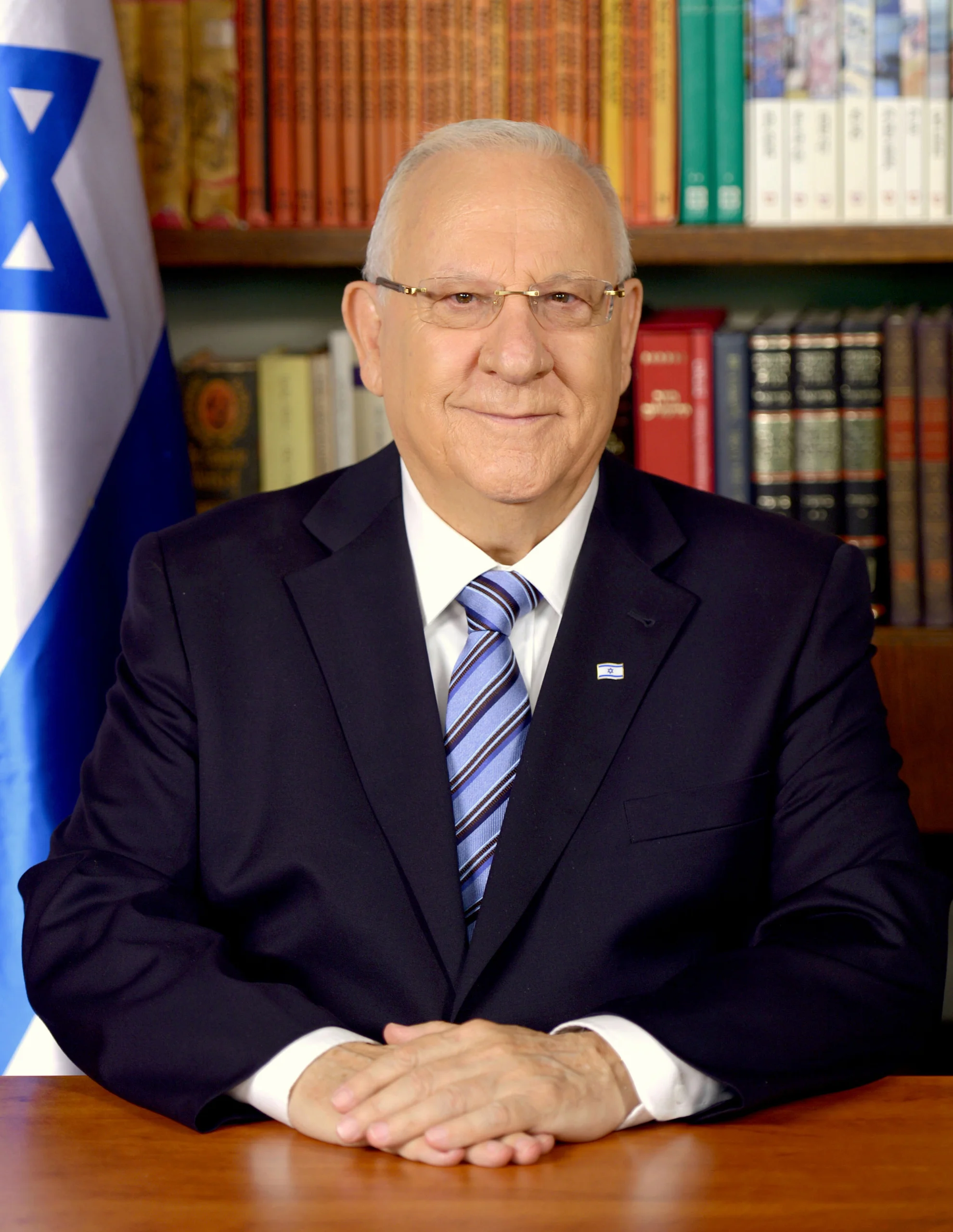
Reuven Rivlin
 Israel
Also known as: Ruvi Rivlin, Reuven "Ruvi" Rivlin
Birthday
September 9, 1939
Birth Sign
Virgo
Birthplace
Jerusalem
Age
87 years old
About
Reuven "Ruvi" Rivlin is an Israeli politician, lawyer, and jurist who served as the tenth President of Israel from July 2014 to July 2021. Born on September 9, 1939, in Jerusalem into a family with deep roots in the city dating back to the 19th century, he spent decades rising through the ranks of the Likud party before reaching the highest office in the land. His career was defined by a unique blend of hawkish nationalism and a fierce advocacy for minority rights, earning him respect across the political spectrum. Before his presidency, he held significant roles including Minister of Communications, Minister of Environmental Protection, and Speaker of the Knesset on two separate occasions.
Rivlin's tenure as president was marked by a distinctive style that emphasized dialogue, tolerance, and the protection of democratic institutions. He famously advocated for a one-state solution where Israelis and Palestinians would share equal citizenship, a view that often put him at odds with other right-wing figures while resonating with Arab leaders and civil society groups. Even after leaving office in July 2021, he remains a respected elder statesman, continuing to participate in academic conferences like the Annual Shared Society Conference and offering insights on Israeli democracy and security. As of late 2026, he maintains an active presence as a commentator on national unity and minority rights, having recently authored memoirs detailing his childhood, IDF service, and political career.
Early Life & Background
Reuven Rivlin entered the world on September 9, 1939, in Jerusalem, where his family had lived since the 19th century. His father, Zvi Rivlin, was a prominent figure in the religious Zionist movement and served as a member of the First Knesset, setting a clear path for political engagement. Growing up in the Rehavia neighborhood, young Reuven attended Herzliya Hebrew High School, where he developed an early interest in national affairs. At age 14, he joined the Betar youth movement, a right-wing Zionist organization founded by Ze'ev Jabotinsky, which shaped his ideological foundation.
Following his mandatory service in the Israel Defense Forces, where he reached the rank of Major in the Golani Brigade, Rivlin turned his attention to legal studies. He earned a Bachelor of Laws degree from the Hebrew University of Jerusalem in 1967 and later completed a Master of Laws at Tel Aviv University in 1973. Before stepping onto the national political stage, he worked as a lawyer specializing in constitutional and administrative law and taught at the Interdisciplinary Center Herzliya. These years of legal practice and teaching provided the expertise that would later underpin his legislative leadership. He also cultivated a close association with Menachem Begin during this era, playing a key role in peace process negotiations that would influence his future political stance.
Career Growth
Rivlin's ascent in politics began in 1988 when he was elected to the Twelfth Knesset as a member of the Likud party. His early career included serving as Chairman of the Knesset Constitution, Law and Justice Committee from 1992 to 1996. In 1996, Benjamin Netanyahu appointed him as Minister of Environmental Protection, a role he held until 1999. The following decade saw him serve as Minister of Communications under Ariel Sharon from 2001 to 2003.
In 2003, Rivlin was elected Speaker of the Knesset for the first time, a position he held until 2006. Known for his impartiality, he modernized parliamentary procedures during this term. After returning to the Knesset as a regular member and chairing the Foreign Affairs and Defense Committee, he was elected Speaker again in 2009, serving until 2013. His diplomatic skills were crucial in bridging divides within fractured coalition governments during those years. The pinnacle of his career arrived on June 10, 2014, when he was elected the tenth President of Israel, succeeding Shimon Peres. His seven-year term concluded in July 2021. Throughout his presidency, he championed the integration of Arab citizens and supported minority rights, including those of Druze and Bedouins. Post-presidency, he has focused on writing memoirs and participating in high-level conferences, maintaining his status as a key voice on national unity.
Career Timeline
Public Image & Style
Reuven Rivlin projects the image of a distinguished statesman with a calm demeanor and articulate speech. He is frequently seen in traditional suits or military-style uniforms during official events, reflecting his background in the IDF and his respect for tradition. Media portrayals often describe him as a "moral compass" who combines conservative values with progressive stances on human rights. This unique positioning allows him to speak effectively to both the religious right and the secular left, making him a unifying figure in a polarized political landscape. His nickname "Ruvi" is widely used by friends and colleagues, adding a touch of approachability to his dignified public persona.
Fame & Fandom (iFAMOUS Rankings)
Reuven Rivlin stands as a towering figure in modern Israeli statecraft, his influence extending far beyond the walls of the Knesset or the presidential residence. While he does not hold a placement in the iFANN Global Top 1,000 rankings as of September 2026, his standing among the nation's most recognized historical figures remains undeniable. This distinction reflects a career that spanned decades of legislative leadership and high-stakes diplomacy, woven deeply into the national narrative. The reach of his legacy is evident in media coverage and consumption signals worldwide, recognized not just for his titles but for his distinct voice on democratic values and minority rights. While his fame is rooted in serious governance rather than pop culture spectacle, the impact of his work is felt across global diplomatic circles.
Unlike entertainers who cultivate adoring mobs, Rivlin operates without a formal fanbase. There are no organized groups of supporters, no viral birthday campaigns, and no ritualistic gatherings dedicated to his persona. The public engagement surrounding him is strictly civic; it manifests in the solemnity of state functions rather than the frenetic energy of fandom. When crowds gather, they do so to witness history or honor a statesman, not to participate in a shared cultural obsession. Consequently, the concept of a specific fandom name does not apply to his legacy. His audience consists of citizens, diplomats, and historians who view him through the lens of duty and achievement. The absence of a fan club highlights the gravity of his role, he is a leader respected for his service, not celebrated for stardom.
Interesting Facts and Legends
One notable moment occurred in 2026 when Benny Gantz revealed that Rivlin had mediated between him and Benjamin Netanyahu, clarifying that the former president facilitated dialogue rather than issuing warnings about crises. Rivlin also played a significant role in the peace process negotiations as a close associate of Menachem Begin. His commitment to social inclusion extended to hosting events for World Autism Awareness Day, bringing attention to the needs of people with disabilities in Israeli society. During a visit to UCLA in 2020, he was honored as a statesman, reinforcing his dedication to bridging divides with international academic communities. Unlike many politicians, he rarely discloses personal details about his grandchildren to maintain their privacy.
Notable Quotes
“Israel can't agree to half a democracy.”
“We must build bridges, not walls.”
“My term of office as president... Chief of Staff...”
Family & Personal Life
Reuven Rivlin has been married to Nechama Rivlin since 1963. Nechama, a teacher and social worker, has been his constant companion throughout his entire political career. The couple has three children: Yonatan, Tamar, and Noa. Their long-standing partnership is often cited as a cornerstone of his personal narrative, providing stability amidst the demands of high-stakes statecraft. They have several grandchildren, though specific details about them are kept out of the public eye to ensure their safety and privacy.
Notable Connections
Relationships & Dating History
Reuven Rivlin's romantic life has been defined by a single, enduring marriage. He wed Nechama Rivlin in 1963, and she has remained his partner throughout his entire political career. Nechama, a teacher and social worker, has been a constant source of support as he navigated the complexities of Israeli politics. The couple has raised three children together: Yonatan, Tamar, and Noa. There are no public records of previous marriages, divorces, or significant romantic relationships prior to his union with Nechama.
As of 2026, Reuven Rivlin remains married to Nechama Rivlin. Their long-standing partnership is a cornerstone of his personal narrative, often cited in interviews regarding the balance between his public duties and private life. They have grandchildren, though specific details about their names and ages are rarely disclosed to maintain privacy. The stability of their relationship contrasts with the volatility of the political arena he inhabits, serving as a private anchor for the public figure.
- MarriedNechama Rivlin1963 - presentCurrentMarried since 1963; three children together.
Salary, Net Worth In 2026
$4 Million
iFANN Editorial Team estimate
iFANN currently estimates Reuven Rivlin's net worth at approximately $4 million. As a former head of state and a long-serving politician, his wealth is derived primarily from his parliamentary salary, the presidential stipend, and his legal practice prior to entering full-time politics. Unlike celebrities who accumulate vast fortunes through commercial ventures, Rivlin's financial standing reflects the standard compensation for Israeli dignitaries over a multi-decade career. His assets likely consist of real estate holdings in Jerusalem and savings accumulated over his lifetime.
Recent reports regarding a $17 million foreclosure involving a "Reuven Rivlin" in Chicago refer to a different individual, a New Jersey investor, and should not be attributed to the former President. The former President's financial trajectory remains consistent with that of a retired statesman. His economic footprint is stable and grounded in the modest earnings of public service rather than speculative markets.
Awards & Accolades
View 3 records, honours and achievementsKnown For
President of Israel
2014 · Tenth President
Speaker of the Knesset
2003 · Legislative Leader
Minister of Communications
2001 · Government Official
Keywords
Sources
Quick Facts
- Profession
- politician, lawyer, jurist
- Born
- September 9, 1939
- Birthplace
- Jerusalem
- Gender
- Male
- Spouse
- Nechama Rivlin
- Birth Sign
- Virgo
Personal Details
- Full Name
- Reuven Rivlin
- Spouse
- Nechama Rivlin
- Children
- Yonatan, Tamar, Noa
- Education
- Hebrew University of Jerusalem (LL.B.), Tel Aviv University (LL.M.)
Frequently Asked Questions
Who is Reuven Rivlin?
Is Reuven Rivlin still alive?
What is Reuven Rivlin's political stance?
Does Reuven Rivlin have a spouse?
Why is there news about a Reuven Rivlin facing foreclosure?
Join the community
fans discussing