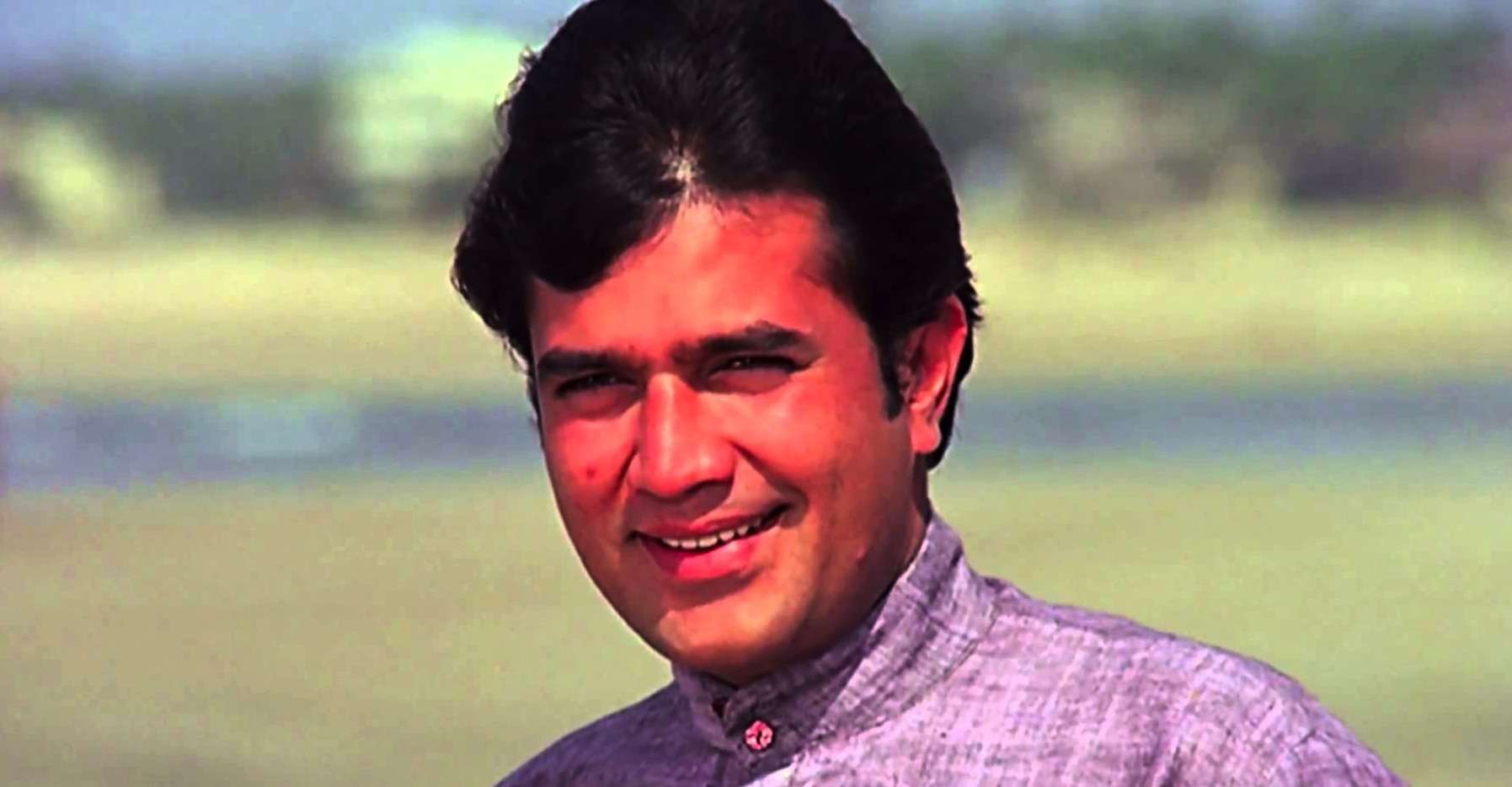
Rajesh Khanna
 India
Indiafilm actor•politician•film producer
Also known as: Kaka, Jatin Khanna
Birthday
December 29, 1942
Birth Sign
Sagittarius
Birthplace
Amritsar, Punjab, British India
Age
Died at 69
Height
5 ft 6 in (168 cm)
About
Rajesh Khanna was the original superstar of Hindi cinema, a man whose face launched a thousand fan clubs and whose every film became an event. Born Jatin Khanna in Amritsar in 1942, he carried the weight of an entire industry on his shoulders through the late 1960s and early 1970s, delivering an unmatched string of hits that made him a household name across India. His legacy is measured not just in box office numbers but in the way he changed what it meant to be a film star.
Khanna's career began in 1966 with Aakhri Khat, but it was Aradhana in 1969 that turned him into a phenomenon. Over the next few years, he broke records with films like Anand, Safar, and Kati Patang, earning five Filmfare Awards and the adoration of millions. His distinctive style, from the iconic hair flip to his effortless charm, made him a trendsetter whose influence extended beyond the screen.
After retiring from films in 1991, he entered politics, serving as a Member of Parliament for New Delhi from 1992 to 1996. His later years were quieter, but his impact never faded. He passed away on 18 July 2012, and in 2013, he was posthumously awarded the Padma Bhushan, India's third-highest civilian honour. For generations of fans, he remains the eternal superstar.
Early Life & Background
Rajesh Khanna was born Jatin Khanna on 29 December 1942 in Amritsar to Lala Hiranand Khanna, a school headmaster, and Chandrani Khanna. Shortly after his birth, he was adopted by his uncle Chunnilal Khanna and aunt Leelawati Khanna, a family of railway contractors who had moved from Lahore to Bombay in 1935. He grew up in Saraswati Niwas in Thakur-dwar, near Girgaon, Mumbai, and was fondly called "Kaka" by everyone who knew him.
As a student at St. Sebastian's Goan High School, he was a natural performer, winning drama competitions and starring in school plays. His classmate Ravi Kapoor would later become the actor Jeetendra. In 1962, while playing a wounded soldier in the play Andha Yug, he so impressed the Chief Guest that he was encouraged to pursue acting seriously. He went on to attend Kishinchand Chellaram College in Mumbai, all while enjoying a comfortable life, even owning an MG sports car before his film career took off.
That early confidence and charm would serve him well. He entered the film industry with a determination that matched his talent, ready to take on the world.
Career Growth
Rajesh Khanna's film debut in 1966 with Aakhri Khat, directed by Chetan Anand, was a critical success but a commercial failure. The film became India's first official entry to the Academy Awards, a sign of things to come. His breakthrough arrived in 1969 with Shakti Samanta's Aradhana, opposite Sharmila Tagore. The film was a massive blockbuster, and its success, along with Do Raaste, earned him the title of "Superstar."
From 1969 to 1971, he delivered an unprecedented 17 consecutive super-hits, including The Train, Sachaa Jhutha (1970), Safar, Kati Patang (1971), Anand (1971), Andaz, Haathi Mere Saathi (1971), and Khamoshi. This record remains unbroken. In 1971, he won his first Filmfare Best Actor award for Anand, in which he played a man suffering from lymphosarcoma. More hits followed: Amar Prem (1972), Namak Haraam (1973), Roti (1974), Aap Ki Kasam, Ajnabee, Kudrat, and Agar Tum Na Hote.
He also produced three films and co-produced four others. His later hits included Souten (1983) and Amrit (1986). After appearing in approximately 180 films, he left the industry in 1991 and entered politics, joining the Indian National Congress and serving as Member of Parliament for New Delhi from 1992 to 1996. In 2005, he received the Filmfare Lifetime Achievement Award, and in 2013, he was posthumously awarded the Padma Bhushan.
Career Timeline
Public Image & Style
Rajesh Khanna's public image was that of a charismatic, almost mythical figure. He was the first actor in India to have a fan following that bordered on religious devotion, with fans shaving their heads and pouring milk on his posters. His style, from his flamboyant shirts to his carefully tousled hair, set trends that young men across the country rushed to copy.
Media and fans alike were captivated by his on-screen charm and off-screen mystique. He was often called the "Kaka" of Bollywood, a term of endearment that stuck. His social media presence, though nonexistent in his time, was replaced by a constant stream of fan clubs and magazines dedicated to his every move.
What made him connect with audiences was his ability to portray vulnerability and romance with equal conviction. He wasn't just a star; he was a phenomenon who made people believe in the magic of cinema. His legacy as a trendsetter and a cultural icon remains strong, with his films still watched and celebrated by new generations.
Fame & Fandom (iFAMOUS Rankings)
Rajesh Khanna is currently evaluated by the iFANN Global Fame Engine but does not hold a placement in the published rankings, including the Global Top 1,000 or any Top-100 scope list. While his historical dominance during the late 1960s and early 1970s created a cultural phenomenon unmatched in Indian cinema history, current algorithmic assessments place him outside the active ranking tiers as of August 2026. The audience that once turned cities into stages for his arrival has no formal name documented in modern databases, operating instead as an organic mass movement known simply as the Rajesh Khanna Phenomenon. This fanbase was characterized by spontaneous, massive gatherings rather than structured campaigns, with crowds overwhelming airports and train stations to the point of causing stampedes. A notable ritual among these devoted followers involved writing marriage proposals in blood, a practice reported during his prime that highlighted the extreme nature of his allure. During the release of films like Amar Prem and Seeta Aur Geeta, fans fainted in droves, and streets were completely blocked by mobs screaming his name. One specific incident occurred when his car broke down in Mumbai; the crowd refused to let him leave until he had personally interacted with them, leading to a scene where he had to climb out of the vehicle to appease the masses. Hospitals reportedly ran out of space for fainting fans at his premieres, distinguishing these events from folklore. Recent accounts suggest that while he was exceptionally generous, he could also be arrogant and abusive at the peak of his stardom, a contradiction that contributed to his eventual downfall. Despite these darker anecdotes, the central legend remains his unparalleled ability to make audiences weep and swoon, with his birthday continuing to be celebrated as a major cultural event decades after his death.
Interesting Facts and Legends
Rajesh Khanna's nickname Kaka stuck with him from childhood, and even his closest friends and family used it. He was known for his love of fast cars, and his collection included a vintage MG sports car he owned before his film career took off. He was a trendsetter in fashion, making Guru Kurtas and wearing belts on shirts popular in the 1970s and 1980s. His iconic hair flip became a signature move that fans tried to imitate. Khanna was a huge fan of singer Kishore Kumar, and their collaboration produced some of the most memorable songs in Hindi cinema. He also had a quirky habit of wearing a specific type of cologne, which became his trademark. In his later years, he became an avid painter, and his artwork was exhibited in Mumbai. He also had a deep love for poetry and often recited verses at family gatherings. Despite his superstar status, he was known to be shy and introverted in personal settings, a contrast to his on-screen persona. A widely retold story involves the sheer physical reaction of crowds to his presence, where fans fainted in droves during the release of films like Amar Prem and Seeta Aur Geeta. Another legendary moment occurred when his car broke down in Mumbai; the crowd refused to let him leave until he had personally interacted with them, forcing him to climb out of the vehicle to appease the masses. Additionally, the revelation that Khanna was adopted, discovered later in life, is a key part of his personal mythology, with recent accounts suggesting this discovery caused him deep psychological distress.
Notable Quotes
“Luck may run out and the public, which is so kind, may turn cruel but when that happens I'll go down with a smile.”
“I have always considered myself as an actor, but somewhere along the way I became a superstar.”
“Ten cars with ten stars would come for the premiere of a movie and when my car would arrive there was mass hysteria. I got scared of my own superstardom.”
“I had my good days, I had my bad days, and I will have my good days again. I do not envy the man on top now, because I have been there myself. I know how he feels, every hit, every joy, every applause. I have tasted it all, and it is WOW.”
“I would love to live my entire life again and experience the same success, same failures, same women and also the same heartbreaks.”
Family & Personal Life
Rajesh Khanna was born to Lala Hiranand Khanna and Chandrani Khanna, but was adopted and raised by his relatives Chunnilal Khanna and Leelawati Khanna, who were railway contractors. He grew up in Mumbai with his adopted family and was known as "Kaka" to them.
He married actress Dimple Kapadia in 1973, just eight months before her debut film Bobby was released. The couple had two daughters: Twinkle Khanna (born 1974) and Rinke Khanna (born 1977). Both daughters became actresses; Twinkle later married actor Akshay Kumar. The couple separated in 1982 but never divorced, remaining legally married until his death.
In his later years, he was in a relationship with Anita Advani, who was his companion until his passing. He also had a sister-in-law, Simple Kapadia, who was an actress and costume designer. His family remained a central part of his life, and he was a devoted father to his daughters.
Notable Connections
Rajesh Khanna's career was deeply intertwined with some of the biggest names in Hindi cinema. He frequently collaborated with director Shakti Samanta, who helmed his breakthrough film Aradhana, and with composers S.D. Burman, R.D. Burman, and the duo Laxmikant-Pyarelal, who created many of his iconic songs. Singer Kishore Kumar was his voice, lending his vocals to countless hits. His frequent co-stars included Sharmila Tagore, Mumtaz, and Tina Munim. His personal connections included his wife Dimple Kapadia, daughters Twinkle and Rinke Khanna, son-in-law Akshay Kumar, and sister-in-law Simple Kapadia.
Relationships & Dating History
Rajesh Khanna's love life was as dramatic as his films. In the late 1960s, he dated actress Anju Mahendru, a relationship that lasted from around 1967 to 1972. The couple was often in the spotlight, but their romance fizzled out as his career soared.
In 1973, he married Dimple Kapadia, just eight months before her debut film Bobby was released. The marriage was a sensation, with fans reportedly shaving their heads in mourning. They had two daughters, Twinkle and Rinke, but the couple separated in 1982. They never divorced, remaining legally married until his death.
In the mid-1980s, he had a public relationship with actress Tina Munim, whom he co-starred with in Souten (1983). The relationship lasted from about 1984 to 1987.
In his later years, his companion was Anita Advani, who stayed with him until his passing in 2012. At the time of his death, he was still legally married to Dimple Kapadia, though they had been separated for decades.
- DatedAnju Mahendru1967 - 1972His partner before his marriage; the relationship ended around the time he married Dimple Kapadia.
- MarriedDimple Kapadia1973 - 2012Married in 1973, separated in 1982 but never divorced; remained legally married until his death.
- DatedTina Munim1984 - 1987Public relationship during this period; they co-starred in Souten (1983).
- DatedAnita Advani2000 - 2012His companion in his later years until his death.
Death & Aftermath
Died
July 18, 2012 (aged 69)
Death Place
Bandra, Mumbai, India
Cause of Death
Cardiac arrest following multiple organ failure
Rajesh Khanna died on July 18, 2012, at Sahyadri Hospital in Bandra, Mumbai, following a prolonged illness that had compromised his health for several years. The actor, who was born in 1942 and had managed diabetes and kidney failure through dialysis treatments, slipped into a coma before passing away peacefully from cardiac arrest. His condition had deteriorated significantly in late July, leading to his final admission where he remained until his death at the age of 69. The reaction to his passing was marked by widespread mourning across India, with tributes pouring in from peers such as Amitabh Bachchan, Dharmendra, and Govinda, who described him as a timeless icon. Institutions including the International Indian Film Academy held moments of silence, while fan vigils gathered at his residence in Bandra and at major film studios.
In the days following the event, there was a notable surge in the streaming and sales of his classic films like Anand and Seeta Aur Geeta, and memorial murals appeared in cities throughout the country. Khanna's funeral took place two days later on July 20, 2012, at the Gorai Crematorium in Mumbai, attended by hundreds of family members and colleagues including Shashi Kapoor and Vinod Khanna. Following the cremation, his ashes were immersed in the Arabian Sea off the coast of Mumbai in accordance with Hindu traditions. Posthumously, he received the Padma Bhushan in 2013, and his legacy has been preserved through documentaries and biographies, though his estate remains under management by his family with ongoing civil litigation regarding inheritance claims by his partner Anita Advani.
Net Worth (Estate Value)
$120 Million
iFANN Editorial Team estimate
Per iFANN's editorial analysis, Rajesh Khanna's net worth at the time of his death in 2012 was estimated at $120 Million. His wealth was accumulated through his prolific film career, which included over 160 films, many of which were blockbusters. He also earned from producing films and from brand endorsements during his peak years. In addition to his film earnings, Khanna owned several properties in Mumbai, including his famous bungalow Aashirwad in Bandra, which was a landmark. He also had investments in real estate and other ventures. His estate has continued to earn from royalties, residuals from his films, and the licensing of his image and music. As of 2026, his estate is managed by his family and continues to generate income from the enduring popularity of his films. The estate's value is estimated to be in line with the $120 Million figure, reflecting the lasting commercial appeal of his work.
Awards Won (4)
Rajesh Khanna won five Filmfare Awards, including Best Actor for Anand (1971) and a Lifetime Achievement Award in 2005. He also won the All India Critics Award for Best Actor a record seven times and the Bengal Film Journalists' Association Award for Best Actor four times. In 1991, he received a Filmfare Special Award for starring in 101 films as solo lead hero. Posthumously, he was honoured with the Padma Bhushan in 2013.
2013 · Civilian Honour
Lifetime contribution to Indian cinema
2005 · Lifetime Achievement
Lifetime contribution to Indian cinema
Known For
Anand
1971 · Anand Sehgal
Aradhana
1969 · Arun / Suraj
Safar
1970 · Avinash
Kati Patang
1971 · Kamal
Amar Prem
1972 · Anand
Keywords
Sources
Quick Facts
- Profession
- film actor, politician, film producer
- Born
- December 29, 1942
- Birthplace
- Amritsar, Punjab, British India
- Died
- July 18, 2012
- Death Place
- Mumbai, Maharashtra, India
- Gender
- Male
- Spouse
- Dimple Kapadia
- Birth Sign
- Sagittarius
- Height
- 5 ft 6 in (168 cm)
Personal Details
- Full Name
- Jatin Khanna
- Height
- 5 ft 6 in (168 cm)
- Spouse
- Dimple Kapadia
- Children
- Twinkle Khanna, Rinke Khanna
- Education
- Kishinchand Chellaram College, Mumbai
Filmography
180
Total
163
Film
17
TV
Frequently Asked Questions
Was Rajesh Khanna really the first superstar of Bollywood?
How many films did Rajesh Khanna act in?
Why did Rajesh Khanna and Dimple Kapadia separate?
What was Rajesh Khanna's real name?
Did Rajesh Khanna win any national honours?
Join the community
fans discussing