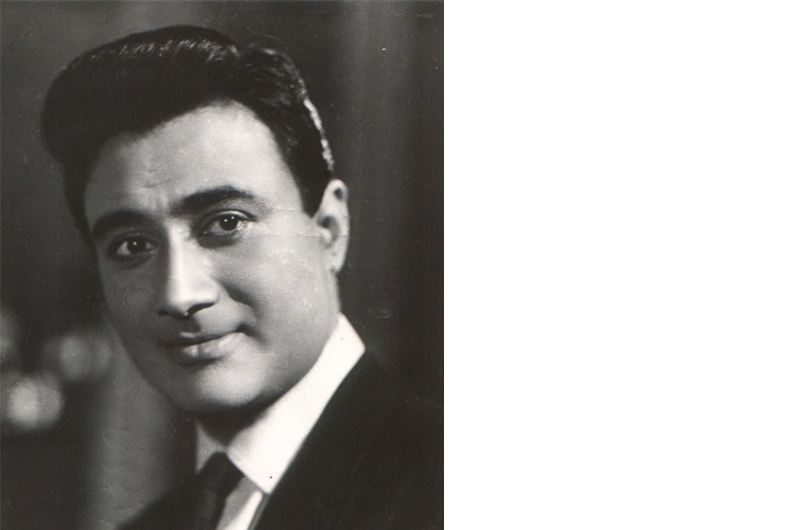
Dev Anand
 India
Indiafilm actor•film director•film producer
Also known as: Evergreen Star
Birthday
September 26, 1923
Birth Sign
Sagittarius
Birthplace
Shakargarh Tehsil, Gurdaspur district, Punjab Province, British India (now in Punjab, Pakistan)
Age
Died at 88
Height
5 ft 7 in (170 cm)
About
Dev Anand, born Dharamdev Pishorimal Anand on 26 September 1923 in Shakargarh Tehsil, was one of Hindi cinema's most enduring stars. Over a career that stretched more than six decades, he acted in over 100 films, while also writing, directing, and producing. His suave style and distinctive dialogue delivery made him a trendsetter, and he earned four Filmfare Awards, including two for Best Actor. The Government of India honored him with the Padma Bhushan in 2001 and the Dadasaheb Phalke Award in 2002.
Anand's journey began in 1946 with a lead role in Hum Ek Hain. His first big commercial success came with Ziddi (1948), but it was the 1951 crime thriller Baazi that truly launched him, sparking a wave of Bombay noir films. Throughout the 1950s and 1960s, he delivered a string of hits like Jaal, Taxi Driver, C.I.D., Paying Guest, Kala Pani, and Guide, the latter often cited as his finest work. He also charmed audiences in romantic comedies such as Tere Ghar Ke Samne and Asli-Naqli, and action thrillers like Jewel Thief and Johny Mera Naam.
Even as new stars emerged in the 1970s and 1980s, Anand remained a box-office draw with films like Amir Garib, Warrant, Jaaneman, and Des Pardes. In 1971, he directed and starred in Haré Rama Haré Krishna, which became a cultural touchstone. His final film, Chargesheet (2011), which he also directed, came just months before his death on 3 December 2011. Anand's legacy is that of a fearless filmmaker who followed his own path, leaving behind a body of work that continues to inspire.
Early Life & Background
Dev Anand was born into a well-to-do family in Shakargarh Tehsil, where his father Pishori Lal Anand practiced as an advocate at the Gurdaspur District Court. He was the third of four sons, with older brothers Manmohan and Chetan, and a younger brother Vijay. The family moved between Shakargarh and Gurdaspur, and Dev's early years were comfortable and shaped by his father's legal profession.
He completed his schooling up to matriculation at Sacred Heart School in Dalhousie, then attended Government College Dharamshala before moving to Lahore for higher studies. At Government College, Lahore, he earned a Bachelor of Arts degree in English Literature. During his college years, he developed a deep interest in literature and writing, and he harboured a quiet crush on a fellow student named Usha Puri, the only girl in his class. In his autobiography Romancing with Life, he recounted meeting her in the college corridor while collecting his character certificate, where she approached him, but the moment passed without a confession. This experience of unrequited love would later inform his romantic screen persona.
After graduating, Anand left his hometown and moved to Bombay, where he worked at the Military Censor Office at Churchgate during the Second World War. His entry into films came almost by chance when he was offered a role in the 1946 film Hum Ek Hain, a film about Hindu-Muslim unity. On that set, he formed a lifelong friendship with the legendary Guru Dutt. He also famously dreamed of meeting the actress Snehprabha Pradhan, a wish that came true when he later acted alongside her, and of owning a Hillman car, a wish he also fulfilled.
Career Growth
Dev Anand's breakthrough came with Ziddi (1948), where he was introduced as a leading man opposite Kamini Kaushal by Ashok Kumar. The following year, he co-founded Navketan Films with his elder brother Chetan Anand, a production company that became synonymous with quality cinema. His first production as a producer was Afsar (1950).
The 1951 crime thriller Baazi, directed by Guru Dutt, was the true launchpad of his career, sparking a wave of Bombay noir films. Throughout the 1950s, he delivered a string of hits including Jaal, Taxi Driver (1954), C.I.D. (1956), Paying Guest (1957), Kala Pani (1958), and Munimji. His rapid-fire dialogue delivery and distinctive head-nodding mannerism became his trademark in films like House No. 44, Pocket Maar, Funtoosh, and C.I.D.
The 1960s saw Anand at the height of his powers. Guide (1965), directed by his brother Vijay Anand, is widely considered his finest work. He charmed audiences in romantic comedies like Tere Ghar Ke Samne and Asli-Naqli, and action thrillers like Jewel Thief (1967) and Johny Mera Naam (1970). He made his directorial debut with Prem Pujari (1970), and in 1971 directed and starred in Haré Rama Haré Krishna, which became a cultural touchstone.
Even as new stars emerged, he remained a box-office draw with films like Amir Garib, Warrant, Jaaneman, and Des Pardes. He continued acting into his later decades, starring in films through 2005. His final film, Chargesheet (2011), which he also directed, was released just months before his death.
Career Timeline
Public Image & Style
Dev Anand epitomised the debonair, romantic hero in Indian cinema. His fashion sense, with a puffed hairstyle, trench coats, scarves, and a distinctive gait, turned him into a style icon whose look was imitated across the country. He brought a global flair to Indian cinema, fusing Western sensibilities with Indian ethos. His romantic heroes were never one-dimensional; they were poets, rebels, and thinkers who dared to dream.
His films were known for their romantic tone, mystery elements, and social relevance. His distinctive style has been widely imitated by subsequent actors and comedians. He was known for his youthful spirit and relentless passion for cinema, even in his later years. Fans and critics alike remember him as the "Evergreen Star" for his timeless appeal and ability to connect with audiences across generations.
Fame & Fandom (iFAMOUS Rankings)
The 'Adonis of Indian Cinema' remains a towering figure whose cultural footprint spans generations, yet the iFANN Global Fame Engine has evaluated this legacy without assigning him a current placement in the published rankings. Dev Anand is currently not ranked within the Global Top 1,000 or any specific Top-100 scope list as of August 2026, reflecting a status where historical dominance does not translate to real-time algorithmic volatility. His admirers do not operate under a single, officially recognized fandom name like modern digital tribes; instead, his devotees are a multi-generational collective known simply by their reverence for the Evergreen Star. Unlike contemporary stars driven by organized fan armies, Anand's audience sustains itself through institutionalized tribute rather than grassroots digital campaigns. The Dev Anand Memorial Trust anchors this devotion, organizing annual gatherings on his birth and death anniversaries that blend film screenings with charity drives across India and abroad. Fans often quote his philosophy that the sky is not the limit, treating his life as a masterclass in resilience following his miraculous survival of a fatal plane crash in 1969. While no formal fan club exists, the ritual of watching his classics on streaming platforms serves as the primary mode of interaction today. This enduring presence ensures that while he holds no numeric rank in current global metrics, his influence remains a verified pillar of cinematic history.
Interesting Facts and Legends
Dev Anand was famous for his rapid-fire dialogue delivery and a distinctive habit of nodding while speaking, which became his signature style. He fulfilled a lifelong dream of meeting actress Snehprabha Pradhan by acting with her and also owned a Hillman car, a wish he had cherished for years. His personal hobbies included reading, writing, collecting pens, jackets, and pairs of shoes, alongside practicing yoga. He favored yellow, brown, and black as his favorite colors and cited Ashok Kumar and Charlie Chaplin as his preferred actors. In 1970, he launched a public campaign against the internal emergency imposed by Prime Minister Indira Gandhi. His sister Sheel Kanta Kapur is the mother of director Shekhar Kapur. Waheeda Rehman's first Hindi film C.I.D. featured Anand, who insisted she call him "Dev" rather than "Dev Saab," and Hema Malini's second film Johny Mera Naam starred her alongside a man her mother adored. Beyond these facts, legends persist about his role in high-level geopolitics when Pakistani Prime Minister Nawaz Sharif reportedly requested Anand accompany Indian leaders on a peace mission to Lahore during the 1999 Kargil conflict. Another enduring story claims his arrival at film releases in the 1950s caused such mass hysteria that streets shut down and fans fainted, forcing security changes. Fans also recount how he refused to wear a helmet while riding a motorcycle in Guide, insisting on the wind in his hair aesthetic as a symbol of rebellion.
Notable Quotes
“Main zindagi ka saath nibhata chala gaya; har fiqr ko dhuen mein udata chala gaya.”
Family & Personal Life
Dev Anand was born into the Anand-Sahni family, the third of four sons of Pishori Lal Anand, an advocate, and his wife. His older brothers were Manmohan Anand, an advocate, and Chetan Anand, the renowned film director. His younger brother, Vijay Anand, also became a celebrated filmmaker. His younger sister, Sheel Kanta Kapur, married into the Kapur family and became the mother of acclaimed film director Shekhar Kapur.
Two of Dev's nieces, Neelu and Aruna, later married actors Navin Nischol and Parikshat Sahni respectively. Dev married actress Kalpana Kartik in 1954, and the couple had two children: a son, Suneil Anand, and a daughter, Devina Anand (Narang). The marriage lasted until his death in 2011, and the family remained closely involved in preserving his legacy, with Suneil managing his father's estate.
Notable Connections
Dev Anand's career was intertwined with several key figures. Guru Dutt, a close friend from his debut film onwards, directed him in Baazi. His elder brother Chetan Anand co-founded Navketan Films with him, while his younger brother Vijay Anand directed several of his biggest hits including Guide. He frequently co-starred with Waheeda Rehman in seven films, and with Hema Malini in Johny Mera Naam. His wife Kalpana Kartik also appeared in several of his films. Ashok Kumar introduced him as a leading man in Ziddi. His nephew, Shekhar Kapur, became an acclaimed director in his own right.
Relationships & Dating History
Dev Anand's romantic life was as captivating as his on-screen roles. His first well-documented relationship was with actress Suraiya, which began around 1948 and lasted until 1951. The couple never married, reportedly due to opposition from Suraiya's grandmother, and the relationship ended amicably, with both going on to have successful careers.
In 1954, Anand married actress Kalpana Kartik, and the couple remained together until his death in 2011. Their marriage, which lasted 57 years, was one of the longest in Bollywood. They had two children, Suneil and Devina. At the time of his death, Dev Anand was married to Kalpana Kartik.
- DatedSuraiya1948 - 1951High-profile relationship; never married due to opposition from Suraiya's grandmother.
- MarriedKalpana Kartik1954 - 2011CurrentMarried until his death; had two children together.
Death & Aftermath
Died
December 3, 2011 (aged 88)
Death Place
London, England, United Kingdom
Cause of Death
Heart attack (myocardial infarction)
Prime Minister Manmohan Singh honored Dev Anand as a legend who defined an era, while President Pratibha Patil called him the epitome of the evergreen hero. Tributes poured in from the global Indian diaspora and film institutions that held moments of silence for the man whose final public appearance had been during promotional events years prior to his passing. His funeral remained intimate on December 5, 2011, at the Girgaon Chowpatty crematorium in Mumbai, attended by close family members including his son Suneil Anand, alongside industry giants like Amitabh Bachchan and Rajinikanth. The ceremony was private, with no public speeches recorded, adhering to his wishes for a simple send-off after decades of dazzling the screen. The end came quietly on December 3, 2011, when he passed away at Hammersmith Hospital in London following a heart attack.
He had been admitted earlier that day after suffering cardiac symptoms while staying in the United Kingdom, never regaining consciousness despite medical care. Hospital authorities and his family confirmed the cause as myocardial infarction, ruling it a natural event. There were no disputes regarding the manner of death, allowing the focus to shift immediately to the profound reaction across India and the world. Posthumously, the Government of India awarded him the Dadasaheb Phalke Award in 2012, recognizing his lifetime contribution to cinema. His family established the Dev Anand Foundation to support young talent and preserve archival materials, ensuring his vision for Indian filmmaking continued under the stewardship of his son.
Net Worth (Estate Value)
$10 Million
iFANN Editorial Team estimate
Per iFANN's editorial analysis, Dev Anand's estate is valued at $10 Million. This figure reflects his enduring legacy in Indian cinema and represents a stable asset base maintained since his passing in 2011. The bulk of this value stems from royalties and intellectual property rights covering his extensive filmography of over 100 films, many of which continue to be distributed and streamed across various platforms globally. His production company, Navketan Films, retains rights to several classics including Guide and Haré Rama Haré Krishna, generating ongoing licensing revenue. Since his death, the estate has been managed by his son, Suneil Anand, who oversees the preservation and monetization of his father's work. The valuation benefits significantly from the continued popularity of his films on television and digital platforms, as well as from tribute events and retrospectives that keep his image relevant. While exact figures remain private, the estate's worth has remained consistent, supported by the timeless appeal of Anand's performances and the lasting resonance of his storytelling.
Awards Won (24)
Dev Anand won four Filmfare Awards during his career, including two for Best Actor for Kala Pani (1958) and Guide (1965). He also received the Filmfare Lifetime Achievement Award in 1993. Beyond Filmfare, he was honoured with the Padma Bhushan in 2001 and the Dadasaheb Phalke Award in 2002, India's highest film honour. His contributions were recognised internationally as well, with awards from the US First Lady and various film bodies.
1965 · Best Actor
Guide
1958 · Best Actor
Kala Pani
1993 · Lifetime Achievement
Known For
Guide
1965 · Actor
Baazi
1951 · Actor
Jewel Thief
1967 · Actor
C.I.D.
1956 · Actor
Kala Pani
1958 · Actor
Keywords
Sources
Quick Facts
- Profession
- film actor, film director, film producer
- Born
- +1923-09-26
- Birthplace
- Shakargarh Tehsil
- Died
- +2011-12-03
- Death Place
- London
- Gender
- Male
- Spouse
- Kalpana Kartik
- Birth Sign
- Sagittarius
Personal Details
- Full Name
- Dharamdev Pishorimal Anand
- Height
- 5 ft 7 in (170 cm)
- Spouse
- Kalpana Kartik
- Children
- Suneil Anand, Devina Anand
- Education
- Bachelor of Arts in English Literature, Government College, Lahore
Filmography
100
Total
100
Film
0
TV
Frequently Asked Questions
How did Dev Anand die?
Was Dev Anand married?
How many films did Dev Anand act in?
What was Dev Anand's real name?
Why is Dev Anand famous?
Social Media
Similar People
Join the community
fans discussing