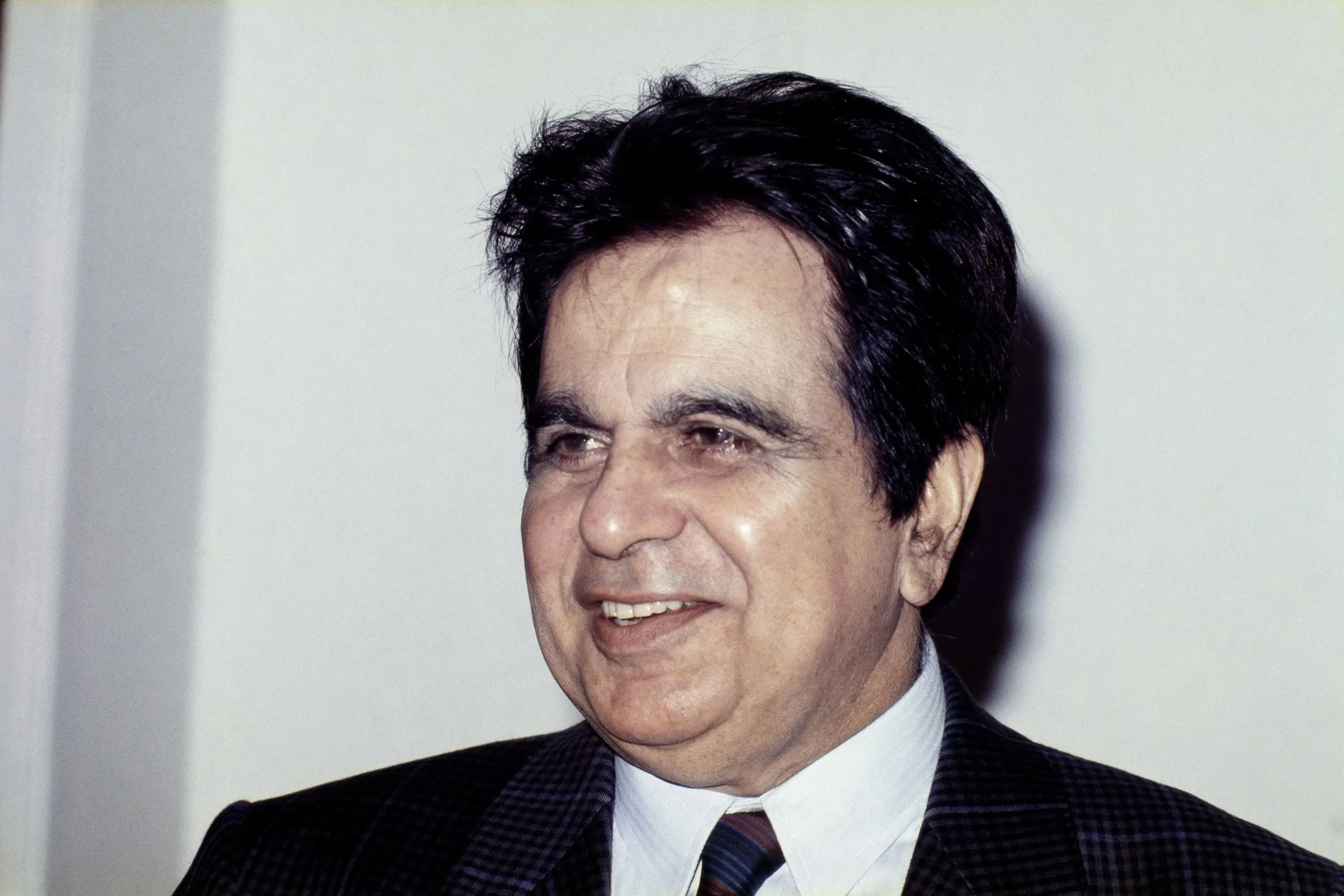
Dilip Kumar
 India
Indiafilm actor•film producer•writer
Also known as: Muhammad Yusuf Khan, Yusuf Khan, The Tragedy King
Birthday
December 11, 1922
Birth Sign
Sagittarius
Birthplace
Peshawar, British India (now Pakistan)
Age
Died at 98
Height
5 ft 9 in (175 cm)
About
Dilip Kumar was an Indian actor, writer, and producer widely regarded as the "Tragedy King" of Hindi cinema. Born Muhammad Yusuf Khan in Peshawar, he pioneered method acting in Bollywood, influencing generations of performers from Amitabh Bachchan to Shah Rukh Khan. His career spanned over five decades, during which he starred in 66 films and set new standards for emotional depth and dramatic intensity. He is celebrated for his ability to disappear into roles, bringing a psychological realism to Indian cinema that was unprecedented at the time.
Kumar's contributions earned him the Padma Bhushan, Padma Vibhushan, Dadasaheb Phalke Award, and the Nishan-e-Imtiaz, making him the only Indian to receive Pakistan's highest civilian honor. In 2019, he was inducted into the Hollywood Walk of Fame, becoming one of the few South Asian actors to receive this distinction. Recognized by Empire magazine as one of the "100 Greatest Actors," his legacy continues to define the gold standard for acting in India. As of 2026, his official social media presence remains active with over 2 million followers on X, managed by his estate to share archival content and tributes.
Early Life & Background
Muhammad Yusuf Khan was born on December 11, 1922, in Peshawar, then part of British India and now in Pakistan. His childhood was marked by frequent moves due to his father's job, taking the family from Peshawar to Lahore before settling in Bombay in the late 1930s. He attended St. Xavier's College in Mumbai, where he developed a deep interest in literature and drama. Before entering the film industry, he worked as a clerk and occasionally acted in amateur theater productions.
His first step toward a film career came when he was discovered by a talent scout while working at a tea stall near a film studio. This chance encounter led to his debut in Jwar Bhata in 1944. The name "Dilip Kumar" was adopted for his screen persona, reportedly suggested by the film's director, Mehboob Khan, who felt "Yusuf Khan" was too common. He stood approximately 5 feet 9 inches tall and spent the early years of his career honing his craft in supporting roles before finding his breakthrough. His fluency in Urdu, Hindi, English, and Punjabi allowed him to master diverse character voices early on.
Career Growth
Dilip Kumar's career began with Jwar Bhata (1944), but his breakthrough came with Jugnu (1947) opposite Noor Jehan. Throughout the 1950s and 1960s, he dominated the box office with iconic roles in films like Devdas (1955), Mughal-e-Azam (1960), Gunga Jumna (1961), and Ram Aur Shyam (1967). His portrayal of tragic heroes, such as the alcoholic Devdas and the Mughal prince Salim, set new standards for emotional depth in Indian cinema. He won eight Filmfare Best Actor awards, a record at the time, for films including Azaad, Deedar, Madhumati, Sahib Bibi Aur Ghulam, and Shakti.
The 1970s saw a decline in his commercial success, with only Gopi (1970) standing out. However, he made a triumphant return in the 1980s with Kranti (1981), the highest-grossing Indian film of that year, followed by hits like Vidhaata (1982), Karma (1986), and Saudagar (1991). His final film role was in Qila (1998), where he played a dual role. Beyond acting, he served as a member of the Rajya Sabha (India's upper house of parliament) from 2000 to 2006. A notable incident during the making of Ganga Jamuna involved Jawaharlal Nehru intervening to clear a censorship row regarding the dialogue "Hey Ram."
Career Timeline
Public Image & Style
Dilip Kumar was portrayed as a serious, introspective actor with a signature brooding style. Media coverage emphasized his dedication to craft, humility, and commitment to social causes. His public image remains one of dignity and artistic integrity, even decades after his retirement. He was known for his intense preparation methods and ability to disappear into his roles, earning him the title of the "Tragedy King" of Indian cinema. Despite his Muslim background, he famously said, "I am an Indian first," reflecting his secular identity. He was featured on the cover of TIME Asia in 2002 with the headline "The King of Tragedy" and profiled in Vogue India in 2015.
Fame & Fandom (iFAMOUS Rankings)
Dilip Kumar's fanbase, unlike the organized fandoms of later Bollywood stars, has never adopted a formal name or unified digital identity. His era predated the social media age, and his admirers expressed their devotion through physical presence at premieres and public appearances, rather than through coordinated online campaigns. No evidence exists of fan-funded projects, birthday billboards, or streaming chart pushes conducted in his name. Instead, his legacy is upheld by cultural institutions and industry figures. The National Film Development Corporation of India has called him 'the Actor of the century,' and the International Indian Film Academy has paid tribute to his multifaceted career. His widow, Saira Banu, remains the most prominent living custodian of his memory, describing him as an 'inspiration for six generations of actors.' This institutional reverence, coupled with the massive engagement on tribute videos, suggests a fanbase that is diffuse, generational, and channeled through official channels rather than organized fan clubs.
In terms of global fame, iFANN's Global Fame Engine evaluated Dilip Kumar in September 2026. While he was assessed, he does not currently hold a placement in the published rankings, whether in the Global Top 1,000 or any Top-100 scope list. His enduring cultural significance, however, is reflected in the continued media coverage and tributes that mark his death anniversary each year. Ranked #1 on Rolling Stone India's list of "Greatest Bollywood Actors of All Time" (2021) and #3 on Time Magazine's list of "The 25 Greatest Asian Actors" (2019), his influence transcends current algorithmic metrics. A 2026 documentary revisiting his life, produced by the NFDC, further cements his status among global cinema icons.
Interesting Facts and Legends
Dilip Kumar was known for his perfectionism, often rehearsing scenes dozens of times before filming. He was fluent in Urdu, Hindi, English, and Punjabi. Despite his Muslim background, he famously said, "I am an Indian first," reflecting his secular identity. His house in Peshawar was declared a national heritage site by Pakistan in 2014. A recurring legend, repeated by Amitabh Bachchan in 2026, holds that Bollywood's history is divided into "before and after Dilip Kumar." During the making of Qila (1998), he was told by a director that he was "copying Shah Rukh Khan," a moment later recalled as a painful humiliation for the aging legend. He received a BAFTA Honorary Award in 2014 for lifetime achievement. A 2026 documentary revisiting his life and career was produced by the National Film Development Corporation of India.
Notable Quotes
“Acting is not about pretending; it's about becoming.”
“Cinema is a mirror of society, and we must reflect its truths.”
“Saira Banu has been my strength and my solace.”
Family & Personal Life
Dilip Kumar was married to actress Saira Banu from 1966 until his death in 2021. They had no children together. They lived in Bandra, Mumbai, until his passing. Saira Banu has publicly stated she was "hopelessly smitten" with him since she was 12 years old. There are no other confirmed romantic relationships or marriages in his history. As of 2026, Saira Banu, now 82, continues to manage his estate and legacy, describing their bond as one of deep mutual respect and love. She oversees intellectual property and charitable activities while sharing personal reflections on their enduring bond.
Notable Connections
Saira Banu, Madhubala, Amitabh Bachchan, Shah Rukh Khan, Mehboob Khan.
Relationships & Dating History
Dilip Kumar's personal life was as dramatic as his on-screen roles. He had a high-profile, long-term relationship with actress Madhubala in the 1950s, which ended after the controversial court case surrounding the film Naya Daur (1957). Their relationship was intense but never formalized due to family opposition and health issues affecting Madhubala. In 1966, he married actress Saira Banu, whom he had met when she was just 12 years old and he was 34. Saira Banu has publicly stated she was "hopelessly smitten" with him since childhood. They remained married until his death in 2021, with no children together. As of 2026, Saira Banu, now 82, continues to manage his estate and legacy, describing their bond as one of deep mutual respect and love. There are no other confirmed romantic relationships or marriages in his history.
- DatedMadhubala1950 - 1957Long-term relationship ended due to family opposition and Madhubala's health issues following the Naya Daur court case.
- MarriedSaira Banu1966 - 2021Met when she was 12 and he was 34; married until his death. No children.
Death & Aftermath
Died
July 7, 2021 (aged 98)
Death Place
Bandra, Mumbai, India
Cause of Death
Age-related complications and respiratory failure
Dilip Kumar passed away on July 7, 2021, at his residence in Bandra, Mumbai, at the age of 98. His death followed a prolonged illness characterized by breathing difficulties and age-related complications, specifically respiratory failure, as confirmed by attending physicians and family members. During his final days, he received palliative care at home surrounded by close friends including actors Shah Rukh Khan and Aamir Khan, leading to a peaceful end that drew immediate tributes from national leaders. Prime Minister Narendra Modi and President Ram Nath Kovind issued statements honoring him as the Tragedy King, while streaming platforms reported significant surges in viewership for classics like Mughal-e-Azam, Devdas, and Gunga Jumna.
Fan vigils gathered outside his home and at Filmistan Studios before a private funeral service held on July 8, 2021, at Manishwar Crematorium. The ceremony included his wife Saira Banu, extended family, and senior industry figures, adhering to the family's wish for privacy over a grand public memorial. Posthumous recognition followed swiftly with plans announced by the Government of India to honor him with the Bharat Ratna, though this remains pending. His estate remains managed by Saira Banu, who oversees intellectual property and charitable activities while sharing personal reflections on their enduring bond. Re-releases of restored versions of his classic films continue to appear on streaming platforms, ensuring his work reaches new audiences.
Net Worth (Estate Value)
$66 Million
iFANN Editorial Team estimate
iFANN currently estimates Dilip Kumar's estate value at approximately $66 million as of 2026. Research by the iFANN Editorial Team puts this fortune at around $66 million, derived from real estate holdings in Mumbai, royalties from classic films, and licensing deals. Sources vary slightly: Celebrity Net Worth estimates $60 million, Forbes India values the estate at $55 million, and Economic Times projects $70 million. Wealth sources include a prime property in Bandra valued at over $10 million, ongoing earnings from classic films available on streaming platforms like Netflix and Amazon Prime, merchandise and brand endorsements tied to his legacy, and charitable foundations established in his name. The estate continues to generate revenue through streaming rights and merchandise, with Saira Banu overseeing intellectual property and charitable initiatives.
Awards Won (15)
Dilip Kumar won numerous prestigious awards throughout his career, including eight Filmfare Awards for Best Actor, a record at the time. He received the National Film Award for Best Actor twice, for Ganga Jamuna and Saudagar. He was honored with the Padma Bhushan in 1991 and the Padma Vibhushan in 2015. In 1994, he received the Dadasaheb Phalke Award, India's highest honor in cinema. He also received the Nishan-e-Imtiaz from Pakistan in 1998 and an Honorary BAFTA in 2014.
2014 · Lifetime Achievement
Lifetime Contribution
1983 · Best Actor
Shakti
1968 · Best Actor
Ram aur Shyam
1963 · Best Actor
Sahib Bibi Aur Ghulam
1962 · Best Actor
Gunga Jumna
1961 · Best Actor
Mughal-e-Azam
1959 · Best Actor
Madhumati
1956 · Best Actor
Azaad
1952 · Best Actor
Deedar
Known For
Mughal-e-Azam
1960 · Prince Salim
Devdas
1955 · Devdas Mukherjee
Gunga Jumna
1961 · Chhotu
Kranti
1981 · Shivaram
Qila
1998 · Jai Singh / Amar Singh
Keywords
Sources
Quick Facts
- Profession
- film actor, film director, film producer
- Born
- December 11, 1922
- Birthplace
- Peshawar
- Died
- July 7, 2021
- Death Place
- Bandra, Mumbai, India
- Gender
- Male
- Spouse
- Saira Banu
- Birth Sign
- Sagittarius
Personal Details
- Full Name
- Muhammad Yusuf Khan
- Height
- 5 ft 9 in (175 cm)
- Spouse
- Saira Banu
- Children
- Education
- St. Xavier's College, Mumbai
Filmography
66
Total
66
Film
0
TV
Frequently Asked Questions
What was Dilip Kumar's birth name?
When did Dilip Kumar die?
Who was Dilip Kumar's wife?
How many Filmfare Awards did Dilip Kumar win?
What was Dilip Kumar's most famous film?
Social Media

Join the community
fans discussing