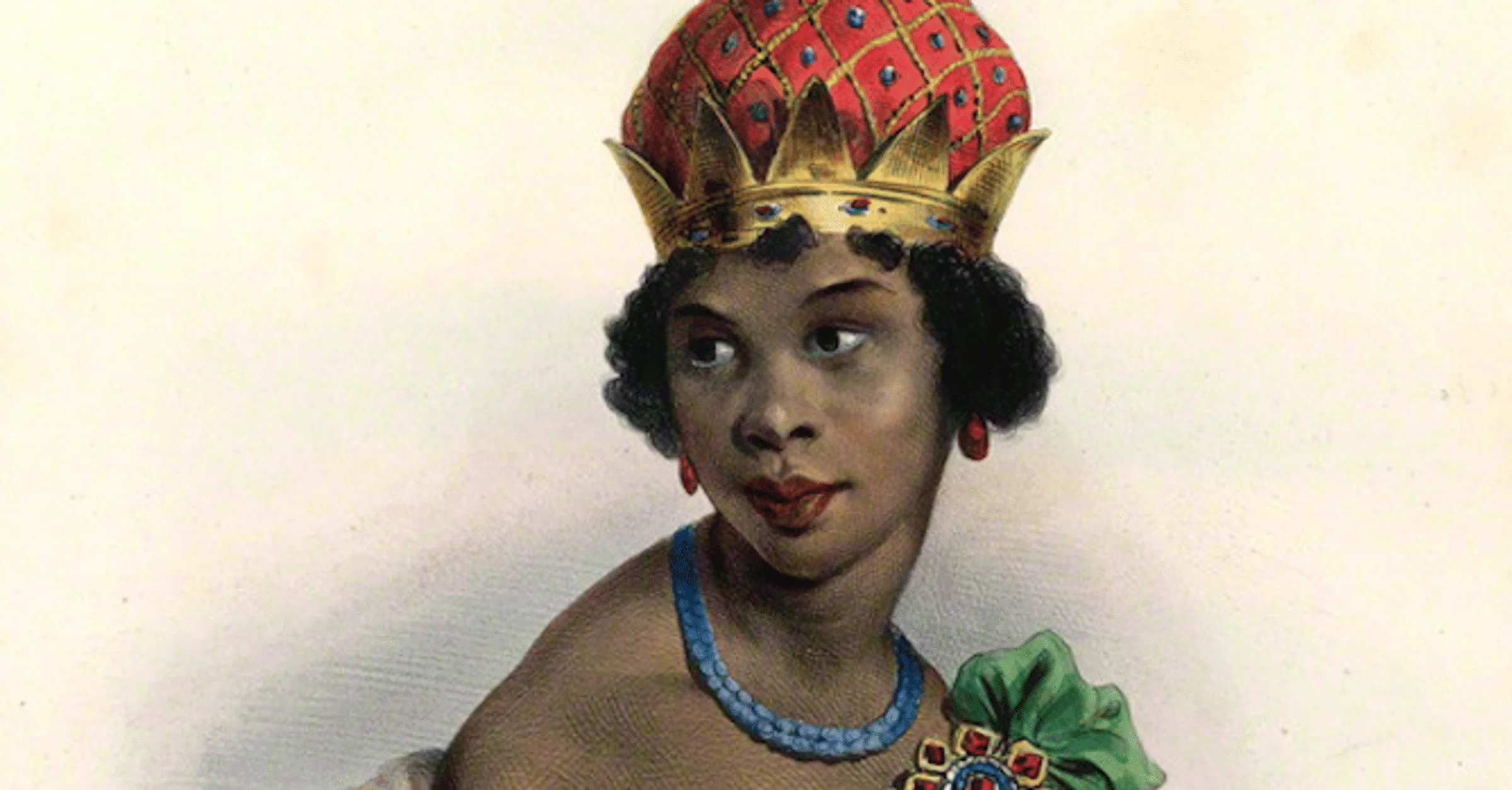
Queen Nzinga
 Angola
Also known as: Nzinga Mbande, Ana de Sousa, Queen Nzinga of Ndongo
Birthday
c. 1583
Birth Sign
Capricorn
Birthplace
Kingdom of Ndongo, present-day Angola
Age
Died at 80
About
Nzinga Mbande was a 17th-century monarch who ruled the African kingdoms of Ndongo and Matamba in what is now Angola. She is historically revered for her decades-long military resistance against Portuguese colonial expansion and her diplomatic mastery in navigating complex political landscapes. Born into royalty, she became a symbol of African sovereignty and anti-colonial defiance, leading armies and negotiating treaties with European powers while maintaining the independence of her people.
Her reign marked a unique era where a female leader commanded absolute authority in a male-dominated region. Nzinga successfully unified neighboring territories, forged alliances with the Dutch West India Company, and utilized guerrilla tactics to repel Portuguese forces. Her legacy endures as a testament to resilience, with her story continuing to inspire movements for freedom and equality centuries after her death.
Early Life & Background
Nzinga entered the world around 1583 within the royal family of the Kingdom of Ndongo. Her father was Ngola Kiluanji Kia Samba, and her mother was Queen Guenguela Cakombewas. From her earliest years, she was immersed in the intricate web of court politics, witnessing the constant tension between her kingdom and expanding Portuguese interests along the coast. This environment shaped her understanding of power dynamics long before she ever donned the crown.
A pivotal moment in her pre-ascension life occurred in 1622 when she served as an envoy to negotiate with Portuguese officials in Luanda. During these talks, she famously refused to sit on the floor as a sign of submission to the governor. Instead, she demanded a servant kneel so she could rest upon their back, asserting her status as an equal. This bold gesture became legendary and signaled her refusal to accept subjugation. Following the death of her brother, Ngola Mbandi, in 1624, she stepped into the role of ruler, immediately facing opposition from both internal rivals and external Portuguese forces.
Career Growth
Upon ascending to the throne of Ndongo in 1624, Nzinga launched a sustained campaign to protect her kingdom's sovereignty. She proved herself a formidable strategist, employing guerrilla warfare and leveraging her knowledge of the terrain to outmaneuver better-equipped Portuguese troops. In 1631, she expanded her influence by establishing control over the neighboring Kingdom of Matamba, creating a unified front that strengthened her position against colonial encroachment.
Her diplomatic acumen was just as critical as her military prowess. Fluent in Kimbundu and Portuguese, she navigated complex negotiations with European powers, at one point securing an alliance with the Dutch West India Company to counterbalance Portuguese dominance in the slave trade. For nearly forty years, she maintained the independence of her realms despite relentless pressure. Even after being forced to temporarily flee and later convert to Christianity under the name Ana de Sousa, she returned to lead her people with renewed vigor until her death in 1663.
Career Timeline
Public Image & Style
Queen Nzinga is remembered as a figure of immense strength, intelligence, and unwavering commitment to her people's freedom. Modern media portrays her as a trailblazer and a symbol of African resistance, often highlighting her role as a female leader in a male-dominated era. Her image is characterized by traditional Ambundu attire adorned with symbols of royalty, and she is frequently depicted in battle regalia to emphasize her martial prowess. Contemporary depictions focus on her strategic brilliance and moral courage, presenting her as an empowering icon for generations of leaders.
Fame & Fandom (iFAMOUS Rankings)
iFANN has not yet collected fame data for this person. While historical records confirm her enduring significance, current global fame metrics have not been established for her in the iFANN database. Despite this lack of modern ranking data, her cultural impact remains profound. Enthusiasts of African history and students of global leadership often refer to themselves as supporters of her legacy rather than a formal fandom. Notable campaigns include efforts to preserve her historical sites and promote her story in educational curricula across Africa and beyond. Fans celebrate her achievements on International Women's Day and other relevant occasions, keeping her memory alive through art, literature, and documentary projects.
Interesting Facts and Legends
Nzinga was fluent in multiple languages, including Kimbundu and Portuguese, which gave her a distinct advantage in high-stakes diplomacy. Historical accounts suggest she used poison as a weapon against enemies, adding to her fearsome reputation as a warrior queen. She also practiced strategic religious flexibility, adopting the Christian name Ana de Sousa during her baptism while secretly maintaining traditional pagan practices. Another notable fact is her adoption of heirs to ensure succession, as she had no biological children. The famous incident where she sat on a servant's back during negotiations remains one of the most iconic moments in African history, symbolizing her unyielding spirit.
Notable Quotes
“I will not sit on the floor like a subordinate.”
“We are not slaves; we are free people.”
Family & Personal Life
Born to Ngola Kiluanji Kia Samba and Queen Guenguela Cakombewas, Nzinga grew up in the heart of Ndongo's royal court. Her brother, Ngola Mbandi, preceded her as ruler, and his death in 1624 thrust her into the leadership role. Though she did not have a traditional marriage or biological children, she adopted heirs to secure the lineage of her throne. Her family life was deeply intertwined with statecraft, as her household served as a center for political strategy and cultural preservation. She remained unmarried throughout her life, a choice that allowed her to maintain absolute political authority without the interference of a consort.
Notable Connections
Relationships & Dating History
Queen Nzinga did not marry in the traditional European sense, nor did she have a documented dating history involving public romantic partners, engagements, or marriages. Historical records indicate that she remained unmarried throughout her life, a status that was somewhat unusual for monarchs of her time but allowed her to maintain absolute political authority without the interference of a consort. Some historical accounts suggest she may have had male companions or concubines, as was common among African royalty, but no specific names, dates, or details of such relationships are recorded in credible historical sources. Consequently, there are no children attributed to her in official records, though she adopted heirs to ensure the succession of her throne. Her legacy is one of personal autonomy and political independence rather than domestic partnership.
Death & Aftermath
Died
December 17, 1663 (aged 80)
Death Place
Kingdom of Matamba, Angola
Cause of Death
Natural causes associated with old age
Queen Nzinga died on December 17, 1663, in the Kingdom of Matamba at approximately age 80. Contemporary accounts do not specify a cause of death or document her final days, with historians noting only that she passed from natural causes associated with old age. Surviving records offer no details on her last public appearance or any specific illness that preceded her passing. Her estate passed to her sister Barbara and other family members.
Her grave site is not identified in any source. Public reaction to her death in 1663 was not documented in the way modern deaths are covered, vigils, gatherings, moments of silence, or memorial murals from that era. However, her legacy has been extensively honored posthumously through numerous books, films, and academic works, including a Met Museum essay and a South African History Online biography.
She has been honored as a symbol of resistance against Portuguese colonialism and the slave trade, with educational foundations and scholarships named in her honor across Angola and beyond. Modern recognition includes a PBS series segment on Africa's Great Civilizations and a documentary featuring a facial reconstruction. In December 2021, Starz announced a drama series titled Queen Nzinga, produced by Curtis "50 Cent" Jackson, Mo Abudu, and Steven S. DeKnight, starring Yetide Badaki. Her story also gained renewed attention in December 2024 when an explainer on her life was published during U.S. President Joe Biden's tour of Angola.
Net Worth (Estate Value)
$0
iFANN Editorial Team estimate
As a historical figure who passed away in 1663, Queen Nzinga does not have a personal net worth in the modern financial sense. However, the value of her estate and legacy is immense in cultural and historical terms. The 'estate' of Queen Nzinga is managed by the Angolan government and cultural heritage organizations, which derive revenue from tourism related to her historical sites, merchandise, and licensing deals for books, films, and documentaries. The economic impact of her legacy includes the preservation of historical sites like the fortresses she built, which contribute significantly to Angola's tourism industry. There are no specific dollar figures for her net worth, as it is a historical figure, but her cultural capital is considered invaluable.
Awards & Accolades
View 8 records, honours and achievementsKnown For
African Queens: Njinga
2023 · Subject
The Warrior Queen of Ndongo
1990 · Historical Figure
Keywords
Sources
Quick Facts
- Profession
- Queen and Military Leader
- Born
- c. 1583
- Death
- December 17, 1663
- Birthplace
- Kingdom of Ndongo, Angola
- Languages
- Kimbundu, Portuguese
Personal Details
- Full Name
- Nzinga Mbande (also known as Ana de Sousa)
- Children
- None documented; adopted heirs
- Education
- Royal court education in diplomacy and warfare
Frequently Asked Questions
Who was Queen Nzinga?
When was Queen Nzinga born?
Did Queen Nzinga have children?
How did Queen Nzinga die?
What is Queen Nzinga famous for?
Social Media
Similar People
Join the community
fans discussing