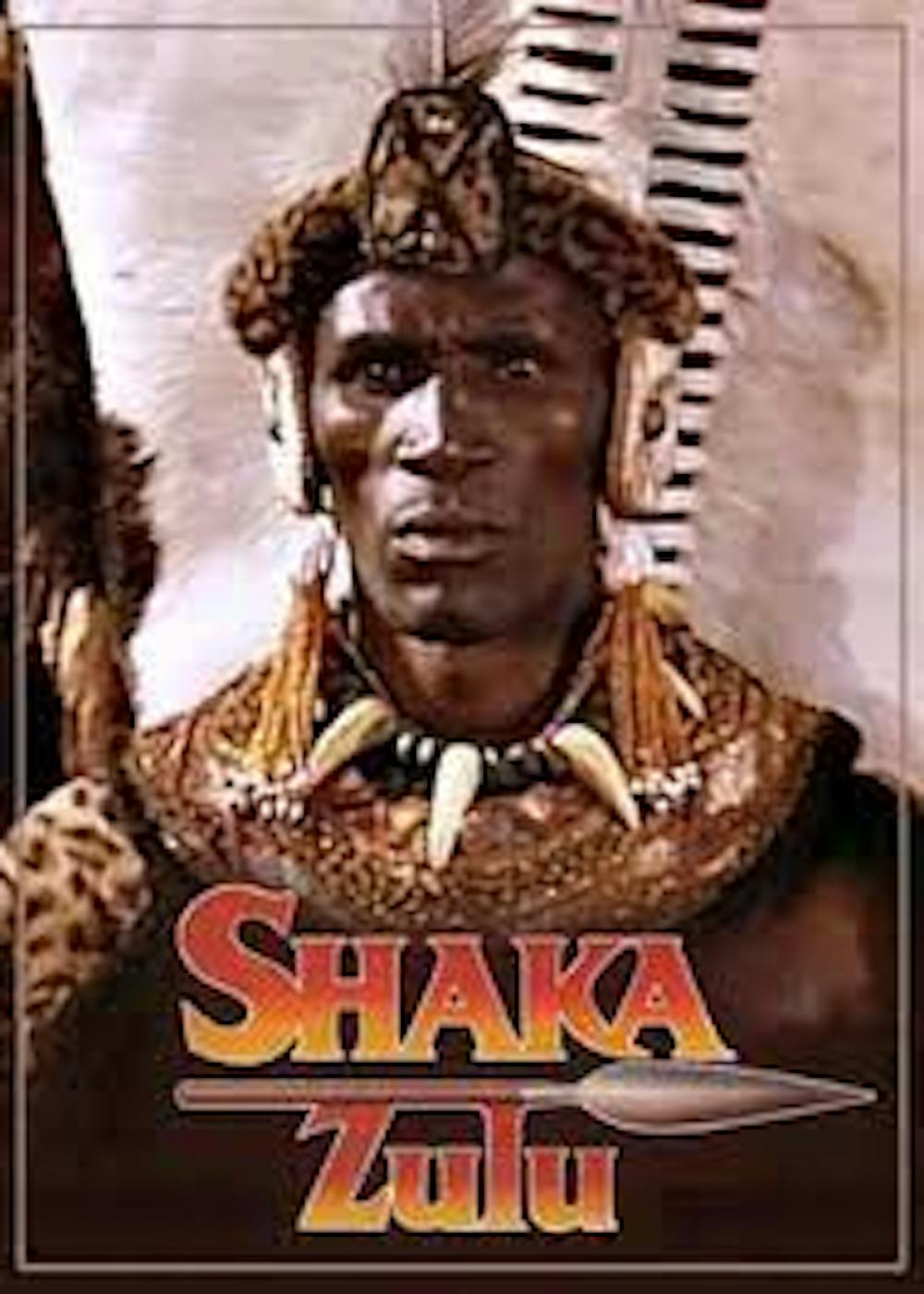
Shaka Zulu
 South Africa
King of the Zulu Kingdom•military leader
Also known as: Shaka kaSenzangakhona, Shaka the Great
Birthday
July 1787
Birth Sign
Cancer
Birthplace
Mthonjaneni, KwaZulu-Natal, South Africa
Age
Died at 41
About
Shaka kaSenzangakhona, known worldwide as Shaka Zulu, was the founder and king of the Zulu Empire, ruling from 1816 until his assassination in 1828. Born in July 1787 in Mthonjaneni, in what is now KwaZulu-Natal, South Africa, he transformed a small chiefdom into a dominant military power through revolutionary tactics and centralized governance. His legacy is a study in contrasts: celebrated as a military genius and nation-builder, yet also remembered for the violent upheaval of the Mfecane that reshaped southern Africa.
Today, Shaka Zulu stands as a symbol of African resilience and strategic brilliance. His innovations, like the short stabbing spear and the "horns of the buffalo" formation, are studied in military academies worldwide. He is often compared to Napoleon for his empire-building, a title HistoryNet bestowed in 2017. His story has been dramatized in the acclaimed 1986 miniseries Shaka Zulu and the 2023 series Shaka iLembe, ensuring his name resonates with new generations.
Shaka's reign, though only twelve years, left an indelible mark on the region's demographics and politics. His death on September 22, 1828, at the hands of his half-brothers, Dingane and Mhlangana, ended an era, but his legacy endures through the Zulu royal family, whose succession disputes still reference his name.
Early Life & Background
Shaka's early life was marked by hardship and stigma. He was born the illegitimate son of Senzangakhona kaJama, chief of the Zulu clan, and Nandi, daughter of Chief Mbhengi of the Langeni clan. His illegitimacy made him a target of ridicule, and some traditions claim his very name derived from the intestinal parasite iShaka, a taunt from his father's other wives. When Shaka was around six, he and his mother were expelled from the Zulu court, forced to seek refuge first with the Langeni and later with the Mthethwa people.
Growing up among the Mthethwa, Shaka was initiated into an ibutho lempi, a fighting regiment, and caught the attention of Inkosi Dingiswayo, the Mthethwa paramount chief. Under Dingiswayo's patronage, Shaka distinguished himself in battle, earning a reputation for fierce courage and tactical insight. These formative years, away from his father's court, shaped his later military reforms and his determination to build a powerful, centralized state.
By the time his father died in 1816, Shaka had already proven himself a formidable warrior. With Dingiswayo's backing, he returned to claim the chieftainship of the Zulu clan, a small and relatively insignificant group at the time. His early life of exile and struggle had forged a leader ready to transform a minor chiefdom into an empire.
Career Growth
Shaka's rise to power began in 1816 when he assumed the chieftainship of the Zulu clan with Dingiswayo's support. His first acts were revolutionary: he reorganized the military, replacing the long throwing spear with a short stabbing spear known as the iklwa, named for the sucking sound it made when withdrawn from a victim. He introduced large cowhide shields and developed the "horns of the buffalo" formation, a pincer movement that enveloped enemies. These innovations, combined with rigorous training and an age-based conscription system, turned the Zulu into a feared fighting force.
His early campaigns were largely defensive, forging alliances with smaller chiefdoms against the powerful Ndwandwe confederation to the north. After Dingiswayo's death around 1818, Shaka absorbed the Mthethwa Paramountcy and decisively defeated the Ndwandwe, cementing Zulu dominance. His expansion triggered the Mfecane, a period of catastrophic upheaval from 1815 to 1840 that displaced hundreds of thousands and reshaped the region's demographics.
By the early 1820s, Shaka's kingdom controlled much of present-day KwaZulu-Natal. In 1824, European traders like Nathaniel Isaacs and Henry Fynn arrived at his court, leaving valuable written accounts. Shaka's reign, though brief, established a centralized Zulu state that would endure for decades, and his military tactics were later studied by European tacticians. His later years, however, were marred by erratic behavior following his mother's death in 1827, leading to growing discontent and ultimately his assassination in 1828.
Career Timeline
Public Image & Style
Shaka Zulu's public image is that of a brilliant yet ruthless military leader, often depicted in popular culture wearing leopard-skin garments and carrying his iconic short spear. He is frequently compared to Napoleon Bonaparte, a title HistoryNet gave him in 2017, for his strategic genius and empire-building. The 1986 BBC miniseries Shaka Zulu portrayed him as complex and ruthless, while the 2023 series Shaka iLembe aimed for a more nuanced, African-centered perspective. Fans of African history and military tactics revere him, and his legacy is honored through Zulu cultural ceremonies like the annual Umhlanga Reed Dance. There's no official fandom name, but enthusiasts gather on forums and YouTube to debate his tactics and impact.
Fame & Fandom (iFAMOUS Rankings)
The reverence surrounding Shaka Zulu is less a modern fandom and more a living cultural tradition, where engagement manifests through state-sanctioned holidays like Shaka Day rather than social media campaigns or organized fan clubs. While there is no official collective name for his admirers, the community consists of historians, cultural enthusiasts, and South Africans who protect his legacy with fierce pride, as seen in recent global reactions to misrepresentations of his name. This unique dynamic blends academic study with deep-seated national identity, ensuring that interest in the 19th-century king remains vibrant without the trappings of celebrity worship. His story has also found new life through renewed documentary interest in 2025 and 2026, keeping the visual iconography of the warrior king alive for new generations. The iFANN Global Fame Rankings track this enduring attention across media coverage, search, and consumption signals worldwide, placing him firmly among the most recognized historical figures of his origin. Shaka Zulu is currently the 39th most famous person in South Africa, holding steady from the previous cycle. Furthermore, he stands as the 13th most famous person from South Africa, maintaining his position with consistent recognition. These placements reflect not just historical importance but a sustained, active connection to the figure who reshaped southern Africa.
Interesting Facts and Legends
The name iklwa for Shaka's stabbing spear comes from the sound it made when pulled from a body. His mother Nandi's death in October 1827 reportedly sent him into a spiral of grief, during which he ordered executions of those who didn't mourn enough. Shaka's name is sometimes said to derive from the Zulu word for an intestinal parasite, a jab at his illegitimate birth, though scholars dispute this. The "horns of the buffalo" formation was so effective that European military tacticians later studied and adapted it. Nathaniel Isaacs, a Jewish castaway who lived at Shaka's court, speculated about the Zulu's Jewish origins, reflecting 19th-century racial theories rather than fact. Beyond these established facts, a popular legend frames Shaka as the "Black Napoleon," a comparison that endures in modern articles for his strategic genius and rapid empire-building. Another enduring story involves the mysterious influence of foreign castaways at his court, adding layers of myth to his interactions with outsiders. The scale of the Mfecane, or scattering, remains a powerful narrative often attributed directly to his reign, even as historians debate the complexity of the migrations involved. These tales, mixed with verified events like the Battle of Gqokli Hill and his assassination by half-brothers Dingane and Mbopha, create a rich tapestry of history and folklore that fans still retell today.
Family & Personal Life
Shaka's mother Nandi was his most significant family bond. A daughter of Chief Mbhengi of the Langeni clan, she was cast out with her son from the Zulu court when Shaka was young. Her death in 1827 plunged Shaka into profound mourning, leading to erratic behavior that alienated his people. His father, Senzangakhona kaJama, was chief of the Zulu clan, but Shaka's illegitimacy meant he was never fully accepted until he seized power. Shaka had several half-brothers, including Dingane and Mhlangana, who would ultimately assassinate him, and Mpande, who later became king. Shaka never married and had no documented children, maintaining a celibate military establishment to keep his warriors focused.
Notable Connections
Shaka's life was intertwined with key figures of his era. Dingiswayo, the Mthethwa paramount chief, was his mentor and military patron. His mother Nandi shaped his early years and his grief at her death contributed to his downfall. His father Senzangakhona kaJama was the Zulu chief whose rejection set Shaka on his path. His half-brothers Dingane and Mhlangana, along with adviser Mbopha kaSithayi, assassinated him. European traders Nathaniel Isaacs and Henry Fynn documented his court and left invaluable accounts.
Relationships & Dating History
Shaka Zulu never married and had no documented romantic partners. Historical accounts and oral traditions consistently describe him as celibate, a choice tied to his military focus and the discipline of his regiments. He reportedly forbade his warriors from marrying until a certain age to keep them devoted to battle. Some oral traditions hint at possible fatherhood, but there is no credible evidence of any wife, concubine, or children. His most significant emotional attachment was to his mother, Nandi, whose death in 1827 devastated him. As of 2026, Shaka Zulu is deceased, and his legacy is carried by the Zulu royal family.
Death & Aftermath
Died
September 22, 1828 (aged 41)
Death Place
KwaDukuza, KwaZulu-Natal, South Africa
Cause of Death
Assassination by stabbing
In the royal kraal at KwaDukuza, then known as Stanger, Shaka kaSenzangakhona spent his final days in a state of heightened paranoia. On September 22, 1828, while tending to a wound on his hand or arm that left him vulnerable, he was approached by his half-brothers Dingane and Mhlangana alongside their accomplice Mbopha. The assassination unfolded through a stabbing attack where Dingane delivered the fatal blow after Mbopha whispered that the king had been wounded, an event rooted in oral traditions recorded by early missionaries like Henry Francis Fynn and John Cope rather than any formal medical investigation. No police inquiry or legal trial followed the coup, as Dingane immediately seized power and eliminated potential rivals to secure his throne, treating the act as a political succession rather than a criminal homicide.
While the immediate reaction within the Zulu Kingdom shifted from shock to acceptance of the new regime, centuries later Shaka has become a subject of intense national reverence and historical debate. Modern South Africa honors this legacy through the Shaka Memorial in KwaDukuza and the annual Shaka Day holiday, while contemporary media projects such as the Netflix series King Shaka and the documentary Shaka iLembe continue to explore his complex story. His vast personal estate and kingdom resources were absorbed by Dingane upon ascension, dissolving any separate entity of wealth.
Net Worth (Estate Value)
$10 Million
iFANN Editorial Team estimate
As a pre-colonial king who died in 1828, Shaka Zulu's wealth was measured in cattle, land, and tribute, not currency. His personal estate, in the modern sense, does not exist as a commercial entity. However, his legacy holds immense cultural and symbolic value. The Zulu royal family, which he founded, remains a recognized traditional institution in South Africa, and its current succession disputes continue to reference his name. While there are no posthumous revenue streams or licensing deals, the name "Shaka Zulu" itself carries significant brand power, as seen in the naming of the King Shaka International Airport and the South African Navy ship SAS King Shaka Zulu. Estimates of his historical wealth are speculative, but his impact on southern Africa's history is invaluable. Per iFANN's editorial analysis, the total net worth is $10 Million. As of 2026, his estate is not a financial entity, and any net worth figure is purely symbolic, reflecting his enduring legacy rather than monetary value.
Awards & Accolades
View 4 records, honours and achievementsKnown For
Founding the Zulu Empire
1816 · King and military reformer
Military innovations
1816 · Tactician
Keywords
Sources
Quick Facts
- Profession
- King of the Zulu Kingdom
- Born
- July 1787
- Birthplace
- Mthonjaneni, KwaZulu-Natal
- Died
- September 22, 1828
- Death Place
- KwaDukuza
- Gender
- Male
- Reign
- 1816-1828
Personal Details
- Full Name
- Shaka kaSenzangakhona
Frequently Asked Questions
How did Shaka Zulu die?
Was Shaka Zulu a good leader?
Did Shaka Zulu have children?
How tall was Shaka Zulu?
What is Shaka Zulu's net worth?
Similar People
Join the community
fans discussing