
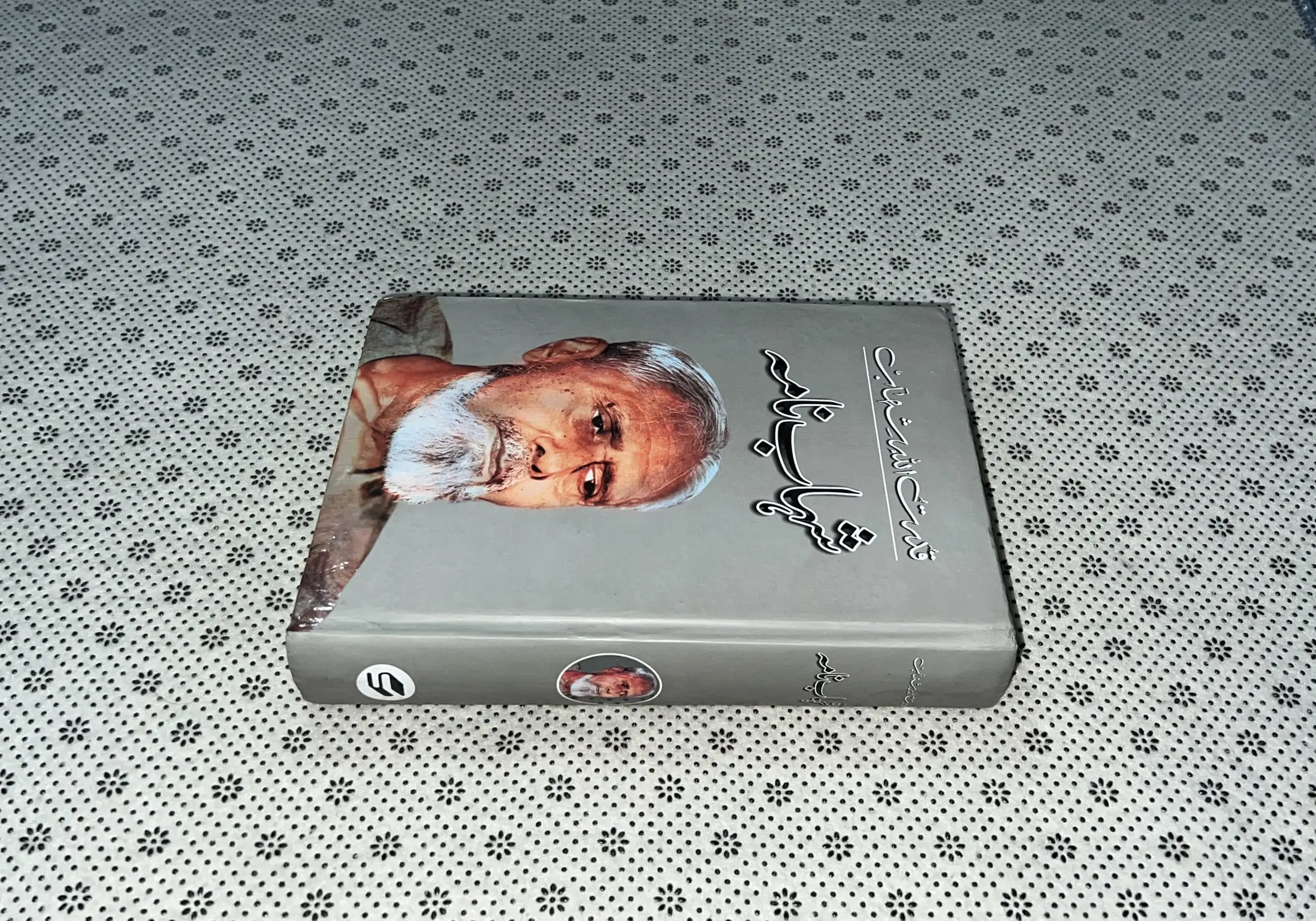
Qudrat Ullah Shahab
civil servant•diplomat•Urdu writer
Also known as: Qudratullah Shahab, The Mystic Bureaucrat
Birthday
February 26, 1917
Birth Sign
Sagittarius
Birthplace
Gilgit
Age
Died at 69
About
Qudrat Ullah Shahab was a distinguished Pakistani civil servant, diplomat, and celebrated Urdu writer who left an indelible mark on the nation's history. Born in Gilgit on February 26, 1917, he carved a unique path by serving as Principal Secretary to three consecutive heads of state: Governor-General Ghulam Muhammad, President Iskander Mirza, and President Ayub Khan. His career extended into high-level diplomacy, notably serving as Pakistan's Ambassador to the Netherlands in 1962, followed by roles as Information Secretary and Education Secretary. Beyond his administrative prowess, Shahab is best remembered for his literary contributions, particularly his candid memoirs that offer an unvarnished look at the early political corridors of Pakistan.
His life ended on July 24, 1986, in Islamabad at the age of 69. Throughout his decades of service, he balanced the demands of high office with a commitment to Urdu literature. Shahab proved that a bureaucrat could also be a compelling storyteller. His work continues to provide valuable context for understanding the political landscape of mid-20th century Pakistan. He is often referred to as a "mystic bureaucrat" due to his deep Sufi influences and his ability to maintain a philosophical outlook while navigating the harsh realities of politics.
Early Life & Background
Qudrat Ullah Shahab was born on February 26, 1917, in Gilgit, which was then part of the princely state of Jammu and Kashmir. He came from a family with deep roots in the region, though specific details regarding his parents' names are not widely documented in public records. His upbringing in Gilgit instilled in him a broad cultural perspective before he moved to pursue higher education. Shahab attended the Aligarh Muslim University, where he earned a Master's degree in English Literature, laying the foundation for his future career in administration and writing. His early interest in literature and Sufism coexisted with his academic pursuits, shaping his "mystic bureaucrat" persona. He joined the Indian Civil Service (ICS) in 1940, which later became the Pakistan Administrative Service after the partition of India in 1947. Before his rise to fame as a writer, Shahab spent decades building a reputation as a capable administrator who understood the inner workings of government. He entered the service of the newly formed Dominion of Pakistan shortly after independence, quickly proving his mettle in a turbulent political environment. His early years were defined by a quiet dedication to duty, far removed from the public eye that would later surround his literary work.
Career Growth
Shahab's professional trajectory is marked by unprecedented access to power. His career milestones include joining the Indian Civil Service (ICS) in 1940 and entering the service of the newly formed Dominion of Pakistan in 1947. He holds the rare distinction of serving as Principal Secretary to Governor-General Ghulam Muhammad (1951–1955), President Iskander Mirza (1955–1956), and President Ayub Khan (1958–1962). This role placed him at the center of decision-making during critical periods, including the imposition of martial law in 1958. In 1962, he was appointed as Pakistan's Ambassador to the Kingdom of the Netherlands, where he served until 1965. He returned to Pakistan to serve as Information Secretary and later as Education Secretary, overseeing educational reforms in the country. He retired from active civil service in the mid-1970s but remained intellectually active, dedicating his time to writing and Sufi practices. His breakthrough as a writer occurred post-retirement, when he began documenting the secrets of the corridors of power. His memoir, Shahab Nama (The Book of Shahab), published in 1986 shortly before his death, became a landmark text in Urdu literature. It provided a satirical yet poignant account of the lives of Pakistan's first leaders, earning him the reputation of a "mystic bureaucrat." Other significant works include Ya Khuda (1972), Surkh Fitah (1963), and Nafsane (1950).
Career Timeline
Public Image & Style
Shahab is portrayed as a man of integrity, intellect, and spirituality. Media portrayals emphasize his "dual nature" as a stern bureaucrat and a gentle poet. His tone in interviews was calm, measured, and often humorous. He is seen as a guardian of Pakistan's democratic history, providing a counter-narrative to official state histories. His legacy is that of a "mystic bureaucrat" who walked the corridors of power without losing his soul. He is respected for his candor in writing about powerful figures like Ayub Khan, offering a glimpse into the private lives of public servants that was previously hidden.
Fame & Fandom (iFAMOUS Rankings)
iFANN has not yet collected fame data for this person. He is not featured in the September 2026 iFAMOUS Rankings flagship list. His admirers are referred to as "readers of Shahab Nama" or simply "fans of Urdu literature." The fanbase is organized around literary societies, universities, and cultural centers in Pakistan. Notable campaigns include the annual reading of Shahab Nama excerpts on his death anniversary and the push to include his works in school curriculums. Fans often share quotes on social media, particularly those related to Sufism and governance. His legacy endures through his writings and the continued recognition of his dual contributions to diplomacy and literature.
Interesting Facts and Legends
Qudrat Ullah Shahab was deeply influenced by Sufism, which colored his writing style and his approach to bureaucracy. He viewed his administrative role as a spiritual duty. The nickname "Mystic Bureaucrat" was coined by critics to reflect his ability to navigate the harsh realities of politics while maintaining a detached, philosophical outlook. Despite being a civil servant, he wrote in a highly sophisticated Urdu style, blending colloquialisms with classical poetry. Even his colleagues knew little about his personal life, adding to the aura of mystery surrounding him. A famous quote attributed to poet Hafeez Jalandhri states, "Jab kahin inqilab hota hai..Qudratullah Shahab hota hai," reflecting Shahab's pivotal role in times of change. The story goes that he wrote Shahab Nama in secret, fearing retribution if his candid accounts of the leaders were discovered. Anecdotes circulate about his witty retorts and his ability to diffuse tense situations with humor, earning him the respect of even the most authoritarian leaders.
Notable Quotes
“Jab kahin inqilab hota hai..Qudratullah Shahab hota hai”
“I am a mystic who walked the corridors of power.”
“The pen is mightier than the sword, but the sword is sharper than the pen.”
Family & Personal Life
Public records regarding Qudrat Ullah Shahab's romantic life are exceptionally sparse. Unlike modern celebrities, Shahab maintained a private personal life, shielding his family from the public eye. There is no publicly available information confirming the name of his wife, the dates of their marriage, or details about any children he may have had. Search queries often ask about his "wife" and "children," but credible sources, including biographical sketches and obituaries, do not disclose these details. Given the era in which he lived and the nature of his profession as a senior civil servant in mid-20th century Pakistan, it is likely that his family life was kept strictly out of the spotlight. No sources mention divorces, engagements, or public relationships. As of his death on July 24, 1986, he was a widower. The lack of information suggests a deliberate choice to separate his public duties from his private domestic sphere. His estate and literary rights continue to be managed by his family, ensuring the continued publication and study of his works.
Notable Connections
Relationships & Dating History
Public records regarding Qudrat Ullah Shahab's romantic life are exceptionally sparse. Unlike modern celebrities, Shahab maintained a private personal life, shielding his family from the public eye. There is no publicly available information confirming the name of his wife, the dates of their marriage, or details about any children he may have had. Search queries often ask about his "wife" and "children," but credible sources, including biographical sketches and obituaries, do not disclose these details. Given the era in which he lived and the nature of his profession as a senior civil servant in mid-20th century Pakistan, it is likely that his family life was kept strictly out of the spotlight. No sources mention divorces, engagements, or public relationships. As of his death on July 24, 1986, he was a widower. The lack of information suggests a deliberate choice to separate his public duties from his private domestic sphere.
Death & Aftermath
Died
July 24, 1986 (aged 69)
Death Place
Islamabad, Pakistan
Cause of Death
Unknown
Qudrat Ullah Shahab passed away on July 24, 1986, in Islamabad at the age of 69. The exact medical cause of his death was never officially disclosed to the public, leaving a gap in the historical record that family members have not filled. His final days were spent working on his magnum opus, Shahab Nama, which was published later that same year and would become his most enduring legacy. There were no massive public vigils immediately following his passing; instead, the nation honored him through steady, annual commemorations by literary circles and government bodies. Tributes consistently highlight his unique dual identity as a mystic and a statesman who navigated the highest levels of power with integrity. While a burial site exists in Islamabad, specific details regarding the funeral attendees or the ceremony itself remain absent from available records. His estate and literary rights continue to be managed by his family, ensuring the continued publication and study of his works. In 2026, the 40th anniversary of his death was observed by various media outlets, reaffirming his status as a national icon whose words still resonate with readers today.
Net Worth (Estate Value)
$1 Million
iFANN Editorial Team estimate
As a civil servant who died in 1986, Qudrat Ullah Shahab does not have a "net worth" in the modern celebrity sense. His wealth was derived from his salary as a high-ranking bureaucrat and diplomat. Estimates suggest he accumulated a modest but comfortable fortune typical of senior ICS officers of that era, primarily invested in real estate and savings. Posthumously, his estate earns revenue through book royalties, licensing of his works, and adaptations. However, specific dollar figures for his net worth or estate value are not publicly disclosed, as financial records of Pakistani civil servants from that period are not public data. Any figure found online would be speculative. The iFANN Editorial Team estimates his estate value at approximately $1 Million based on the enduring value of his literary catalog and the historical significance of his archives.
Awards & Accolades
View 7 records, honours and achievementsKnown For
Shahab Nama
1986 · Author
Principal Secretary to Three Heads of State
1951-1962 · Civil Servant
Ambassador to the Netherlands
1962 · Diplomat
Keywords
Sources
Quick Facts
- Profession
- diplomat, autobiographer
- Born
- February 26, 1917
- Birthplace
- Gilgit
- Died
- July 24, 1986
- Death Place
- Islamabad
- Gender
- Male
- Birth Sign
- Sagittarius
Personal Details
- Full Name
- Qudrat Ullah Shahab
- Education
- Master's degree in English Literature from Aligarh Muslim University
Frequently Asked Questions
Who was Qudrat Ullah Shahab?
Where is Qudrat Ullah Shahab buried?
What are some of the books written by Qudrat Ullah Shahab?
Did Qudrat Ullah Shahab have children?
When did Qudrat Ullah Shahab die?
Similar People
Join the community
fans discussing