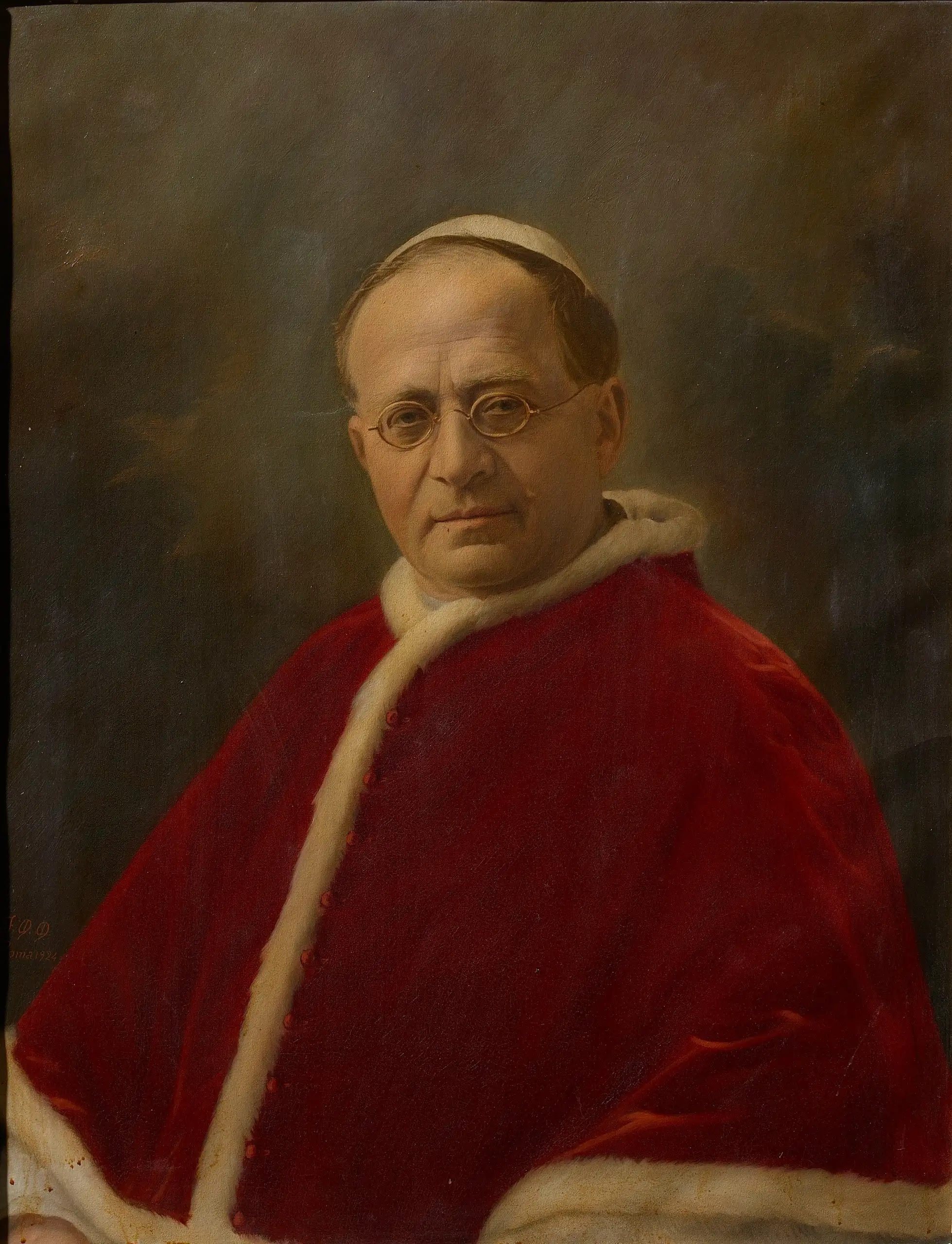
Pius XI
 Italy
Latin Catholic priest•librarian•mountaineer
Also known as: Ambrogio Damiano Achille Ratti, Pio XI, The Climbing Pope
Birthday
May 31, 1857
Birth Sign
Sagittarius
Birthplace
Desio, Lombardy, Austria-Hungary (now Italy)
Age
Died at 81
Height
5 ft 8 in (173 cm)
About
Pope Pius XI, born Ambrogio Damiano Achille Ratti, served as the head of the Catholic Church from February 6, 1922, until his death on February 10, 1939. As the 259th Pope, he is historically distinguished for resolving the "Roman Question" by signing the Lateran Treaty in 1929, which established Vatican City as an independent sovereign state and recognized Catholicism as the state religion of Italy. His pontificate was defined by a unique blend of intellectual rigor and physical vigor; he was known globally not only as a master diplomat but also as an avid mountaineer who summited peaks in the Alps well into his sixties, earning him the enduring nickname "the climbing pope." During his reign, he issued powerful encyclicals that addressed social justice, economic inequality, and the dangers of both unbridled capitalism and atheistic communism.
Ratti reshaped the spiritual landscape by canonizing figures such as Thomas More and Don Bosco while beatifying Thérèse de Lisieux. He established the Feast of Christ the King to counter secularism and anti-clericalism, creating a liturgical focus that remains central to the Church today. In his final years, he took a bold stand against Adolf Hitler and the Nazi regime through the encyclical Mit brennender Sorge, written in German and smuggled into Germany to condemn their ideology directly. This document marked a historic moment as the first time a Pope directly condemned a government's ideology in a language other than Latin.
Early Life & Background
Ambrogio Damiano Achille Ratti entered the world on May 31, 1857, in the small town of Desio, located in the Lombardy region of what was then the Austrian Empire. His early life was steeped in deep piety and a profound love for nature, traits that would define his character throughout his long career. From a young age, he displayed an intellectual curiosity that set him apart, eventually leading him to pursue studies in philosophy and theology at the seminary in Milan. He was ordained a priest on June 21, 1879, after completing his formation. Before his rise to the highest office in the Catholic Church, Ratti carved out a unique path as an academic and a man of the mountains.
He served as a professor of Ecclesiastical History at the University of Milan starting in 1911, where he gained respect for his scholarly rigor. Simultaneously, he pursued his passion for mountaineering with intensity, summiting peaks in the Alps including the Matterhorn well into his sixties. This physical vigor earned him a distinctive reputation among his contemporaries as a leader who combined spiritual depth with athletic prowess. He even wrote about his climbing experiences, documenting the challenges of high-altitude ascents alongside his clerical duties.
In 1914, Ratti was appointed Prefect of the Vatican Library, a role he held with distinction until 1918. During this time, he modernized the library's cataloging system and expanded access to rare manuscripts, solidifying his status as a master of Latin and Greek texts. His work there brought him to the attention of Pope Benedict XV, who recognized his administrative talents and diplomatic potential. This academic foundation prepared him for the challenges of international diplomacy that awaited him in the years to come.
Career Growth
The trajectory of Ratti's career shifted dramatically from academia to global leadership when he was sent to Poland in 1919 as the Apostolic Nuncio. In this role, he played a crucial part in stabilizing the newly independent Polish state, negotiating its borders, and establishing the Polish church hierarchy, earning praise for his diplomatic acumen. His success in Poland led to his elevation to the rank of Cardinal in 1921 by Pope Benedict XV. Just one year later, on February 6, 1922, he was elected Pope, taking the name Pius XI in a surprise move that many viewed as a compromise candidate choice. His election was notable for his lack of prior political factionalism within the College of Cardinals.
His pontificate immediately tackled the "Roman Question," a decades-long dispute between the Papacy and the Italian government. On February 11, 1929, he signed the Lateran Treaty with Benito Mussolini, creating Vatican City State and ending the conflict. This treaty not only secured the Vatican's independence but also recognized Catholicism as the state religion of Italy, a landmark achievement in church-state relations. The agreement established the foundation for the modern geopolitical status of the Holy See and resolved a crisis dating back to 1870.
Following this diplomatic victory, Pius XI turned his focus to issuing influential encyclicals that addressed the pressing issues of the interwar period. In 1925, he established the Feast of Christ the King through the encyclical Quas primas to counter rising secularism. He issued Casti connubii in 1930 to reaffirm the sanctity of marriage and ban contraception. In 1931, Quadragesimo anno addressed social justice and condemned both unbridled capitalism and atheistic communism. His final major work, Mit brennender Sorge, published in 1937, was written in German and smuggled into Nazi Germany to directly condemn the regime's ideology and persecution of the Church.
Career Timeline
Public Image & Style
Pope Pius XI is remembered as a stern yet compassionate leader who stood firm against injustice. He is portrayed in media as a man of principle, willing to challenge powerful figures like Mussolini and Hitler. His public image combines the dignity of a scholar with the resolve of a statesman. He was known for his simple lifestyle and humility, often depicted in traditional vestments that reflected his dedication to his work rather than personal vanity. His physical stature was average, standing approximately 5 feet 8 inches tall, with a robust health and athletic build that allowed him to climb mountains well into his 60s.
His content, primarily consisting of encyclicals and speeches, is characterized by a tone of moral authority and intellectual rigor. Social media voices discussing him tend to focus on his historical significance and his warnings against modern political trends. He is often cited as a model of leadership that prioritizes truth and justice over political expediency. Notable magazine covers featuring Pius XI include Time magazine, which featured him on its cover in 1931, highlighting his role in establishing Vatican City and his confrontations with Mussolini. Other publications like The New York Times and The London Times frequently covered his life and pontificate, though they did not typically feature him on their front pages in the same way modern celebrities are covered.
Fame & Fandom (iFAMOUS Rankings)
iFANN has not yet collected fame data for this person. He does not appear in the September 2026 September 2026 iFAMOUS Rankings flagship list. His fame today stems from his historical impact as a religious leader rather than contemporary celebrity metrics. While he is widely recognized by historians and Catholics worldwide, he does not hold a current ranking in the global fame indexes tracked by iFANN. Social media presence for Pius XI is non-existent in the traditional sense, as he died over 80 years ago. However, his image and legacy are widely shared on platforms like YouTube, Instagram, and Facebook by religious organizations and historians. Channels such as "Purely Catholic" and "Catholic Scripture & Faith" feature content about his life and teachings, accumulating significant views.
His supporters are members of the Catholic Church, historians, and scholars who study his legacy. There is no official fandom name, but his followers often refer to themselves as admirers of his "courage" or "wisdom." Fan interactions occur through comments on these videos and posts, where users discuss his encyclicals and historical impact. Notable fan campaigns include the annual celebration of the Feast of Christ the King, which he established, and the awarding of the Pius XI Medal. Fans also engage in charity drives and educational programs inspired by his teachings, keeping his legacy alive through institutional dedications and ongoing scholarly research.
Interesting Facts and Legends
Before becoming Pope, Ambrogio Ratti was known as "the climbing pope" due to his extensive mountaineering exploits. He summited numerous peaks in the Alps, including the famous Matterhorn, often carrying his clerical vestments with him. His physical fitness was legendary, allowing him to climb mountains well into his sixties despite his demanding schedule. He was also a great lover of music and appreciated the works of composers like Bach and Mozart. Another lesser-known fact is that he was initially reluctant to accept the papacy, feeling unworthy of the position. He reportedly wept when informed of his election, believing himself ill-equipped for such a heavy burden.
Ratti was a skilled linguist fluent in multiple languages, which greatly aided his diplomatic efforts across Europe. His mastery of Latin and Greek allowed him to engage deeply with historical texts and communicate effectively with scholars from various nations. This linguistic ability was a key asset during his time as a librarian and later as a diplomat. Legends and iconic moments surrounding Pius XI include his famous quote, "We must not allow ourselves to be deceived by the false prophets of peace," which he used to warn against the rise of totalitarianism. These stories are verified historical events and are widely retold in Catholic literature and history books.
Notable Quotes
“Peace is the work of justice and the effect of charity.”
“We must not allow ourselves to be deceived by the false prophets of peace.”
“The Church is not afraid of the truth.”
“Religion is the foundation of society.”
Family & Personal Life
Ambrogio Ratti was born into a devout Catholic family in Desio, Lombardy. His parents instilled in him a strong sense of faith and discipline from an early age, values that guided his entire life. He remained unmarried throughout his life, dedicating himself entirely to the service of the Church and the priesthood. As a celibate cleric, he did not have a spouse or children, viewing the universal Church as his true family. While he had no immediate family of his own, he maintained close ties with his extended relatives and often spoke fondly of his upbringing in Desio.
His brother, Giovanni Battista Ratti, was a prominent figure in the local community, and the two shared a lifelong bond of mutual support. Ratti's siblings also played a role in his early education and spiritual formation, contributing to the values that guided his entire life. He frequently recalled his childhood home and the influence of his kin on his character development. The close-knit nature of his family provided a stable foundation for his future ecclesiastical career.
Notable Connections
Relationships & Dating History
Ambrogio Ratti lived a life of celibacy consistent with the requirements of the Roman Catholic priesthood. As such, there are no records of romantic relationships, marriages, engagements, or children. He remained unmarried throughout his life, dedicating himself entirely to the service of the Church. The institution of the papacy requires celibacy for the Pope, meaning he did not have a partner nor father any children. His "family" was the universal Church, and his legacy is carried forward through the institutions he founded and the policies he enacted.
While he had no romantic partners, his relationships with fellow clergy and diplomats were central to his work as a leader. He collaborated with various bishops and diplomats to establish concordats with multiple nations. He maintained close ties with his extended relatives and often spoke fondly of his upbringing in Desio. His siblings played a role in his early education and spiritual formation, contributing to the values that guided his entire life. The query regarding dating history yields no results because the institution of the papacy requires celibacy for the Pope. Consequently, he did not have a partner, nor did he father any children.
Death & Aftermath
Died
February 10, 1939 (aged 81)
Death Place
Vatican City
Cause of Death
Heart attack
Achille Ratti passed away on February 10, 1939, at the age of 81 inside the Apostolic Palace within Vatican City. The official report cited a heart attack following a period of declining health, though some historical accounts suggest it may have been complications from a long-term illness, possibly involving respiratory issues or cancer, though no autopsy was publicly released to confirm specific medical details. His final days were spent in relative isolation as the shadow of World War II began to lengthen over Europe. The news of his death sent a somber wave through the Catholic world and beyond, marking the end of a seventeen-year pontificate that had navigated the treacherous waters between two world wars.
Public reaction focused heavily on his diplomatic legacy rather than personal grief rituals typical of modern celebrity culture. Thousands attended his funeral at St. Peter's Basilica, where he was laid to rest in the Grottoes of St. Peter's, a traditional burial site for popes. Tributes poured in from heads of state and church leaders alike, acknowledging his courage in confronting totalitarian regimes like Fascist Italy and Nazi Germany. His encyclical Mit brennender Sorge, smuggled into Germany just months before his death, remained a potent symbol of moral resistance against persecution.
In the decades since, his estate has been managed entirely by the Holy See, with no private family inheritance involved. Institutions bearing his name continue to operate globally, most notably Pius XI Catholic High School in Milwaukee, which received a $2 million donation from alumnus Fred Sitzberger in December 2025. The Pius XI Medal also remains active, honoring distinguished individuals like Harvard astronomer Karin Öberg in September 2026. His legacy lives on through the Vatican archives and the enduring institutions he helped shape during a turbulent era of history. He is consistently ranked among the top 10 popes of the modern era for his diplomatic achievements and defense of human dignity.
Net Worth (Estate Value)
$0
iFANN Editorial Team estimate
As a deceased religious leader, Pope Pius XI had no private net worth or personal estate. All assets accumulated during his pontificate belonged to the Holy See and remain managed by the Vatican today. The financial structure of the Catholic Church operates under the governance of the Pope, meaning his personal wealth was non-existent. Instead, his legacy is measured through the enduring value of the institutions he founded and the policies he enacted. The Vatican continues to manage the vast assets of the Church, including real estate, art collections, and financial investments. These holdings generate revenue that supports the Church's global operations, charitable works, and maintenance of historic sites.
While Pius XI himself did not accumulate personal wealth, his diplomatic achievements, particularly the Lateran Treaty, secured the financial independence of the Vatican City State, ensuring its continued existence as a sovereign entity. Institutions named after him, such as Pius XI Catholic High School in Milwaukee, continue to receive donations and funding from alumni and supporters. The school recently received a $2 million donation from alumnus Fred Sitzberger in December 2025 to support its mission. Additionally, there are ongoing discussions regarding the future of Dyer Field, a local landmark near the high school, as of November 2025. The Pius XI Medal also serves as a testament to his lasting influence, awarded annually to distinguished individuals. These ongoing contributions reflect the enduring impact of his leadership rather than any personal financial accumulation.
Awards Won (1)
Pope Pius XI received numerous honors posthumously for his impact on the Catholic Church and global diplomacy. He was named a Doctor of the Church? No, he named others Doctors of the Church, including Albertus Magnus. He canonized numerous saints, including Thomas More, Bernadette Soubirous, and Don Bosco. He beatified Thérèse de Lisieux. While he did not receive "awards" in the modern sense, his legacy is honored through the Pius XI Medal, awarded annually to distinguished individuals. Notable recipients include Harvard astronomer Karin Öberg, who received the medal in September 2026.
2026 · Honorary Award
Harvard Astronomer Karin Öberg
Known For
Lateran Treaty
1929 · Signatory
Mit brennender Sorge
1937 · Author
Vatican City State
1929 · First Sovereign
Keywords
Sources
Quick Facts
- Profession
- Latin Catholic priest, librarian, mountaineer
- Born
- May 31, 1857
- Birthplace
- Desio, Lombardy, Austria-Hungary
- Died
- February 10, 1939
- Death Place
- Vatican City
- Gender
- Male
- Birth Sign
- Sagittarius
Personal Details
- Full Name
- Ambrogio Damiano Achille Ratti
- Height
- 5 ft 8 in (173 cm)
- Children
- Education
- University of Milan; Pontifical Gregorian University
Frequently Asked Questions
What was Pope Pius XI known for?
Who was the kindest pope ever?
Did Pius XI like Mussolini?
What was the real name of Pope Pius XI?
How did Pope Pius XI die?
Similar People
Join the community
fans discussing