Benito Mussolini
 Italy
Italypolitician•journalist•dictator
Also known as: Il Duce, Benito Amilcare Andrea Mussolini
Birthday
July 29, 1883
Birth Sign
Sagittarius
Birthplace
Predappio, Italy
Age
Died at 61
Height
5 ft 8 in (173 cm)
About
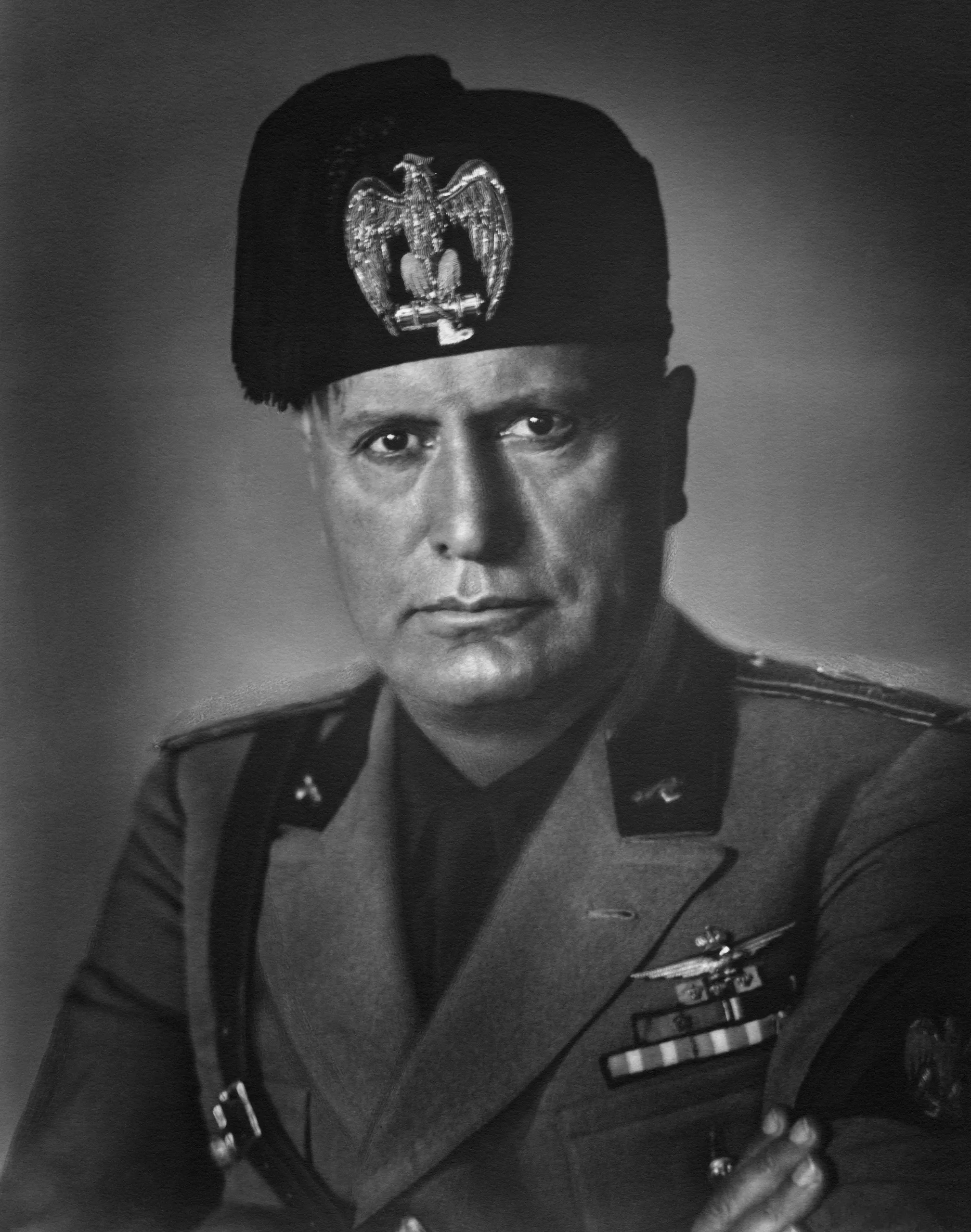
Benito Amilcare Andrea Mussolini (29 July 1883 – 28 April 1945) was an Italian politician, journalist, and the founder of fascism who served as the Prime Minister of Italy from 1922 until his dismissal in 1943. Known universally as "Il Duce" (The Leader), he established a totalitarian dictatorship that aligned Italy with Nazi Germany during World War II. His rule ended with his capture by Italian partisans and subsequent execution in 1945. Standing approximately 5 feet 8 inches tall with a lean, athletic build, he cultivated a persona of virility and strength through military-style uniforms adorned with medals. His aesthetic included sharp gestures and an intense gaze that became synonymous with authoritarianism globally. He held state titles such as "Founder of Fascism" and "Commander-in-Chief," receiving honors like the Silver Medal of Military Valor and the Iron Cross for his service in WWI. As a political figure rather than an entertainer, he does not appear on cultural lists like Rolling Stone's greatest singers, yet his influence remains profound in historical retrospectives of the 20th century.
Early Life & Background
Mussolini was born on 29 July 1883 in Predappio, a small village in the Romagna region of Italy. He was the son of Alessandro Mussolini, a blacksmith and fervent socialist journalist, and Rosa Maltoni, a primary school teacher. The household environment was politically charged; his father's socialist leanings influenced Benito's early political awakening, while his mother's influence provided him with a basic education before he attended boarding schools. He attended the Salesian College in Faenza and later the State Normal School in Fiume, where he began to display a charismatic and aggressive personality. In his youth, he worked as a schoolteacher and a journalist, eventually becoming a prominent voice for the Italian Socialist Party (PSI) before being expelled for advocating intervention in World War I. Prior to his rise as a dictator, he edited Avanti!, the official newspaper of the PSI, but his support for Italy's entry into World War I led to his expulsion from the party in 1914. He founded Il Popolo d'Italia in November 1914 to promote nationalist interventionism. During the war, he served in the Royal Italian Army, rising to the rank of corporal before being wounded by a mortar explosion in 1917 and discharged. Following the war, he capitalized on the social unrest and economic instability in Italy to launch his political career, founding the Fasci Italiani di Combattimento in March 1919, which evolved into the National Fascist Party (PNF) in 1921.
Career Growth
Mussolini's ascent to power is marked by several pivotal chronological milestones: elected to the National Directorate of the Italian Socialist Party in 1912; expelled from the PSI for pro-war advocacy and founded Il Popolo d'Italia in 1914; founded the Fasci Italiani di Combattimento in March 1919, the precursor to fascism; reorganized as the National Fascist Party (PNF) in 1921. In October 1922, he orchestrated the "March on Rome," a mass mobilization of Blackshirts, leading to his appointment as Prime Minister by King Victor Emmanuel III. He formally declared himself dictator in 1925 after eliminating opposition and outlawing other political parties. In 1929, he signed the Lateran Treaty with the Vatican, establishing Vatican City and resolving the "Roman Question." In 1935, he ordered the invasion of Ethiopia, leading to international condemnation and League of Nations sanctions. He formed the Rome-Berlin Axis with Adolf Hitler in 1936 and signed the Pact of Steel with Germany in 1939, subsequently invading Albania. Italy entered World War II in June 1940 on the side of the Axis Powers. In July 1943, he was overthrown by the Grand Council of Fascism and arrested by the King. Rescued by German commandos in the Gran Sasso raid in September 1943, he led the Italian Social Republic (Salò Republic), a puppet state in northern Italy, until his capture and execution by partisans in April 1945.
Career Timeline
Public Image & Style
Mussolini's public image was carefully curated as the embodiment of strength, virility, and national rebirth. Media portrayals during his regime depicted him as a superhuman leader capable of solving all of Italy's problems. His aesthetic included military-style uniforms adorned with medals, sharp gestures, and an intense gaze that became synonymous with authoritarianism globally. Post-war imagery shifted dramatically to depict him as a tyrant and a failure, yet his visual legacy remains a potent symbol of fascist ideology. He was a constant presence on international covers, particularly TIME Magazine between 1922 and 1940, often highlighting his role as "Il Duce" and the rise of fascism in Europe. While rarely featured in fashion magazines like Vogue compared to political outlets, his distinctive style was occasionally noted. L'Illustrazione Italiana was dominated by his image throughout the 1920s and 30s as state propaganda. His famous quotes, such as "Everything within the state, nothing outside the state, nothing against the state," defined the era's ideological landscape.
Fame & Fandom (iFAMOUS Rankings)
iFANN has not yet collected fame data for this person. While there is no legitimate fandom in the traditional sense of fans supporting a cultural icon, a niche group of neo-fascist admirers and historians study his regime. Some far-right groups visit Predappio annually to honor him, treating his tomb as a shrine, an act widely condemned by mainstream society and Italian law which prohibits the glorification of fascism. There are no organized fan campaigns or charity drives associated with him; any activity is political activism rather than fandom. The recent participation of his granddaughter, Alessandra, in reality TV has brought the name back into mainstream conversation, specifically winning Italy's Grande Fratello VIP in May 2026 with a prize of €116,000. Her victory sparked significant media attention regarding the continued visibility of the Mussolini name in Italian pop culture. Articles published in August 2026 discuss the "ghost" of Mussolini, analyzing why his legacy persists in parts of Italy despite his crimes. New evidence published in 2026 regarding assassination plots against him has been highlighted in academic circles, shedding light on anti-fascist resistance efforts. Any admiration is viewed more as a curiosity or political statement than genuine admiration for the dictator himself.
Interesting Facts and Legends
Before his political career took hold, Mussolini was an avid boxer who participated in amateur bouts to maintain his physical fitness and aggressive persona. He spoke fluent English, French, and German, often quoting Shakespeare and Nietzsche in his speeches to project an image of intellectual depth. The uniform of his militia, the Squadristi, featured black shirts designed to symbolize the "black flag" of revolution and intimidate opponents. He owned a dog named Cesare which frequently accompanied him in official photographs. A notable propaganda campaign known as the "Battle of Wheat" claimed to have significantly increased grain production, though historical analysis suggests these figures were largely exaggerated to bolster his image as a man of action. During WWI, he was wounded by a mortar shell at the Battle of Ceva, an event he used to bolster his image as a soldier-hero. The public display of his body hanging upside down in Piazzale Loreto in Milan is one of the most iconic images of the end of WWII, serving as a graphic symbol of the fall of fascism. Common slogans attributed to the regime include "Believe, obey, fight" and "War is to man what maternity is to woman." No verified digital footprint exists for the individual, though his name is frequently associated with online discussions and memes regarding WWII.
Notable Quotes
“Believe, obey, fight.”
“Everything within the state, nothing outside the state, nothing against the state.”
“War is to man what maternity is to woman.”
Family & Personal Life
Mussolini's family life was centered around his long-term partnership with Rachele Guidi, whom he met in Forlì around 1908 when she was a waitress and he was a student activist. They entered a common-law partnership shortly thereafter and lived together since their early twenties. Although they officially married in 1915 after he had been imprisoned for his anti-war stance, this was his only public and legally recognized marriage. They had five children: Edda, Vittorio, Bruno, Romano, and Anna Maria. Rachele remained loyal throughout his exile and imprisonment, visiting him in prison and accompanying him to the Salò Republic. She survived him, living until 1979. He also had a secret relationship with Ida Dalser, a Venetian woman he met in 1914. They had a son, Benito Albino Mussolini, born in 1915. Mussolini denied the relationship publicly and forced her into psychiatric institutions, effectively erasing her existence from the public record until historical research uncovered the story decades later. This relationship ended through coercion and legal suppression rather than mutual separation.
Notable Connections
Rachele Guidi, Ida Dalser, Clara Petacci, Adolf Hitler, King Victor Emmanuel III, Alessandra Mussolini
Relationships & Dating History
Mussolini's romantic history was defined by his long-term partnership with Rachele Guidi and coerced secret relationships with others. He met Rachele in Forlì around 1908 when she was a waitress and he was a student activist. They entered a common-law partnership shortly thereafter and eventually married officially in 1915 after Mussolini had been imprisoned for his anti-war stance. They had five children together: Edda, Vittorio, Bruno, Romano, and Anna Maria. Rachele remained loyal to him throughout his exile and imprisonment, visiting him in prison and accompanying him to the Salò Republic. She survived him, living until 1979. In 1914, Mussolini met Ida Dalser, a Venetian woman. They had a son, Benito Albino Mussolini, born in 1915. Mussolini denied the relationship publicly and forced her into psychiatric institutions, effectively erasing her existence from the public record until historical research uncovered the story decades later. This relationship ended through coercion and legal suppression rather than mutual separation. In 1936, Clara Petacci, also known as Claretta, became Mussolini's mistress. Their relationship lasted until his death. She accompanied him during his flight from Milan in April 1945. Both were captured by partisans near Lake Como and executed on 28 April 1945. Petacci was reportedly pregnant at the time of her death, though the paternity remains a subject of historical debate. As of 2026, he is widowed posthumously, having died alongside his mistress.
- MarriedRachele Guidi1908 - 1945Met in 1908; married officially in 1915; had five children.
- DivorcedIda Dalser1914 - 1915Secret relationship; had one son; forcibly institutionalized by Mussolini.
- DatedClara Petacci1936 - 1945Mistress; executed alongside Mussolini in 1945.
Death & Aftermath
Died
April 28, 1945 (aged 61)
Death Place
Giulino di Mezzegra, Lombardy, Italy
Cause of Death
Execution by firing squad
The bodies of Benito Mussolini and Claretta Petacci were hung upside down at Milan's Piazzale Loreto on April 29, 1945. This public display followed their execution by a partisan firing squad the previous afternoon near Villa Belmonte in Giulino di Mezzegra, a village on the western shore of Lake Como. On the morning of April 28, 1945, Walter Audisio, operating under the pseudonym Colonel Valerio, shot both men after they had been captured the day before while attempting to flee to Switzerland disguised as German soldiers.
Mussolini's final public appearance occurred just days earlier on April 25, when he broadcast a radio message from Milan urging continued resistance before his capture. The bodies were subsequently buried in an unmarked grave at Musocco cemetery until Mussolini's mother exhumed them in 1946 for identification via dental records. He was then laid to rest in the family crypt in Predappio, his birthplace. Fascist propaganda was immediately banned and destroyed, while the site of his death remains a point of contention rather than a memorial.
Net Worth (Estate Value)
$0
iFANN Editorial Team estimate
As a deceased historical figure whose assets were largely seized or dispersed upon his death in 1945, Benito Mussolini does not have a current net worth in the traditional sense. Upon his death, his assets were confiscated by the Italian state, and his property in Predappio was seized. There are no active revenue streams managed by a central estate comparable to modern celebrities. Royalties from books about him or films featuring him go to publishers and production companies, not a family trust. While the town of Predappio has become a site of pilgrimage for neo-fascists generating tourism revenue, this income is not attributed to a personal estate. As of 2026, no credible sources estimate a net worth for a deceased dictator whose assets were liquidated nearly 80 years ago. His estate status remains N/A, with no current romantic partners or dating history beyond his death alongside his mistress Clara Petacci. The financial legacy is purely historical, with no ongoing management of wealth by descendants or trusts.
Awards & Accolades
View 8 records, honours and achievementsKnown For
The Rise of Fascism
1919 · Founder
World War II
1940 · Axis Leader
Keywords
Sources
Quick Facts
- Profession
- journalist, teacher, politician
- Born
- July 29, 1883
- Birthplace
- Predappio
- Died
- April 28, 1945
- Death Place
- Giulino
- Gender
- Male
- Spouse
- Rachele Guidi, Ida Dalser
- Birth Sign
- Sagittarius
Personal Details
- Full Name
- Benito Amilcare Andrea Mussolini
- Height
- 5 ft 8 in (173 cm)
- Spouse
- Rachele Guidi
- Children
- Edda Mussolini · Vittorio Mussolini · Bruno Mussolini · Romano Mussolini · Anna Maria Mussolini
- Education
- Salesian College, State Normal School in Fiume
Frequently Asked Questions
Who was Benito Mussolini?
How did Benito Mussolini die?
Who was Benito Mussolini's wife?
Did Benito Mussolini have grandchildren?
Why is Benito Mussolini still talked about in 2026?
Similar People
Join the community
fans discussing