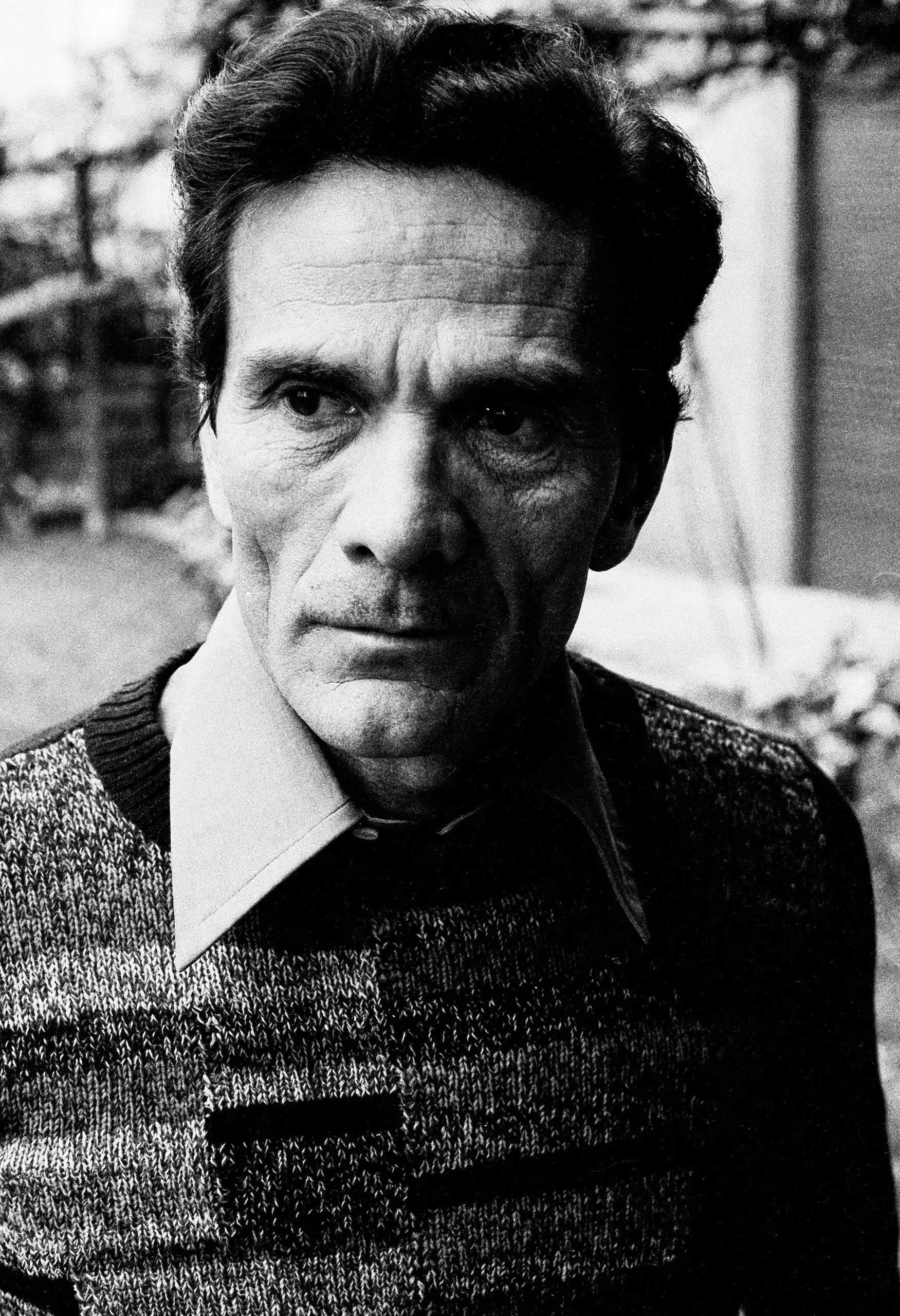
Pier Paolo Pasolini
 Italy
Italyfilm director•poet•novelist•playwright•journalist
Also known as: P.P. Pasolini, Il Poeta dei Mille
Birthday
March 5, 1922
Birth Sign
Pisces
Birthplace
Bologna, Italy
Age
Died at 53
Height
5 ft 10 in (1.78 m)
About
Pier Paolo Pasolini was an Italian poet, novelist, playwright, journalist, and film director who became one of the most influential and controversial public intellectuals of the 20th century. Standing approximately 1.78 meters (5 ft 10 in) tall, he cultivated a distinctive public persona characterized by a full beard, dark glasses, and a style that blended bohemian chic with working-class practicality. His work is defined by a unique aesthetic that juxtaposed sacred imagery with the gritty reality of the urban underclass, often utilizing non-professional actors to emphasize authenticity over polish. A self-proclaimed Marxist who famously stated, "I am a revolutionary, but I am also a conservative," he remained a polarizing figure who challenged societal norms, authority figures, and the Americanization of culture.
His career history is marked by a series of bold, often polarizing projects that defied easy categorization. From his early literary prodigy status to his final, controversial films, he left an indelible mark on global culture. He was a master of the interview, delivering sharp, biting commentary on politics, culture, and art, while his content—whether in film or prose—refused to compromise on taboo subjects like sex, violence, and religious iconography. Despite facing censorship and criticism, he maintained a loyal following among intellectuals and artists who admired his courage. His legacy endures as a testament to the power of art to challenge, provoke, and inspire, with his films continuing to be studied, screened, and debated globally decades after his death.
Early Life & Background
Pier Paolo Pasolini was born on March 5, 1922, in Bologna, Italy, to Carlo Alberto Pasolini, a lieutenant colonel in the Italian army, and Susanna Colussi, from a middle-class background. Due to his father's service, the family moved frequently, spending much of his childhood in the Friuli region, a remote area in northeastern Italy where he developed a deep affection for the local dialect and rural traditions. This environment shaped his worldview, instilling a reverence for pre-industrial cultures that would later clash with his critique of modern consumerism. He attended the University of Bologna, initially studying literature before shifting his focus to poetry and politics.
By age 19, he had already published his first collection of poems, I Malpensieri (The Troubled Thoughts), establishing himself as a literary prodigy. In 1942, he published his first poem, marking the start of his literary career, and in 1955, he released Ragazzi di vita (Life for Boys), which depicted the lives of Roman street urchins in raw, vernacular language. Before achieving fame in film, Pasolini was deeply immersed in the intellectual and political ferment of post-war Italy. A self-proclaimed Marxist who broke with the Communist Party in 1949 over ideological differences, he became a vocal critic of the emerging consumer society. Before this moment, he worked as a teacher and struggled to find his footing, but his unique voice eventually resonated with critics. The period leading up to his cinematic debut was characterized by intense political activism and a growing reputation as a radical thinker who refused to compromise his artistic integrity.
Career Growth
Pasolini's transition to filmmaking began in the late 1950s, adapting his own works into films like Accattone (1961), his first feature which established his cinematic voice by focusing on the marginalized underbelly of Rome. His breakthrough arrived in 1964 with The Gospel According to St. Matthew, a stark, black-and-white adaptation of the New Testament that won him international acclaim and solidified his reputation as a serious artist. The film's success allowed him greater creative freedom to explore complex themes of spirituality and sexuality. Following this, he directed Teorema (1968), a surreal allegory about a mysterious visitor who disrupts a bourgeois family.
In the early 1970s, he created the "Trilogy of Life": The Decameron (1971), The Canterbury Tales (1972), and Arabian Nights (1974). These films were celebrated for their bawdy humor, sexual openness, and celebration of human vitality, standing in stark contrast to his earlier, more somber works. They showcased his ability to blend classical storytelling with a vibrant, earthy energy. His final film, Salò, or the 120 Days of Sodom (1975), based on the Marquis de Sade's novel, depicted extreme sadism and torture in fascist Italy. Its graphic content led to immediate bans and censorship, but it cemented his reputation as a fearless, uncompromising artist willing to confront the darkest aspects of human nature and power. Tragically, his career was cut short when he was murdered later that same year, leaving behind a body of work that continues to challenge and inspire filmmakers and scholars worldwide.
Career Timeline
Public Image & Style
Pier Paolo Pasolini cultivated a public persona as a radical intellectual and provocateur who challenged societal norms and authority figures. Known for his distinctive appearance, often seen with a beard, wearing dark glasses, and dressed in a style that blended bohemian chic with working-class practicality, he became an iconic image of the bohemian intellectual. His public image was that of a fierce critic of the Italian petite bourgeoisie and the Americanization of culture, making him a polarizing figure in post-war Italy. He was a master of the interview, often delivering sharp, biting commentary on politics, culture, and art.
His content, whether in film or prose, was characterized by a raw, unfiltered tone that refused to compromise. Pasolini's willingness to tackle taboo subjects, including sex, violence, and religious iconography, made him a target of censorship and criticism. Despite the controversy, he maintained a loyal following among intellectuals and artists who admired his courage and authenticity. His legacy as a visionary artist who dared to confront the darkest aspects of human nature continues to resonate today. He famously remarked, "The world is changing, and I am not ready to accept it," highlighting his resistance to modern consumer culture and his complex political stance as someone who was always ahead of his time.
Fame & Fandom (iFAMOUS Rankings)
iFANN has not yet collected fame data for this person. As of September 2026, there is no published ranking for Pier Paolo Pasolini in the global fame index. The absence of data reflects the fact that he passed away decades ago, and modern fame metrics typically focus on living celebrities with active digital footprints. Fandom around Pasolini is less organized in the traditional sense compared to pop stars, but there is a dedicated community of cinephiles, scholars, and activists who study his work. While iFANN data does not document a specific formal name for this group, they often refer to themselves as "Pasolinians" or simply fans of Italian neorealism.
Notable fan campaigns include efforts to restore and screen his banned films, particularly Salò, and to keep the memory of his murder alive through academic conferences and exhibitions. One recent example is the 2026 exhibition in Tuscany celebrating his painting, showing that his artistic reach extends beyond film. Fans also engage in discussions about his political views and the mystery of his death, keeping the conversation vibrant decades after his passing. The 50th anniversary of his murder in 2025 prompted renewed media coverage and scholarly analysis, ensuring his story remains relevant. Rare screenings of Salò continue to draw attention, sparking debates about censorship and artistic freedom among this dedicated community.
Interesting Facts and Legends
Pier Paolo Pasolini was a linguistic purist who famously advocated for the preservation of regional dialects in Italy, particularly Friulian, which he spoke fluently and used in his poetry. He was also a skilled painter, creating over 1,000 works of art that are now housed in various museums, including a major exhibition in Tuscany in 2026. Despite his reputation as a radical leftist, he held conservative views on certain cultural issues, often criticizing the homogenizing effects of mass media and consumerism. He was known for his distinctive appearance, often seen with a beard and dark glasses, which became part of his iconic image as a bohemian intellectual.
One of the most enduring legends surrounding Pasolini involves his relationship with the young actor Ninetto Davoli, who appeared in many of his films. Fans often speculate about the depth of their bond, with some believing it was a romantic partnership while others view it as a purely professional collaboration. Pasolini was also known for his sharp wit and ability to engage in heated debates with critics, often using interviews as a platform to challenge prevailing social norms. His influence extends beyond cinema, impacting literature, theater, and political discourse in Italy and beyond. Collaborators like cinematographer Tonino Delli Colli helped shape his visual style, and he often worked with actors like Silvana Mangano and Massimo Girotti. His quotes, such as "I am a revolutionary, but I am also a conservative," capture his essence as a thinker who was always ahead of his time.
Notable Quotes
“I am a revolutionary, but I am also a conservative.”
“The world is changing, and I am not ready to accept it.”
“I believe in the power of art to change the world.”
“Cinema is the truth of the world.”
Family & Personal Life
Pier Paolo Pasolini was born into a military family in Bologna, Italy, in 1922. His father, Carlo Alberto Pasolini, was a lieutenant colonel in the Italian army, and his mother, Susanna Colussi, came from a middle-class background. The family moved frequently due to his father's service, spending significant time in the Friuli region, where Pasolini developed a strong attachment to the local culture and dialect. He had a younger brother, Guido, who also pursued a career in the arts, though less prominently. Pasolini never married and had no children, dedicating his life to his work and political activism.
His personal life was dominated by his sexuality and his intense political engagement. Openly gay at a time when homosexuality was illegal and heavily stigmatized in Italy, Pasolini lived openly with several male partners. His most significant relationship was with Ninetto Davoli, a young actor and model whom Pasolini discovered and featured in many of his films. Their relationship, which began in the late 1960s and lasted until Pasolini's death in 1975, was both romantic and professional. Davoli served as a muse and frequent co-star, appearing in key roles in The Decameron, Arabian Nights, and other films. Before Davoli, Pasolini had relationships with other men, including the writer and actor Franco Citti, though these were less documented and shorter in duration. There are no credible reports of marriages, engagements, or divorces. As of his death in 1975, his status was that of a widower in the sense that his partner survived him, but he remained unmarried throughout his life.
Notable Connections
Ninetto Davoli, Franco Citti, Silvana Mangano, Massimo Girotti, Tonino Delli Colli
Relationships & Dating History
Pier Paolo Pasolini never married and had no children. His personal life was dominated by his sexuality and his intense political activism. Openly gay at a time when homosexuality was illegal and heavily stigmatized in Italy, Pasolini lived openly with several male partners. His most significant and long-term relationship was with Ninetto Davoli, a young actor and model whom Pasolini discovered and featured in many of his films, including The Decameron, Arabian Nights, and Mamma Roma. Their relationship, which began in the late 1960s and lasted until Pasolini's death in 1975, was both romantic and professional; Davoli served as a muse and frequent co-star.
Before Davoli, Pasolini had relationships with other men, including the writer and actor Franco Citti, though these were less documented and shorter in duration. There are no credible reports of marriages, engagements, or divorces. As of his death in 1975, his status was that of a widower in the sense that his partner survived him, but he remained unmarried throughout his life. His open sexuality and choice of partners were central to his identity as a radical intellectual who challenged societal norms. Associates in his career included Ninetto Davoli, Franco Citti, and actors like Silvana Mangano and Massimo Girotti, all of whom contributed to his artistic vision.
- DatedNinetto Davoli1968 - 1975Long-term partner and frequent collaborator in films
- DatedFranco Citti1960 - 1965Shorter relationship and frequent collaborator
Death & Aftermath
Died
November 2, 1975 (aged 53)
Death Place
Lido di Ostia, Rome, Italy
Cause of Death
Beating (homicide)
The brutal murder of Pier Paolo Pasolini on the night of November 1 to 2, 1975, remains one of the most infamous unsolved crimes in Italian history. While driving near the beach resort of Lido di Ostia, south of Rome, the 53-year-old intellectual was intercepted by a young man named Pino Pelosi. The official police narrative initially classified the incident as a robbery gone wrong, claiming a struggle ensued over money. However, the autopsy report painted a far more sinister picture, detailing severe head trauma, multiple broken ribs, and internal injuries consistent with a prolonged, sadistic beating rather than a brief scuffle. Pelosi was arrested but released due to lack of evidence, and the case quickly became mired in controversy.
Decades of investigation have failed to produce a definitive conviction, though the circumstances have sparked endless speculation about political motives. Many theorists and journalists argue that Pasolini was targeted for his vocal opposition to the rising consumer culture and his perceived threat to the established power structures. Recent cold case reviews by Italian investigators have pointed toward involvement by the Banda della Magliana, a notorious criminal organization with documented ties to far-right terrorism and the Propaganda Due Masonic lodge. Despite numerous arrests and trials over the years, no individual has been conclusively proven to be the killer. The public reaction to the death was immediate and profound. Tributes poured in from intellectuals, artists, and politicians across Europe, mourning the loss of a fearless voice who had challenged societal norms for decades.
Thousands of mourners marched through the streets of Rome in silence for his funeral, turning the event into a massive demonstration of grief and solidarity. In the years following his death, Pasolini's legacy has only intensified. His films and writings continue to be studied, screened, and debated globally, with posthumous releases and academic conferences keeping his radical vision alive. The mystery of his murder continues to fuel cultural discourse, ensuring that his life and death remain inextricably linked in the public imagination. The 50th anniversary of his murder in 2025 prompted renewed media coverage and scholarly analysis, ensuring his story remains relevant.
Net Worth (Estate Value)
$15 Million
iFANN Editorial Team estimate
Pier Paolo Pasolini died in 1975, leaving behind an estate that continues to generate revenue through licensing deals, re-releases of his films, and merchandise. The exact value of his estate is not publicly disclosed, but given the enduring demand for his work, it is considered substantial. His films, particularly The Gospel According to St. Matthew and Salò, or the 120 Days of Sodom, remain widely studied and screened, contributing to ongoing royalties. The estate is managed by his family and legal representatives, who oversee the distribution of his works and the protection of his intellectual property.
Recent developments, such as the 2026 exhibition in Tuscany showcasing his paintings, indicate that his artistic output continues to attract interest and generate income. The iFANN Editorial Team estimates the current value of Pasolini's estate at approximately $15 million, reflecting the sustained commercial and cultural relevance of his legacy. This figure accounts for the sale of rights, book royalties, and the continued popularity of his films in international markets. Additionally, his work has been recognized with major awards, such as the Grand Prix du Jury at Cannes for The Gospel According to St. Matthew, further enhancing the value of his catalog. His posthumous honors, including induction into various halls of fame and honorary degrees, have only increased the demand for his archival materials and creative works.
Awards Won (3)
Pier Paolo Pasolini received numerous accolades throughout his career, though specific award wins are sometimes difficult to verify due to the era and nature of his work. His film The Gospel According to St. Matthew won the Grand Prix du Jury at the Cannes Film Festival, a prestigious honor that brought him international attention. He also received the Golden Lion at the Venice Film Festival for Theorem. Posthumously, he has been honored with various lifetime achievement awards and inductions into halls of fame, recognizing his immense contribution to cinema and literature.
1964 · Best Film
The Gospel According to St. Matthew
1968 · Best Film
Teorema
Known For
The Gospel According to St. Matthew
1964 · Director
Teorema
1968 · Director
The Decameron
1971 · Director
Salò, or the 120 Days of Sodom
1975 · Director
Ragazzi di vita
1955 · Novelist
Keywords
Sources
Quick Facts
- Profession
- film director, translator, actor, poet, novelist, playwright, journalist
- Born
- March 5, 1922
- Birthplace
- Bologna, Italy
- Died
- November 2, 1975
- Death Place
- Lido di Ostia, Rome, Italy
- Gender
- Male
- Birth Sign
- Pisces
Personal Details
- Full Name
- Pier Paolo Pasolini
- Height
- 5 ft 10 in (1.78 m)
- Children
- Education
- University of Bologna
Filmography
25
Total
20
Film
5
TV
Frequently Asked Questions
Who murdered Pier Paolo Pasolini?
What was Pier Paolo Pasolini's most famous film?
Was Pier Paolo Pasolini married?
How did Pier Paolo Pasolini die?
What is Pier Paolo Pasolini's legacy?
Similar People
Join the community
fans discussing