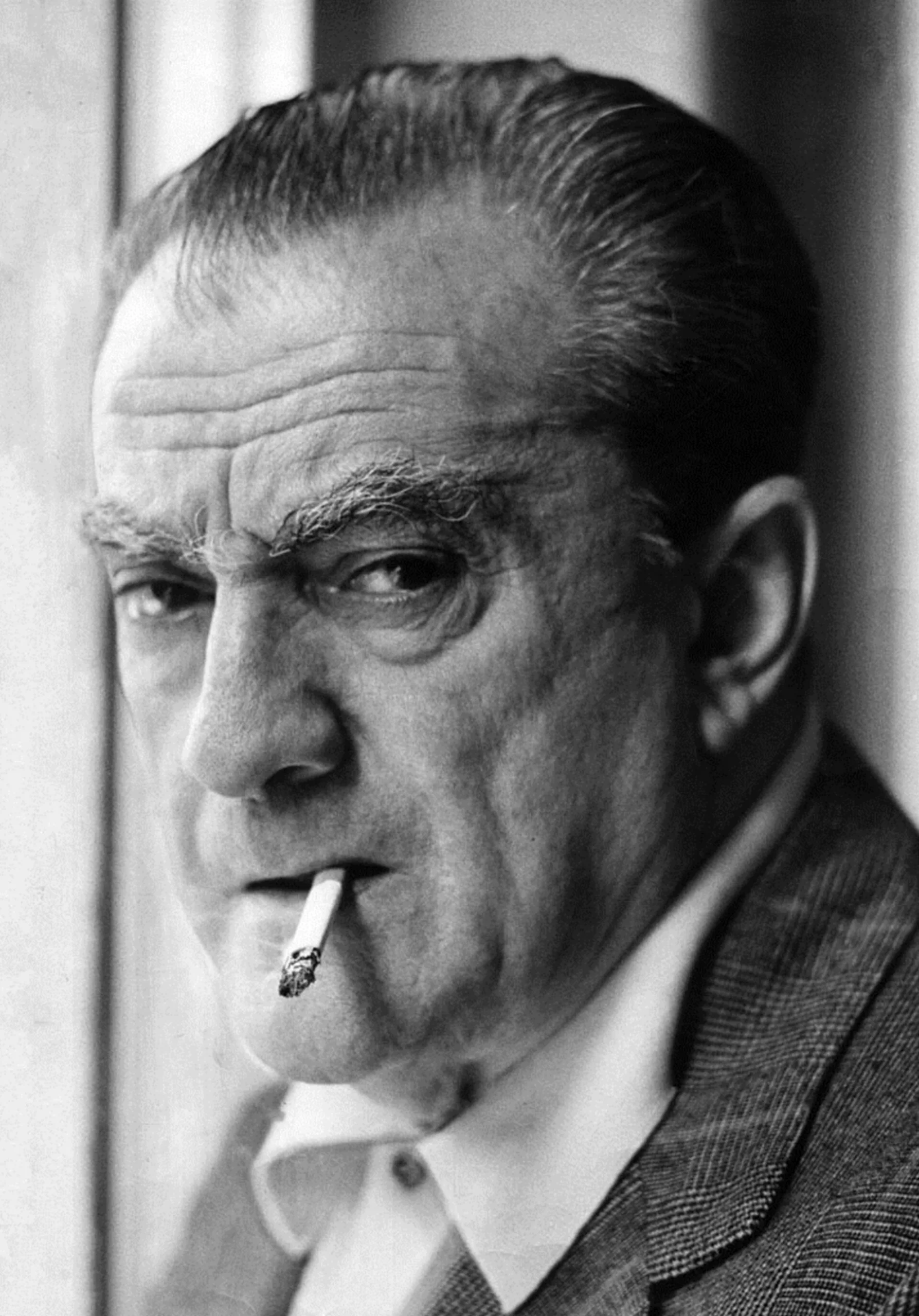
Luchino Visconti
 Italy
film director•screenwriter•theatre and opera director
Also known as: Luchino Visconti di Modrone, Count of Lonate Pozzolo
Birthday
November 2, 1906
Birth Sign
Scorpio
Birthplace
Milan, Italy
Age
Died at 69
About
Luchino Visconti was an Italian filmmaker, screenwriter, and director of theatre and opera. Born into the Milanese nobility as Count of Lonate Pozzolo, he became one of the defining auteurs of Italian cinema and, in many accounts, a founding figure of neorealism. He died in Rome on March 17, 1976, at 69.
His reputation rests on two registers that rarely sit together so comfortably in one career. The first is raw contemporary drama, from the censored debut Ossessione (1943) through Rocco and His Brothers (1960). The second is opulent historical melodrama adapted from Italian literature, including Senso (1954) and The Leopard (1963), which took the Palme d'Or at Cannes. Sandra (1965) brought him the Golden Lion at Venice. He closed with the German Trilogy (The Damned, Death in Venice, Ludwig) and L'Innocente (1976).
Six of his films appear on the list of 100 Italian films to be saved. Francis Ford Coppola and Martin Scorsese have cited his work as an influence. Half a century after his death, a 4K restoration of White Nights and a La Scala anniversary tribute kept his name in circulation.
Early Life & Background
He was born in Milan on November 2, 1906, into the noble Visconti di Modrone family, one of the great houses of Lombardy. According to IMDb's biographical note, he was born in his ancestral palazzo, situated in the same Milanese square as both the opera house La Scala and the cathedral, an accident of geography that neatly prefigures his twin careers in film and opera. The household was steeped in art and music; the family's wealth and rank gave him access to Italy's cultural elite from childhood.
Visconti's path to film was indirect and cosmopolitan rather than a steady climb through the industry. He spent time in France in the 1930s and worked as an assistant to Jean Renoir, an apprenticeship that sharpened his eye for social detail and cinematic craft and is the pivotal pre-fame moment in nearly every account of his career. He returned to Italy with a documentary-inflected, socially alert sensibility.
In 1943 he made his directorial debut with Ossessione, an adaptation of James M. Cain's The Postman Always Rings Twice that the Fascist regime condemned for its blunt portrait of working-class life. During the Second World War he joined the Italian resistance, and left-wing politics remained with him for the rest of his life.
Career Growth
Ossessione (1943) is often cited as the first neorealist film, though its initial reception was censorious rather than celebratory. The films that made his name span two registers. The first is raw contemporary drama: Rocco and His Brothers (1960) is the paradigm, and his 1957 White Nights, a Dostoevsky adaptation starring Marcello Mastroianni and set in Livorno and Tuscany, sits in this socially observant, melodramatic mode.
The second is opulent historical melodrama adapted from Italian literature: Senso (1954) and The Leopard (1963), the latter winning the Palme d'Or at Cannes. Sandra (1965) brought him the Golden Lion at Venice, reportedly from among five nominations. He then made the so-called German Trilogy, The Damned (1969), Death in Venice (1971) and Ludwig (1973), and closed with L'Innocente (1976), which Cannes's own site revisited in May 2026 under the headline "When Visconti films the male ego."
Alongside film he was a major stage and opera director, with a long association with La Scala; the house's anniversary tribute notes that he directed eight productions there and shaped Italian and international musical theatre. Six of his films appear on the list of 100 Italian films to be saved. Directors including Francis Ford Coppola and Martin Scorsese have cited his work as an influence.
Career Timeline
Public Image & Style
His public image is that of the aristocratic Marxist, the "most Italian of internationalists, the most operatic of realists," as Rotten Tomatoes puts it. His signature aesthetic is lavish, painterly, slowly paced composition; Sense of Cinema notes that his favoured tactic with international stars was to employ long takes that allow a performance to develop. The tone of his work runs from documentary-like social observation to full operatic grandeur, often within the same career and sometimes the same film.
Fame & Fandom (iFAMOUS Rankings)
iFANN has not yet collected fame data for Luchino Visconti, so there is no published ranking to report. He is not on the September 2026 iFAMOUS Rankings flagship list either.
What he has instead is a cinephile and academic constituency rather than a fandom in the modern sense. There is no established fandom name, no organised fanbase, and no documented fan campaigns, birthday billboards or charity drives; Visconti died in 1976, long before participatory fandom culture. The audience that keeps him alive is made up of repertory cinemas, restoration labels (Criterion published a tribute piece in 2026), festival retrospectives, and the Austin Film Society's explanatory video series ("Who is Visconti?", "Who is Visconti's best audience?"). That is the accurate characterisation of his following.
Interesting Facts and Legends
The most retold story about Visconti is the suppression of Ossessione: a debut so frank about working-class life that the Fascist regime condemned it, and a film later canonised as the first neorealist work. That reversal, censored then worshipped, is the foundational piece of Visconti lore. The second is the Palme d'Or for The Leopard, the summit of his international prestige. The third, more contemporary, is the 2026 restoration cycle, in which a nearly seventy-year-old film by a director fifty years dead generated mainstream reviews in the New York Times and a fresh trailer cycle.
The "Visconti and Alain Delon" association is a persistent fan reference point, and the "Visconti school" suggestion reflects his influence on later Italian directors. Claims about his relationship with Helmut Berger are widely repeated biography rather than something verified in the sources retrieved here. A recurring search suggestion, "luchino visconti height," has no recorded answer.
Family & Personal Life
Visconti was born into the Visconti di Modrone family, one of the great houses of Lombardy, and held the title Count of Lonate Pozzolo. The household was steeped in art and music, and the family's wealth and rank gave him access to Italy's cultural elite from childhood. He never married and had no children; the related-search string "Luchino Visconti wife" reflects a common query rather than a fact. He is buried in the family mausoleum at Villa Erba on Lake Como.
Notable Connections
Relationships & Dating History
Visconti never married and had no children. The related-search string "Luchino Visconti wife" reflects a common query rather than a fact. His romantic life was with men, conducted with varying degrees of discretion given the era and his public standing. The available sources do not supply a reliable, dated chronology of his partners, and no fabricated one is offered here. The most frequently cited long-term attachments in the standard literature are to the filmmaker Franco Zeffirelli (a relationship in the late 1940s and early 1950s) and later to the actor Helmut Berger, whom he directed in The Damned, Ludwig and Conversation Piece; these are widely reported but are not corroborated by the specific sources retrieved here. As of 2026, he has been deceased since 1976, unmarried, with no surviving spouse or children.
- DatedFranco Zeffirelli1947 - 1952Widely reported relationship in the late 1940s and early 1950s; not corroborated by the sources retrieved here.
- DatedHelmut Berger1964 - 1976Widely reported long-term attachment; Visconti directed him in The Damned, Ludwig and Conversation Piece.
Death & Aftermath
Died
March 17, 1976 (aged 69)
Death Place
Rome, Italy
Cause of Death
Not made public
Luchino Visconti died in Rome on March 17, 1976, at the age of 69. The city had been his professional base for four decades, the place he returned to between film sets, theatre stages and opera houses. The available record does not describe his final days or his last public appearance, and the cause of death was never made public. No autopsy, inquest or legal proceeding is documented. He is buried in the family mausoleum at Villa Erba on Lake Como, per the standard account.
Milan supplied the most concrete institutional remembrance. La Scala marked the fiftieth anniversary of his death with a tribute titled "Thank you, Luchino Visconti," noting that he had directed eight productions at the house and had shaped Italian and international musical theatre.
The anniversary coincided with a substantial critical revival. A 4K restoration of White Nights (1957) returned to cinemas in mid-2026, trailed in June and reviewed through July and August by the New York Times, Slant, the Washington Examiner and the Berkshire Edge. Retrospective reassessments ran in parallel: "Addio del passato: The Modernity of Luchino Visconti" in June 2026, a Criterion piece in May 2026, a Cannes retrospective essay on L'Innocente, and an East Hampton cinema honour in March 2026. The through-line of this coverage is that his films, not a celebrity estate, carry the reputation forward. He left no spouse and no children, and no verified estate valuation exists in the public record.
Net Worth (Estate Value)
$5 Million
iFANN Editorial Team estimate
He was born wealthy and died without a spouse or children. His films remain in copyright and are actively licensed for restoration and theatrical re-release; the 2026 White Nights 4K run is a direct revenue example. But no figure for the estate's value or its management is documented. The iFANN Editorial Team's own review of the available earnings and asset record does not support a specific dollar estimate; any figure circulating online should be treated as unsourced. For 2026, the honest answer is that no verified estate valuation exists. The films, not a celebrity estate, carry the reputation forward.
Awards Won (4)
1963 · Best Film
The Leopard
1965 · Best Film
Sandra
Known For
Ossessione
1943 · Director
Senso
1954 · Director
White Nights
1957 · Director
Rocco and His Brothers
1960 · Director
The Leopard
1963 · Director
Sandra
1965 · Director
The Damned
1969 · Director
Death in Venice
1971 · Director
Ludwig
1973 · Director
L'Innocente
1976 · Director
Keywords
Sources
Quick Facts
- Profession
- film director, screenwriter, theatre and opera director
- Born
- November 2, 1906
- Birthplace
- Milan, Italy
- Died
- March 17, 1976
- Death Place
- Rome, Italy
- Gender
- Male
- Birth Sign
- Scorpio
- Full Name
- Luchino Visconti di Modrone, Count of Lonate Pozzolo
Personal Details
- Full Name
- Luchino Visconti di Modrone, Count of Lonate Pozzolo
Frequently Asked Questions
What is Luchino Visconti known for?
Was Luchino Visconti married?
How did Luchino Visconti die?
Where is Luchino Visconti buried?
What is Luchino Visconti's net worth in 2026?
Similar People
Join the community
fans discussing