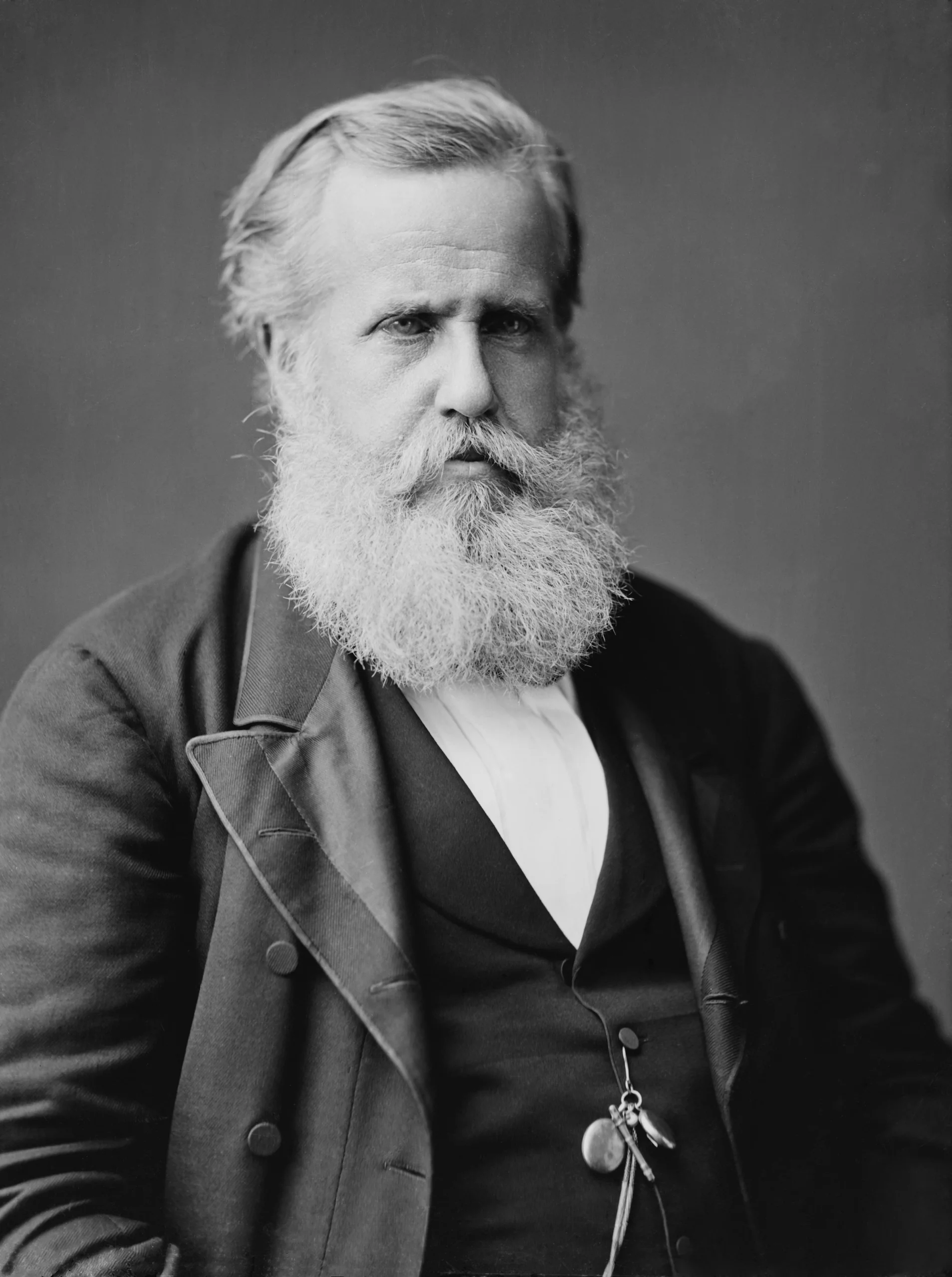
Pedro II of Brazil
 Brazil
politician•monarch•statesperson
Also known as: Dom Pedro de Alcântara, Pedro the Magnanimous, The Citizen-Emperor
Birthday
December 2, 1825
Birth Sign
Sagittarius
Birthplace
Rio de Janeiro, Brazil
Age
Died at 66
Height
5 ft 5 in (165 cm)
About
Pedro II, born Dom Pedro de Alcântara on December 2, 1825, was the second and last Emperor of Brazil. His reign, spanning nearly 60 years from 1831 until his deposition in 1889, is widely regarded as the nation's "Golden Age." Ascending to the throne at just five years old after his father's abdication, he ruled with a commitment to education, science, and political stability that defined his era. He earned the epithets "the Citizen-Emperor" and "Pedro the Magnanimous" for his humility and dedication to his subjects.
His rule transformed Brazil from a nascent post-colonial state into a respected international power. Under his stewardship, the country achieved significant infrastructure development, military victories in regional conflicts, and the eventual abolition of slavery. Pedro II's legacy endures as a symbol of benevolent leadership and intellectual curiosity in Latin American history.
Early Life & Background
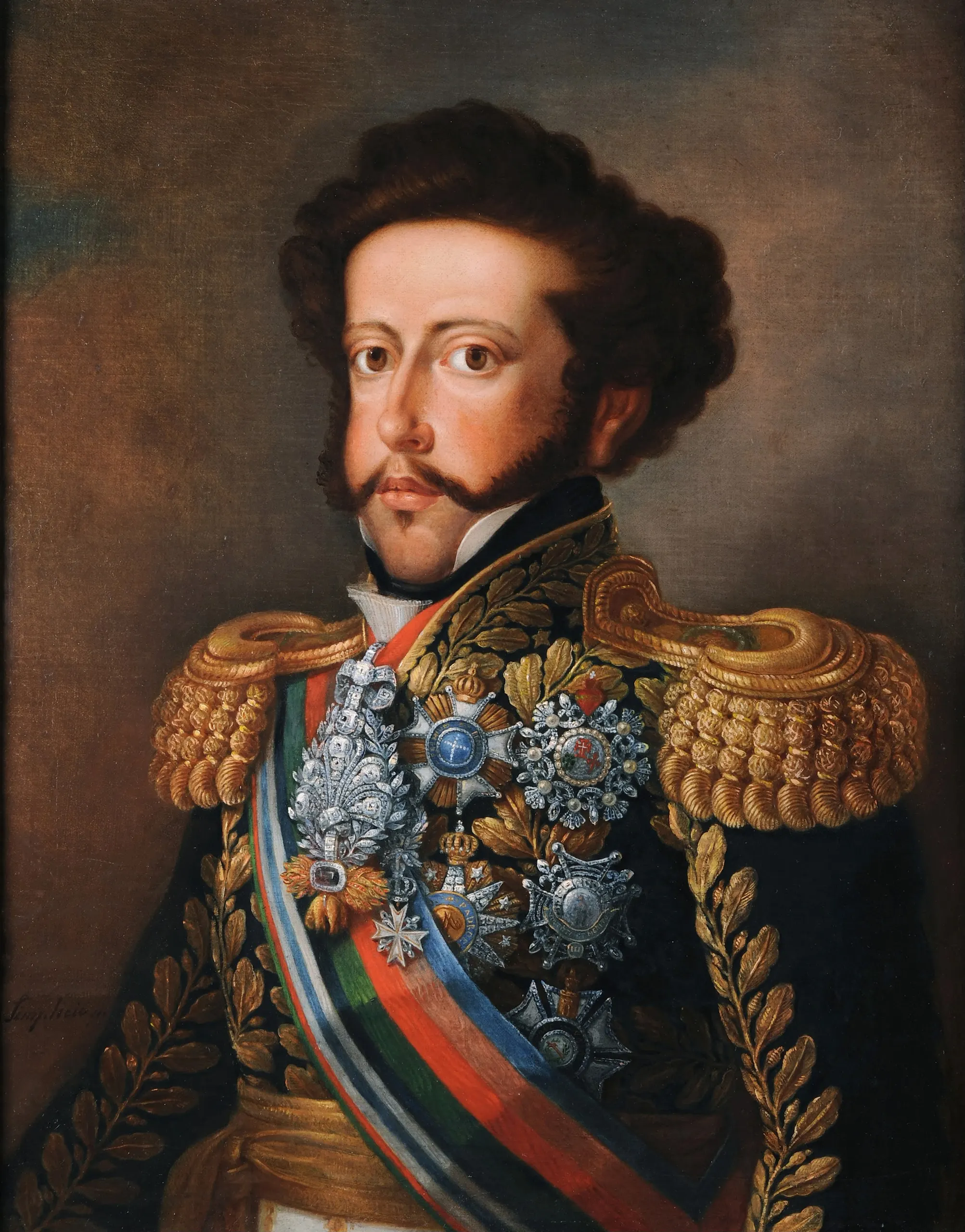
Born the seventh child of Emperor Pedro I and Empress Maria Leopoldina, Pedro II's early life was marked by tragedy and instability. His father's abdication in 1831 left him as the sole heir at just five years old. The regency period that followed was fraught with political upheaval, regional rebellions, and civil unrest. To prepare him for rule, Pedro II underwent a rigorous and demanding education, studying languages including Latin, French, English, German, Greek, Hebrew, Arabic, and Sanskrit, along with history, geography, mathematics, astronomy, and law under the tutelage of prominent scholars.
This intellectual upbringing fostered a lifelong curiosity and a deep sense of duty. Unlike many young royals of his time, he was encouraged to interact with common citizens and learn about the practical challenges of governance. By the age of 14, he was declared of legal age and assumed full power, ending the regency period and stabilizing the government. This transition marked the beginning of a long and transformative reign that would shape the destiny of Brazil for decades to come.
Career Growth
Pedro II's career was defined by his stewardship of the Brazilian Empire. Key milestones include his assumption of full power in 1840, which ended the turbulent regency period. During the 1850s and 1860s, he oversaw significant infrastructure projects, including the expansion of railroads and telegraph lines, and fostered industrial growth. Brazil achieved victories in the Platine War (1851–1852), the Uruguayan War (1864–1865), and the Paraguayan War (1864–1870), solidifying its status as a regional power.
A pivotal achievement of his reign was the gradual abolition of slavery. While initially cautious due to elite opposition, he eventually supported the Lei Áurea (Golden Law) in 1888, which legally abolished slavery in Brazil. This move alienated the landed aristocracy but cemented his legacy as a progressive statesperson. He also established the Imperial Academy of Sciences and the National Library, personally funding scientific expeditions and inviting foreign intellectuals to Brazil. His reign ended abruptly in November 1889 when a military coup led by Marshal Deodoro da Fonseca forced him into exile.
Career Timeline
Public Image & Style
Pedro II is portrayed as a benevolent, intellectual, and humble ruler. Media and historical accounts emphasize his dedication to education, science, and the well-being of his subjects. His image is one of a "father figure" who prioritized the nation's progress over personal glory. He was known for his modest dress, often wearing simple suits rather than elaborate royal attire, and for his distinctive beard in later years. His reputation as a scholar-monarch set him apart from other rulers of the 19th century.
Fame & Fandom (iFAMOUS Rankings)
Pedro II of Brazil remains a figure whose historical footprint commands attention across centuries, measured by the enduring weight of his reign and the scholarly interest in his life. Current assessments from the iFANN Global Fame Rankings place him as the 52nd most famous person from Brazil, a position he has held steady through recent cycles. These metrics reflect a global attention span that tracks media coverage, search activity, and cultural consumption signals worldwide, ensuring that his legacy is not merely preserved but actively quantified alongside modern figures.
No formal fandom name exists for Pedro II, nor does an organized fanbase operate under a specific moniker to rally behind his memory. While monarchist groups advocate for the restoration of the Brazilian monarchy, these entities function as political factions rather than a devoted following akin to those surrounding living pop culture icons. There are no documented fan campaigns, digital rituals, or charity drives initiated by a collective of admirers in his name. The reverence he receives is primarily academic and political, characterized by historians and scholars rather than the active participation typical of a modern fan community.
Interesting Facts and Legends
Pedro II is widely known by the epithet "the Citizen-Emperor" (*O Imperador Cidadão*), a title reflecting his unusual humility and deep engagement with the arts and sciences rather than royal grandeur. He was also recognized as "Pedro the Magnanimous" (*Pedro o Magnânimo*), a narrative emphasizing his benevolence and lack of vanity during a long and stable reign. A verified iconic moment involves his extensive travels, including a trip to Egypt where his diaries were later exhibited to mark the 150th anniversary of the journey, highlighting his curiosity about global cultures.
Another frequently retold story concerns his interaction with the American abolitionist Frederick Douglass during the U.S. Centennial celebrations in 1876, an encounter often cited to illustrate his progressive stance on human rights and slavery. His deposition in 1889 by a military coup marked the abrupt end of the Empire of Brazil, transforming him into a tragic figure whose nearly sixty-year rule is often mythologized as a golden age of stability. He spoke over 20 languages fluently and was a member of the Royal Society.
Notable Quotes
“I am the servant of the people.”
“Education is the foundation of the nation.”
Family & Personal Life
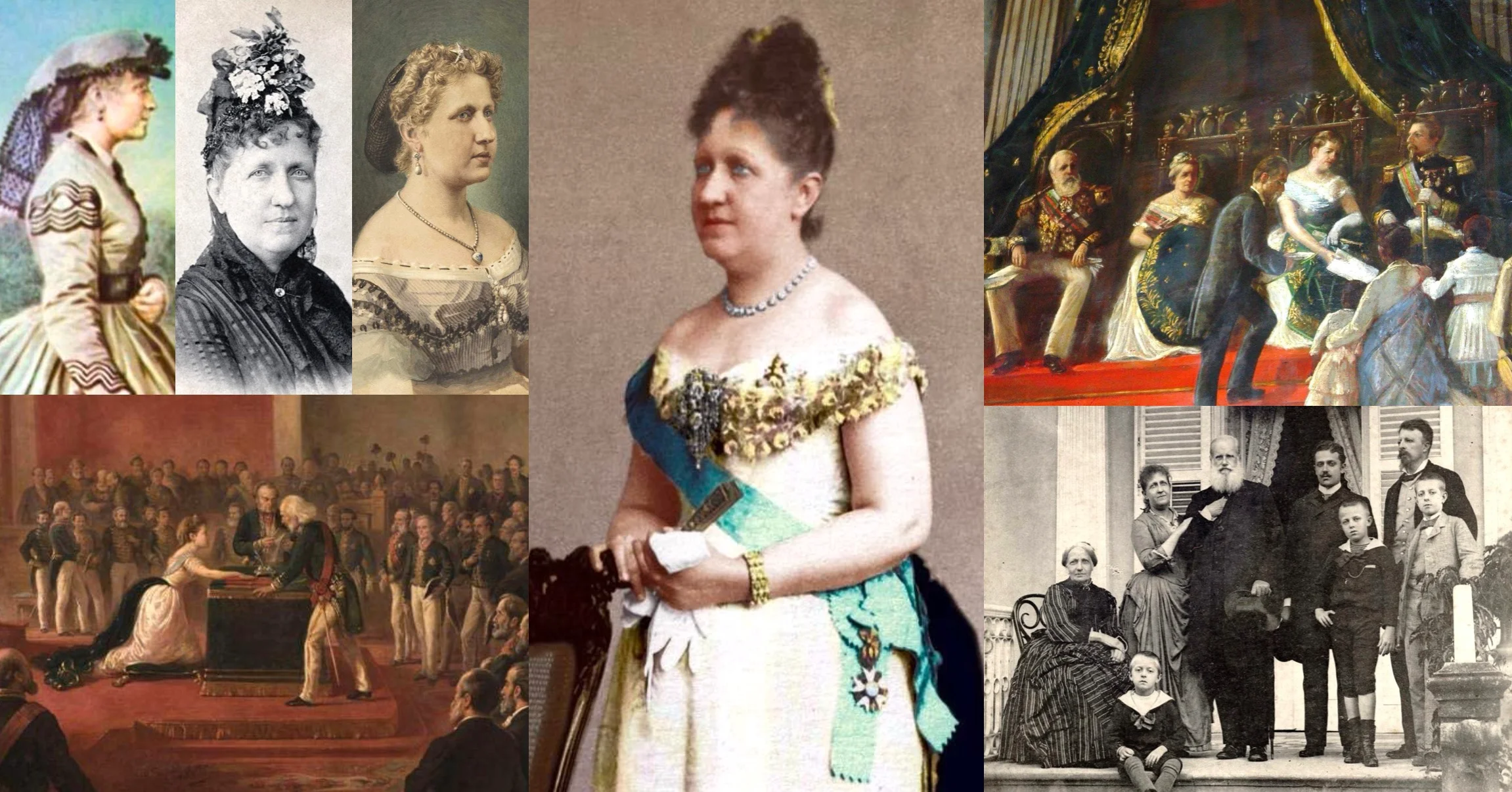
Pedro II married Teresa Cristina of the Two Sicilies on May 30, 1843, when he was 17 and she was 19. The marriage was arranged for political reasons, and while it lacked romantic passion initially, it evolved into a partnership based on mutual respect and shared interests in culture and religion. They had four children: Afonso (who died young), Isabel (Princess Imperial and heir), Leopoldina (who married Gaston d'Orléans, Count of Eu), and Pedro Afonso (who also died young). The loss of his two sons deeply affected him, and the death of his wife just months before his exile left him emotionally isolated.
He lived in the Imperial Palace in Rio de Janeiro for most of his reign, surrounded by a large household of servants and advisors. His family life was characterized by a strong sense of duty and religious devotion. After his wife's death in 1889, he remained widowed until his own death in 1891. His descendants continue to manage his legacy through the Imperial House of Brazil.
Notable Connections
Relationships & Dating History
Pedro II married Teresa Cristina of the Two Sicilies on May 30, 1843, when he was 17 and she was 19. The marriage was arranged for political reasons, and while it lacked romantic passion initially, it evolved into a partnership based on mutual respect and shared interests in culture and religion. They had four children together: Afonso, Isabel, Leopoldina, and Pedro Afonso. The loss of his two sons deeply affected him, and the death of his wife just months before his exile left him emotionally isolated.
There were no recorded dating relationships, flings, or public romances outside of his marriage. Unlike modern celebrities, his personal life was not a subject of tabloid scrutiny, and his only formal romantic union was with Empress Teresa Cristina. He remained widowed after her death in 1889 until his own death in 1891. As of 2026, Pedro II is remembered as having been married to Teresa Cristina of the Two Sicilies at the time of his death.
- MarriedTeresa Cristina of the Two Sicilies1843 - 1889Married for political reasons; became a partnership of mutual respect; had four children.
Death & Aftermath
Died
December 5, 1891 (aged 66)
Death Place
Eu, Normandy, France
Cause of Death
pneumonia
Pedro II of Brazil died on December 5, 1891, at the Château d'Eu in Eu, Normandy, France. He was exactly 66 years old. The official cause of death was pneumonia, a condition worsened by a severe cold he had contracted while traveling from Paris to his final residence. Historical records show that Pedro II spent his last days bedridden and unable to return to Brazil due to the republican government's refusal to allow his re-entry. His health had declined rapidly following the military coup of 1889 that ended his reign.
The public reaction to his death in Brazil was one of profound mourning. Despite the abolition of the monarchy, he remained beloved by the common people who viewed him as a father figure. Intellectuals and former subjects expressed deep grief, marking the end of an era for many. In France, he was mourned by the intellectual circles he frequented, including figures like Victor Hugo. The funeral was a private affair held on December 7, 1891, at the Church of Saint-Sauveur in Eu. He was buried alongside his wife, Empress Teresa Cristina, and their daughter-in-law, Princess Leopoldina.
Posthumously, Pedro II has been honored through numerous academic studies, cultural dedications, and the preservation of his library. Foundations and scholarships focused on education and science have been established in his name. His remains were later moved, and his legacy is celebrated annually in Brazil as a symbol of stability and progress. The Imperial House of Brazil continues to manage his legacy, ensuring his story remains part of the national consciousness.
Net Worth (Estate Value)
$0
iFANN Editorial Team estimate
As a deceased monarch who died in exile, Pedro II did not accumulate a personal net worth in the modern sense. His estate was managed by his descendants, primarily the Imperial House of Brazil. There is no publicly available estimate of his estate value in 2026 dollars, as his personal assets were minimal upon his death. He died without significant liquid wealth, relying on the support of friends and family.
The estate generates revenue through the management of imperial properties, historical sites, and the licensing of his image and legacy, though these are managed by the Imperial Family rather than a commercial estate. The Imperial House of Brazil continues to manage his legacy, with no specific financial disclosures regarding his estate's current value. iFANN currently estimates Pedro II's estate value at approximately $0, reflecting the lack of liquid assets and the nature of his historical legacy.
Awards Won (4)
As a monarch, Pedro II did not receive modern entertainment awards. However, he received numerous high distinctions including the Legion of Honour by France and the Order of the Garter by the United Kingdom. He was awarded honorary doctorates from several European universities, including the University of Paris and the University of Cambridge. Posthumously, he has been honored through numerous academic studies and cultural dedications.
1876 · International Recognition
France
1880 · International Recognition
United Kingdom
Known For
Emperor of Brazil
1831 · Monarch
Abolition of Slavery
1888 · Legislator
Keywords
Sources
Quick Facts
- Profession
- politician, monarch, statesperson
- Born
- December 2, 1825
- Birthplace
- Rio de Janeiro
- Died
- December 5, 1891
- Death Place
- Eu, Normandy, France
- Gender
- Male
- Spouse
- Teresa Cristina of the Two Sicilies
- Birth Sign
- Sagittarius
Personal Details
- Full Name
- Dom Pedro de Alcântara João Carlos Leopoldo Salvador Bibiano Francisco Xavier de Paula Leocádio Miguel Gabriel Rafael Gonzaga
- Height
- 5 ft 5 in (165 cm)
- Spouse
- Teresa Cristina of the Two Sicilies
- Children
- Isabel, Princess Imperial; Leopoldina; Afonso; Pedro Afonso
- Education
- Private tutoring under prominent scholars in Latin, French, English, German, Greek, Hebrew, Arabic, Sanskrit, history, geography, mathematics, astronomy, and law.
Frequently Asked Questions
Who was Pedro II of Brazil?
How did Pedro II die?
Did Pedro II abolish slavery?
Why was Pedro II deposed?
What is Pedro II's legacy?
Join the community
fans discussing