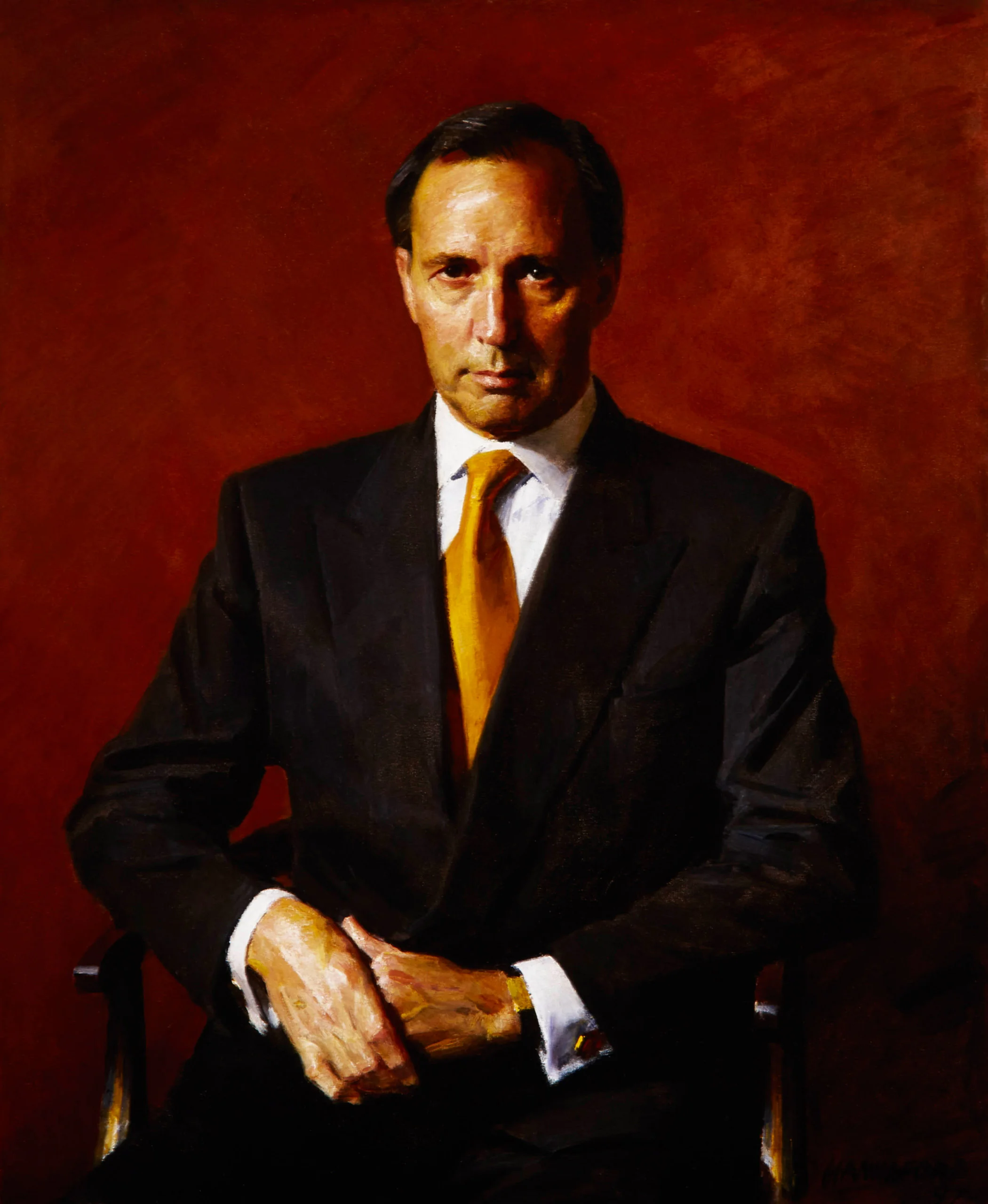
Paul Keating
 Australia
politician•trade unionist•head of government
Also known as: The Silver Bodgie
Birthday
January 18, 1944
Birth Sign
Capricorn
Birthplace
Bankstown, Sydney, Australia
Age
82 years old
About
Paul John Keating is an Australian former politician and trade unionist who served as the 24th Prime Minister of Australia from 1991 to 1996. He is widely regarded as one of the most transformative economic reformers in the nation's history, having reshaped Australia's economy during his tenure as Treasurer under Bob Hawke. As of 2026, Keating remains an influential public voice, offering sharp commentary on politics, economics, and international affairs.
Keating's political career spanned over 26 years in Parliament, where he was known for his formidable oratory, quick wit, and unapologetic style. He led the Labor Party to an unexpected victory in 1993, and his government passed landmark legislation including the Native Title Act and compulsory superannuation. Fans and critics alike remember him for his vision of an independent Australia, especially his push for a republic.
Today, Keating is a sought-after commentator and speaker, still engaging with the issues he championed in office, from superannuation reform to Australia's place in Asia. His legacy as an architect of modern Australia endures, and he remains a polarising but respected figure in national life.
Early Life & Background
Paul Keating grew up in Bankstown, a working-class suburb of Sydney, where his father worked as a boilermaker. He was the eldest of four children, and the family's modest means shaped his early worldview. At age 14, Keating left De La Salle College to take on various jobs, including as a clerk and later as a laborer. That same year, he joined the Labor Party, drawn by his interest in politics and social justice.
Keating's political apprenticeship was rapid. He worked as a research officer for the Federated Municipal and Shire Council Employees Union, where he honed his skills in negotiation and public speaking. He stood for parliament in 1969, winning the seat of Blaxland in western Sydney at just 25. In 1975, he became the youngest federal minister in Australia's history when he was appointed Minister for Northern Australia in the Whitlam government, though that ministry lasted only months before the government's dismissal.
During the nine years of opposition that followed, Keating established himself as a fierce debater and a key figure in the Labor Right. He became a close ally of Bob Hawke, and their partnership would soon reshape the country's economy.
Career Growth
Keating's defining moment came in 1983 when Hawke appointed him Treasurer. Over the next eight years, he oversaw a sweeping program of economic liberalisation: floating the Australian dollar, deregulating the financial sector, cutting tariffs, and introducing capital gains and fringe benefits taxes. He also negotiated the Prices and Incomes Accord with unions, which helped control inflation. By 1987, the government delivered Australia's first budget surplus in decades.
In 1990, Keating became Deputy Prime Minister, but his ambition led him to challenge Hawke in 1991. After losing the first ballot, he won the second in December, becoming Prime Minister. His government faced a severe recession, which he famously called "the recession that Australia had to have." Despite dire predictions, he won the 1993 election, dubbed the "unlosable election" for the opposition. His second term saw the passage of the Native Title Act, the introduction of compulsory superannuation, and the establishment of the Republican Advisory Committee. He also forged closer ties with Asia, championing APEC.
After losing the 1996 election to John Howard, Keating resigned from Parliament. In retirement, he has remained active, writing, speaking, and commenting on public affairs. In 2026, he has been a vocal proponent of merging Centrelink with superannuation, a radical proposal to overhaul retirement income.
Career Timeline
Public Image & Style
Keating's public image is that of a sharp-tongued, confident, and often confrontational politician. His wit is legendary, and his insults are the stuff of Australian political folklore. He famously described a fellow MP as "a gutless spiv" and referred to the opposition as "a motley assortment of kangaroos." Yet he also had a more thoughtful side, known for his passion for the arts and his vision for a multicultural Australia. His love of fine suits and his "Silver Bodgie" style set him apart from the typical politician. Fans admire his directness and his willingness to say what he thinks, while critics see him as arrogant. Regardless, his impact on Australian political culture is undeniable.
Fame & Fandom (iFAMOUS Rankings)
Paul Keating commands a presence defined not by the chaotic energy of pop culture fandoms, but by the enduring weight of political legacy and historical debate. His supporters are primarily constituents, trade unionists, and members of the Australian Labor Party who align with his transformative economic vision rather than fans seeking celebrity rituals or chart-topping moments. There is no organized fanbase using monikers like "Keatingers," nor are there subway ads or birthday billboards; instead, his engagement remains strictly professional, characterized by sharp commentary on global affairs and private counsel to current leaders. The cultural lore surrounding him consists of pivotal rhetorical achievements and controversial stances that fuel decades of political discourse, from the deregulation of finance to the republicanism movement. While recent events in 2026 saw Prime Minister Anthony Albanese surpass Keating as the longest-serving ALP leader, this milestone only reinforces Keating's status as the benchmark for Labor longevity. Despite his immense influence on Australian history, iFANN has evaluated his global standing and found he does not currently hold a placement in the published rankings (Global Top 1,000 or a Top-100 scope list). Paul Keating is currently unranked in the Global Top 1,000 or any Top-100 scope list according to the August 2026 evaluation.
Interesting Facts and Legends
Paul Keating maintains a substantial collection of antique clocks and a renowned library of art, particularly favoring Australian Impressionist paintings. In his youth, he was a talented ballroom dancer who briefly considered it as a career path before entering politics. Known affectionately as "The Silver Bodgie" for his slicked-back hair and youthful energy, he remains an avid reader of history and biography, crediting these works with shaping his political philosophy. Beyond his personal collections, Keating is woven into the fabric of Australian political mythology through stories of his fiery rhetoric and visionary leadership. One recurring legend refers to his era as the "Lizard of Oz," a nod to his flamboyant style that has even inspired theatrical productions decades later. He is also remembered for passing significant legislative milestones, including the push for republicanism and financial sector deregulation. Recent narratives highlight how his tenure set a standard for leadership longevity, a record recently surpassed by his successor Anthony Albanese in 2026, cementing Keating's place as a defining figure whose influence continues to shape national debates on immigration and international relations.
Notable Quotes
“The recession that Australia had to have.”
“I'm not a person who is going to be a great leader of a party that's going to be a bunch of wimps.”
“You can't be a leader if you don't have a vision.”
“Australia is a country that has to be brave and imaginative in its approach to the world.”
“I have a strong sense of what is right and what is wrong, and I act on it.”
Family & Personal Life
Paul Keating married Annita van Iersel, a Dutch-born woman, in 1975. The couple had four children together: Katherine, Patrick, Alexandra, and Caroline. Annita was a supportive presence throughout his career, though they separated in 2008 after 33 years of marriage. Keating later had a long-term relationship with Julieanne Newbould, a former ballerina. He has spoken publicly about the importance of family, often crediting his parents for instilling in him a strong work ethic and a sense of social justice.
Notable Connections
Paul Keating is closely associated with Bob Hawke, his political mentor and predecessor as Prime Minister. He is also known for his rivalry with John Howard, who defeated him in 1996. His partnership with Hawke produced significant economic reforms, and his later advocacy for a republic aligns him with figures like Malcolm Turnbull. Additionally, he has been a vocal critic of current Liberal Party policies, often engaging with contemporary leaders.
Relationships & Dating History
Paul Keating married Annita van Iersel in 1975. The couple had four children together. They remained married throughout his political career, with Annita often appearing at his side. After 33 years of marriage, they separated in 2008. Following the separation, Keating began a long-term relationship with Julieanne Newbould, a former ballerina. As of 2026, Keating is reportedly still with Newbould, though they have never married. His personal life has been relatively private compared to his public persona.
- MarriedAnnita van Iersel1975 - 2008Married for 33 years, had four children together.
- DatingJulieanne Newbould2008 - presentCurrentLong-term partner since separation from Annita.
Salary, Net Worth In 2026
$5 Million
iFANN Editorial Team estimate
Per iFANN's editorial analysis, Paul Keating's net worth stands at $5 Million as of 2026. This figure reflects a modest yet secure financial standing relative to other former prime ministers, built without the accumulation of vast wealth during his time in office. His post-political income streams include lucrative speaking engagements, board positions, and revenue from his memoir, "After Words." Keating has also engaged in consulting work, particularly with financial firms, adding to his steady earnings. While known for avoiding lavish spending habits, he owns a substantial art collection that holds significant value. His superannuation and various investments ensure a comfortable retirement, grounding his financial profile in stability rather than excess.
Awards & Accolades
View 4 records, honours and achievementsKnown For
Prime Minister of Australia
1991 · 24th Prime Minister
Treasurer of Australia
1983 · Treasurer
Keywords
Sources
Quick Facts
- Profession
- politician, trade unionist, head of government
- Born
- January 18, 1944
- Birthplace
- Bankstown
- Gender
- Male
- Spouse
- Annita van Iersel
- Birth Sign
- Capricorn
- Age
- 82
Personal Details
- Full Name
- Paul John Keating
- Spouse
- Annita van Iersel
- Children
- 4 (Katherine, Patrick, Alexandra, Caroline)
- Education
- Left school at 14, De La Salle College (briefly)
Frequently Asked Questions
Who is Paul Keating?
When was Paul Keating Prime Minister?
What were Paul Keating's major achievements as Treasurer?
What key policies did Paul Keating introduce as Prime Minister?
When did Paul Keating retire from politics?
Join the community
fans discussing