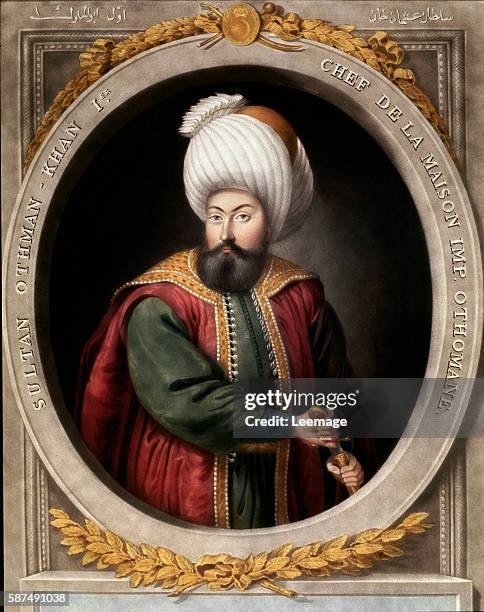
Osman I
Also known as: Osman Ghazi, Osman Bey, Ataman
Birthday
1258
Birth Sign
Leo
Birthplace
Söğüt, Anatolia
Age
Died at 68
About
Osman I was a Turkoman leader and the founder of the Ottoman Empire. He is famous for establishing a small principality that evolved into a vast empire lasting over six centuries until 1922. While his exact origins are debated by historians, his beylik's strategic location near the Byzantine border facilitated significant expansion under his rule and that of his descendants. Despite his monumental impact, surviving historical records from his lifetime are scarce, leading many modern scholars to rely on later chronicles for understanding his reign. Osman died in 1326, leaving a legacy that fundamentally shaped the course of world history.
Early Life & Background
Osman I, revered as Osman Ghazi, was born around 1258 in Söğüt, a modest town situated in the rugged expanse of northwestern Anatolia. His formative years were spent immersed in the traditions of Turkic nomadic tribes, a heritage often linked to the storied Kayı tribe of Oghuz Turks. While later traditions strongly asserted this lineage, some modern historians cautiously suggest it might have been a subsequent construct designed to reinforce dynastic legitimacy. Regardless of its precise historical origins, Osman's early life was steeped in a culture that valued resilience and self-sufficiency. From a young age, he underwent rigorous traditional Turkic nomadic training, mastering essential frontier skills such as horsemanship, archery, and swordsmanship – proficiencies that were not merely recreational but absolutely vital for survival and defense in the volatile borderlands. Concurrently, his upbringing was deeply rooted in an Islamic framework, complemented by a profound Sufi spiritual education. He received guidance under the patronage of respected Sufi sheikhs, with Sheikh Edebali standing out as a pivotal figure who served as his spiritual mentor, shaping his moral compass and philosophical outlook.
The geographical and political context of Osman's youth was instrumental in forging his character and capabilities. His family, as part of the Kayı tribe, had been strategically assigned the region of Söğüt and its surrounding territories by the Seljuk sultan. This designation came with the crucial responsibility of defending the frontier against the persistent pressures of the Byzantine Empire. This position, nestled in Bithynia near the Byzantine border, meant that the young Osman was not merely an observer but an active participant in frequent small battles and raids. Such constant exposure to conflict provided him with invaluable practical military experience, honing his tactical acumen and solidifying his understanding of frontier warfare from a very early age.
It was within this challenging environment that Osman's natural leadership qualities and strategic foresight began to manifest. Building upon his hardened martial prowess and the inherently advantageous location of his nascent principality, he emerged as the governor of a minor Turkoman beylik. This emerging state, strategically positioned for expansion along a dynamic border, represented the crucial initial step in his journey, laying the foundational framework for the powerful entity that would eventually evolve into the Ottoman Empire.
Career Growth
Upon his father Ertuğrul's death around 1280–1281, Osman inherited leadership of the Kayı tribe and its small beylik. He conducted successful raids against Byzantine territories, capturing the fortress of Karacahisar and making Yenişehir an early administrative center. Around 1299, Osman declared independence from the weakening Seljuk Sultanate of Rum. This year is traditionally considered the official founding date of the Ottoman Beylik. In 1302, Osman won the key Battle of Bapheus against Byzantine forces, a significant victory that solidified his control over the Bithynian region. He expanded his territory through a strategy of raids, sieges, and strategic alliances, attracting frontier warriors known as ghazis by promoting the ideology of struggle against non-Muslim lands. By 1326, Osman had extended control over several former Byzantine fortresses, providing a strong base to lay siege to Bursa and Nicaea. His son Orhan captured Bursa on April 6, 1326.
Career Timeline
Public Image & Style
In modern Turkish media and popular culture, Osman I is depicted as a bearded warrior in traditional Turkic attire, often wearing a turban and carrying a sword. Television portrayals emphasize his role as a frontier ghazi. Turkish historical dramas like Kuruluş: Osman (2019–present) present him as a heroic, divinely guided founder, sparking renewed popular interest, particularly in Turkey and among diaspora communities. The series has generated a substantial fan base, with fans sharing clips, edits, and discussions on social media platforms like Instagram, Facebook, and YouTube.
Fame & Fandom
Osman I has never been the subject of a modern organized fandom with birthday billboards, subway campaigns, or streaming drives, as these phenomena belong to the digital age rather than the 13th century. While he is revered across Turkey and among diaspora communities as a national hero and the eponymous founder of an empire that lasted over six centuries, this devotion remains cultural and historical rather than structured as a fanbase with rituals or official names. The enthusiasm for his legacy often manifests through the enduring popularity of historical dramas like Kuruluş: Osman, which have sparked renewed interest in his life story without creating a formal group identity. In August 2026, iFANN's Global Fame Engine evaluated his standing and determined that Osman I does not currently hold a placement in the published rankings, meaning he is not ranked within the Global Top 1,000 or any Top-100 scope list. This absence from the charts reflects his status as a medieval figure whose fame operates on a different axis than contemporary celebrities who drive search volume and media consumption signals worldwide. Although he commands immense respect and is frequently depicted in Turkish media as a bearded warrior guiding a divinely appointed destiny, there is no documented fandom name attached to his followers, nor are there records of fan-led projects dedicated to him in the manner seen for living stars. The lack of a numeric rank underscores that while his impact on world history is monumental, his current visibility does not translate into the specific metrics used to generate global celebrity hierarchies today.
Interesting Facts and Legends
The most enduring legend about Osman involves a prophetic dream where a moon emerged from Sheikh Edebali's chest and entered Osman's, followed by a great tree growing from his body to cover the world, symbolizing the future expansion of the Ottoman Empire. Historical accounts suggest his name may have originally been the Turkish Ataman or Atman before being Arabicized to Osman, a detail Byzantine sources consistently record as Atouman or Atman. Folklore also claims that Osman killed his uncle Dündar to eliminate a rival claimant to leadership, though this event remains part of the traditional narrative rather than a verified fact. His rise occurred during the collapse of the Seljuk Sultanate of Rum under Mongol pressure, leaving many small Turkish beyliks competing for power. A widely retold story from his era notes that tradition states he was born on the same day the Mongols destroyed Baghdad in 1258. Cultural narratives describe him as a warrior, judge, and visionary leader who waged war against the Byzantine Empire and rival Turks, cementing his place in foundational national myths. These stories, recorded centuries later in chronicles such as those by Aşıkpaşazade, remain central to how his legacy is understood today.
Family & Personal Life
Osman was the son of Ertuğrul, chieftain of the Kayı clan, and an unnamed mother. He had at least two wives: Rabia Bala Mal Hatun, daughter of Sheikh Edebali, and Malhun Hatun, possibly the daughter of Ömer Bey. His most historically significant son was Orhan I, who succeeded him as the second Ottoman ruler. Other known sons include Alaeddin Bey and Çoban Bey, though exact numbers vary across sources.
Relationships & Dating History
Given that Osman I lived in the 13th–14th centuries, detailed romantic history relies on later Ottoman chronicles and legends rather than contemporary records. He married Rabia Bala Mal Hatun around the 1280s. She was the daughter of Sheikh Edebali, Osman's spiritual mentor. According to legend, Osman married her after befriending her father and being impressed by his wisdom. She is traditionally considered one of Osman's chief consorts. He also married Malhun Hatun around the 1280s–1290s. She is sometimes identified as the mother of Orhan I, though this is disputed among historians. As of 1326, Osman I was widowed at the time of his death.
- MarriedRabia Bala Mal Hatun1280 - 1326Daughter of Sheikh Edebali; married after befriending her father.
- MarriedMalhun Hatun1285 - 1326Possibly mother of Orhan I; daughter of Ömer Bey.
Death & Aftermath
Died
1326 (aged 68)
Death Place
Söğüt
Cause of Death
Reported natural causes
Osman I spent his final years in Söğüt, the quiet capital of his beylik in northwestern Anatolia, overseeing the consolidation of lands that had been won through decades of raids and sieges against Byzantine forces. By 1326, the founder of what would become a vast empire had passed away at the age of roughly sixty-eight, leaving behind a transformed tribal confederation ready for expansion. Historical chronicles from the era do not record a specific medical cause; he is simply remembered as having died naturally after a long reign of territorial growth. Succession followed established dynastic tradition rather than litigation, with his son Orhan immediately assuming leadership to continue the conquests.
The immediate aftermath involved a private burial consistent with Islamic traditions of the period, held within the city of Söğüt where Osman had ruled. His tomb, now known as the Osman Gazi Mosque and Tomb, stands today as a significant religious and historical site in Bilecik Province, serving as a focal point for centuries of cultural memory. Modern tributes manifest in the naming of major landmarks like the Osman Gazi Bridge and various academic studies that keep his legacy alive.
Net Worth (Estate Value)
Osman I died in 1326, nearly 700 years ago. No credible financial sources estimate his net worth, as he ruled a small principality without modern currency valuation. His estate consisted of the territories he controlled, which passed to his son Orhan. No posthumous estate management, licensing deals, or revenue streams exist in the modern sense.
Awards & Accolades
View 3 records, honours and achievementsKnown For
Founding the Ottoman Empire
1299 · Founder
Battle of Bapheus
1302 · Commander
Keywords
Sources
Quick Facts
- Profession
- Founder of the Ottoman Empire
- Born
- 1258
- Birthplace
- Söğüt, Anatolia
- Died
- 1326
- Death Place
- Söğüt
- Gender
- Male
- Spouse
- Rabia Bala Mal Hatun, Malhun Hatun
- Birth Sign
- Leo
Personal Details
- Spouse
- Rabia Bala Mal Hatun, Malhun Hatun
- Children
- Orhan I, Alaeddin Bey, Çoban Bey
- Education
- Traditional Turkic nomadic training in horsemanship, archery, and combat; Islamic and Sufi spiritual education under Sheikh Edebali
Frequently Asked Questions
Who was Osman I?
How did Osman I die?
Who was Osman I's wife?
What is Osman I famous for?
Is Osman I a real historical figure?
Similar People
Join the community
fans discussing