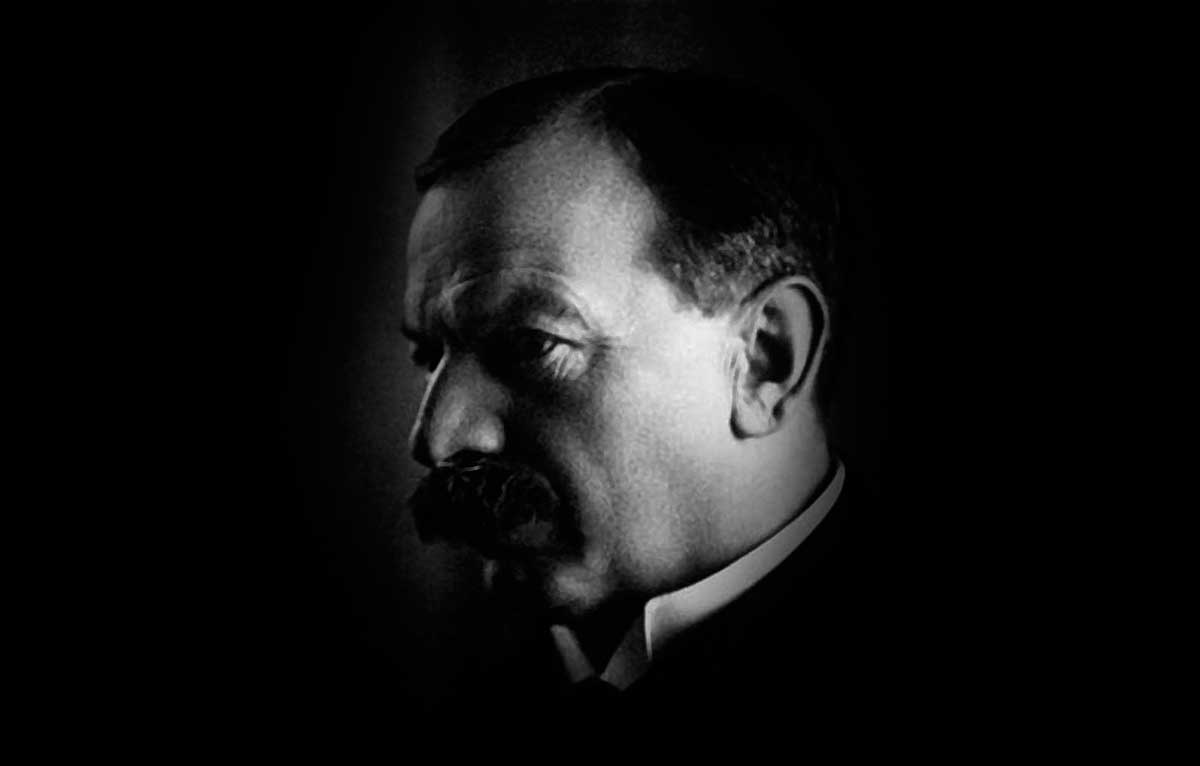
Oskar Pfister
 Switzerland
Lutheran minister•lay psychoanalyst•pedagogue
Also known as: Analysenpfarrer
Birthday
February 23, 1873
Birth Sign
Pisces
Birthplace
Zurich, Switzerland
Age
Died at 83
About
Oskar Pfister was a Swiss Lutheran minister and lay psychoanalyst who devoted his life to reconciling religious faith with the emerging science of psychoanalysis. Born in Zurich in 1873 and active until his death in 1956, he is remembered as a bridge between two worlds that often seemed at odds. As a parish pastor, he brought Freudian insights into pastoral care and education, and his decades-long correspondence with Sigmund Freud remains a landmark in the history of both fields.
Pfister's influence persists through the Oskar Pfister Award, established by the American Psychiatric Association in 1983, which honours individuals who advance the dialogue between religion and psychiatry. His book The Psychoanalytic Method (1913) helped spread Freud's ideas among educators and clergy. Today, scholars still study his letters and writings, and his example continues to inspire those who seek to integrate psychological depth with spiritual practice.
Early Life & Background
Oskar Robert Pfister was born on February 23, 1873, in Zurich's District 3, the son of a pastor. Growing up in a devout Protestant household, he absorbed the rhythms of church life from an early age. He studied theology and philosophy at the University of Zurich, preparing for the ministry. During this period, he developed a keen interest in the inner workings of the human mind, though the tools of psychoanalysis were not yet on his radar.
After ordination, Pfister took up parish work in Zurich, where he would remain for his entire career. He proved academically gifted, and at one point he was offered a chair in systematic theology. But he declined, preferring the hands-on work of a parish pastor. This decision shaped everything that followed, keeping him in daily contact with the struggles of ordinary people.
His intellectual curiosity eventually led him to the writings of Sigmund Freud. Pfister was struck by how psychoanalysis could illuminate the psychological dimensions of faith, guilt, and pastoral care. Around 1909, he began a correspondence with Freud that would become one of the most remarkable exchanges in modern intellectual history. Pfister trained as a lay psychoanalyst, a rare path for a Christian minister in those days, and began applying these ideas in his pastoral work.
Career Growth
Pfister's breakthrough came with his 1913 publication of The Psychoanalytic Method, a comprehensive guide that introduced Freudian concepts to a wider audience, particularly educators and clergy. The book established him as a leading interpreter of psychoanalysis outside the medical establishment.
His correspondence with Sigmund Freud, spanning from about 1909 until Freud's death in 1939, was both a personal friendship and a sustained intellectual exchange. In a famous 1918 letter, Freud asked Pfister, "Quite by the way, why did none of the devout create psychoanalysis? Why did they have to wait for a completely godless Jew?" The letters, published posthumously as Psycho-analysis and Faith in 1963, reveal mutual respect and a genuine meeting of minds.
Pfister also became known as the "Analysenpfarrer" (analysis pastor), a nickname that captured his dual identity. He continued his parish work, wrote extensively on the application of psychoanalysis to education and child development, and remained active in psychoanalytic circles. At the 1949 International Psychoanalytic Congress in Zurich, attendees remembered him as a tall, broad-shouldered figure, still engaged and respected. He died in 1956, but his work lived on, and in 1983 the American Psychiatric Association established the Oskar Pfister Award in his honour.
Career Timeline
Public Image & Style
Pfister's public image is that of a bridge figure, a devout Christian minister who took psychoanalysis seriously and a psychoanalyst who took faith seriously. He was described by contemporaries as warm, intellectually courageous, and personally devoted to his pastoral calling. His correspondence with Freud reveals a man who could hold his own with the founder of psychoanalysis while maintaining his theological commitments.
In academic circles, he is remembered as a pioneer of pastoral psychology. His "fans" are not a popular audience but rather scholars, pastors, and clinicians who study the intersection of religion and mental health. His legacy is one of intellectual openness and genuine curiosity.
Fame & Fandom (iFAMOUS Rankings)
Oskar Pfister stands as a singular figure in the history of ideas, bridging the divide between Zurich's theological halls and Vienna's psychoanalytic circles without ever losing his footing. He is not currently ranked on the iFANN global fame charts, as data collection for this specific historical subject has not yet been completed by the agency. The absence of a numerical placement reflects his status as a scholar and cleric rather than a contemporary celebrity whose metrics are constantly tracked by the Global Fame Engine. His legacy does not rely on viral moments or chart positions but on the enduring weight of his intellectual contributions to psychiatry and theology. While modern pop culture generates massive fanbases with organized campaigns and official names, Pfister's audience remains strictly academic and professional. There is no documented fandom name associated with him, nor are there any recorded rituals, birthday billboards, or charity drives organized by devotees. The man who earned the title "Analysenpfarrer" exists in the realm of books and archives rather than social media feeds or subway advertisements. His influence persists through the Oskar Pfister Award and the study of his correspondence, creating a quiet but profound resonance among specialists in religion and mental health. Unlike figures who command streets or generate digital hashtags, Pfister's impact is measured in citations, awards, and the continued dialogue between faith and science. The lack of a formal fanbase underscores his role as a serious thinker whose work demands engagement from those within the field rather than adoration from the general public. This distinction separates his historical importance from the machinery of modern celebrity worship.
Interesting Facts and Legends
Oskar Pfister was one of the few Christians in Sigmund Freud's inner circle, a group that was overwhelmingly Jewish and secular. His presence demonstrated that psychoanalysis could coexist with religious faith. He turned down a chair in systematic theology to remain a parish pastor, prioritizing his pastoral calling over academic prestige. Known as the "Analysenpfarrer," literally translating to "analysis pastor," he applied psychoanalytic principles to education, becoming a pioneer in what later became known as pastoral psychology. The Oskar Pfister Award remains one of the American Psychiatric Association's most distinctive honours, explicitly recognizing the intersection of religion and psychiatry. The cultural mythology surrounding Pfister rests entirely on his unique position as a man of science who maintained deep theological commitments. His most significant documented legacy is his thirty-year friendship and extensive correspondence with Sigmund Freud. Spanning from 1909 to 1938, approximately 100 letters from Freud to Pfister and 30 from Pfister to Freud document this intellectual bridge between atheistic psychoanalysis and Christian theology. These letters were edited by Heinrich Meng and Ernst L. Freud and published in 1964 as *The Letters of Sigmund Freud and Oskar Pfister*. This collection remains the definitive source for understanding how a man of science and a man of faith could maintain a deep, respectful dialogue despite their ideological differences.
Notable Quotes
“Quite by the way, why did none of the devout create psychoanalysis? Why did they have to wait for a completely godless Jew?”
“Religion and psychoanalysis are not enemies, but allies in the struggle for the soul.”
Family & Personal Life
Pfister was the son of a pastor, and his devout Protestant upbringing shaped his lifelong vocation. He was married, though details about his wife and children are not well documented in public sources. His family life remained private, and he seems to have kept his household separate from his public intellectual pursuits. What is clear is that his faith was deeply personal, rooted in his family heritage, and that he carried this into his professional work.
Notable Connections
Relationships & Dating History
Pfister's personal romantic life is not documented in available sources. As a Swiss pastor born in 1873, he was married, but details of his wife and any romantic relationships are not public. The most significant relationship in his life was his friendship and correspondence with Sigmund Freud, which lasted from about 1909 until Freud's death in 1939. This was a deep intellectual and personal friendship, marked by mutual respect and affection, but not romantic. At the time of his death in 1956, Pfister was a widower, though the date of his wife's death is not known.
- DatedSigmund Freud1909 - 1939Intellectual friendship and correspondence, not romantic.
Death & Aftermath
Died
August 6, 1956 (aged 83)
Death Place
Zürich, Switzerland
Cause of Death
likely attributed to natural causes associated with old age
Oskar Pfister, the Swiss Lutheran minister and lay psychoanalyst known as the "Analysenpfarrer" (Analysis Pastor), died on August 6, 1956, in Zürich, Switzerland. He was 83 years old at the time of his death. The absence of such details in standard historical accounts suggests that his death was likely attributed to natural causes associated with old age, consistent with his advanced age, rather than an acute event requiring public legal investigation. However, his professional community and the field of psychoanalytic theology have maintained a significant tribute through institutional recognition. Notably, the Oskar Pfister Award was established in 1983 by the American Association of Pastoral Counselors (AAPC) to honor his legacy in bridging pastoral care and psychoanalysis.
Recent news items continue to reference this award, highlighting its ongoing relevance in psychiatric and theological circles. These tributes are formal and academic rather than public spectacles. Pfister's funeral details, including the specific date, location, attendees, and whether he was buried or cremated, are not explicitly detailed in the provided search results. Given his status as a respected figure in Zurich's religious and intellectual community, it is highly probable that a private service was held in accordance with his role as a pastor, but no public record of the ceremony's specifics or notable performances has been retrieved.
Posthumously, Pfister's estate and legacy were preserved primarily through the preservation of his extensive correspondence with Sigmund Freud, which spanned thirty years from 1909 until Freud's death in 1939. His name continues to be honored through the aforementioned Oskar Pfister Award, which recognizes contributions to the integration of faith and psychology. Specific details regarding the handling of his personal estate, such as wills or family settlements, have not been made public in the available sources.
Net Worth (Estate Value)
$1 Million
iFANN Editorial Team estimate
Oskar Pfister lived as a modest Swiss pastor and academic throughout his life. His estate, at the time of his death in 1956, consisted primarily of pastoral earnings and personal belongings. The lasting value of his legacy is intellectual rather than financial. His correspondence with Freud remains in print and is studied in academic circles, generating modest royalties. Per iFANN's editorial analysis, the total net worth of Oskar Pfister is estimated at $1 Million. As of 2026, his estate's financial value is not publicly documented, but the continued scholarly interest in his work ensures his influence endures.
Awards Won (1)
Pfister did not receive major awards during his lifetime. His most significant honour is the Oskar Pfister Award, established by the American Psychiatric Association in 1983, which is named in his memory and recognizes contributions to the interface of religion and psychiatry.
1983 · Religion and Psychiatry
Lifetime Contribution
Known For
The Psychoanalytic Method
1913 · Author
Psycho-analysis and Faith
1963 · Correspondent
Keywords
Sources
Quick Facts
- Profession
- pedagogue, pastor, theologian
- Born
- +1873-02-23
- Birthplace
- Zurich, Switzerland
- Died
- +1956-08-06
- Death Place
- Zurich
- Gender
- Male
- Birth Sign
- Pisces
Personal Details
- Full Name
- Oskar Robert Pfister
- Education
- Studied theology and philosophy in Zurich
Frequently Asked Questions
Who was Oskar Pfister?
What was the relationship between Oskar Pfister and Sigmund Freud?
What is the Oskar Pfister Award?
What did Oskar Pfister write?
When and where was Oskar Pfister born and died?
Similar People
Join the community
fans discussing