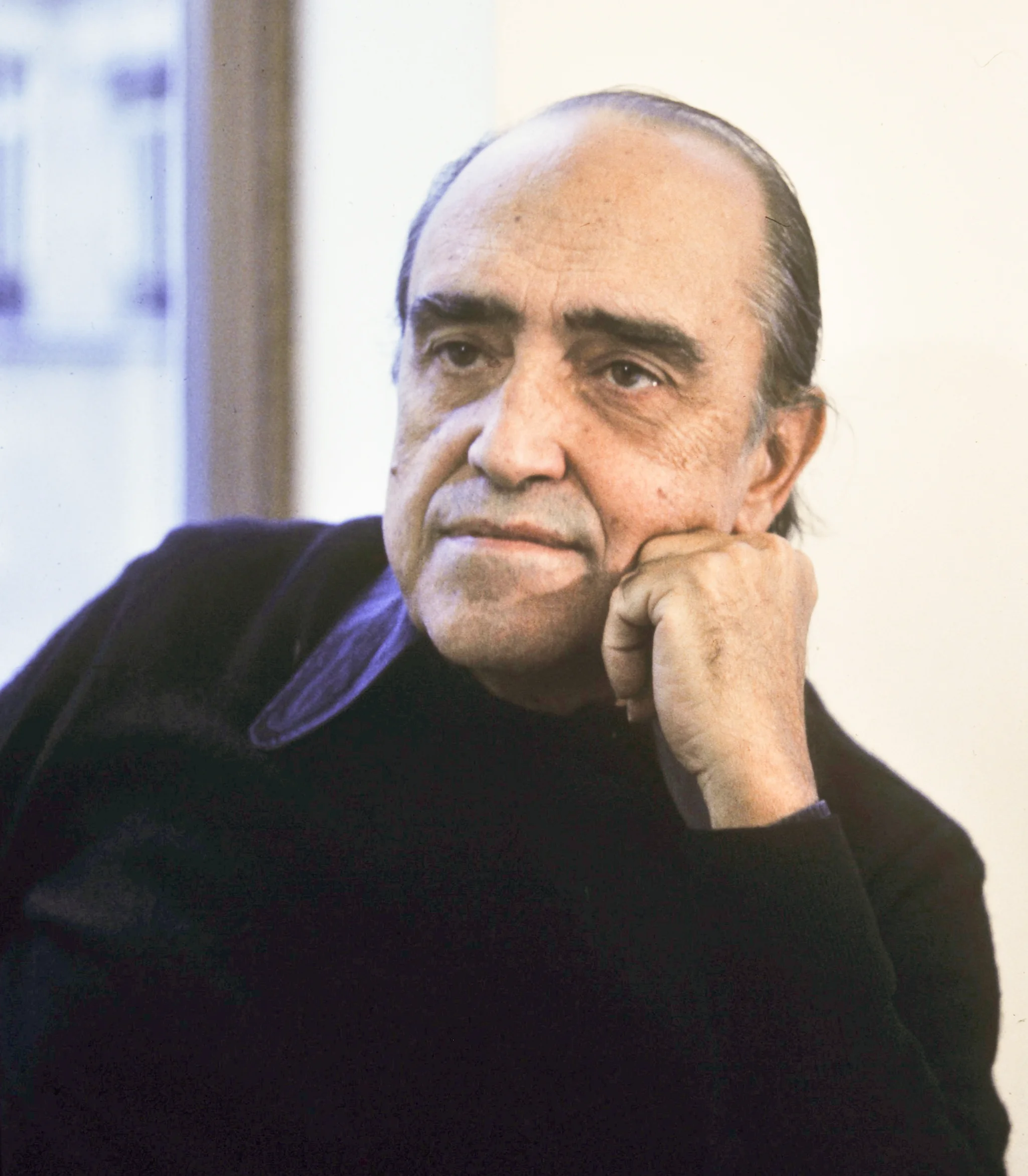
Oscar Niemeyer
 Brazil
architect•designer•university teacher
Also known as: Oscar Ribeiro de Almeida Niemeyer Soares Filho, Oscar Niemeyer Soares, Ribeiro de Almeida Soares, Filho, Oscar Niemeyer Soares, Oscard Niemeyer, Oskar Nimeĭer
Birthday
December 15, 1907
Birth Sign
Sagittarius
Birthplace
Rio de Janeiro, Brazil
Age
Died at 104
Height
5 ft 9 in (175 cm)
About
Oscar Niemeyer was a pioneering Brazilian architect whose career spanned over seven decades and fundamentally shaped modern architecture. He is best known for designing the bold, curvilinear structures of Brasília, Brazil's capital, which transformed the city into an icon of modernist urban planning. His work utilized reinforced concrete to create sweeping organic forms that contrasted sharply with the rigid straight lines of European modernism. Niemeyer believed that architecture should be sensual and inspired by the curves of the female body, the ocean waves, and the Brazilian landscape.
Even in his centennial years, he continued to design projects worldwide, leaving a legacy that blends artistic expression with social purpose. His influence extends far beyond Brazil, impacting architects globally through his unique approach to space and form. The iFANN Global Fame Rankings currently list him as the 56th most famous person from Brazil and the 70th most famous person in Art & Design, reflecting his enduring global impact.
Early Life & Background
Born on December 15, 1907, into a wealthy family in the hillside district of Rio de Janeiro, Oscar Niemeyer did not initially plan to become an architect. His father worked as an accountant for the state government, providing the family with financial stability but not necessarily pushing him toward a specific profession. As a young man, Niemeyer considered joining the navy or studying law, exploring paths that seemed more conventional for someone of his background. However, the influence of his uncle, a civil engineer, and encouragement from his teachers eventually steered him toward the arts.
In 1928, he enrolled in the Escola Nacional de Belas Artes (National School of Fine Arts) in Rio de Janeiro. He graduated in 1934, just before completing his studies, having been deeply influenced by the rationalist architecture of Le Corbusier but seeking to infuse it with the sensuality and curves of the Brazilian landscape. Before his international fame, Niemeyer began his professional journey working at the Ministry of Education and Health in Rio de Janeiro. In 1936, he joined the office of Lúcio Costa, a prominent architect and urban planner. This collaboration was pivotal; together they won the competition for the Ministry building, where Niemeyer was given free rein to design the interior and exterior spaces. This project marked his first major breakthrough, introducing his signature style of reinforced concrete structures with fluid, organic curves that contrasted sharply with the rigid straight lines of European modernism.
Career Growth
Niemeyer's career is defined by a series of landmark projects that evolved from national commissions to global icons. In 1936, he designed the Ministry of Education and Health building in Rio de Janeiro, collaborating with Lúcio Costa and Le Corbusier. This project established his reputation for using reinforced concrete to create sweeping curves. In 1938, he designed the Brazilian Pavilion for the New York World's Fair alongside Lúcio Costa, featuring a distinctive curved roof that introduced Brazilian modernism to the international stage.
The Pampulha Complex in Belo Horizonte, created between 1940 and 1943, including the Church of Saint Francis of Assisi, the Yacht Club, and the Casino, solidified his unique aesthetic and brought him national acclaim. In 1946, he was invited by Le Corbusier to join the team designing the United Nations Headquarters in New York City, placing him at the center of international modernist discourse. From 1951 to 1960, he served as chief architect of the new capital city, Brasília, designing all the major civic buildings, including the National Congress, the Supreme Federal Tribunal, the Palácio do Planalto, and the Cathedral of Brasília.
Following the military coup in Brazil in 1964, Niemeyer went into exile in France, Algeria, and the Soviet Union. During this period, he continued to design high-profile projects, including the French Communist Party headquarters in Paris and the Cultural Center in Alexandria, Egypt. After returning to Brazil, he remained active, taking on commissions worldwide, such as the Niterói Contemporary Art Museum in Rio de Janeiro (1996). Even in his late 90s and early 100s, he continued to work, conceptualizing the "Sphere" restaurant in Leipzig, Germany, a project realized posthumously.
Career Timeline
Public Image & Style
Niemeyer is portrayed as a visionary, a rebel, and a humanitarian. His media image is that of a gentle giant who used his art to fight for social justice. His content, primarily architectural, is characterized by boldness, elegance, and a deep connection to nature. He was known for his elegant, understated clothing, often wearing suits and ties, reflecting his formal yet progressive personality. His political activism as a staunch communist was central to his identity, shaping much of his later work and leading to his exile.
Fame & Fandom (iFAMOUS Rankings)
The audience for Oscar Niemeyer is not a gathered crowd of fans with chants or specific names, but rather a global community of architects, historians, and design enthusiasts who revere his physical legacy. His fanbase is defined by the enduring presence of his structures, which serve as living monuments to a style that prioritized organic curves over rigid geometry. For decades, admirers have traveled to Rio de Janeiro and Brasília simply to stand within the spaces he conceived, treating his buildings as pilgrimage sites rather than mere attractions. This unique form of fandom centers on the architecture itself, where the public engagement happens through observation and study rather than organized campaigns or digital rituals. The reverence for his work has transcended generations, with students and professionals alike tracing the lines of his early sketches in the Pampulha Complex to understand the evolution of modernism.
This sustained global attention places him firmly within the highest echelons of historical influence according to the iFANN Global Fame Rankings. He holds the position of the 56th most famous person from Brazil, a standing that has remained steady through recent cycles. Within the specialized sphere of creative innovation, he is recognized as the 70th most famous person in Art & Design. These placements reflect a deep, worldwide appreciation for his contribution to the built environment, tracking how his vision continues to resonate across media coverage and cultural consumption signals globally.
Interesting Facts and Legends
Niemeyer was still actively designing at the age of 103, conceptualizing a restaurant in Leipzig, Germany, which was completed after his death. He was a lifelong communist and maintained close ties with Fidel Castro and other leftist leaders. His nickname, "the concrete poet," reflects his belief that architecture should be poetic and expressive. He once said, "I am not a revolutionary, but I am a rebel against the status quo." The story of Niemeyer dreaming up the entire layout of Brasília in a single night is a popular legend, though it is likely an exaggeration. However, his rapid design of the city's major buildings in the late 1950s is well-documented and legendary.
Notable Quotes
“Straight lines are rigid and man-made. I prefer the sensual, flowing lines found in nature.”
“Architecture is a form of art, and like any art, it must be beautiful.”
“I am a communist because I believe in a better world for everyone.”
Family & Personal Life
Oscar Niemeyer was married twice. His first marriage was to Annita Baldo, an Italian-Brazilian communist activist and artist, from 1941 until their divorce in 1952. They had two children: Maria Alice and Carlos Alberto. The couple divorced reportedly due to the pressures of Niemeyer's demanding career and their differing lifestyles, though they remained friends. In 1953, he married Vera Lúcia Cabreira, a journalist and writer. Vera accompanied him into exile in France in 1966 and remained his companion until her death in August 2012. She managed his affairs and supported his creative process throughout their nearly 60-year marriage. They did not have biological children together, but Vera was a devoted partner to his existing children.
Notable Connections
Relationships & Dating History
Oscar Niemeyer was married twice. His personal life was often intertwined with his political activism and artistic output. His first marriage was to Annita Baldo, an Italian-Brazilian communist activist and artist, from 1941 until their divorce in 1952. They met through their shared involvement in leftist political circles in Rio de Janeiro. Their marriage was politically charged, as both were active communists. They had two children: Maria Alice and Carlos Alberto. The couple divorced in 1952, reportedly due to the pressures of Niemeyer's demanding career and their differing lifestyles, though they remained friends.
In 1953, Niemeyer married Vera Lúcia Cabreira, a journalist and writer. Vera accompanied him into exile in France in 1966 and remained his companion until her death in August 2012. She managed his affairs and supported his creative process throughout their nearly 60-year marriage. They did not have biological children together, but Vera was a devoted partner to his existing children. She predeceased him by a few months, passing away in August 2012, just weeks before his own death. Niemeyer was known to be a charismatic and somewhat controversial figure in his personal life, often engaging in relationships with younger women while married, though these were rarely publicized in detail compared to his architectural legacy.
- MarriedAnnita Baldo1941 - 1952Met through leftist political circles; divorced due to career pressures.
- MarriedVera Lúcia Cabreira1953 - 2012Journalist and writer; accompanied him into exile; died shortly before him.
Death & Aftermath
Died
December 5, 2012 (aged 104)
Death Place
Rio de Janeiro, Brazil
Cause of Death
Long illness associated with advanced age
Oscar Niemeyer passed away on December 5, 2012, at his home in the Leme neighborhood of Rio de Janeiro. The architect died following a long illness linked to his advanced age, having remained professionally active until very late in life by conceptualizing a restaurant in Leipzig, Germany, at the age of 103. While no specific medical pathology was detailed in public reports, his passing was treated as a natural event consistent with senescence without any legal inquiry or controversy. Global tributes immediately followed from the architectural community and government officials, who recognized him as a pivotal figure in Latin American modernism and a pioneer of fluid design using reinforced concrete.
In Brazil, his death was mourned as the loss of a national icon responsible for designing the civic buildings of Brasília. A private funeral was held in Rio de Janeiro, where he was cremated, though the family kept the ceremony intimate without specifying the final resting place of his ashes. Posthumous efforts to preserve his legacy included ongoing exhibitions at the Museu Oscar Niemeyer in Curitiba and renovations of works like the Palazzo Mondadori in Milan. His estate and intellectual property remained under the management of the Oscar Niemeyer Foundation, ensuring the continued study of his designs and the preservation of commissions such as the French Communist Party headquarters in Paris.
Net Worth (Estate Value)
$180 Million
iFANN Editorial Team estimate
As a deceased individual, Oscar Niemeyer's net worth is assessed based on the value of his estate. Research by the iFANN Editorial Team puts his fortune at around $180 million. This valuation includes royalties and licensing income from the distribution of his designs, books, and documentaries. It also accounts for real estate ownership and land holdings, particularly in Brazil and France, as well as intellectual property rights to his architectural plans and trademarks.
The estate is managed by the Oscar Niemeyer Foundation, which ensures the preservation of his legacy and supports architectural education. Posthumous releases, such as the realization of the Leipzig restaurant project, continue to generate income. The foundation organizes exhibitions and educational programs, generating revenue through grants, donations, and event tickets. The estate's financial trajectory has remained stable, with ongoing interest in his work sustaining its value over time.
Awards Won (6)
Niemeyer received numerous accolades throughout his life, recognizing his immense contribution to architecture. He won the Pritzker Architecture Prize in 1988, often considered the Nobel Prize of architecture. He also received the Praemium Imperiale in 1998, the Stirling Prize in 2004 for the Niterói Contemporary Art Museum, and the Order of the British Empire in 1987. Other honors include the Legion of Honour from France, the Gold Medal of the American Institute of Architects, and the Prince of Asturias Award for Arts.
1988 · Lifetime Achievement
Lifetime Achievements
1998 · Architecture
Lifetime Achievements
Known For
Brasília
1960 · Chief Architect
Niterói Contemporary Art Museum
1996 · Architect
French Communist Party Headquarters
1980 · Architect
Pampulha Complex
1943 · Architect
Keywords
Sources
Quick Facts
- Profession
- architect, designer, university teacher
- Born
- December 15, 1907
- Birthplace
- Rio de Janeiro
- Died
- December 5, 2012
- Death Place
- Rio de Janeiro
- Gender
- Male
- Spouse
- Annita Baldo, Vera Lúcia Cabreira
- Birth Sign
- Sagittarius
Personal Details
- Full Name
- Oscar Ribeiro de Almeida Niemeyer Soares Filho
- Height
- 5 ft 9 in (175 cm)
- Spouse
- Annita Baldo, Vera Lúcia Cabreira
- Children
- Maria Alice · Carlos Alberto
- Education
- Escola Nacional de Belas Artes
Frequently Asked Questions
How old was Oscar Niemeyer when he died?
What is Oscar Niemeyer most famous for?
Did Oscar Niemeyer ever win the Pritzker Prize?
Who was Oscar Niemeyer married to?
Where is Oscar Niemeyer buried?
Similar People
Join the community
fans discussing