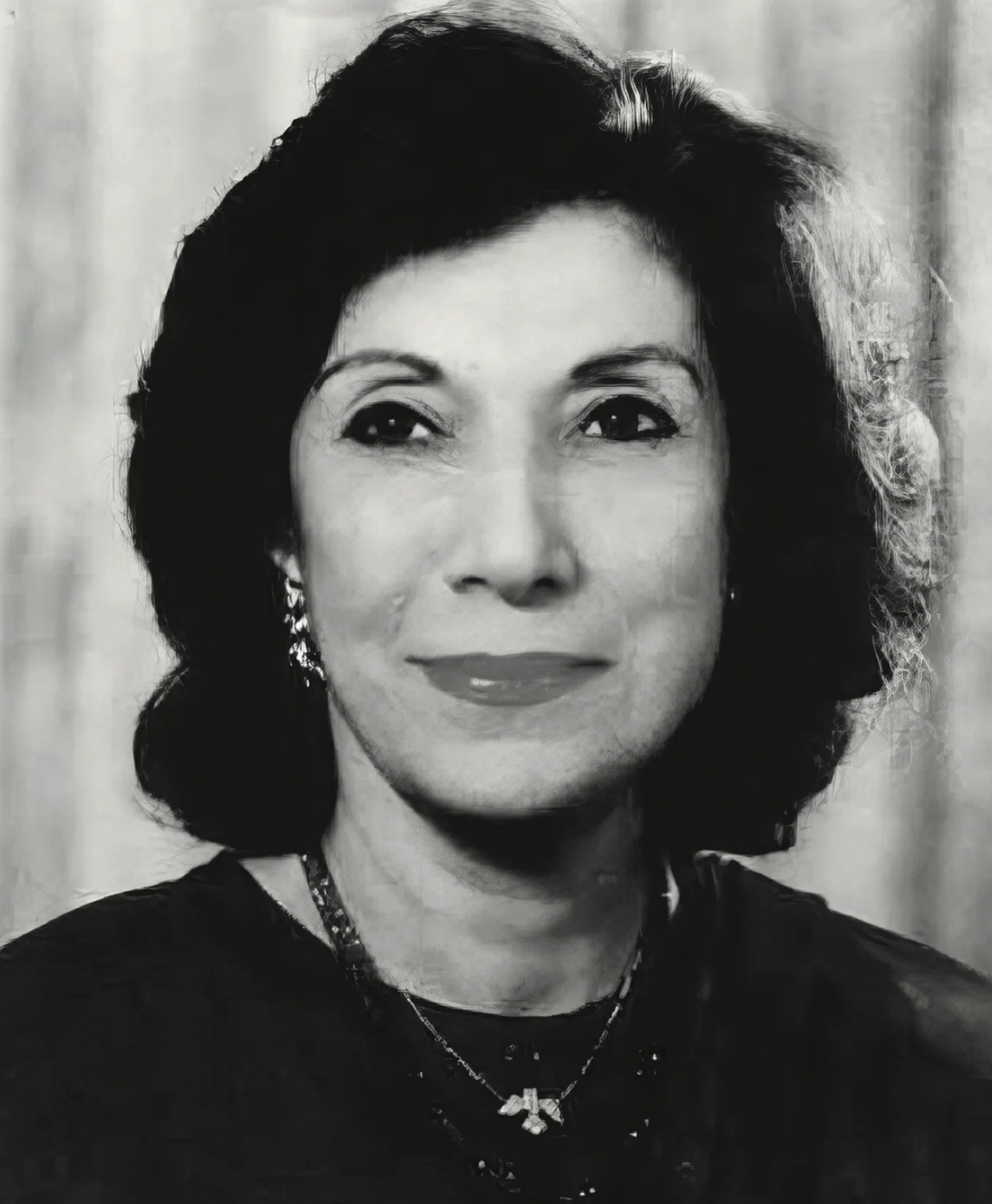
Nusrat Bhutto
 Pakistan
Also known as: Begum Nusrat Bhutto
Birthday
March 23, 1929
Birth Sign
Aries
Birthplace
Isfahan, Iran
Age
Died at 82
About
Begum Nusrat Bhutto was an Iranian-born Pakistani politician who served as First Lady of Pakistan from 1971 to 1977 and became a central figure in the country's democratic movement. After her husband Zulfikar Ali Bhutto's execution in 1979, she took over leadership of the Pakistan Peoples Party, guiding it through years of military rule. She later served as Senior Minister of Pakistan from 1988 to 1990, the first woman to hold that position. Her political career spanned over three decades, and she is remembered as the "Mother of Democracy" for her role in opposing authoritarian rule.
Her life was marked by profound personal tragedy, including the loss of her husband and two sons, yet she remained committed to democratic ideals. She spent her final years battling Alzheimer's disease and passed away in Dubai in 2011. Her legacy continues through her family's political dynasty and memorials like the Begum Nusrat Bhutto Library.
Early Life & Background
Nusrat Ispahani was born on 23 March 1929 in Isfahan, Iran, into the Hariri family, wealthy Kurdish merchants. She grew up in Bombay, where she received an education befitting a daughter of a prosperous family. After the Partition of British India in 1947, her family relocated to Karachi, Pakistan. In 1950, she briefly joined a paramilitary women's force, an early sign of her public spirit. Her life changed dramatically when she met Zulfikar Ali Bhutto, a rising political figure, and they married in 1951.
Career Growth
Nusrat Bhutto became First Lady of Pakistan in 1971 when her husband assumed the presidency, and continued in that role during his premiership until 1977. After Zulfikar's execution in 1979, she assumed leadership of the Pakistan Peoples Party, guiding it through the oppressive regime of General Zia-ul-Haq. In exile in London, she co-founded the Movement for the Restoration of Democracy in 1981, a coalition opposing military rule. She returned to Pakistan in 1986 and, after the PPP's victory in 1988, won a National Assembly seat from Larkana District. She served as Senior Minister from 1988 to 1990, the first woman in that post. A family rift over her son Murtaza's political ambitions led to her dismissal as party leader in the early 1990s, and Murtaza's assassination in 1996 prompted her retreat from public life.
Career Timeline
Public Image & Style
Nusrat Bhutto was known for her grace and resilience, often seen in traditional Pakistani dress with a modest demeanor. She was widely respected as a matriarch of the Bhutto family and a symbol of democratic resistance. Her public image was that of a dignified woman who endured immense personal loss while championing political change. Fans and supporters affectionately called her "Mother of Democracy," a title later conferred by parliament.
Fame & Fandom
Nusrat Bhutto commanded a global profile defined by political gravity and historical significance rather than the ephemeral metrics of celebrity culture. Her life spanned decades of pivotal moments in Pakistan's history, yet she remains outside the scope of contemporary pop-fame rankings. As of August 2026, the iFANN Global Fame Engine has evaluated her standing but determined that she does not currently hold a placement within the published Global Top 1,000 or any Top-100 scope list. This absence from the rankings reflects her status as a stateswoman whose influence is measured in legislative legacy and national memory rather than daily search volume or media consumption signals. Consequently, no ordinal position can be assigned to her current fame level. The concept of a formal fandom does not apply to her public persona; there is no documented fanbase name, organized ritual, or dedicated campaign associated with her memory. Her supporters are best understood as members of the Pakistan People's Party and citizens who revere her as a matriarch. Unlike entertainment figures who inspire fan clubs with specific hashtags or streaming pushes, her legacy is maintained through annual tributes, institutional memorials like the library inaugurated in May 2026, and the enduring political activities of her family. While she was never an icon of viral fame, her story of resilience during imprisonment and her role as the first female Senior Minister constitute a form of cultural mythology that transcends standard popularity metrics.
Interesting Facts and Legends
Born into Kurdish heritage, Nusrat Bhutto occasionally expressed pride in her ancestry and spoke fluently in Urdu, English, and Persian. Before her marriage, she briefly served in a paramilitary women's force, a detail often overlooked in biographical summaries. A lover of literature, she frequently recited poetry at family gatherings and tended to a small garden in Karachi where roses were her preferred bloom. Her life took a tragic turn following the execution of her husband, Zulfikar Ali Bhutto, in 1979. During this period, she endured fourteen months of solitary confinement and torture, an ordeal that cemented her legend as a pillar of strength for the nation. This narrative of endurance became central to her identity as the "Mother of Democracy." Decades later, her legacy was formally honored when the Begum Nusrat Bhutto Library opened at the Pakistan Red Crescent Society headquarters in May 2026. In April 2026, a basketball team named after her won the Shaheed ZA Bhutto Girls' Basketball Memorial match, further illustrating how her name continues to inspire new generations in sports and civic life.
Notable Quotes
“The army should look around and see the oppression, and determine whether they are on the side of the people or of the oppressors.”
Family & Personal Life
Nusrat Bhutto married Zulfikar Ali Bhutto in 1951, and they had four children: Benazir, Murtaza, Shahnawaz, and Sanam. Her life was marked by tragedy: her husband was executed in 1979, her son Shahnawaz died under mysterious circumstances in 1985, and her son Murtaza was killed in a police encounter in 1996. Despite these losses, she remained devoted to her family, and her grandchildren, including Bilawal Bhutto Zardari, have continued the political legacy.
Notable Connections
Nusrat Bhutto was the wife of Zulfikar Ali Bhutto, former President and Prime Minister of Pakistan. Her daughter Benazir Bhutto served as Prime Minister twice. Her son-in-law Asif Ali Zardari became President, and her grandson Bilawal Bhutto Zardari leads the PPP. Her granddaughter Aseefa Bhutto Zardari is the current First Lady of Pakistan.
Relationships & Dating History
Nusrat Bhutto married Zulfikar Ali Bhutto in 1951, and they remained together until his execution in 1979. Their marriage was a political partnership, and they had four children. After his death, she devoted herself to his political legacy. She was widowed for the rest of her life and never remarried. As of her death in 2011, she was widowed.
- MarriedZulfikar Ali Bhutto1951 - 1979Married until his execution in 1979; had four children together.
Death & Aftermath
Died
October 23, 2011 (aged 82)
Death Place
Dubai, United Arab Emirates
Cause of Death
Long illness
Begum Nusrat Bhutto passed away on October 23, 2011, in Dubai, United Arab Emirates, at the age of 82 following a long illness. The event was treated as a natural passing due to advanced age and prolonged sickness, resulting in no legal disputes over the cause or manner of death.
Her funeral took place shortly after her death in Larkana, Pakistan, where she was buried in the Bhutto family graveyard in Garhi Khuda Bakhsh following Islamic rites. Notable attendees included her son Asif Ali Zardari and her grandchildren, including Bilawal Bhutto Zardari. The funeral procession was a significant political event that drew large crowds of Pakistan Peoples Party supporters who paid their respects to the matriarch who had led the party through decades of turmoil. Tributes poured in from political peers and government officials across Pakistan and internationally, acknowledging her role as a symbol of resilience for the party.
Posthumously, Begum Nusrat Bhutto's legacy has been preserved through the continued operation of the Bhutto Foundation and scholarships named in her honor to support women's education. Her estate and the management of her affairs were handled by her surviving family members, primarily her son Asif Ali Zardari and her grandchildren, ensuring the continuity of the family's political and social influence. She has been frequently honored in documentaries and biographical works detailing the history of the Bhutto family and Pakistan's political landscape.
Net Worth (Estate Value)
$10 Million
iFANN Editorial Team estimate
As a political figure, Nusrat Bhutto did not amass significant personal wealth independent of her family's standing. Her estate primarily consists of the Bhutto family properties in Pakistan, including the ancestral home in Larkana. The family's political influence has continued to generate income through political activities and donations over the years. Per iFANN's editorial analysis, net worth estimates remain speculative given the nature of private holdings, but the estate is valued at around $10 million as of 2026.
Awards Won (1)
Nusrat Bhutto was posthumously conferred the title of "Mother of Democracy" by the Pakistani parliament. She also received numerous tributes from political leaders and institutions for her contributions to democracy.
2012 · Honorary
Lifetime achievement
Known For
First Lady of Pakistan
1971-1977 · First Lady
Leader of Pakistan Peoples Party
1979-1984 · Party Leader
Senior Minister of Pakistan
1988-1990 · Senior Minister
Keywords
Sources
Quick Facts
- Profession
- Politician
- Born
- March 23, 1929
- Birthplace
- Isfahan, Iran
- Died
- October 23, 2011
- Death Place
- Dubai, UAE
- Gender
- Female
- Spouse
- Zulfikar Ali Bhutto
- Birth Sign
- Aries
Personal Details
- Full Name
- Nusrat Ispahani
- Spouse
- Zulfikar Ali Bhutto
- Children
- Benazir Bhutto, Murtaza Bhutto, Shahnawaz Bhutto, Sanam Bhutto
Frequently Asked Questions
Who was Nusrat Bhutto?
How did Nusrat Bhutto die?
Was Nusrat Bhutto related to Benazir Bhutto?
What is Nusrat Bhutto's legacy?
What was Nusrat Bhutto's ethnicity?
Similar People
Join the community
fans discussing