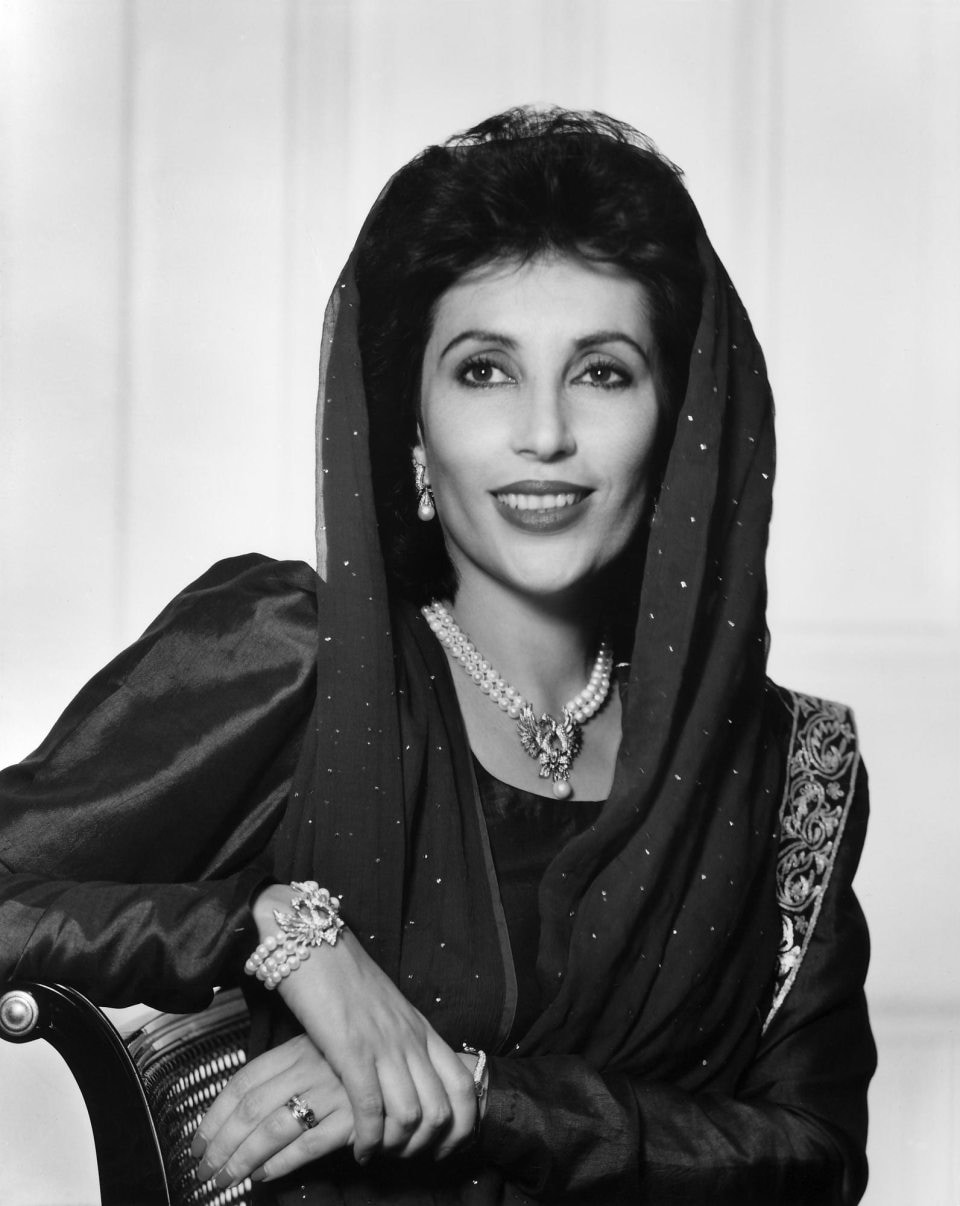
Benazir Bhutto
 Pakistan
Also known as: Shaheed-e-Jamhooriyat, Daughter of the East
Birthday
June 21, 1953
Birth Sign
Gemini
Birthplace
Karachi, Sindh, Pakistan
Age
Died at 54
Height
5 ft 7 in (170 cm)
About
Benazir Bhutto was a Pakistani stateswoman and the first woman elected to lead a Muslim-majority country. She is famous for her two terms as Prime Minister of Pakistan, a record-breaking achievement for women in politics. Bhutto became the public face of resistance to military rule, enduring imprisonment and exile before returning to win power. She is remembered as a liberal and secular reformer whose ambitions for democratic and social change were repeatedly frustrated. Her career remains contested, with admirers casting her as a courageous democrat and a trailblazer for women in politics, while critics point to governance failures. Her life ended in assassination in 2007, while she was campaigning for a political comeback, cementing her status as a martyr in the eyes of her supporters. She is still regarded as one of South Asia's most significant and tragic political figures. Her legacy continues through the Benazir Income Support Programme, Pakistan's largest social safety net program.
" } ] }Early Life & Background
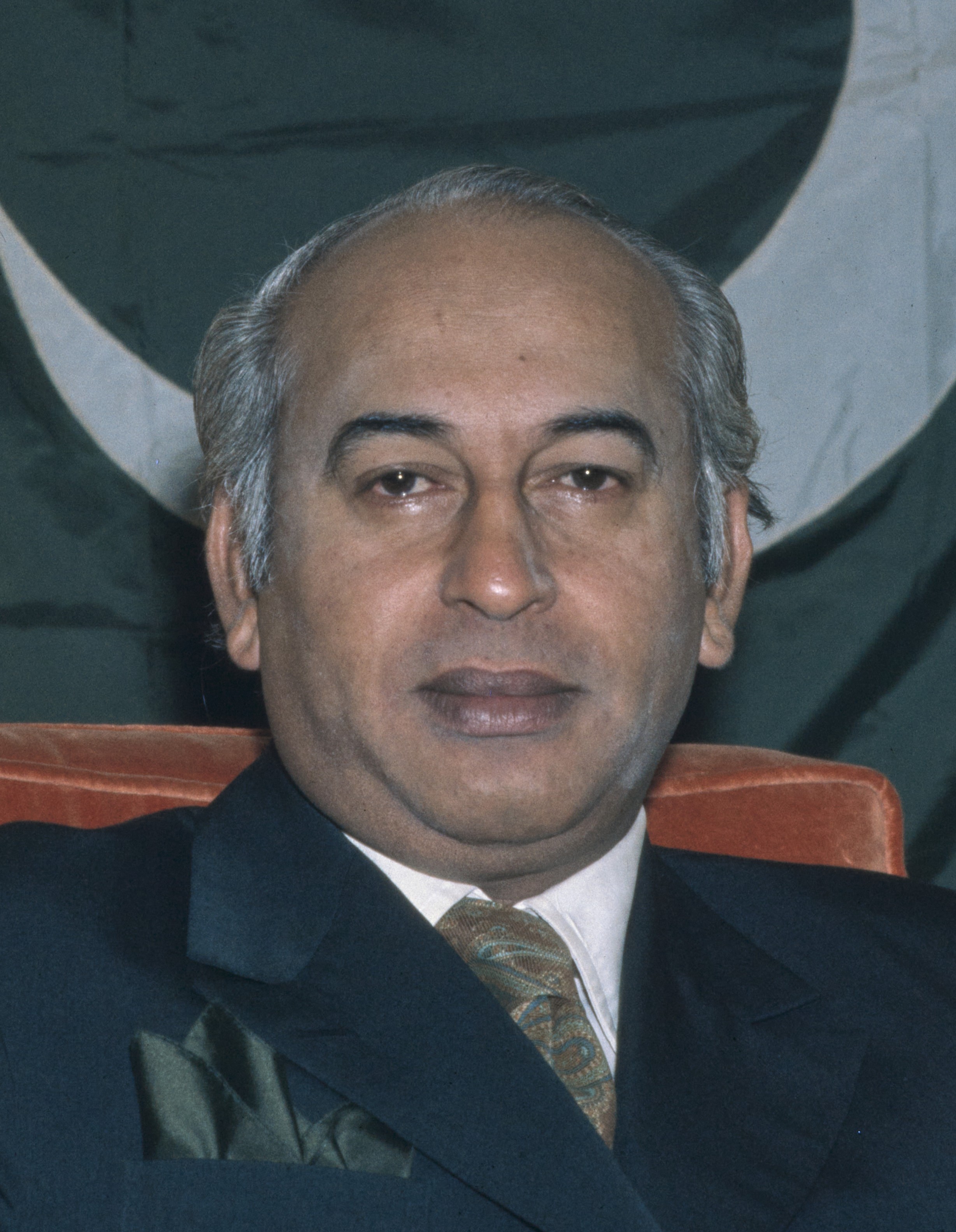
Benazir Bhutto was born on June 21, 1953, in Karachi, Sindh, Pakistan . She grew up in an aristocratic household in Karachi, part of the landed gentry known as waderos, as the daughter of Zulfikar Ali Bhutto, who would later become Prime Minister. Her early education began at Karachi's Lady Jennings Nursery School, followed by attendance at a private Christian-run school in the city. Her mother taught her some Persian as a child, while she idolised her father throughout her childhood, who actively promoted her scholastic development in defiance of traditional attitudes about women prevalent in Pakistan at the time. Despite this, her parents' relationship was troubled; Zulfikar had extramarital romances, and on one occasion, Nusrat was thrown out of their home after complaining.
At age sixteen, Benazir's father used his connections to secure her premature admittance to Radcliffe College at Harvard University, where she initially struggled with homesickness. Her father, Zulfikar, also arranged for his friend John Kenneth Galbraith, an economics professor at Harvard and former U.S. ambassador to India, to be her local guardian. Through Galbraith, Bhutto met his son Peter, who would become a lifelong friend. Despite finding it difficult adjusting to life in the United States, with a fellow student noting she cried through most of her first semester, Bhutto later recalled her time at Harvard as four of the happiest years of her life. She graduated with a B.A. in comparative government in 1973. Continuing her higher education, she then studied at the University of Oxford from 1973 to 1977, where she pursued philosophy, political science, and economics, earning a second B.A. in 1976. This was followed by a postgraduate degree (M.A.) in international law in 1977, having completed a course in International Law and Diplomacy. During her time at Oxford, she made history as the first Asian woman to become president of the prestigious Oxford Union debating society. Initially, Bhutto aspired to become an editor or pursue a career in the Foreign Service, never intending to become involved in politics.
However, her life took an abrupt turn in 1977 when her father's government was overthrown in a military coup led by General Muhammad Zia-ul-Haq, leading to Zulfikar's arrest. Bhutto returned to Pakistan after completing her studies at Oxford, hoping to pursue her diplomatic ambitions, but instead found herself thrust abruptly into the heart of a profound political crisis. Her father was executed on April 4, 1979, after a controversial trial, an event that became the defining trauma of her life and the undeniable catalyst for her political career. Following his execution, Bhutto became the titular head of the Pakistan People's Party (PPP) . From 1979 to 1984, she endured nearly six years of frequent house arrest and imprisonment under the Zia regime for her leadership of the opposition PPP. During solitary confinement, she became deeply religious. After years of detention, Bhutto moved to England in 1984, serving as the joint leader in exile of the PPP. She returned to Pakistan on April 10, 1986, to launch a nationwide campaign for open elections, an event that drew massive crowds and quickly established her as the foremost figure in the political opposition. The path for democratic elections was further cleared on August 17, 1988, when General Zia-ul-Haq was killed in a military plane crash along with the American ambassador, Arnold L. Raphel, removing her primary political adversary.
Career Growth
On December 2, 1988, at age 35, Bhutto was sworn in as prime minister, becoming the first woman to lead a Muslim-majority nation. She also served as finance minister. Her first government was dismissed by President Ghulam Ishaq Khan on August 6, 1990, under charges of corruption and mismanagement, after less than half her term. She won re-election in 1993 and served a second term from 1993 to 1996, again concurrently as finance minister. During this term, she brought electricity to the countryside and built schools across the country, prioritizing hunger, housing, and healthcare. Her government was dismissed again on November 5, 1996, by President Farooq Leghari amid corruption allegations. After the 1999 military coup by General Pervez Musharraf, she went into self-exile, living primarily in Dubai and London while continuing to lead the PPP. She returned to Pakistan on October 18, 2007, after eight years, having negotiated a potential power-sharing agreement with Musharraf. Her return procession in Karachi was targeted by a suicide attack that killed over 140 people, but she survived. On December 27, 2007, following a campaign rally in Rawalpindi, she was assassinated in a suicide attack that also killed 23 others. She was shot and then the attacker detonated explosives. She received the Ellis Island Medal of Honor in 1995 for her humanitarian work. Posthumously, she was awarded the United Nations Human Rights Prize in 2008 for her contributions to democracy and human rights, the Chatham House Prize in 2008 for advancing democracy, and the Harvard Foundation's Peter J. Gomes Humanitarian Award. She was named one of Forbes' 100 Most Powerful Women in the World in 2006, ranking #62.
Career Timeline
Public Image & Style
Bhutto cultivated an image of a modern, educated Muslim woman who respected tradition while advocating progressive change. She was known for wearing the traditional shalwar kameez covered by a white dupatta, often draped over her head as a sign of modesty. International media portrayed her as a glamorous, Western-educated democrat battling extremism and dictatorship. Pakistani media coverage was polarized: supporters saw her as a martyr for democracy, while critics viewed her as corrupt, inexperienced, and too Westernized. Her supporters, known as Bhuttoists, refer to her as Shaheed-e-Jamhooriyat (Martyr of Democracy). Annual death anniversary gatherings at her family mausoleum in Garhi Khuda Bakhsh draw hundreds of thousands. Her speeches, especially the one she gave at the Oxford Union, are frequently shared online. She is often invoked as a symbol of women's empowerment in Muslim societies, though her record on women's rights was mixed. Her personal charisma and family tragedy created a near-mythic status among her followers, who often display her portrait alongside her father's at PPP events. She graced the cover of TIME Magazine in December 1988 with the headline Pakistan's Bhutto: A Woman's Place is in the White House, and again posthumously in December 2007 with The Tragedy of Benazir Bhutto. She was also featured on the cover of Newsweek, Ms. Magazine (1989 cover story: Benazir Bhutto: Leading a Muslim Nation), Vanity Fair, and Der Spiegel.
Fame & Fandom
Benazir Bhutto remains a towering figure in global history, recognized not merely as a politician but as a symbol of democratic resilience. Her enduring presence on the world stage is quantified by her standing in the 4th most famous person from Pakistan ranking, a position she has held steady through multiple cycles of changing political tides. Beyond her national borders, she commands significant attention across the region, placing as the 55th most famous person in South Asia. These placements within the iFANN Global Fame Rankings reflect a sustained legacy that transcends the immediate news cycle, tracking how her story resonates through media coverage and cultural consumption worldwide. Unlike modern celebrities who rely on viral moments, Bhutto's fame is rooted in historical weight and the dramatic arc of her life. There is no formal fandom name for her supporters; instead, her audience consists of voters, party members, and citizens who view her as a martyr for democracy rather than a pop icon. Her following manifests through political rallies, voting patterns, and acts of national mourning rather than organized fan clubs or digital campaigns. The most profound interaction between Bhutto and her people occurred during her final rally in Rawalpindi, where millions gathered not to celebrate a star, but to witness a leader returning from exile. This gathering ended in tragedy, cementing her status as a figure of immense sacrifice. Even years after her death, her image continues to evoke deep emotion, with interfaith groups and political allies honoring her memory in ceremonies that blend reverence with political solidarity.
Interesting Facts and Legends
Benazir Bhutto's first language was English; she spoke Urdu less frequently and barely spoke Sindhi, her ancestral language. She cried most of her first semester at Harvard from homesickness. At Oxford, she became the first Asian woman elected president of the Oxford Union. In 1990, she became the first elected head of government to give birth while in office, when her daughter Bakhtawar was born. She survived at least three major assassination attempts before the successful one in 2007. John Kenneth Galbraith, the famous economist, served as her local guardian at Harvard. Her son Bilawal served as Pakistan's foreign minister from 2022 to 2023. She received an honorary doctorate from the University of Cambridge and the University of Aberdeen. The Benazir Bhutto International Airport in Islamabad was renamed in her honor. Numerous schools, hospitals, and roads across Pakistan are named after her. She was featured in The Guardian's Top 100 Women in Politics and Newsweek's Women of the 21st Century. She was posthumously named a champion of democracy by the United Nations. A legendary anecdote from her time as Prime Minister involves a 1991 Singapore Airlines hijacking; when the hijacker demanded to speak to her, she reportedly answered the phone while asleep, delivering a calm response that became a staple of political lore. Her return from exile in 2007 to face elections despite knowing the risks stands as a defining moment of courage, culminating in her assassination which triggered massive unrest and turned her into a global symbol of the struggle for secular democracy.
Notable Quotes
“Democracy is the best revenge.”
“I am not a fundamentalist but I am very devout.”
“Pakistan's future lies in democracy, not dictatorship.”
“You can imprison a man, but not an idea. You can exile a man, but not an idea. You can kill a man, but not an idea.”
“I have seen the face of terror, and it is not the face of Islam.”
Family & Personal Life
Bhutto was the eldest of four children born to Zulfikar Ali Bhutto and Begum Nusrat Ispahani. Her father, a barrister, founded the Pakistan People's Party and served as prime minister from 1971 to 1977 before being executed in 1979. Her mother, born in Isfahan, Iran, to a wealthy merchant family of Kurdish descent, converted from Shia Islam to Sunni upon marriage. Bhutto's brother Murtaza was assassinated in a police encounter in Karachi in 1996. Her brother Shahnawaz died under mysterious circumstances in 1985. Her sister Sanam remains active in the PPP. Her paternal grandmother, Lakhi Bai, was a Hindu dancing girl who converted to Islam and changed her name to Kurshid before marrying Shah Nawaz Bhutto. The family owns extensive agricultural land in Sindh, particularly in Larkana and surrounding districts, and properties in Karachi, Islamabad, Dubai, and London. The Bhutto family was aristocratic, wealthy landlords from Sindh, part of the waderos. They were Sunni Muslims, though Nusrat had been born into a Shia family before converting upon marriage.
Notable Connections
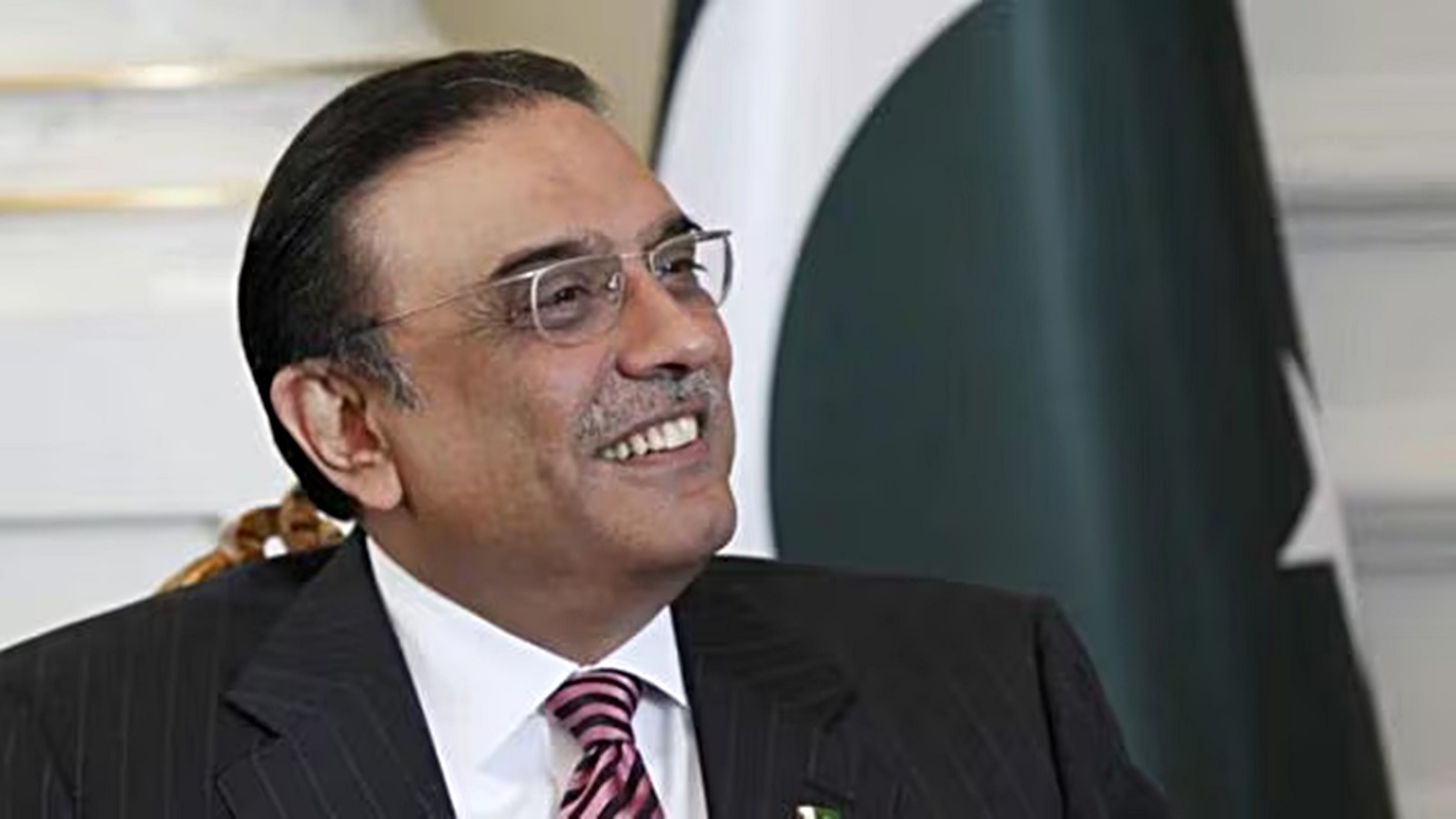
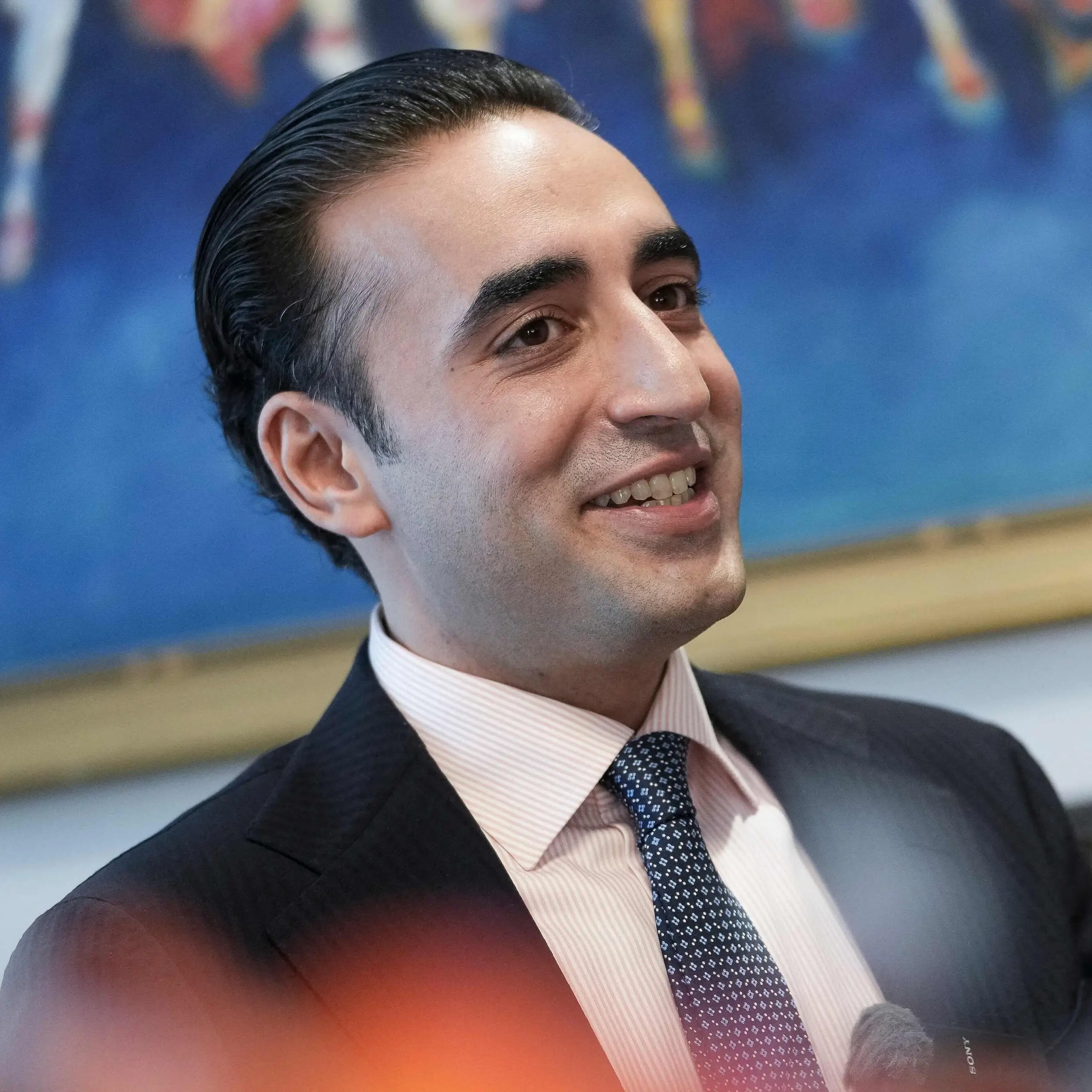
Bhutto is closely associated with the Pakistan People's Party, which she led from 1979 until her death. Her father Zulfikar Ali Bhutto founded the party. She is also linked to her husband Asif Ali Zardari, who became president after her death, and her son Bilawal Bhutto Zardari, who chairs the PPP. Her political rivals included military rulers Zia-ul-Haq and Pervez Musharraf. Internationally, she was linked to figures like John Kenneth Galbraith, who was her guardian at Harvard.
Relationships & Dating History
Bhutto's romantic life was largely private until her arranged marriage. During her years at Harvard and Oxford in the early 1970s, she had casual relationships with fellow students, but no confirmed public partners are documented. At Oxford, she was briefly linked to a fellow student, though details remain scarce. On December 18, 1987, she married Asif Ali Zardari in a match arranged by their families as a political alliance, negotiated while Bhutto was still under surveillance by the Zia regime. Zardari was the son of Hakim Ali Zardari, a prominent Sindhi landowner and politician. The marriage was controversial: Zardari was known as Mr. 10 Percent due to widespread allegations of corruption during Bhutto's governments, and he was imprisoned on various charges during her terms. Despite persistent rumors of strain, Bhutto remained married to him until her assassination in 2007. They had three children together: Bilawal (born 1988), Bakhtawar (born 1990), and Aseefa (born 1993). After her death, Zardari served as president of Pakistan from 2008 to 2013. Unconfirmed rumors circulated about a possible romantic connection with a European diplomat during her second term in the mid-1990s, but no credible evidence exists. As of 2026, Bhutto is deceased; at the time of her death, she was married to Asif Ali Zardari.
- MarriedAsif Ali Zardari1987 - 2007CurrentArranged political marriage; had three children: Bilawal, Bakhtawar, and Aseefa. Ended with her assassination.
Death & Aftermath
Died
December 27, 2007 (aged 54)
Death Place
Rawalpindi, Pakistan
Cause of Death
Reported blunt force trauma and gunshot wounds
Benazir Bhutto stepped out of her vehicle in Rawalpindi's Liaquat National Bagh on December 27, 2007, just moments after addressing a campaign rally for her return to power. A suicide bomber detonated explosives near her car, followed immediately by gunfire that left her with severe head injuries. She was rushed to the Rawalpindi General Hospital where she was declared dead shortly after arrival. Official reports and an autopsy confirmed the cause of death as blunt force trauma to the head from the explosion combined with gunshot wounds. While initial accounts focused solely on the blast, later investigations suggested gunmen fired upon her after the initial explosion, though the exact sequence remained disputed.
No one has ever been convicted for the murder, and the case remains officially unsolved despite periodic renewals of investigative efforts. Her death triggered immediate global outrage and mourning, with tributes pouring in from world leaders including US President George W. Bush and UK Prime Minister Gordon Brown. Millions gathered in vigils across major cities like Karachi and Lahore, while memorial murals appeared in Rawalpindi and moments of silence were observed in parliaments worldwide. The funeral took place two days later in her hometown of Larkana, attended by hundreds of thousands of mourners who filled the streets for the procession.
She was buried in the family mausoleum known as Mazar-e-Benazir, which has since become a significant pilgrimage site for her supporters. Posthumous honors included awards by the International Women's Media Foundation. Her husband Asif Ali Zardari took over leadership of the Pakistan Peoples Party, while the Benazir Bhutto Scholarship Program was established to support women's education.
Net Worth (Estate Value)
$15 Million
iFANN Editorial Team estimate
iFANN currently estimates Benazir Bhutto's estate at $15 Million as of 2026. The bulk of this wealth comes from inherited family assets, including extensive agricultural land in Sindh, particularly in Larkana and surrounding districts, valued at $5–8 million. The family also owns real estate in Karachi, Islamabad, Dubai (purchased during her exile years), and a townhouse in London, collectively worth an estimated $3–5 million. Book royalties from her two memoirs, Daughter of the East (1988) and Reconciliation: Islam, Democracy, and the West (published posthumously in 2008), have generated $500,000 to $1 million in cumulative royalties. During her exile years (2000–2007), she commanded speaking fees of $50,000 to $100,000 per engagement. Since her death, the estate continues to earn income from ongoing book sales, licensing of her image and speeches for documentaries and biographical projects, and the family's agricultural holdings in Sindh. The estate is managed by her husband Asif Ali Zardari and their children. The Bhutto family's political capital also translates into control over PPP assets and party funding, though these are not personal assets.
Awards Won (4)
Bhutto received the United Nations Human Rights Prize posthumously in 2008 for her contributions to democracy and human rights. She was awarded the Ellis Island Medal of Honor in 1995 for her humanitarian work. Harvard Foundation gave her the Peter J. Gomes Humanitarian Award posthumously. She also received the Chatham House Prize in 2008 for advancing democracy. As a political figure, she did not receive entertainment industry awards.
2008 · Human Rights
Contributions to democracy and human rights
2008 · International Relations
Advancing democracy
Known For
Prime Minister of Pakistan (first term)
1988-1990 · Prime Minister
Prime Minister of Pakistan (second term)
1993-1996 · Prime Minister
First woman elected to lead a Muslim-majority country
1988 · Historic achievement
Leader of the Pakistan People's Party
1979-2007 · Chairperson
Assassination in Rawalpindi
2007 · Victim
Keywords
Sources
Quick Facts
- Profession
- politician
- Born
- +1953-06-21
- Birthplace
- Karachi
- Died
- +2007-12-27
- Death Place
- Rawalpindi
- Gender
- Female
- Spouse
- Asif Ali Zardari
- Birth Sign
- Gemini
- Height
- 5 ft 7 in (170 cm)
- Education
- Harvard University, Oxford University
Personal Details
- Full Name
- Benazir Bhutto
- Height
- 5 ft 7 in (170 cm)
- Spouse
- Asif Ali Zardari
- Children
- Bilawal Bhutto Zardari, Bakhtawar Bhutto Zardari, Aseefa Bhutto Zardari
- Education
- Radcliffe College, Harvard University (BA in comparative government, 1973); University of Oxford (BA in philosophy, politics and economics, 1976; MA in international law, 1977)
Frequently Asked Questions
How old was Benazir Bhutto when she died?
What is Benazir Bhutto's net worth in 2026?
Who was Benazir Bhutto's husband?
What is Benazir Bhutto best known for?
How did Benazir Bhutto die?
Social Media
Similar People
Join the community
fans discussing