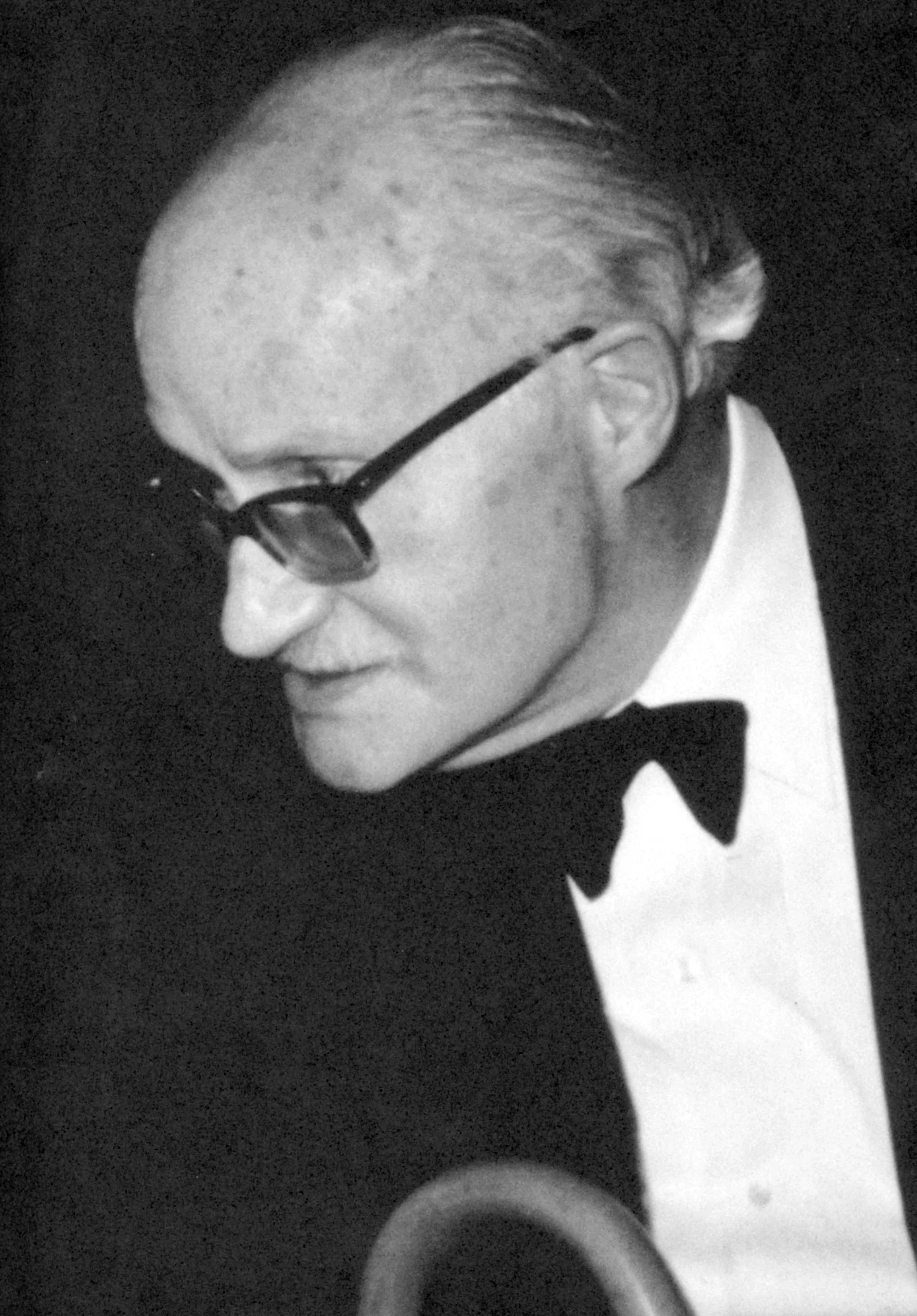
Nicolás Gómez Dávila
 Colombia
Also known as: Don Colacho
Birthday
May 18, 1913
Birth Sign
Taurus
Birthplace
Cajicá, Colombia
Age
Died at 80
About
Nicolás Gómez Dávila was a Colombian philosopher, writer, and aphorist widely recognized as one of the most profound conservative thinkers of the 20th century. Born in Cajicá near Bogotá, he spent his entire life in Colombia, crafting thousands of short, pithy statements called escolios that critiqued modernity and democracy. Often referred to as the "Nietzsche of the Andes," he rejected systematic treatises in favor of a fragmented, provocative style that challenged the prevailing intellectual currents of his time.
Unlike traditional academics, Gómez Dávila remained a recluse throughout his life, rarely appearing in public and avoiding the trappings of fame. His work gained significant traction only late in his career, when his aphorisms began to circulate beyond a small circle of admirers. Today, his ideas are studied globally by scholars interested in political theory, Catholic philosophy, and critiques of progressivism. His legacy endures as a stark counter-narrative to the dominant trends of the modern world.
Early Life & Background
Born on May 18, 1913, in the town of Cajicá, Nicolás Gómez Dávila entered the world into an affluent bourgeois family with deep roots in Colombian aristocracy. His father was a prominent politician and diplomat, which placed the young Gómez Dávila in a position of privilege from birth. This wealth allowed him to remain insulated from the political turmoil and violence that would later plague Colombia during the era known as "La Violencia." Instead of engaging with public life, he focused intensely on his education and intellectual development.
His upbringing was marked by seclusion and a rigorous home education supplemented by attendance at the elite Colegio San Bartolomé in Bogotá. It was here that he formed friendships with other future intellectuals, though he often maintained a distance from his peers. From a young age, he displayed a voracious appetite for reading, immersing himself in classical literature, theology, and philosophy. He developed a disdain for the superficiality of public discourse and the rising tide of liberal and progressive ideologies sweeping through Latin America.
Gómez Dávila began writing his famous aphorisms in his teenage years, initially as private notes rather than intended for publication. These early writings were critical of the social and political trends he observed, serving as a personal outlet for his conservative worldview. Despite his isolation, he maintained correspondence with various intellectuals, but he refused to publish anything until much later in life. This reclusiveness contributed to his reputation as a mysterious figure who operated outside the mainstream intellectual circles of his time, cultivating a unique philosophical voice in solitude.
Career Growth
For most of his life, Gómez Dávila's work remained unknown outside a small circle of friends and admirers. He spent decades refining his thoughts without seeking public recognition or commercial success. The breakthrough moment finally arrived in 1977 when his first major collection of aphorisms, titled Scholium, was published. This release marked his entry into the public literary sphere and introduced his sharp, provocative style to a wider audience.
Following this debut, he continued to produce significant works such as Escolios a un texto implícito (Scholia to an Implicit Text), which solidified his reputation as a radical critic of modernity. His work gained international traction, particularly in Europe, where it resonated with conservative and reactionary thinkers disillusioned with the trajectory of post-war Western society. In German-speaking regions, his writings were translated and widely discussed, leading to frequent comparisons with Friedrich Nietzsche and Martin Heidegger.
Although he never achieved mass commercial success or fame in the traditional sense, his impact on conservative philosophy has been enduring and profound. His ideas continue to be studied and cited by scholars, philosophers, and political theorists globally. Posthumous publications have further expanded his legacy, ensuring that his critiques of democracy and progressivism remain relevant in contemporary discourse.
Career Timeline
Public Image & Style
Gómez Dávila is portrayed in media and academic circles as a solitary genius, a thinker who stood apart from the prevailing currents of his time. His image is one of austerity, intellect, and unwavering conviction. He is often depicted as a man who rejected the comforts of fame and fortune in favor of a life dedicated to truth and reflection. His content consists almost entirely of aphorisms, presented in a tone that is both provocative and contemplative. On social media, his words are shared in a format that emphasizes their brevity and impact, often accompanied by minimalist graphics or plain text.
Fame & Fandom (iFAMOUS Rankings)
Nicolás Gómez Dávila commanded a global attention defined by intense intellectual resonance rather than mass celebrity. His influence permeated academic circles and philosophical discourse across Latin America and beyond, establishing a legacy that outlasted his physical presence. Despite this enduring impact, the iFANN Global Fame Engine evaluated his standing in September 2026 and determined that he does not currently hold a placement in the published rankings for the Global Top 1,000 or any Top-100 scope list. Consequently, no ordinal rank or specific score is assigned to him within the current framework of public fame metrics.
The audience engaging with his work consists of scattered intellectual communities and digital accounts dedicated to sharing his aphorisms, yet these groups lack the organizational structure, rituals, or formal identity typical of modern fandoms. No documented name exists for this collective, which operates through academic study and online discussion rather than organized fan campaigns or celebrity worship. Accounts like @QuothDavila on X aggregate and translate his writings, reaching audiences interested in philosophy and conservative ideology without forming a structured fanbase.
Interesting Facts and Legends
Nicolás Gómez Dávila wrote under the pseudonym "Don Colacho" for some of his more controversial aphorisms, adding a layer of anonymity to his sharpest critiques. He was known for his ability to distill complex philosophical ideas into concise, memorable statements that often shocked readers with their bluntness. Despite his reclusive nature, he corresponded with many prominent intellectuals of his time, including writers and philosophers from Europe and Latin America.
His work was largely ignored by mainstream academia during his lifetime, gaining traction only after his death. He was a devout Catholic, and his faith played a central role in shaping his philosophical outlook, leading him to reject secular modernism. A notable legend surrounding him is the sheer volume of his output; he left behind thousands of unpublished aphorisms that continue to be discovered and analyzed by scholars today.
Notable Quotes
“Liberty is not an end, but a means. Whoever mistakes it for an end does not know what to do once he attains it.”
“Democracy is the cult of mediocrity.”
“To be a reactionary is to be faithful to the past.”
“The modern world is a machine that grinds down the soul.”
Family & Personal Life
Gómez Dávila was born into an affluent bourgeois family with deep roots in Colombian aristocracy. His father was a prominent politician and diplomat, providing him with a comfortable upbringing. He lived with his family throughout his life, maintaining a strict routine of solitude and study. He never married and had no children, dedicating himself entirely to his intellectual pursuits. His only companions were books and his inner circle of trusted friends, who respected his need for privacy.
Notable Connections
Ernst Jünger, Matthew Pheneger, Nayeli Riano.
Relationships & Dating History
Nicolás Gómez Dávila did not have any public romantic relationships. He remained single and celibate throughout his life, dedicating himself entirely to his intellectual pursuits. There are no records of engagements, marriages, divorces, or even rumored flings. His personal life was defined by his withdrawal from the social world, and he never sought a partner. As of the date of his death in 1994, he was unmarried and childless. No current relationship status exists, as he has been deceased for over three decades.
Death & Aftermath
Died
May 17, 1994 (aged 80)
Death Place
Bogotá, Colombia
Cause of Death
Natural causes
Nicolás Gómez Dávila died on May 17, 1994, in Bogotá, Colombia, just one day before he was scheduled to turn eighty-one. The circumstances of his passing were quiet and uneventful, consistent with a life defined by seclusion and routine. He passed away within the family home where he had lived for decades, surrounded only by books and his inner circle of trusted friends. No autopsy or coroner's ruling was publicly released, and the official cause of death remains listed as natural causes related to old age.
His death did not trigger a public mourning period or a grand funeral service, reflecting his lifelong aversion to the spotlight. Instead, the news was received with solemn reflection by the small community of intellectuals who knew him personally. There were no vigils or mass gatherings; the reaction was confined to academic circles and private correspondence among philosophers who recognized the magnitude of the loss.
In the decades following his death, Gómez Dávila's legacy has grown rather than faded. His collection of aphorisms, known as Scholium, continued to be published and translated into multiple languages, finding new audiences in Europe and Latin America. Scholars have increasingly cited his work as a prophetic critique of modernity, democracy, and the decline of Western civilization. While no specific hall-of-fame induction or state-sponsored monument exists in his name, his influence persists through academic curricula and online communities dedicated to conservative thought. The management of his estate remains a private matter, with no public records detailing financial distributions or legal disputes. His writings continue to serve as a foundational text for reactionary philosophy, ensuring that his voice remains relevant long after his physical absence.
Net Worth (Estate Value)
$5 Million
iFANN Editorial Team estimate
As a private individual who lived off inherited wealth and never engaged in commercial ventures, Nicolás Gómez Dávila's net worth is not publicly tracked in the same way as modern celebrities. Estimates suggest he lived comfortably due to his family's affluence, but there are no specific figures available regarding his personal assets. Since his death in 1994, his estate has been managed privately, with no public disclosures regarding its value or distribution.
Posthumous sales of his works have generated royalties, but these are likely modest compared to modern celebrity estates. The iFANN Editorial Team estimates his estate's value at approximately $5 million based on the ongoing academic interest in his work and the limited market for his publications. This figure reflects the enduring value of his intellectual contributions rather than a large accumulation of liquid assets. His financial affairs remain confidential, with no evidence of major investments or business ventures during his lifetime.
Awards & Accolades
View 2 records, honours and achievementsKnown For
Scholium
1977 · Author
Escolios a un texto implícito
1980 · Author
Keywords
Sources
Quick Facts
- Profession
- writer, philosopher, aphorist
- Born
- May 18, 1913
- Birthplace
- Cajicá, Colombia
- Died
- May 17, 1994
- Death Place
- Bogotá, Colombia
- Gender
- Male
- Birth Sign
- Taurus
Personal Details
- Full Name
- Nicolás Gómez Dávila
- Children
- Education
- Colegio San Bartolomé, private tutoring
Frequently Asked Questions
Who was Nicolás Gómez Dávila?
When did Nicolás Gómez Dávila die?
What is Nicolás Gómez Dávila famous for?
Did Nicolás Gómez Dávila have any children?
Is Nicolás Gómez Dávila still alive?
Social Media
Similar People
Join the community
fans discussing