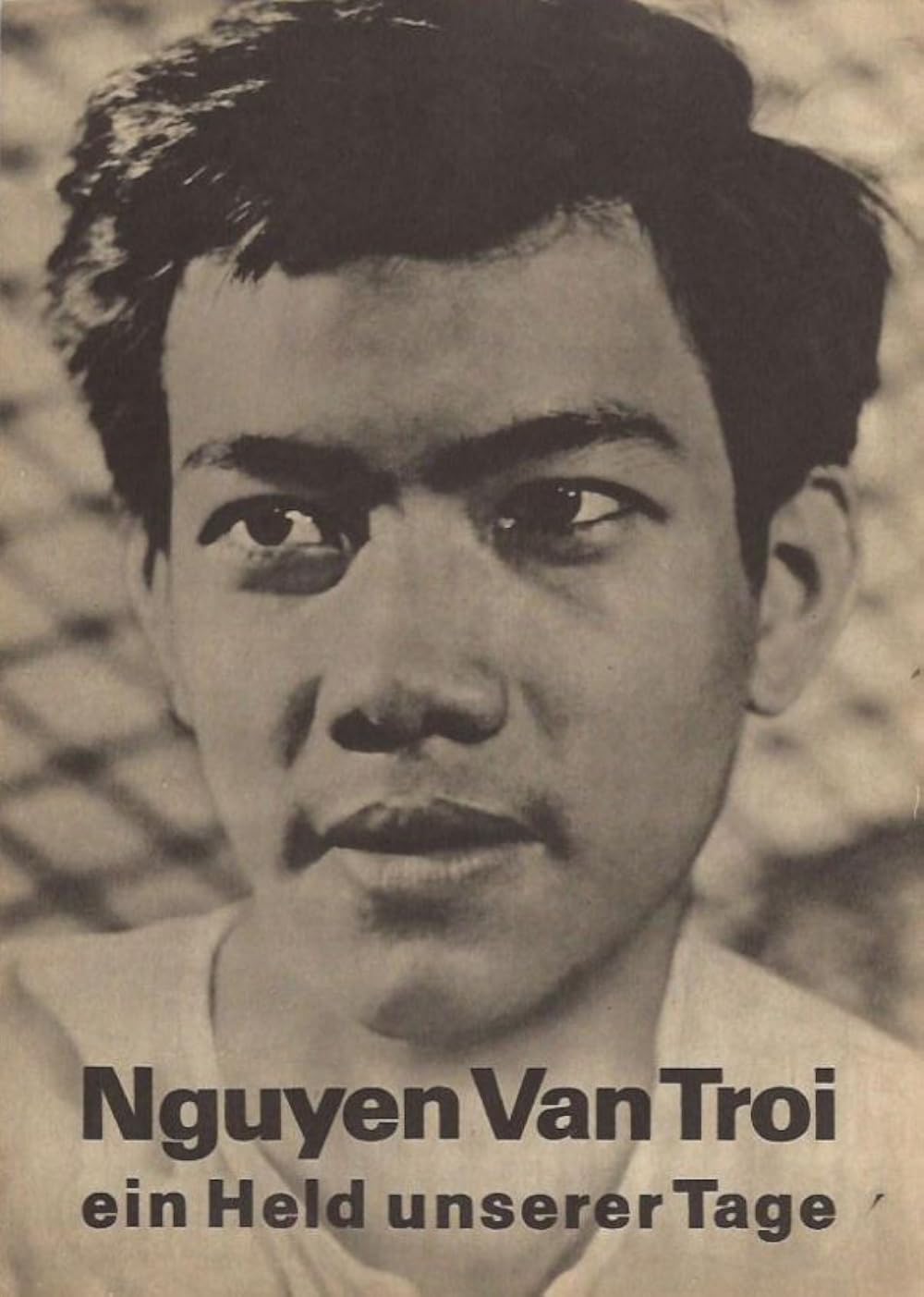
Nguyen Van Troi
 Vietnam
revolutionary•resistance fighter
Also known as: Nguyễn Văn Trỗi
Birthday
February 1, 1940
Birth Sign
Aquarius
Birthplace
Quảng Nam, Vietnam
Age
Died at 24
About
Nguyễn Văn Trỗi was a Vietnamese electrician and a member of the National Liberation Front of South Vietnam whose execution at age 24 turned him into a lasting symbol of the revolutionary movement. His name is spoken with reverence in Vietnam, where streets and schools carry his memory.
Trỗi's notoriety came from a bold plot to assassinate U.S. Secretary of Defense Robert McNamara during his 1964 visit to Saigon. The plan involved bombing the Công Lý Bridge, a key crossing McNamara's motorcade was expected to use. Arrested, tried, and sentenced to death, Trỗi faced the firing squad on October 15, 1964. His final words reportedly defiant, he was immediately honored as a martyr by the Democratic Republic of Vietnam and the National Liberation Front, his face appearing on stamps and propaganda materials that cemented his status as a folk hero.
Early Life & Background
Trỗi was born on February 1, 1940, in Quảng Nam province, a region of central Vietnam that would see heavy fighting in the decades to come. His early life was shaped by the turmoil of the First Indochina War. In 1954, as the Geneva Accords divided the country, Trỗi and his father fled south to Saigon to escape the 'Denounce Communists Campaign' that swept through their native province. The move was a defining moment, separating them from their northern roots and plunging Trỗi into the bustling, tense atmosphere of the southern capital.
In Saigon, Trỗi took up an electrician's apprenticeship, learning a trade that would later prove both practical and symbolic. He worked as an electrician, a job that took him into the city's infrastructure and its hidden networks. During these years, he quietly became involved with underground workers' organizations, circles where anti-government sentiment simmered. In 1962, he formally joined the People's Revolutionary Youth League, the youth wing of the National Liberation Front, committing himself to the resistance. His training as an electrician, combined with his political awakening, positioned him for the dangerous mission that would define his life.
Career Growth
Trỗi's revolutionary career reached its peak with the 1964 plot against McNamara. The plan was to plant explosives beneath the Công Lý Bridge in Saigon, a structure that carried a main artery of the city. The attack was intended to strike a major blow against American military leadership. But the plot was uncovered before it could be executed. Trỗi was arrested by the Republic of Vietnam's police, and his subsequent trial drew intense international attention.
Convicted of attempted murder, Trỗi was sentenced to death. During his imprisonment, he reportedly rejected offers of clemency in exchange for cooperation. He was executed by firing squad on October 15, 1964. The execution sparked outrage among anti-war activists and became a rallying point for the National Liberation Front. In the aftermath, Trỗi was posthumously promoted to a hero of the revolution. His widow, Phan Thị Quyên, later published a biography of him, and a propaganda film titled 'Nguyễn Văn Trỗi Will Live Forever' was produced. Streets and schools in both North and South Vietnam were named in his honor, ensuring his name would outlive the war itself.
Career Timeline
Public Image & Style
In the eyes of the Vietnamese public, Nguyễn Văn Trỗi stands as a martyr of unyielding resolve. His image, captured in grainy photographs and stylized propaganda posters, shows a young man with a determined gaze. He is often depicted in the simple clothes of a worker, a deliberate contrast to the American military might he defied. The narrative of his life, as promoted by the state, emphasizes his humble origins, his political awakening, and his fearless acceptance of death. This carefully crafted image has made him a permanent fixture in Vietnam's patriotic education, a model of sacrifice for generations of students.
Fame & Fandom
Nguyen Van Troi never courted a fanbase in the modern sense of autograph seekers or chart chasers. His legacy is not built on the adoration of a living celebrity but on the solemn reverence of a nation mourning a martyr. There is no formal fandom name for his followers; instead, his 'audience' consists of citizens who honor him as a National Hero through civic rituals rather than pop culture consumption. Streets, schools, and markets across Vietnam bear his name, transforming his memory into a daily part of public life. While he lacks the viral moments or fan campaigns typical of entertainment icons, his story persists through state-sanctioned education and cultural artifacts like the 1966 film Nguyen Van Troi, which cemented his narrative in the national consciousness. This unique form of fame transcends mere popularity, anchoring him deeply in the country's historical identity. Despite the absence of a recreational fanbase, his global recognition remains statistically significant within specific geopolitical contexts. According to the iFANN Global Fame Rankings, Nguyen Van Troi is currently the 67th most famous person in Vietnam, holding steady from the previous cycle. He also stands as the 83rd most famous person from Vietnam in the August 2026 data set. These placements reflect an enduring prominence that extends far beyond his execution.
Interesting Facts and Legends
Nguyễn Văn Trỗi's legacy carries a few surprising footnotes that bridge history and folklore. Actress Jane Fonda, a vocal opponent of the Vietnam War, reportedly named her son Troy Garity after him, using a phonetic twist on 'Trỗi.' His final words, as recorded by witnesses, were a defiant shout against the government of General Nguyễn Khánh and American imperialists. A wartime play featuring actor Mr. Binh brought his story to the stage, and his image was reproduced on postage stamps issued by North Vietnam. Pantheon's historical database ranks him second among 'Extremists In Vietnam,' a statistical nod to his enduring prominence. Beyond these facts, a powerful legend surrounds his death: the story of the man who refused a blindfold. Unlike other prisoners who were often hooded before execution, Trỗi allegedly walked to the firing squad with his eyes open, shouting revolutionary slogans until the very end. This act of unyielding dignity became central to his mythos, portraying him as an 'unblindfolded' hero who faced death without fear. The narrative, perpetuated in Vietnamese literature and education, frames his execution not as a defeat but as a final, triumphant performance of resistance.
Notable Quotes
“Down with Khanh, down with the American Imperialists.”
Family & Personal Life
Trỗi married Phan Thị Quyên, a woman who would become a guardian of his memory. The couple had no known children. Following his execution, Quyên dedicated herself to preserving his story, publishing a biography that detailed his life and revolutionary commitment. She became a symbol of the movement's resilience, often appearing at commemorative events. The family's personal life was largely subsumed by the political cause, and little else is recorded about their household or relatives.
Notable Connections
Relationships & Dating History
Nguyễn Văn Trỗi was married to Phan Thị Quyên, a union that was cut short by his execution in 1964. The couple's marriage was brief, overshadowed by his political activities and eventual imprisonment. Quyên remained devoted to his memory after his death, publishing a biography and becoming a public figure in her own right. She never remarried, dedicating her life to preserving his legacy. Their relationship, though short, became a symbol of the personal sacrifices demanded by the revolutionary struggle.
- MarriedPhan Thị Quyên1963 - 1964Married until his execution in 1964; she later published his biography.
Death & Aftermath
Died
October 15, 1964 (aged 24)
Death Place
Saigon, South Vietnam
Cause of Death
Execution by firing squad
The South Vietnamese government announced the execution of Nguyen Van Troi by firing squad on October 15, 1964, following a conviction for attempting to assassinate U.S. Secretary of Defense Robert McNamara. The electrician and National Liberation Front member faced the state-sanctioned death in Saigon after being captured in the spring of 1963 while planting an explosive device intended for the motorcade. His final days occurred within military custody, culminating in a public sentencing that ended his life at exactly twenty-four years old. North Vietnam immediately elevated him to the status of a national martyr, transforming his death into a central component of revolutionary propaganda that inspired songs, poems, and plays.
A notable tribute arrived in 1966 with the film titled Nguyen Van Troi , which dramatized his life and cemented his legacy in popular culture. His remains were reportedly repatriated to Hanoi for a state-organized funeral attended by officials and the public, featuring performances of revolutionary songs dedicated to his memory. Posthumously, he received the title Hero of the People's Armed Forces, and his story was chronicled in books like The Way He Lived by Tran Dinh Van. Streets, schools, and factories across Vietnam now bear his name, including the Nguyen Van Troi Bridge in Da Nang, ensuring his identity outlived the war itself.
Awards & Accolades
View 1 records, honours and achievementsKnown For
Attempted assassination of Robert McNamara
1964 · Planner
Keywords
Sources
Quick Facts
- Profession
- revolutionary, resistance fighter
- Born
- February 1, 1940
- Birthplace
- Quảng Nam, Vietnam
- Died
- October 15, 1964
- Death Place
- Saigon, Vietnam
- Gender
- Male
- Spouse
- Phan Thị Quyên
- Birth Sign
- Aquarius
Personal Details
- Spouse
- Phan Thị Quyên
Frequently Asked Questions
Who was Nguyen Van Troi?
Why was Nguyen Van Troi executed?
When was Nguyen Van Troi born and when did he die?
What was Nguyen Van Troi's role in the Vietnam War?
How did Nguyen Van Troi become a martyr?
Similar People
Join the community
fans discussing