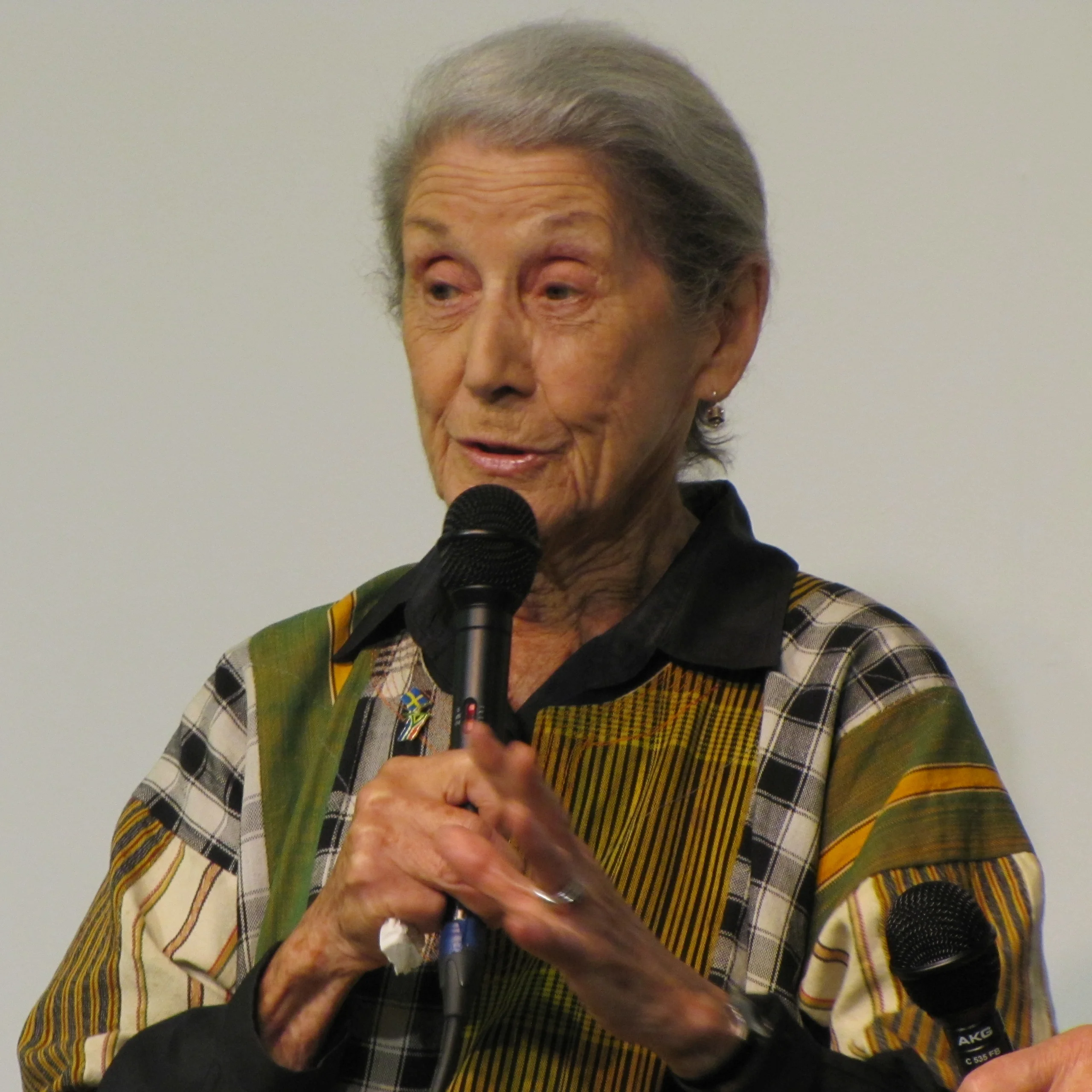
Nadine Gordimer
 South Africa
novelist•short story writer•political activist
Birthday
November 20, 1923
Birth Sign
Scorpio
Birthplace
Springs, South Africa
Age
Died at 90
About
Nadine Gordimer was a South African novelist, short story writer, and political activist whose work served as a moral compass against the apartheid regime. Born in Springs, a gold-mining town near Johannesburg, she began writing at age six and published her first short story at fifteen. Her fiction explored the personal and political costs of racial injustice, earning her the Nobel Prize in Literature in 1991 for her magnificent epic writing. Gordimer's novels, including the Booker Prize-winning The Conservationist, were often banned by the South African government for their unflinching portrayal of white complicity and black resistance. She joined the African National Congress when it was outlawed and advised Nelson Mandela during his 1964 trial. Gordimer died on July 13, 2014, leaving behind a body of work that remains essential reading for understanding South Africa's journey through apartheid.
Early Life & Background
Nadine Gordimer was born on November 20, 1923, in Springs, a bustling gold-mining town located east of Johannesburg. Her father, Isidore Gordimer, was a Jewish immigrant from Lithuania who worked as a jeweler and watchmaker, while her mother, Nanmy (née Friedlaender), was an English immigrant from London. Both parents instilled in her a strong sense of social justice from a young age, exposing her to the stark racial divisions that defined South African society. Despite being surrounded by these tensions, her childhood home was a place of intellectual curiosity where she learned to read voraciously.
She began writing stories at the age of six, influenced by the fairy tales she devoured and the complex adult conversations she overheard. By the time she was fifteen, she had already published her first short story, "Come Morning," in a children's magazine called Child Life. This early success encouraged her to continue writing, even as she navigated the limitations of the segregated education system available to her. She attended local schools but eventually left formal education to focus entirely on her craft, relying on self-education through extensive reading and observation of the world around her.
Before achieving global recognition, Gordimer lived a relatively quiet life in Johannesburg, working as a freelance journalist and contributing to liberal publications. She secretly engaged with anti-apartheid circles, gathering material for her writing while navigating the dangers of the era. Her breakthrough came in the 1960s with the publication of The Lying Days in 1953, which gained critical attention for its honest depiction of white South African life. However, it was her later works that would truly cement her reputation as a fearless critic of the regime.
Career Growth
Gordimer's career took a definitive turn in the 1960s when she began writing openly about apartheid and joining underground activities within the African National Congress. Her novel The Conservationist won the Booker Prize in 1974, making her the first South African to receive the award. This recognition propelled her into international prominence and solidified her status as a major literary figure. Two of her most powerful works, Burger's Daughter (1979) and July's People (1981), were banned by the South African government for their unflinching portrayal of white complicity and black resistance.
In 1991, she was awarded the Nobel Prize in Literature, an honor that recognized her "magnificent epic writing" and its benefit to humanity. This award brought unprecedented attention to the struggles within South Africa and cemented her standing as a global icon. Throughout the 1990s, she played a key role in drafting the post-apartheid constitution, leveraging her influence to help shape the country's future. She continued to write and advocate for HIV/AIDS awareness in the 2000s, remaining politically engaged until her death.
Career Timeline
Public Image & Style
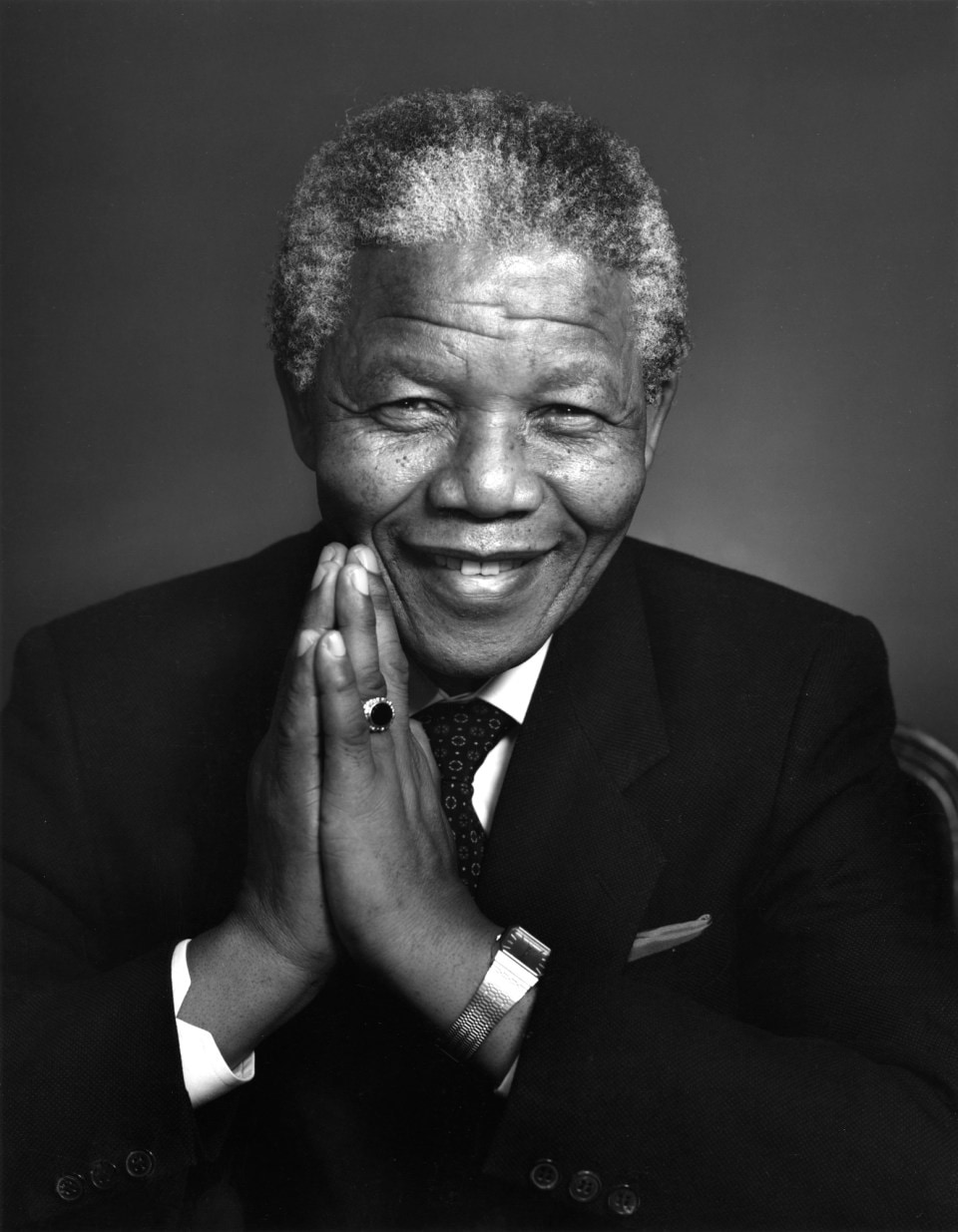
Gordimer was portrayed as a moral and intellectual force, a writer who used her pen to dismantle oppression. Her tone was serious, urgent, and uncompromising, reflecting her deep commitment to social justice. She was known for her sharp intellect, humility, and unwavering principles. Despite her fame, she lived a modest life in Johannesburg and avoided the spotlight, often wearing simple clothing. Her public image was that of a rebel radical, someone who refused to compromise her values even when faced with censorship and exile.
Fame & Fandom (iFAMOUS Rankings)
Nadine Gordimer's legacy rests not on the frenzied adoration of a pop culture mob, but on the quiet, enduring reverence of readers and activists who viewed her as a moral compass. There is no formal name for her fanbase; she cultivated no clubs, sparked no viral hashtag campaigns, and never inspired fans to organize billboard drives or midnight vigils outside her Johannesburg home. Her audience comprised literary critics, academics, and political dissidents who engaged with her work through the gravity of its content rather than the spectacle of celebrity. The legends surrounding her are historical bedrock: the 1991 Nobel Prize that declared her writing a benefit to humanity, her decades-long resistance against apartheid as an ANC member, and her final departure in 2014 which marked the silence of a radical voice. These verified events form the mythology of a writer who used fiction to dismantle oppression. While the world has moved on from the specific rhythms of her life, her standing remains a measured metric of global cultural weight. As of September 2026, iFANN's Global Fame Engine has evaluated this person, but they do not currently hold a placement in the published rankings (Global Top 1,000 or a Top-100 scope list). Say this plainly and neutrally; do NOT state or guess any numeric rank or score. This absence from the current top lists does not diminish her canonical status, which is anchored by her inclusion in academic curricula and literary anthologies worldwide. She appeared on the cover of Time magazine in 1991 following her Nobel Prize win, with the headline "The Conscience of South Africa," a rare instance of such high-profile media attention for a writer of her generation. Her presence in The New Yorker and The Paris Review further solidified her reputation among intellectuals without seeking mass-market celebrity. The lack of a fandom name reflects the serious nature of her readership, who approached her work as a vital historical document rather than entertainment.
Interesting Facts and Legends
Nadine Gordimer wrote her first story at age six and published her first story at fifteen. She advised Nelson Mandela on his 1964 court statement, which became iconic in the struggle against apartheid. She was a founding member of the Congress of South African Writers (COSAW). Her refusal to leave South Africa during the height of apartheid, despite offers of exile and safety abroad, symbolized her commitment to her homeland. The 1991 Nobel Prize acceptance speech is widely cited as a defining moment where she declared that literature must serve humanity and challenge oppression. She received the Order of Merit in South Africa in 1995, one of the country's highest civilian honors. In 2003 and 2005, she received honorary doctorates from the University of Cape Town and the University of the Witwatersrand, respectively. She was also named Commander of the Order of Arts and Letters by France in 2006. In 2008, she received the Lifetime Achievement Award from the South African Literary Awards, followed by the PEN Pinter Prize for freedom of expression in 2010. She became an Honorary Fellow of the Royal Society of Literature in 2013. Her notable quotes include "Literature is not a luxury; it is a necessity" and "I write because I cannot help myself." Her works have been adapted for stage and screen, including the film adaptations of Burger's Daughter (1988) and July's People (1983).
Notable Quotes
“Literature is not a luxury; it is a necessity.”
“I write because I cannot help myself.”
“The writer's duty is to tell the truth, even if it is uncomfortable.”
Family & Personal Life
Nadine Gordimer was married twice. Her first marriage was to Gerald Gavron, a lawyer, from 1949 to 1952. The couple had no children, and the marriage ended due to irreconcilable differences and her growing political activism. In 1954, she married Reinhold Cassirer, a German-Jewish art dealer and refugee who had fled Nazi Germany. They remained together until her death in 2014, a union of over six decades. Cassirer was a significant intellectual and emotional support throughout her career. They had no biological children, though Gordimer maintained close relationships with several nieces and nephews.
Notable Connections
Reinhold Cassirer (husband), Nelson Mandela (political ally), Gerald Gavron (first husband), Athol Fugard (collaborator), J.M. Coetzee (contemporary and friend).
Relationships & Dating History
Nadine Gordimer was married twice. Her first marriage was to Gerald Gavron, a lawyer, from 1949 to 1952. The couple had no children, and the marriage ended due to irreconcilable differences and her growing political activism. In 1954, she married Reinhold Cassirer, a German-Jewish art dealer and refugee who had fled Nazi Germany. They remained together until her death in 2014, a union of over six decades. Cassirer was a significant intellectual and emotional support throughout her career, and they had no biological children, though Gordimer maintained close relationships with several nieces and nephews. There is no public record of other romantic relationships or affairs; her personal life was largely private, and she did not engage in high-profile dating or flings. As of her death in 2014, she was widowed, having been married to Reinhold Cassirer since 1954.
- DivorcedGerald Gavron1949 - 1952First husband; marriage ended due to irreconcilable differences and her growing political activism
- MarriedReinhold Cassirer1954 - 2014Second husband; remained together until her death; he was a German-Jewish art dealer and refugee
Death & Aftermath
Died
July 13, 2014 (aged 90)
Death Place
Johannesburg, South Africa
Cause of Death
Heart failure
Nadine Gordimer passed away on July 13, 2014, at her home in Johannesburg. She was ninety years old at the time of her death. Her family and literary agent confirmed that she died of natural causes, specifically heart failure, though no formal autopsy was conducted or publicly released by authorities. There were no disputed accounts regarding the circumstances surrounding her final days, which were spent quietly in private without any public appearances in the weeks leading up to her passing.
The reaction to her death was immediate and profound across South Africa and the global literary community. South African President Jacob Zuma issued a statement describing her as a national treasure and a voice for the oppressed. Institutions like the Nobel Committee and PEN International released tributes honoring her decades of work against apartheid. Sales of her novels surged immediately following the announcement, with titles like Burger's Daughter and July's People reappearing on international bestseller lists. Literary organizations observed moments of silence to mark the loss of such a significant moral compass.
Her funeral took place on July 17, 2014, in Johannesburg. The service was a private affair attended by close family members, friends, and fellow writers. Following the ceremony, she was cremated, and her ashes were scattered according to her wishes, though the specific location remains undisclosed. In the years since her death, her legacy has been actively managed by her estate. The Nadine Gordimer Literary Award was established in 2015 to support emerging South African writers, and the Nadine Gordimer Foundation was created to promote literacy and education. New editions of her works continue to be published, ensuring her voice remains part of contemporary conversations about race, justice, and human rights.
Net Worth (Estate Value)
$7 Million
iFANN Editorial Team estimate
Since Nadine Gordimer passed away in 2014, her net worth is represented by the value of her estate. Estimates vary based on royalty income, book sales, and licensing deals. According to various sources, her estate is valued between $5 million and $10 million, with the majority coming from ongoing book sales and literary rights. Specific breakdowns of salary per project are not available, as she was primarily a writer and not involved in commercial ventures outside of publishing. The estate is managed by her literary agents and publishers, with new editions of her works continuing to generate revenue. In 2015, the Nadine Gordimer Literary Award was established to support emerging South African writers, and scholarships bearing her name were instituted at various universities. The Nadine Gordimer Foundation was created to promote literacy and education in South Africa, further extending her legacy. While exact figures fluctuate, the consistent performance of her catalog ensures a steady stream of income for her heirs and the foundations she supported.
Awards Won (4)
Nadine Gordimer received numerous accolades throughout her career, including the Booker Prize in 1974 for The Conservationist and the Nobel Prize in Literature in 1991. She was honored with the Order of Merit in South Africa in 1995 and received honorary doctorates from the University of Cape Town and the University of the Witwatersrand. Her contributions to freedom of expression were recognized with the PEN Pinter Prize in 2010.
1974 · Fiction
The Conservationist
1991 · Literature
Body of Work
Known For
The Conservationist
1974 · Author
Burger's Daughter
1979 · Author
July's People
1981 · Author
The Lying Days
1953 · Author
Keywords
Sources
Quick Facts
- Profession
- novelist, short story writer, political activist
- Born
- November 20, 1923
- Birthplace
- Springs, South Africa
- Died
- July 13, 2014
- Death Place
- Johannesburg, South Africa
- Gender
- Female
- Spouse
- Reinhold Cassirer, Gerald Gavron
- Birth Sign
- Scorpio
Personal Details
- Full Name
- Nadine Gordimer
- Spouse
- Reinhold Cassirer, Gerald Gavron
- Children
- Education
- Self-educated; attended local schools but left formal education early
Frequently Asked Questions
What was Nadine Gordimer's nationality?
Why was Nadine Gordimer famous?
Did Nadine Gordimer have children?
How did Nadine Gordimer die?
What is Nadine Gordimer's most famous book?
Join the community
fans discussing