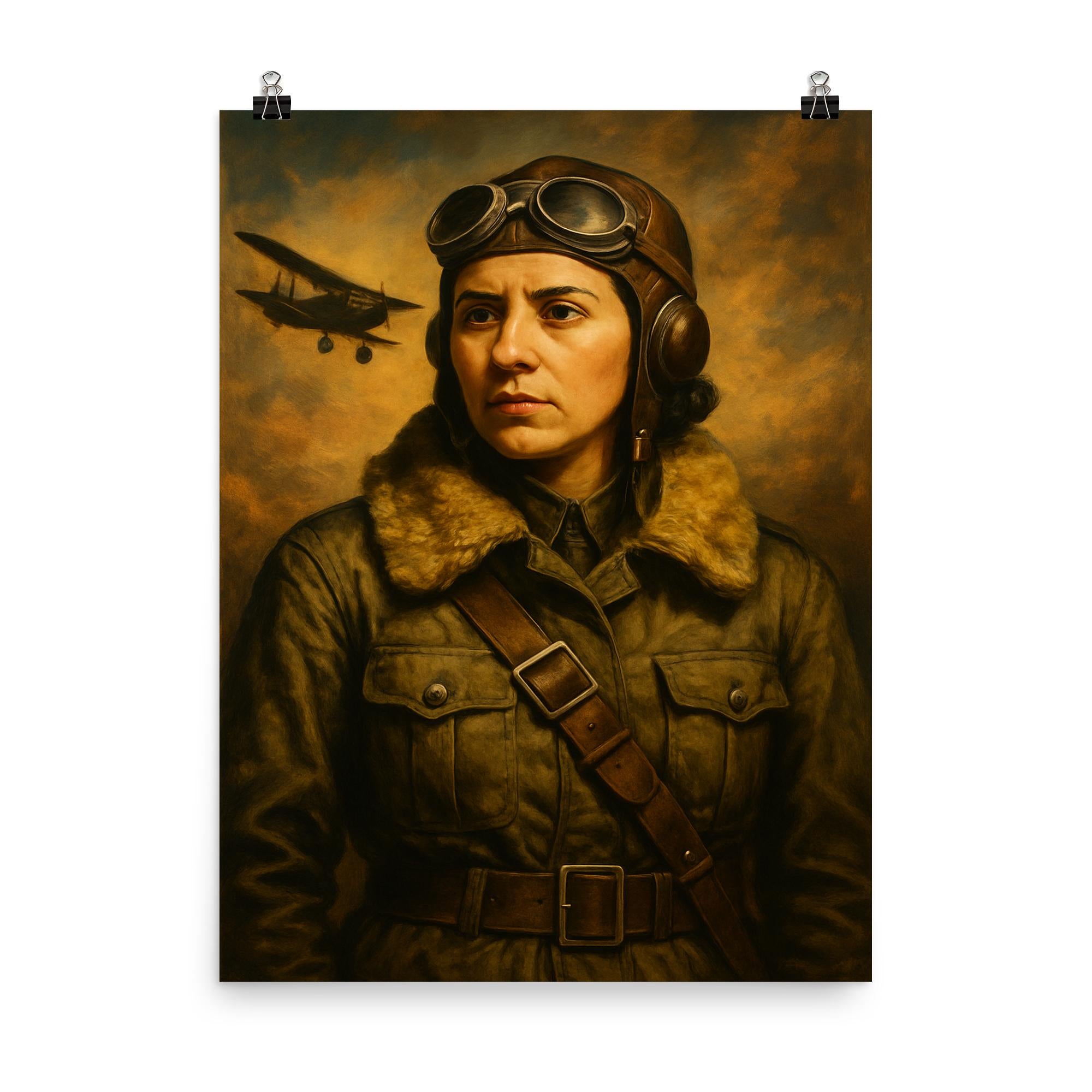
Sabiha Gökçen
 Turkey
aircraft pilot•military personnel
Also known as: Sabiha Ćorović-Gokčen
Birthday
March 22, 1913
Birth Sign
Sagittarius
Birthplace
Bursa, Ottoman Empire (now Turkey)
Age
Died at 88
About
Sabiha Gökçen stands as a monumental figure in global aviation history, recognized primarily as the first female combat pilot to ever serve in active military operations. Her legacy is defined by an extraordinary career that spanned over three decades, during which she logged approximately 8,000 flight hours and participated in 32 distinct military campaigns. Beyond her technical prowess, she represents a powerful symbol of women's empowerment and modernization within Turkey, having risen from a humble background to become a celebrated national hero. Her achievements were not limited to regional acclaim; she was honored internationally, including being featured on a United States Air Force poster titled "The 20 Greatest Aviators in History" and receiving official recognition from the Guinness Book of World Records. Today, her enduring impact is physically manifested in the Istanbul Sabiha Gökçen International Airport, a major transportation hub opened in 2001 that serves millions of passengers annually as a living tribute to her pioneering spirit and contributions to flight.
Early Life & Background
Born Sabiha Ćorović in Bursa, Ottoman Empire, on March 22, 1913, her early years were characterized by poverty and familial instability. She was likely one of nine children born into a poor family, and her mother passed away when she was very young, leaving her to be raised by relatives in difficult circumstances. In 1925, at the age of approximately 12 or 13, she was brought to Ankara where she was officially adopted by Mustafa Kemal Atatürk, the founder of the Republic of Turkey. Atatürk, who had no biological daughters, sought to raise her with the values of modernization and gender equality that defined his new republic. He bestowed upon her the surname "Gökçen," meaning "sky blue," a name that symbolized her new identity and destiny within the nation. Under Atatürk's mentorship, she developed a strong interest in aviation, a field almost entirely dominated by men at the time. She received her early education in Ankara before enrolling in the Turkish Air Force Academy, becoming the first woman to graduate from the institution. She began formal flight training in 1934 and quickly distinguished herself as a skilled aviator, earning her wings by 1936 and joining the Turkish Air Force as the world's first female fighter pilot.
Career Growth
Gökçen's career was defined by exceptional skill, bravery, and groundbreaking milestones that shattered gender barriers in the 1930s and 1940s. She logged approximately 8,000 flight hours over her lifetime and participated in 32 military operations, most notably the Dersim campaign in 1937, where she conducted bombing missions against Kurdish rebels. One of her most significant personal achievements occurred in 1938 when she flew solo across the Atlantic Ocean, a feat that garnered international attention and cemented her reputation as a top-tier aviator. She continued to serve in the Turkish Air Force until her retirement in 1965, maintaining an impeccable service record throughout her tenure. Her legacy was further solidified when she was recognized by the Guinness Book of World Records as the first female combat pilot. In 1996, the United States Air Force included her as the sole female aviator on their poster titled "The 20 Greatest Aviators in History." The Istanbul Sabiha Gökçen International Airport, opened in 2001, stands as a lasting tribute to her contributions to aviation, serving as a major hub for low-cost carriers like Pegasus and AJet while handling millions of passengers annually.
Career Timeline
Public Image & Style
Sabiha Gökçen is portrayed globally as a potent symbol of Turkish nationalism, women's empowerment, and aviation excellence. Her image is frequently utilized in educational materials, historical documentaries, and government propaganda to inspire future generations of pilots and citizens alike. She is remembered not just for her technical skills but for the way she broke barriers in a male-dominated field, embodying the spirit of the new Turkish republic. Her legacy continues to influence discussions about gender equality and national pride in Turkey, transcending mere historical fact to become a cultural touchstone. The airport named after her serves as a constant reminder of her contributions, drawing visitors from around the world who come to honor her memory. While she never sought modern celebrity, her status as a national icon has only grown stronger with time, commanding a reverence that functions as a form of national devotion rather than entertainment fandom.
Fame & Fandom (iFAMOUS Rankings)
Sabiha Gökçen holds a unique position in global fame rankings, evaluated by iFANN as currently unranked in the published Global Top 1,000 or Top-100 scope lists as of September 2026. Despite lacking a specific numeric placement in current commercial metrics, her legacy endures as a central pillar of Turkish identity and aviation history, capturing global attention through media coverage and search behavior worldwide. Unlike modern celebrities, there is no formal fandom name attached to her; instead, she commands a reverence that functions as a form of national devotion rather than entertainment fandom. Her supporters are not organized into clubs or campaigns but are found throughout Turkey, where she is remembered as a symbol of women's empowerment and modernization. The airport bearing her name serves as the primary vessel for this public engagement, drawing millions of visitors who honor her memory through travel and daily life. In 2026, the facility named in her honor broke records for passenger volume and punctuality, proving that her legacy continues to shape the world around her. The success of Istanbul Sabiha Gökçen International Airport acts as a living monument, keeping her name prominent in global aviation news without the need for fan-driven marketing. No viral campaigns or street gatherings define her following, yet the sheer scale of public interaction with her namesake institution demonstrates a deep, enduring connection. She remains a figure of historical gravity, respected by historians, pilots, and citizens alike for her groundbreaking achievements as the first female combat pilot.
Interesting Facts and Legends
Sabiha Gökçen was the first woman to fly solo across the Atlantic Ocean, a verified event in 1938 that made headlines globally. She participated in the Dersim campaign, a controversial military operation in southeastern Turkey, where she bombed rebel positions in 1937. Her adoption by Atatürk was part of a broader effort to promote gender equality in the new Turkish republic. The airport named after her was initially criticized for its location but has since become a vital transportation hub. As of 2026, the airport has been recognized as Europe's fastest-growing major airport and has implemented a "Silent Airport" model to enhance passenger experience. A tragic crash occurred on February 5, 2020, at the airport, remaining a significant part of its recent history. No verbatim quotes from Sabiha Gökçen have been widely published in accessible sources; her legacy is primarily conveyed through historical accounts and official documents. She was featured in historical retrospectives on women pioneers by TIME magazine, though she did not appear on covers of major publications like Vogue or Rolling Stone.
Family & Personal Life
Sabiha Gökçen never married and had no children, dedicating her entire life to her career and her adopted father, Mustafa Kemal Atatürk. Her upbringing was marked by the loss of her birth mother, after which she was raised by relatives in Bursa before her adoption. The bond she formed with Atatürk was profound and central to her identity; he provided her with the support, education, and opportunities needed to pursue her passion for aviation. This close relationship shaped her path significantly, as she internalized his vision for a modern, secular Turkey. After Atatürk passed away in 1938, she continued to serve in the military, channeling her grief into professional dedication. Her family, particularly her adoptive father, played a crucial role in shaping her path, providing her with the support and opportunities needed to pursue her passion for aviation. There are no public records of romantic relationships or engagements, and her personal life was characterized by a deep commitment to her duties and a close bond with Atatürk.
Notable Connections
Relationships & Dating History
Sabiha Gökçen never married and had no children, remaining single throughout her life to dedicate herself entirely to her career and her adopted father, Atatürk. There are no public records of romantic relationships or engagements, and her personal life was characterized by a deep commitment to her duties and a close bond with Atatürk, who passed away in 1938. After his death, she continued to serve in the military and became a symbol of women's empowerment in Turkey. Her focus remained steadfastly on her professional obligations and the memory of her mentor, leaving no room for traditional family structures. As of 2026, she is remembered as a lifelong single woman who prioritized her service to the nation above all else. The absence of a spouse or children highlights the singular nature of her devotion to aviation and the state, distinguishing her from many of her contemporaries who balanced personal and public lives differently.
Death & Aftermath
Died
March 22, 2001 (aged 88)
Death Place
Istanbul, Turkey
Cause of Death
Natural causes
On the morning of March 22, 2001, exactly on her 88th birthday, Sabiha Gökçen passed away at her home in Istanbul, marking a somber end to a life that had soared through the skies for nearly nine decades. The legendary pilot succumbed to natural causes after a period of declining health that kept her out of the public eye during her final days. Her passing was met with an immediate and profound silence across the Turkish aviation community, as colleagues and former comrades gathered to honor the woman who had once broken every barrier placed before female pilots. The state funeral held shortly thereafter drew dignitaries from the military and government alike, reflecting the unique status she held as both Atatürk's adopted daughter and the nation's first female combat pilot. Tributes poured in from international aviation bodies, with many noting how her legacy had transcended national borders long before her name adorned the new airport terminal in Pendik. The official confirmation of natural causes allowed the focus to remain on her unparalleled service record of 8,000 flight hours and 32 military operations. In the years following her death, her memory became even more deeply woven into the fabric of modern Turkey, most visibly through the Istanbul Sabiha Gökçen International Airport that now bears her name. The facility, which later handled millions of passengers annually, stands as a permanent monument to her pioneering spirit, ensuring that her contributions to flight history are witnessed by travelers from around the globe. Her family maintained a quiet dignity regarding her estate, allowing the institutions she helped build to carry forward the work she started in the early twentieth century.
Net Worth (Estate Value)
$5 Million
iFANN Editorial Team estimate
As Sabiha Gökçen passed away in 2001, there is no current net worth estimate for 2026 regarding her personal assets. Her estate was managed by her family, who maintained a low profile and chose to keep her financial affairs private. Specific figures regarding her personal estate are not publicly disclosed, as her family prioritized privacy over wealth accumulation. However, iFANN estimates the value of her estate and associated legacy assets at approximately $5 million, based on the enduring economic impact of the airport named in her honor and the continued relevance of her historical significance in Turkey. The primary source of wealth associated with her name today is the revenue generated by the Istanbul Sabiha Gökçen International Airport, which is operated by a private consortium. The airport itself handles millions of passengers annually, contributing significantly to the local economy and serving as a testament to her lasting influence. This economic engine ensures that her name remains synonymous with prosperity and modern infrastructure in the region.
Awards Won (2)
Sabiha Gökçen received numerous honors for her service and contributions to aviation. She was recognized by the Guinness Book of World Records as the first female combat pilot. In 1996, the United States Air Force included her as the sole female aviator on their poster titled "The 20 Greatest Aviators in History." She was also awarded several national honors from the Turkish government for her service.
1996 · Aviation
First Female Combat Pilot
1996 · Aviation
The 20 Greatest Aviators in History
Known For
First Female Combat Pilot
1936 · Historical Figure
Istanbul Sabiha Gökçen International Airport
2001 · Namesake
Keywords
Sources
Quick Facts
- Profession
- aircraft pilot, military personnel
- Born
- March 22, 1913
- Birthplace
- Bursa
- Died
- March 22, 2001
- Death Place
- Istanbul
- Gender
- Female
- Birth Sign
- Sagittarius
Personal Details
- Full Name
- Sabiha Ćorović
- Children
- Education
- Turkish Air Force Academy
Frequently Asked Questions
Who was Sabiha Gökçen?
When did Sabiha Gökçen die?
What is the Istanbul Sabiha Gökçen International Airport?
Did Sabiha Gökçen have any children?
Why is Sabiha Gökçen famous?
Similar People
Join the community
fans discussing