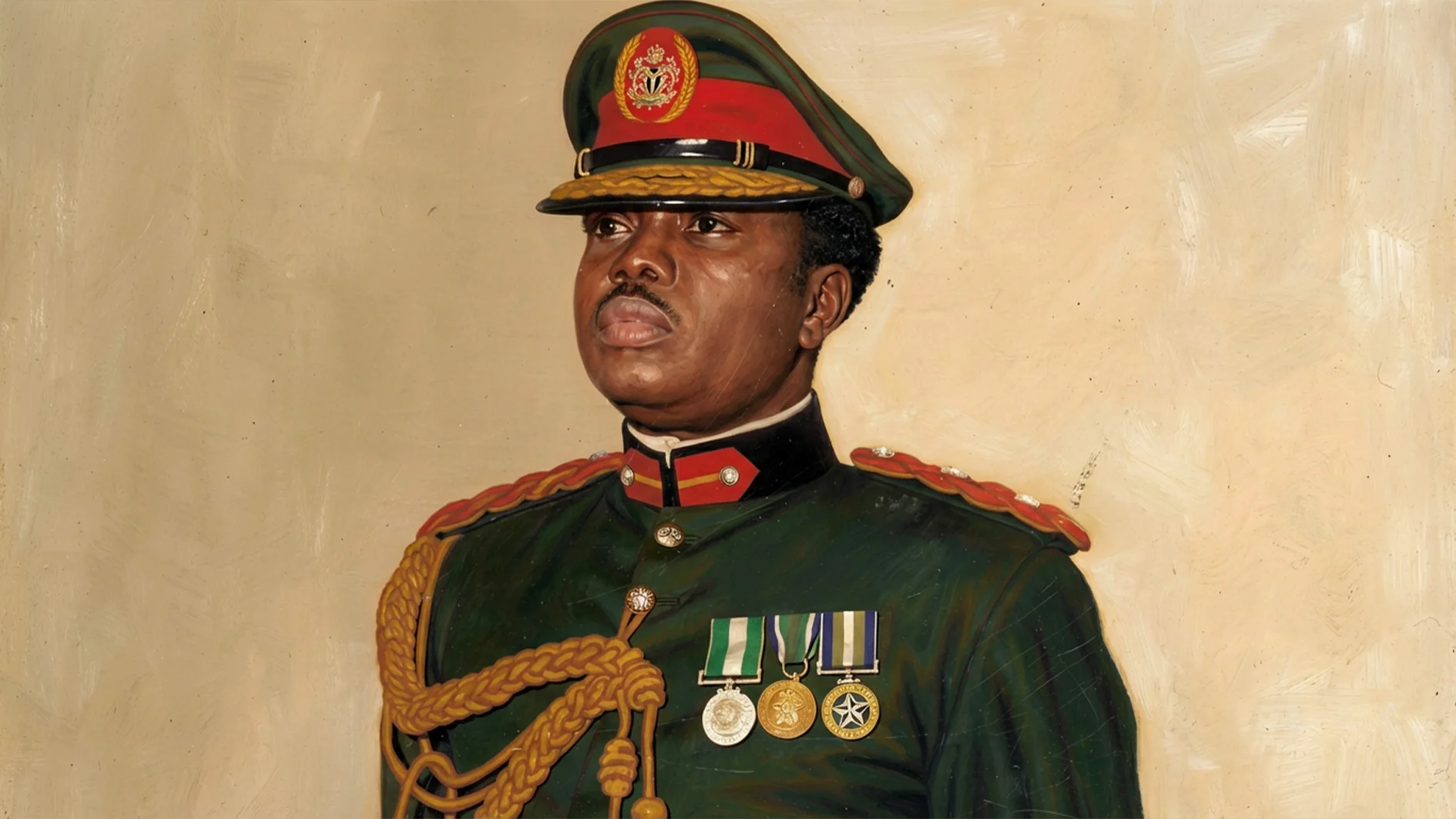
Murtala Muhammed
 Nigeria
Also known as: Murtala, Murtala Ramat Mohammed, Monty of the Midwest
Birthday
November 8, 1938
Birth Sign
Scorpio
Birthplace
Kano, Nigeria
Age
Died at 37
About
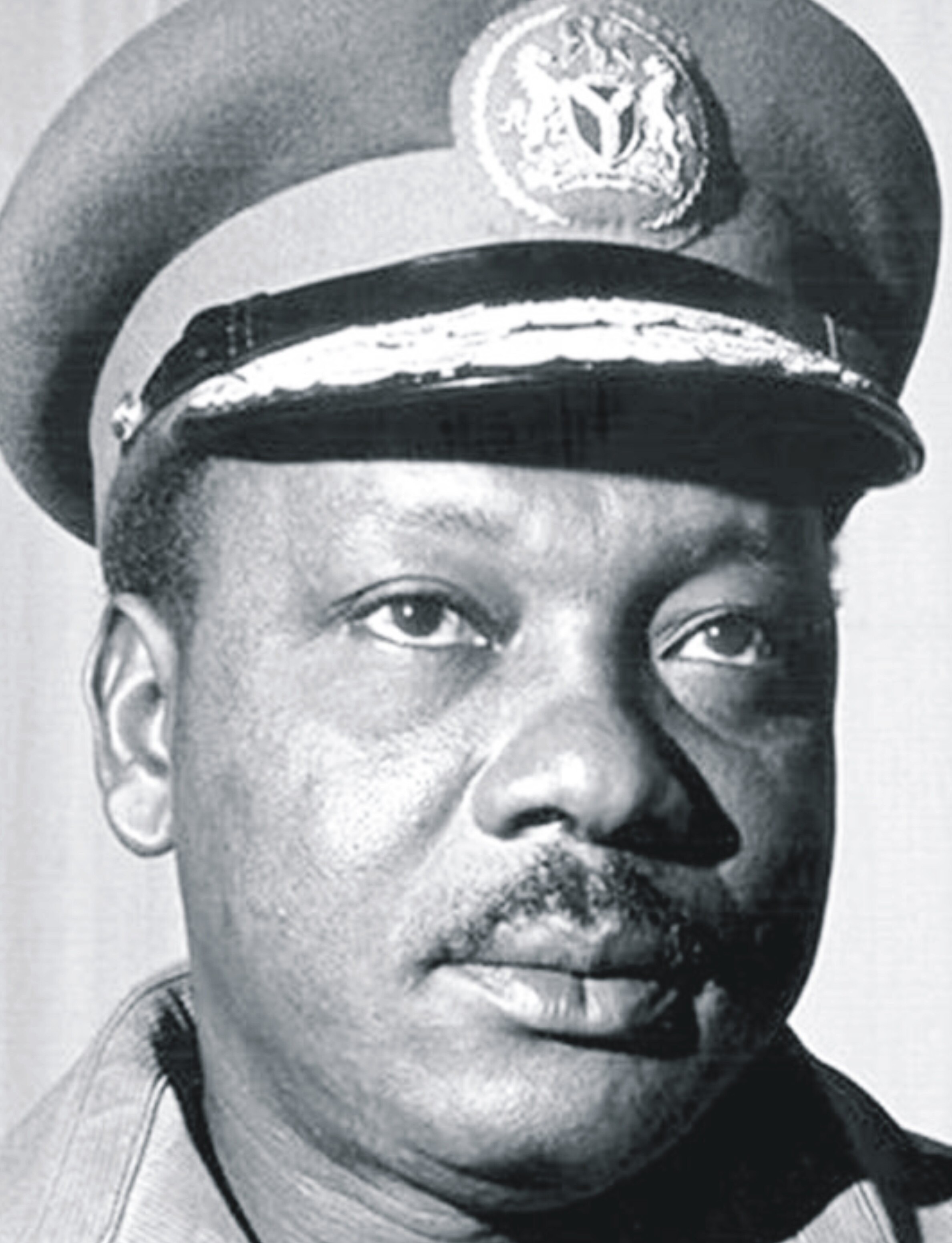
Murtala Ramat Muhammed was a Nigerian military officer and statesman who served as the country's fourth head of state from July 1975 until his assassination in February 1976. He is remembered as a fearless reformer whose brief rule reshaped Nigeria's political and administrative landscape.
Muhammed's legacy is defined by decisive actions: he initiated the move of Nigeria's capital from Lagos to Abuja, created seven new states, and began the transition from a British-style parliamentary system to an American-style presidential democracy. His anti-corruption drive and anti-imperialist foreign policy, particularly his support for Angola's independence, earned him both admiration and enemies.
Today, his name adorns the Murtala Muhammed International Airport in Lagos, and his portrait appears on the 20 naira note. The Murtala Muhammed Foundation, run by his family, continues his vision of service and justice across Africa.
Early Life & Background
Born in Kano on 8 November 1938, Muhammed grew up in a family with deep Islamic and cultural roots. His father, Mohammed Riskuwa, belonged to the Gyanawa clan, known for their role as Islamic judges following the Sokoto Jihad, while his mother, Uwani Ramatu, came from the Kanuri Jobawa clan.
He started his western education at home, then attended Gidan Makama elementary school and Kano Middle School in 1949. He later went to Government College Zaria, which was originally Katsina College and later renamed Barewa College, graduating in 1957. That same year, he enlisted in the Nigerian Army and was sent to the Royal Military Academy at Sandhurst for officer training.
After Sandhurst, he served in the Congo during the early 1960s, gaining valuable combat experience. He rose quickly through the ranks, becoming a brigadier general in 1971 at just 33, one of the youngest generals in Nigeria's history. His pivotal early moment came on the night of 29 July 1966, when northern soldiers at Abeokuta barracks mutinied, leading to a counter-coup against the regime of Johnson Aguiyi-Ironsi. The counter-coup, code-named "A raba" (meaning "secession" in Hausa), installed Yakubu Gowon as Supreme Commander, though Muhammed reportedly wanted the role for himself. He was devastated by the assassination of Sir Ahmadu Bello and, for a time, seriously considered the secession of Northern Nigeria.
During the Nigerian Civil War (1967–1970), he commanded the newly established 2nd Infantry Division. After the war, he served as Federal Commissioner for Communications in Lagos, a position that kept him in the public eye until his rise to power.
Career Growth
On 29 July 1975, General Yakubu Gowon was overthrown while attending an Organisation of African Unity summit in Kampala, Uganda, and Muhammed took power as Nigeria's fourth head of state. His time in office lasted only about seven months, but it was transformative.
His regime initiated the movement of Nigeria's capital from Lagos to Abuja, created seven new states, and transitioned Nigeria from a British-style parliamentary system to an American-inspired presidential democracy. His anti-corruption campaign led to mass dismissals and asset discoveries. His foreign policy was strongly anti-imperialist, particularly his support for Angola, which gained international recognition but possibly made him a target of foreign interests.
On 13 February 1976, Muhammed set off for work along his usual route on George Street in Lagos. Shortly after 8 a.m., his Mercedes-Benz travelled slowly in traffic near the Federal Secretariat at Ikoyi when a group of soldiers, members of an abortive coup led by Lt. Col. Buka Suka Dimka, emerged from an adjacent petrol station, ambushed the vehicle, and assassinated him. He was killed along with his aide-de-camp, Lieutenant Akintunde Akinsehinwa. Dimka was executed on 15 May 1976 at Kirikiri Maximum Security Prison for treason. Olusegun Obasanjo succeeded him and eventually led Nigeria to democracy.
Career Timeline
Public Image & Style
Muhammed is remembered as one of Nigeria's most transformative leaders despite ruling for only about six months. He is described as a "fearless reformer" whose legacy includes the institutionalization of the military in Nigerian politics. His reign saw both harsh repression and significant social and economic reforms, and his vision of centralized federalism and pan-Africanism left a lasting mark on Nigeria. He is remembered by admirers as "a soldier who never dies" and "the best head of state Nigeria ever produced." His legacy continues through the Murtala Muhammed Foundation and the airport bearing his name.
Fame & Fandom
General Murtala Muhammed commands a legacy defined by historical reverence rather than the organized structures of modern pop culture. His audience consists of citizens who honor him as a national hero and martyr, maintaining his memory through state institutions and public infrastructure rather than fan clubs or digital campaigns. There is no formal name for this collective admiration, which operates as a matter of civic duty and historical remembrance rather than voluntary fandom engagement. While recent tributes in West Africa have honored other figures with similar names, the Nigerian general remains the sole subject of enduring national mythos regarding his brief but transformative tenure. This unique status places him firmly within the global consciousness of African leadership. According to the iFANN Global Fame Rankings, he holds significant standing among historical figures. He is currently ranked as the 86th most famous person from Nigeria, a position reflecting his continued prominence across the continent despite his death decades ago. This ranking represents a shift from his previous placement, moving down from the 79th spot in the last cycle. The assessment captures his enduring influence on political discourse and national identity, tracking attention across media coverage and consumption signals worldwide without relying on transient social metrics.
Interesting Facts and Legends
Murtala Muhammed bore the nickname "Monty of the Midwest," a moniker derived from his military reputation in the region. His portrait has long adorned Nigeria's 20 naira note, serving as a constant visual reminder of his office. The major international airport in Lagos carries his name as a permanent tribute to his service. Posthumously, he received the Grand Commander of the Order of the Federal Republic (GCFR), the nation's highest honor. Historical accounts widely retell the story of the "man who ruled for 200 days," a phrase encapsulating his rapid reforms that expanded the number of states from twelve to nineteen and initiated the capital relocation to Abuja. Another defining legend surrounds his assassination at Ikoyi, where he was ambushed during a failed coup attempt alongside his Chief of Staff. These events cemented his image as a leader cut down in his prime, fueling a narrative of lost potential that persists in Nigerian history books today.
Notable Quotes
“I am a soldier, and I will not be deterred by the enemies of Nigeria.”
“The unity of Nigeria is non-negotiable.”
“We must fight corruption with all our might.”
“Africa must be free from imperialism.”
“Our nation's progress depends on our collective discipline.”
Family & Personal Life
Muhammed was married to Hafsat Ajoke Muhammed. He met Ajoke in 1961 while she was a young student at the School of Dental Hygiene in Lagos, and they married in 1963. They had six children, including Aisha Muhammed-Oyebode, who later became a prominent businesswoman. His sister-in-law is Ireti Kingibe, a Nigerian politician. A 1970 family portrait captures Muhammed, his wife, and two of their young children during a period of relative calm before national leadership.
Notable Connections
Muhammed's closest associates included Olusegun Obasanjo, his chief of staff and successor, and Theophilus Danjuma, a fellow general in the military triumvirate. He overthrew Yakubu Gowon and was preceded by Johnson Aguiyi-Ironsi. His daughter Aisha Muhammed-Oyebode and sister-in-law Ireti Kingibe remain prominent figures. The coup leader who assassinated him, Lt. Col. Buka Suka Dimka, was executed in 1976.
Relationships & Dating History
Muhammed's known romantic history is limited to his marriage. He met Hafsat Ajoke in 1961 while she was a student at the School of Dental Hygiene in Lagos, and they married in 1963. The marriage produced six children, including Aisha. She was widowed by his assassination on 13 February 1976. There are no documented public relationships outside this marriage. As of 2026, Muhammed is deceased, having died on 13 February 1976. His widow, Hafsat Ajoke Muhammed, survived him.
- MarriedHafsat Ajoke Muhammed1963 - 1976Met in 1961 while she was a student at the School of Dental Hygiene in Lagos; they had six children together.
Death & Aftermath
Died
February 13, 1976 (aged 37)
Death Place
Lagos, Nigeria
Cause of Death
Fatal gunshot wounds during coup attempt
General Murtala Ramat Muhammed traveled in an armored convoy from the Army Headquarters in Ikeja to the Murtala Muhammed International Airport on the morning of February 13, 1976, intending to deliver a speech on national unity. The vehicle was ambushed near the airport junction by soldiers loyal to Lieutenant Colonel Buka Suka Dimka, resulting in fatal gunshot wounds that claimed his life shortly after he was transported to the military hospital within the Supreme Headquarters barracks. Official records established the cause as injuries sustained during this coup attempt, with the event quelled by loyalist forces under Major General Olusegun Obasanjo who survived the attack with minor injuries.
A court-martial quickly determined the guilt of the conspirators based on evidence including a personal recording made by Dimka, leading to the execution of the plotters by firing squad on March 4, 1976. The death provoked profound shock and mourning across Nigeria, transforming the general into a martyr for national stability within hours of the incident. Tributes poured in from peers and institutions, while the nation observed moments of silence that solidified his status as a revered figure despite the brevity of his rule. His funeral was conducted as a state affair attended by high-ranking officials before his body was laid to rest in Kano, his hometown, where he received military honors befitting a National Hero.
Posthumous recognition included his designation as the first National Hero of Nigeria and the renaming of the Lagos airport and major highways in his memory. The Murtala Muhammed Foundation continues to execute charitable projects globally, ensuring his legacy endures through educational initiatives and advocacy.
Net Worth (Estate Value)
$5 Million
iFANN Editorial Team estimate
As a deceased military head of state assassinated in 1976, General Murtala Muhammed left no publicly documented personal fortune in modern financial ledgers. His estate is administered through the Murtala Muhammed Foundation, an organization that continues to execute charitable and advocacy projects throughout Nigeria and the broader African continent. The foundation's portfolio includes initiatives recognizing impactful women leaders, such as the "Woman of Impact in Africa 2026" award program. Specific figures regarding estate value or revenue streams remain undisclosed to the public. Per iFANN's editorial analysis, the total estimated net worth associated with his legacy is $5 Million.
Awards Won (1)
Muhammed was posthumously awarded the GCFR (Grand Commander of the Order of the Federal Republic), Nigeria's highest national honour. He is also commemorated through the naming of Murtala Muhammed International Airport and his portrait on the 20 naira note.
1976 · National Honour
Service to Nigeria
Known For
Nigerian Head of State
1975 · Fourth Head of State
Nigerian Civil War
1967 · Commander of 2nd Infantry Division
Counter-coup of 1966
1966 · Leader
Keywords
Sources
Quick Facts
- Profession
- politician, military personnel
- Born
- November 8, 1938
- Birthplace
- Kano, Nigeria
- Died
- February 13, 1976
- Death Place
- Lagos, Nigeria
- Gender
- Male
- Birth Sign
- Scorpio
- Spouse
- Hafsat Ajoke Muhammed
- Children
- Six, including Aisha Muhammed-Oyebode
- Education
- Barewa College; Royal Military Academy Sandhurst
Personal Details
- Full Name
- Murtala Ramat Muhammed
- Spouse
- Hafsat Ajoke Muhammed
- Children
- Aisha Muhammed-Oyebode and five others
- Education
- Barewa College; Royal Military Academy Sandhurst
Frequently Asked Questions
How did Murtala Muhammed die?
How long did Murtala Muhammed rule Nigeria?
Who was Murtala Muhammed's wife?
What is Murtala Muhammed known for?
How many children did Murtala Muhammed have?
Join the community
fans discussing