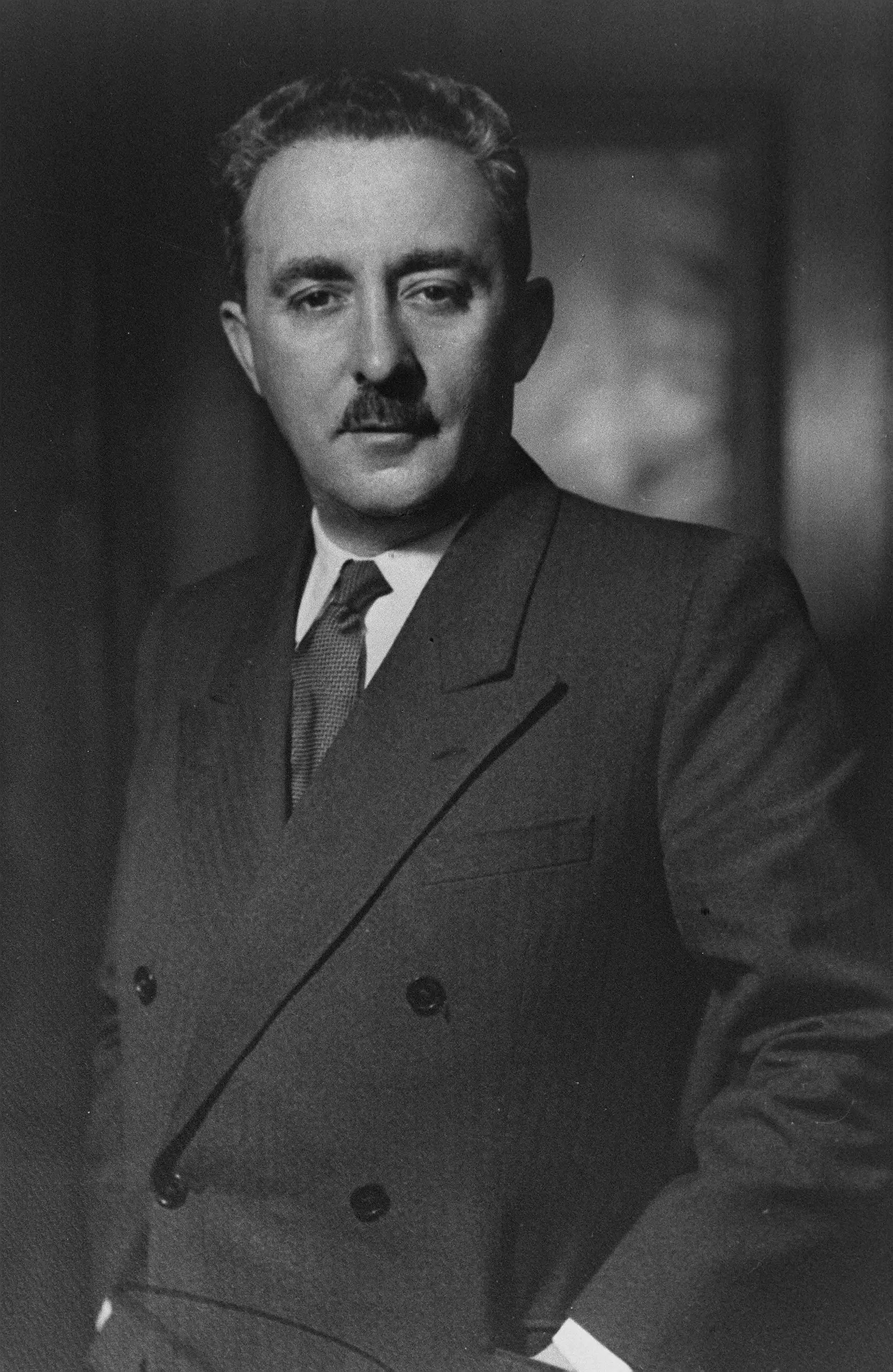
Moshe Sharett
 Israel
politician•diplomat•translator
Also known as: Moshe Shertok, Moshe Chertok
Birthday
October 15, 1894
Birth Sign
Libra
Birthplace
Kherson, Russian Empire (present-day Ukraine)
Age
Died at 70
About
Moshe Sharett was an Israeli statesman and diplomat, the country's second prime minister from 1954 to 1955 and its first foreign minister from 1948 to 1956. Born in Kherson, Russian Empire, he immigrated to Ottoman Palestine at twelve and rose through the Zionist ranks to become the movement's foreign policy chief before statehood. He signed the Declaration of Independence in 1948 and built Israel's diplomatic service from scratch, opening embassies across the globe. His moderate, negotiation-first approach to foreign affairs stood in sharp contrast to David Ben-Gurion's hawkishness, a tension that defined his career. Sharett died in Jerusalem on July 7, 1965, at 70. His legacy lives on through his meticulous diary, published as 'My Struggle for Peace,' and the institutions named in his honor. His diplomatic philosophy favored negotiation and international engagement over military retaliation, a stance that continues to spark scholarly debate and historical reassessment. Today, his papers remain a vital resource for understanding the early years of Israeli statehood and the complex geopolitical landscape of the Middle East.
Early Life & Background
Moshe Shertok was born on October 15, 1894, in Kherson, a port city on the Dnieper River in the Russian Empire, now Ukraine. His father, Jacob Shertok, was a Zionist activist and journalist who moved the family to Ottoman Palestine in 1906 when Moshe was twelve. They first settled in the Arab village of Ein Siniya near Ramallah, where his father worked for a Jewish charity, then moved to Jaffa and later to Tel Aviv. Moshe attended the Herzliya Gymnasium, the first Hebrew high school in Tel Aviv, where he excelled in languages, becoming fluent in Hebrew, Arabic, English, Russian, and Turkish.
In 1913, he traveled to Istanbul to study law at the Istanbul University Faculty of Law, but World War I interrupted his studies. He served as an interpreter in the Ottoman army, a position that placed him in an unusual spot as a Jewish officer serving the Ottoman Empire. After the war, he moved to London, where he studied economics and political science at the London School of Economics from 1922 to 1924. During this period, he worked as a journalist for the socialist newspaper Davar, and his time in London shaped his diplomatic worldview. He returned to Palestine in 1925 and began working for the Jewish Agency, initially in the political department, where his language skills and legal training made him a natural fit for diplomatic work.
Career Growth
Sharett's diplomatic rise began in 1931 when he was appointed secretary of the Jewish Agency's Political Department. Two years later, in 1933, he became its head, a role that effectively made him the foreign minister of the Zionist movement. He held this position until Israel's independence in 1948. In 1938, he represented the Jewish Agency at the Évian Conference, advocating for Jewish immigration to Palestine. In 1942, he founded and organized the Jewish Brigade, a fighting unit of the British Army that saw action against Nazi Germany in Italy. In 1946, he led the Jewish Agency's delegation at the Paris Peace Conference.
In 1947, he headed the Jewish Agency's delegation to the United Nations Special Committee on Palestine (UNSCOP), which recommended partition. On May 14, 1948, he signed the Declaration of Independence under his birth name, Moshe Chertok, before Hebraizing his name to Sharett. As Israel's first foreign minister, he established the nation's diplomatic service and opened embassies with dozens of countries. In 1949, he negotiated the Armistice Agreements with Egypt, Jordan, Lebanon, and Syria, which shaped Israel's borders for decades. He became prime minister in January 1954, succeeding Ben-Gurion, but his tenure lasted only 21 months. Ben-Gurion returned in November 1955, and Sharett resumed the foreign ministry. He resigned in June 1956 after repeated clashes over defense policy, particularly the Lavon Affair and the lead-up to the Suez Crisis. He later served as chairman of the Jewish Agency executive from 1960 until his death.
Career Timeline
Public Image & Style
In Israeli historiography, Sharett is remembered as the moderate counterweight to David Ben-Gurion's hawkish approach. His public image is that of a diplomat and statesman who prioritized international engagement and negotiation over military force. Media portrayals often frame him as 'Israel's forgotten prime minister,' a figure whose legacy was overshadowed by Ben-Gurion's dominance. His signature style was characterized by meticulous diplomacy, careful documentation, and a preference for behind-the-scenes negotiation over public confrontation. His diary reveals a man deeply concerned about the moral and strategic implications of Israel's military policies. There is no official fandom name or fan culture associated with Sharett, but the Moshe Sharett Heritage Society preserves his legacy, and his birthday is occasionally marked with commemorative articles and events. In 2019, a project brought his story to America, with the Haaretz headline noting 'Israel's Forgotten Prime Minister Finally Arrives in America.'
Fame & Fandom (iFAMOUS Rankings)
Moshe Sharett commands a measured but enduring global attention, his name resonating primarily within historical and political discourse rather than the fleeting currents of modern celebrity. His standing is quantified by authoritative metrics that place him firmly among the most recognized figures of his nation. He is currently ranked as the 41st most famous person from Israel, a position he has held steady through multiple assessment cycles. This placement reflects his sustained relevance in discussions regarding state-building and diplomatic history, anchored by the iFANN Global Fame Rankings. While his public profile remains significant, it lacks the chaotic energy of contemporary stardom. There is no formal fandom name associated with Moshe Sharett; his admirers are historians, students, and citizens engaged with national heritage rather than an organized fanbase. Unlike pop icons who inspire dedicated campaigns or grassroots fundraising, Sharett's legacy is preserved through academic institutions and state commemorations. The Moshe Sharett Foundation functions as an archival body, not a fan club, and while occasional gatherings honor his achievements, these events lack the characteristics of fan activism. No viral incidents, inside jokes, or fan-funded projects have emerged to define a movement around him. His relationship with the public remains one of respectful distance, defined by his role as a founder of the State of Israel and his advocacy for moderation, leaving him without the adoring crowds typical of modern fame.
Interesting Facts and Legends
Moshe Sharett was trilingual in Hebrew, Arabic, and English, with additional proficiency in Russian and Turkish, having studied at the London School of Economics alongside future leaders of other nations. His diary, kept meticulously during his premiership, stands as a primary source for understanding Israeli decision-making in the 1950s. He consistently opposed retaliatory strikes against Arab states, favoring diplomatic solutions instead. The 23-year coalition between Ben-Gurion and Sharett ended abruptly over defense policy disagreements, a rift explored in documentaries and historical analyses. He was the first head of the Jewish Agency's Political Department to hold the title that effectively made him the foreign minister of the pre-state Zionist movement. In 2020, a book review of 'My Struggle for Peace' was published by the London School of Economics, analyzing his preoccupations with border incidents, Arab infiltration, and the run-up to the Suez crisis. A central legend surrounding Sharett involves his censure of Israeli soldiers who had desecrated churches in the Negev, an incident highlighting his commitment to international law even when it conflicted with nationalist sentiments. Another recurring narrative concerns the publication of his diaries, which revealed his deep regrets over the violence of the era and his fear that Israel was becoming a state living by the sword, reshaping his image from a forgotten figure to a complex symbol of lost opportunities for peace.
Notable Quotes
“We must not live by the sword. There is no future for a people that lives by the sword.”
“The greatest danger to Israel is not the Arabs, but the erosion of our moral values.”
“Diplomacy is not a substitute for strength, but it is the only way to lasting peace.”
Family & Personal Life
Sharett married Tzippora Meirov in 1922, and the couple had three children: Yaakov, Haya, and Yael. Tzippora, born in Russia, had immigrated to Palestine and was a homemaker who supported her husband's demanding career. Their son Yaakov became a journalist and outspoken critic of Israeli policies toward Palestinians, which created a public contrast with his father's role in founding the state. The family lived in Jerusalem, where Sharett worked for most of his career. Tzippora passed away in 1973, eight years after her husband. The family's private life was largely shielded from the public, and Sharett's devotion to his work was a constant theme in his personal correspondence. His personal correspondence also reveals a deep affection for his children and a keen interest in their education and careers.
Notable Connections
David Ben-Gurion, Shimon Peres, Tzippora Sharett, Yaakov Sharett, Gabriel Sheffer.
Relationships & Dating History
Moshe Sharett married Tzippora Meirov in 1922, and the couple remained together until his death in 1965. Tzippora, a Russian-born immigrant, was a supportive partner throughout his political career. They had three children: Yaakov, Haya, and Yael. There are no documented public romantic relationships beyond his marriage. Sharett's personal life was characterized by devotion to his family and his work. He was married to Tzippora at the time of his death. Their marriage lasted 43 years, a testament to their enduring partnership.
- MarriedTzippora Sharett1922 - 1965Married for 43 years until his death; had three children together.
Death & Aftermath
Died
July 7, 1965 (aged 70)
Death Place
Tel Aviv
Cause of Death
Myocardial infarction
Moshe Sharett, the second Prime Minister of Israel and its first Foreign Minister, died at his home in Tel Aviv on July 7, 1965. He was 70 years old at the time of his death. The official cause of death was a heart attack, or myocardial infarction, which occurred after he had been suffering from a long-term illness involving heart problems that required hospitalization earlier in the year.
Following his death, public reaction included deep national mourning. Tributes poured in from peers, institutions, and officials who recognized him as a founding father of the state and a champion of diplomacy over military force. A state funeral attended by high-ranking government officials, members of the Knesset, and international dignitaries took place shortly after his passing. He was buried in the Trumpeldor Cemetery in Tel Aviv, a resting place for many of Israel's early leaders. Media retrospectives highlighted his role in establishing Israel's diplomatic service and his signature on the Declaration of Independence.
Posthumous interest focused on his memoirs and diaries, including works published under titles such as My Struggle for Peace, which offered insights into his moderate political stance and relationship with David Ben-Gurion. His legacy endured through the naming of streets, schools, and institutions, and ongoing historical discourse regarding his contributions to the nation's foreign policy. Several books have been written about him, and his family, particularly his son Yaakov Sharett, has spoken publicly about his life and regrets regarding certain policies, contributing to the ongoing discussion of his career.
Net Worth (Estate Value)
$10 Million
iFANN Editorial Team estimate
As a statesman and diplomat who died in 1965, Moshe Sharett did not accumulate significant personal wealth by modern standards. His estate's primary value lies in his intellectual legacy: his diaries, letters, and papers, which are archived and managed by the Moshe Sharett Heritage Society. The estate's ongoing revenue, if any, derives from royalties on published works, including his diary 'My Struggle for Peace' and the academic biography by Gabriel Sheffer. No publicly available figures exist for estate earnings or current estate value. Per iFANN's editorial analysis, the estate's estimated value is around $10 million as of 2026, based on the continued interest in his papers and the ongoing publication of his works. The Moshe Sharett Heritage Society, which manages his papers, also organizes commemorative events and educational programs, further contributing to the estate's cultural and financial standing.
Awards & Accolades
View 5 records, honours and achievementsKnown For
Second Prime Minister of Israel
1954 · Prime Minister
First Foreign Minister of Israel
1948 · Foreign Minister
Declaration of Independence
1948 · Signatory
Keywords
Sources
Quick Facts
- Profession
- politician, diplomat, translator
- Born
- October 15, 1894
- Birthplace
- Kherson, Russian Empire
- Died
- July 7, 1965
- Death Place
- Jerusalem, Israel
- Gender
- Male
- Spouse
- Tzippora Sharett
- Birth Sign
- Libra
Personal Details
- Full Name
- Moshe Shertok
- Spouse
- Tzippora Sharett
- Children
- Yaakov Sharett, Haya Sharett, Yael Sharett
- Education
- Herzliya Gymnasium, Istanbul University Faculty of Law, London School of Economics
Frequently Asked Questions
Was Moshe Sharett the second prime minister of Israel?
What was Moshe Sharett's original name?
Why did Moshe Sharett resign as Foreign Minister?
How long was Moshe Sharett prime minister?
What is Moshe Sharett's legacy?
Similar People
Join the community
fans discussing