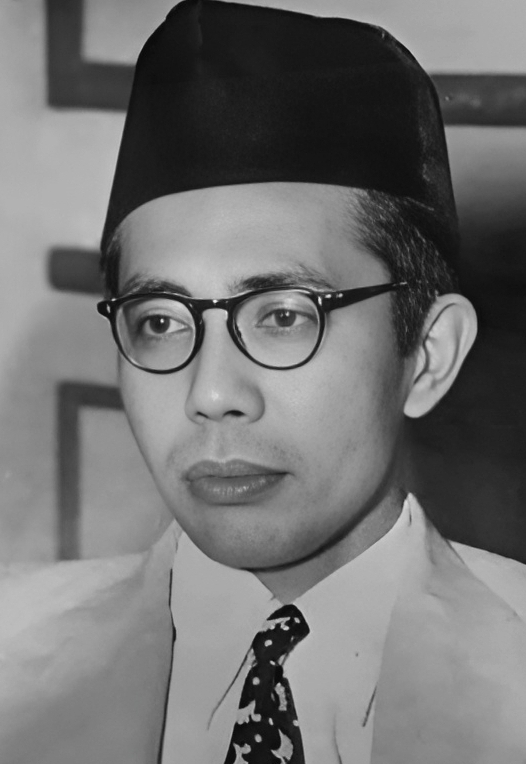
Mohammad Natsir
 Indonesia
Birthday
+1908-07-17
Birth Sign
Cancer
Birthplace
Alahan Panjang
Age
Died at 84
About
Born in Alahan Panjang in 1908, Mohammad Natsir emerged as a significant figure in Indonesian politics and Islamic scholarship. He began his educational journey in Bandung, where he delved deeply into Islamic doctrine. His early writings appeared in 1929, and he became a regular contributor to Islamic publications throughout the 1930s. This period also saw him enter the political arena, steadily advancing within Islamic political organizations. Natsir's career reached a pivotal point when he was appointed Indonesia's fifth prime minister on September 5, 1950, serving until April 26, 1951. Following his premiership, he became a more outspoken advocate for the role of Islam in Indonesian society. This stance eventually led to his arrest. He was released in 1966 after the New Order government came to power, but he continued to express his criticisms, which resulted in him being barred from international travel. Natsir passed away in Jakarta on February 6, 1993, at the age of 84. His intellectual contributions were vast, with 45 books and hundreds of articles to his name. Natsir believed Islam was an integral part of Indonesian culture and often voiced his concerns about the way the religion was handled by the Sukarno and Suharto administrations. He received three honorary doctorates during his lifetime, two from Malaysia and one from Lebanon. In recognition of his lifelong dedication and influence, he was posthumously honored as a national hero of Indonesia on November 10, 2008.
Fame & Fandom
Mohammad Natsir remains a towering figure in Indonesian history, yet he does not currently hold a placement in the published iFANN Global Top 1,000 rankings or any Top-100 scope list. The iFANN Global Fame Engine evaluated his standing in August 2026 and determined that while his historical significance is immense, he falls outside the current numerical hierarchy used for living pop culture icons and contemporary celebrities. This absence from the charts reflects his status as a statesman rather than an entertainer; his influence is measured in political legacy and religious scholarship rather than viral moments or streaming metrics. Unlike modern stars whose fame fluctuates with social media trends, Natsir's reputation has stabilized into a permanent fixture of national memory, untouched by the volatility of global celebrity cycles. His audience consists of political adherents and followers of the Islamic movement in Indonesia rather than a formalized fanbase. There is no documented name for this group, nor are there organized campaigns, charity drives, or ritualistic gatherings dedicated to his memory in the manner of concert tours or award show reactions. The reverence shown for him is rooted in verified historical contributions, such as his tenure as the fifth prime minister and his leadership of the Masyumi Party, rather than the fervent adulation typical of entertainment fandoms. While some might imagine crowds gathering to celebrate his life, the reality is a quiet, enduring respect for a man who shaped the early years of the republic. His legacy is carried forward by the political lineage of his party and the students of his teachings, creating a form of devotion that is deeply intellectual and historically grounded instead of performative or commercial.
Interesting Facts and Legends
Born in Alahan Panjang in 1908, Mohammad Natsir began his educational journey in Bandung where he immersed himself in Islamic doctrine before entering the political arena. His early writings appeared in 1929, marking the start of a prolific career as a contributor to Islamic publications throughout the 1930s. He reached a pivotal point in his career when appointed Indonesia's fifth prime minister on September 5, 1950, serving until April 26, 1951. Following his premiership, he became a more outspoken advocate for the role of Islam in Indonesian society. A widely cited story among historians focuses on his leadership during the struggle against Dutch occupation, highlighting his transition from teacher to national leader. Another enduring narrative centers on his death on February 6, 1993, in Bandung, which marked the end of an era for Indonesia's leading Muslim politician. While there are no legends of crowds fainting at his appearances or viral incidents, the stories told about him focus on his intellectual brilliance and political acumen. The phrase "Masyumi Dies But His Cadres Are Immortal" often surfaces in discussions about his lasting influence, referring to the continued political lineage of his party rather than a fan club. These accounts are well-documented in biographies and obituaries, cementing his place as a revered historical figure without the need for folklore or performance-based lore.
Death & Aftermath
Died
+1993-02-06 (aged 84)
Death Place
Bandung, West Java, Indonesia
Cause of Death
Natural causes associated with advanced age
Decades after his premiership, Mohammad Natsir received the King Faisal Prize for Service to Islam, a posthumous honor cementing his status as an architect of liberal democracy and Islamic thought. This recognition arrived long after the quiet end of his life in Bandung, West Java, where he passed away on February 6, 1993. At eighty-four years old, the former prime minister succumbed to natural causes associated with advanced age, marking the conclusion of a life dedicated to Indonesian independence and Islamic scholarship. The circumstances surrounding his final days remain unrecorded in public archives, with no specific timeline of decline or last public appearances documented beyond his residence in Bandung.
Tributes from peers and institutions quickly acknowledged his foundational role in the Masyumi party and the broader struggle for modern Indonesia. While detailed accounts of funeral rites or specific attendees are absent from the historical record, standard protocol for a figure of his stature would have dictated religious and state observances within his city of residence. His legacy has since been preserved through academic publications and political biographies that continue to analyze his contributions to the nation's history.
Awards & Accolades
Keywords
Quick Facts
- Profession
- politician, teacher, ulema
- Born
- +1908-07-17
- Birthplace
- Alahan Panjang
- Died
- +1993-02-06
- Death Place
- Dr. Cipto Mangunkusumo National General Hospital
- Gender
- Male
- Spouse
- Nur Nahar
- Birth Sign
- Cancer
Personal Details
- Spouse
- Nur Nahar
Join the community
fans discussing