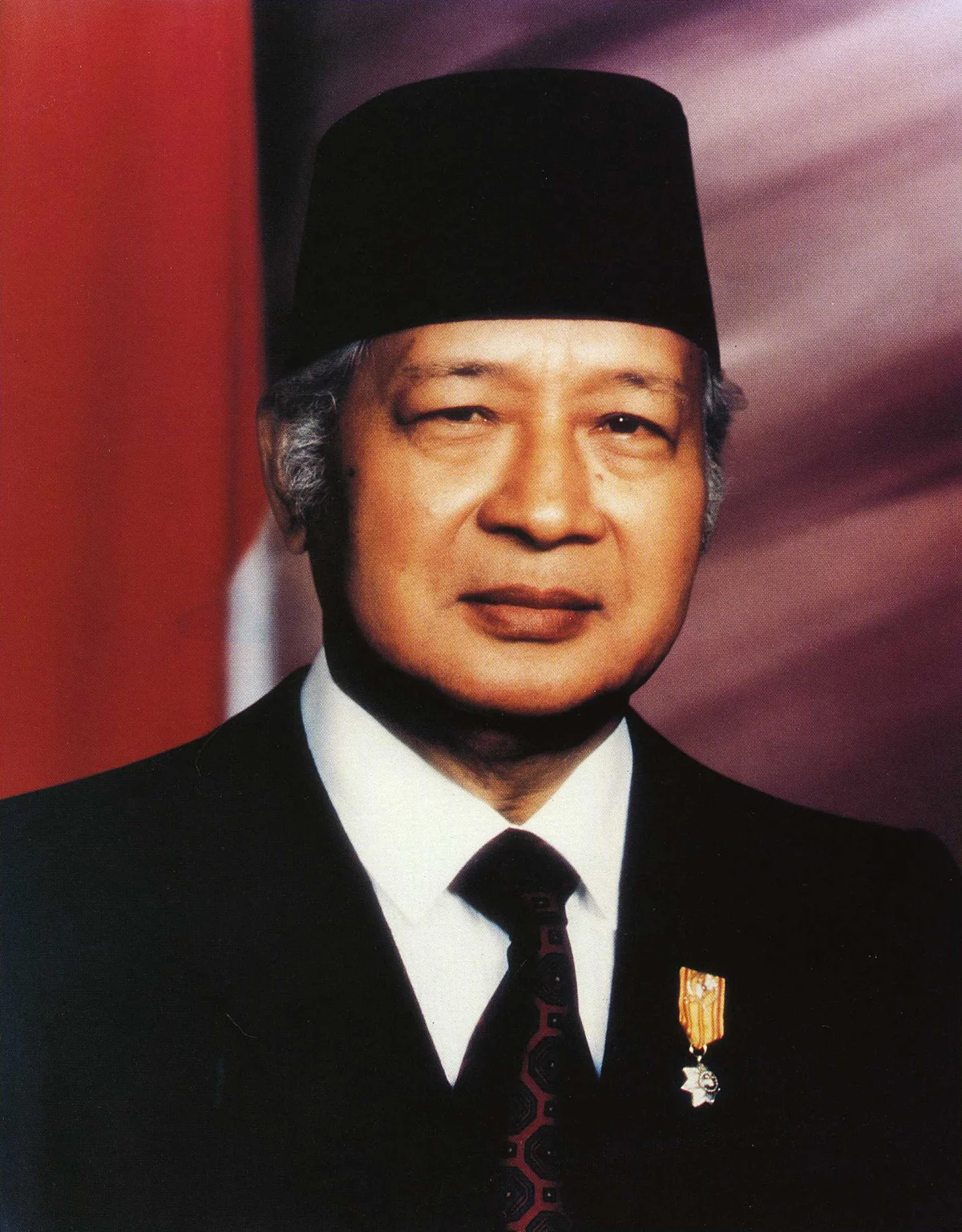
Suharto
 Indonesia
Also known as: Muhammad Suharto, Soeharto
Birthday
June 8, 1921
Birth Sign
Gemini
Birthplace
Kemusuk, Yogyakarta, Dutch East Indies
Age
Died at 86
Height
5 ft 7 in (170 cm)
About
Muhammad Suharto was an Indonesian military general and politician who served as the second and longest-serving president of Indonesia from 1967 until his resignation in 1998. He rose through the ranks of the Indonesian Army during the struggle for independence and eventually seized power during the political turmoil of the mid-1960s. His thirty-one-year presidency, known as the New Order, oversaw rapid economic growth and industrialization but was also defined by authoritarian control, widespread corruption, and severe human rights abuses.
Upon taking office, Suharto stabilized an economy crippled by hyperinflation exceeding 650% and implemented free-market policies that lifted millions out of poverty. He achieved rice self-sufficiency and received international acclaim for his development programs. However, his regime relied heavily on military dominance and a cult of personality. The legacy he left behind remains one of the most controversial in modern history, balancing economic achievements against the bloodshed of the 1965 anti-communist purges and the brutal occupation of East Timor.
Early Life & Background
Born Muhammad Suharto on June 8, 1921, in the small village of Kemusuk near Yogyakarta, he entered the world during the height of Dutch colonial rule in the East Indies. His early years were marked by instability and hardship. His parents divorced shortly after his birth, leaving him to be raised by foster parents in a humble environment. When his biological father died while Suharto was still young, the family structure fractured further, forcing him to navigate life without consistent parental guidance.
During World War II, the Japanese occupied the Dutch East Indies. In 1942, Suharto joined the Japanese-organized security forces, learning basic military discipline and tactics under their command. This experience provided the foundation for his future career. After Japan's surrender in 1945 and the declaration of Indonesian independence, Suharto joined the newly formed Indonesian National Armed Forces. He fought alongside other nationalist leaders during the Indonesian National Revolution against Dutch attempts to reclaim the colony. By the early 1950s, he had risen to the rank of major general, commanding troops in various regions and gaining a reputation for loyalty and organizational skill within the army hierarchy.
Career Growth
Suharto's ascent to total power began in October 1965 when he led troops to counter an attempted coup attributed to the Communist Party of Indonesia (PKI). This event triggered a violent anti-communist purge orchestrated by the army, resulting in the deaths of hundreds of thousands of alleged communists, ethnic Chinese, and leftists. By March 1967, following the political turmoil that forced President Sukarno to transfer executive authority, Suharto was appointed acting president. On February 22, 1967, Sukarno formally surrendered all executive power to Suharto, marking the beginning of the "New Order" regime.
His presidency was characterized by rapid economic growth and authoritarian control. He inherited an economy plagued by hyperinflation exceeding 650% and implemented free-market policies through an advisory group, stabilizing prices by 1969. Under his rule, Indonesia experienced annual GDP growth averaging around 7%, significant industrialization, and improved education. In 1982, the People's Consultative Assembly named him the "Father of Development." In 1986, he received the Ceres Medal from the UN Food and Agriculture Organization for achieving rice self-sufficiency.
However, his regime became increasingly authoritarian, centered on a cult of personality and military dominance. In 1975, he ordered the invasion of East Timor, leading to a brutal 23-year occupation and genocide that claimed hundreds of thousands of lives. By the 1990s, widespread corruption and human rights abuses fueled public discontent. The 1997 Asian financial crisis acted as a catalyst for mass protests, leading to Suharto's resignation in May 1998 after more than three decades in power.
Career Timeline
Public Image & Style
Suharto's public image is deeply polarized. To supporters, he is a strongman who brought stability and economic progress to a fractured nation. To critics, he is a ruthless dictator responsible for mass murder and systemic corruption. Media portrayals in 2026 reflect this division, with some outlets focusing on his economic achievements while others emphasize the human rights atrocities. His military background gave him an imposing physical presence, often described as sturdy and authoritative, fitting the image of a wartime leader turned statesman.
Fame & Fandom
From the quiet village of Kemusuk to the center of a nation, Suharto's historical footprint remains vast and deeply polarizing. In the September 2026 cycle of the iFANN Global Fame Rankings, he holds the position of the 7th most famous person in Indonesia, maintaining that spot from the previous cycle. His influence extends beyond borders as well, placing him at the 6th most famous person from Indonesia globally and securing the 11th most famous person in Southeast Asia, with both rankings holding steady against shifting tides of regional attention. These figures reflect a complex legacy where state-enforced loyalty once met modern reckoning.
Despite these high placements, Suharto never cultivated a traditional fandom. There is no collective name for his supporters, nor are there fan clubs or organized chart campaigns. During his three decades in power, the "New Order" era demanded political allegiance through military hierarchy and bureaucratic structure rather than voluntary adoration. The public response to his memory today is equally stark; recent attempts to designate him a National Hero sparked intense controversy and protests in late 2025. Rather than cheering crowds, his presence now evokes deep division regarding human rights abuses and corruption. While documentaries like My Neighbour, The Dictator have revisited his rule in 2026, they do so to analyze brutality and fear, not to celebrate a pop icon. The audience surrounding Suharto consists instead of historians, activists, and citizens navigating a contested past.
Interesting Facts and Legends
Suharto adopted the name "Suharto" instead of keeping his full Islamic name "Muhammad Suharto" to distance himself from Islamic political movements, although he was raised Muslim. His achievement in making Indonesia self-sufficient in rice was a major propaganda point, earning him the Ceres Medal, but it relied heavily on imported fertilizers and pesticides, which later caused environmental issues. His children controlled vast conglomerates, including the Salim Group, which dominated key sectors of the Indonesian economy such as timber, cement, and automobiles. The narrative of Suharto as a benevolent developer who lifted millions out of poverty is a legend promoted by his regime, now contested by historians who highlight the environmental degradation and corruption that accompanied this growth.
Notable Quotes
“We must be able to feed our people.”
“Development is the only way to maintain unity.”
“I will not step down unless the people ask me to.”
Family & Personal Life
Suharto was married to Siti Hartinah, known publicly as Tien Soeharto, from 1944 until her death in 1996. They had six children: Hutomo Mandala Putra (Tommy), Sigit Hardjojudanto (Sigit), Bambang Trihatmodjo (Bambang), Siti Hardiyanti Rukmana (Tutut), Agus Harimurti Yudhoyono, and Hutomo. There are no records of other public romantic relationships or marriages prior to or concurrent with his marriage to Tien, as their union was a central pillar of his public image. Tien's influence was significant, particularly in business ventures linked to the family. Following her death in 1996, Suharto remained widowed until his own death. As of 2026, he is deceased, so he has no current dating status.
Notable Connections
Tien Soeharto, Sukarno, Susilo Bambang Yudhoyono, Prabowo Subianto, General Benny Moerdani, Bob Hasan
Relationships & Dating History
Suharto was married to Siti Hartinah, known publicly as Tien Soeharto, from 1944 until her death in 1996. They had six children: Hutomo Mandala Putra (Tommy), Sigit Hardjojudanto (Sigit), Bambang Trihatmodjo (Bambang), Siti Hardiyanti Rukmana (Tutut), Agus Harimurti Yudhoyono, and Hutomo. There are no records of other public romantic relationships or marriages prior to or concurrent with his marriage to Tien, as their union was a central pillar of his public image. Tien's influence was significant, particularly in business ventures linked to the family. Following her death in 1996, Suharto remained widowed until his own death. As of 2026, he is deceased, so he has no current dating status.
- MarriedTien Soeharto1944 - 1996Married until her death; had six children together.
Death & Aftermath
Died
January 27, 2008 (aged 86)
Death Place
Jakarta, Indonesia
Cause of Death
Multiple organ failure due to chronic kidney dysfunction and heart issues
Suharto spent his final days bedridden at Cipto Mangunkusumo Hospital in Jakarta, where he had retreated from public life following a long decline marked by severe kidney dysfunction and heart issues. The former president passed away on January 27, 2008, at the age of 86, with hospital officials citing multiple organ failure as the cause stemming from these chronic conditions. Public reaction to his passing remained deeply divided, reflecting the polarized views on his thirty-two-year rule; while some expressed gratitude for economic stability, human rights activists voiced anger over past atrocities, and international tributes stayed muted regarding his authoritarian methods.
A private funeral followed on January 29, 2008, at Grebek Cemetery in Semarang, attended only by family, close associates, and select military officials, with then-President Susilo Bambang Yudhoyono paying respects separately rather than joining the service. Decades later, the debate intensified when Indonesia officially named him a national hero in November 2025, a decision presided over by President Prabowo Subianto that sparked outrage among rights groups. Posthumous releases like Tari Lang's memoir My Neighbour, The Dictator offered critical insights into the era, while the Suharto Foundation continued charitable operations under scrutiny regarding its ties to alleged wealth.
Net Worth (Estate Value)
$25 Billion
iFANN Editorial Team estimate
As a deceased figure whose estate was managed posthumously, Suharto's net worth is a subject of historical estimation rather than current market valuation. Estimates vary widely due to allegations of massive corruption and kleptocracy. Some sources suggest the Suharto family amassed between $15 billion and $35 billion during his rule, though these figures are often disputed and based on leaked documents or investigative journalism rather than audited financial statements. The iFANN Editorial Team's analysis of available data points to an estimated estate value of approximately $25 billion.
Wealth sources included state contracts, monopolies granted to family members (particularly in timber, cement, and automobiles), and kickbacks from foreign aid and loans. The exact value of his estate remains opaque. The "Suharto Foundation" continued charitable operations but faced scrutiny regarding its ties to alleged illicit wealth. No credible 2026 financial report provides a precise, verified figure, as the assets were largely dispersed or frozen during legal investigations into the family's wealth.
Awards Won (5)
Suharto received numerous accolades for his economic policies and diplomatic relations. Notable awards include the Ceres Medal from the UN FAO for rice self-sufficiency, the title of "Father of Development" from the People's Consultative Assembly, and the posthumous designation as a National Hero of Indonesia in 2025. He also received high honors from Thailand, France, and Japan.
1986 · Agriculture
Rice Self-Sufficiency Achievement
1982 · National Title
Presidency
Known For
President of Indonesia
1967 · Head of State
New Order Regime
1967 · Leader
Keywords
Sources
Quick Facts
- Profession
- politician, military personnel
- Born
- June 8, 1921
- Birthplace
- Kemusuk
- Died
- January 27, 2008
- Death Place
- Jakarta
- Gender
- Male
- Spouse
- Tien Soeharto
- Birth Sign
- Gemini
Personal Details
- Full Name
- Muhammad Suharto
- Height
- 5 ft 7 in (170 cm)
- Spouse
- Tien Soeharto
- Children
- Hutomo Mandala Putra (Tommy) · Sigit Hardjojudanto · Bambang Trihatmodjo · Siti Hardiyanti Rukmana (Tutut) · Ratna Sarumpaet · Hutomo
- Education
- Indonesian Army Academy
Frequently Asked Questions
Who was Suharto?
How did Suharto die?
Was Suharto a hero or a villain?
Why was Suharto named a National Hero in 2025?
Did Suharto have any children?
Join the community
fans discussing