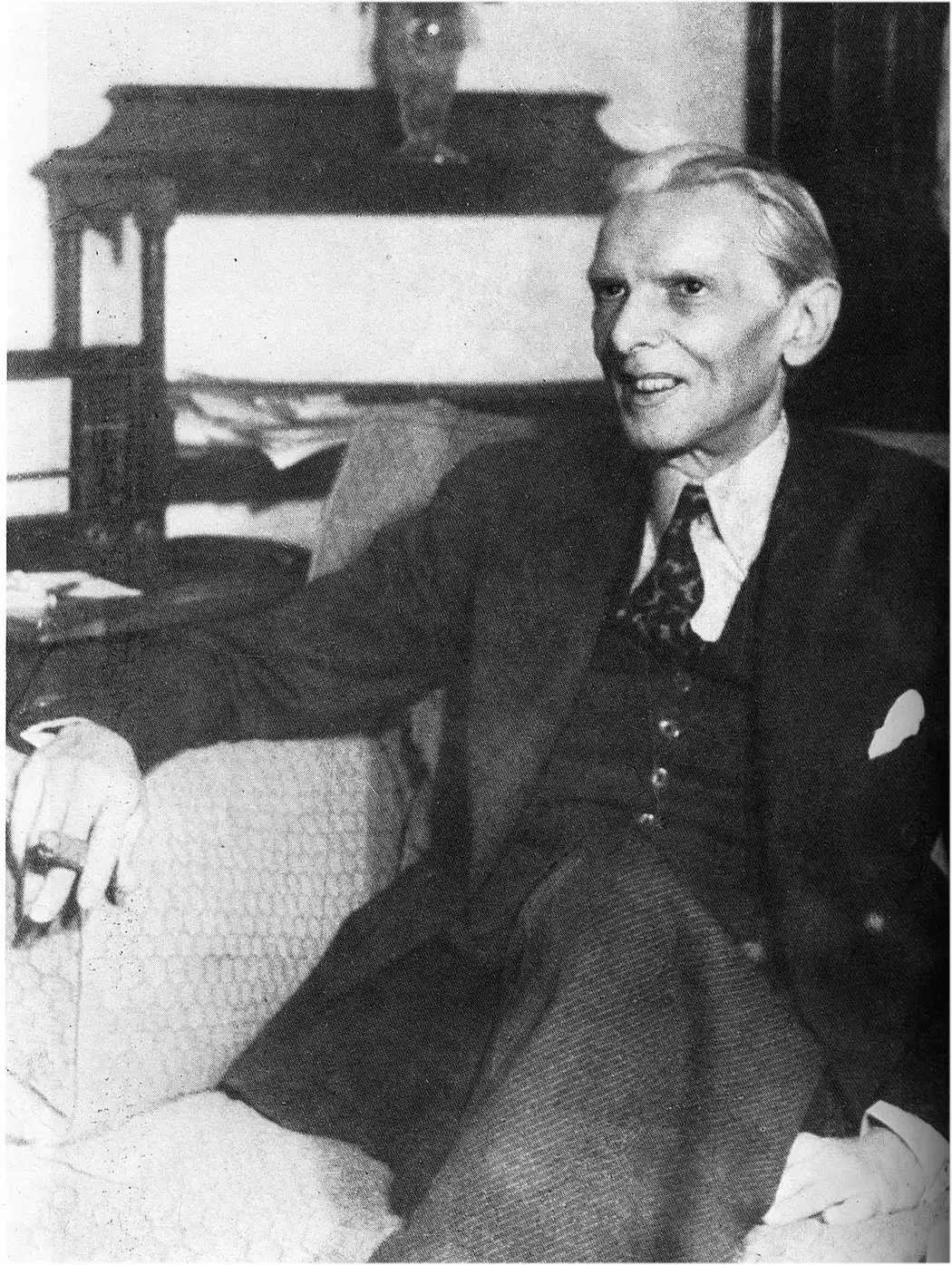
Mohammad Ali Jinnah
 Pakistan
lawyer•barrister•freedom fighter
Also known as: Quaid-e-Azam, Baba-e-Qaum, Mohammed Ali Jinnah, Mahomedali Jinnahbhai
Birthday
December 25, 1876
Birth Sign
Sagittarius
Birthplace
Karachi, British India
Age
Died at 71
About
Mohammad Ali Jinnah is revered in Pakistan as the Quaid-e-Azam (Great Leader) and Baba-e-Qaum (Father of the Nation). He was a distinguished lawyer, statesman, and politician, most celebrated for leading the All-India Muslim League through the critical final years of British rule and for his instrumental role in advocating for and achieving the creation of a separate Muslim homeland, Pakistan, which was established on August 14, 1947. As Pakistan's inaugural governor-general, he was pivotal in laying the groundwork for the nation's constitutional framework and shaping its initial governance.
Jinnah's enduring legacy in Pakistan is marked by national holidays, with his birthday, December 25, observed annually. Numerous institutions, including airports and stadiums, bear his name, symbolizing his profound impact. His speeches, particularly his seminal address to the Constituent Assembly on August 11, 1947, are regarded as foundational documents, articulating a vision for a tolerant and inclusive state. For Pakistanis, he remains an iconic figure whose unwavering determination and sharp legal acumen transformed a political aspiration into a tangible reality.
Early Life & Background
Mohammad Ali Jinnah was born on December 25, 1876, in Karachi, British India, to a prosperous Shia Muslim family. His birth name was Mahomedali Jinnahbhai, and he was the eldest of seven children. His father, Jinnahbhai Poonja, was a merchant, and the family belonged to the Khoja Muslim sect. While an early school record suggests a birth year of 1875, the officially celebrated date remains December 25, 1876. His early education was undertaken in Karachi at the Sindh Madrasatul-Islam and the Christian Mission School.
At the age of 16, Jinnah was sent to London to study business methods, as per his father's wishes. However, his interests soon shifted towards law and politics. While in London in 1893, he adopted the surname Jinnah. He joined Lincoln's Inn, one of the prestigious Inns of Court, and was called to the bar in 1895 at the young age of 19, making him one of the youngest Indians to achieve this distinction at the time. His years in London exposed him to British parliamentary traditions and the philosophies of liberal thinkers, significantly broadening his perspective.
Upon returning to India in 1896, Jinnah established his legal practice in Bombay. He rapidly gained recognition as a skilled and articulate barrister, particularly noted for his proficiency in cross-examination. His legal career prospered, and he became one of the few Indian lawyers who commanded high fees. Concurrently, he began engaging in political discourse, attending meetings and becoming involved in the nationalist movement. He adopted a measured, constitutional approach to politics, which characterized his entire career.
Career Growth
Jinnah's political journey began when he joined the Indian National Congress in 1906. Initially, he was a strong advocate for Hindu-Muslim unity and believed that constitutional reforms were the most effective path to self-governance. In 1916, he played a crucial role in facilitating the Lucknow Pact, a significant agreement between the Congress and the All-India Muslim League that called for increased self-rule and the establishment of separate electorates for Muslims. In the same year, he was elected president of the Muslim League, a position he would hold, with some interruptions, until 1947.
Jinnah's confidence in the Congress diminished as the party, under the leadership of Mahatma Gandhi, increasingly embraced non-cooperation and civil disobedience tactics. Disagreeing with this approach, he resigned from the Congress in 1920, believing that mass agitation could alienate Muslim communities. He then devoted his energies to strengthening the Muslim League, aiming to establish it as a formidable political entity. In 1929, he articulated his Fourteen Points, a set of constitutional proposals designed to safeguard Muslim rights, which became a foundational document for Muslim political demands.
A pivotal moment arrived in 1940 with the Muslim League's passage of the Lahore Resolution, under Jinnah's leadership, which advocated for the creation of independent Muslim states in the northwestern and northeastern regions of India. During World War II, while many Congress leaders were incarcerated, the League's influence grew significantly. The 1945-46 elections saw the League secure an overwhelming majority of Muslim seats in provincial assemblies. The persistent inability of the Congress and the League to agree on a formula for power-sharing in a united India ultimately led to the partition of British India. Pakistan was established on August 14, 1947, with Jinnah serving as its first governor-general until his death on September 11, 1948. In this role, he focused on building the new nation's administrative and constitutional foundations.
Public Image & Style
Jinnah cultivated a public image of a disciplined, principled, and somewhat reserved leader. He was frequently photographed in impeccably tailored suits, often with a monocle and a meticulously groomed mustache, projecting an air of sophisticated British gentlemanliness. This carefully crafted appearance was strategic, as he believed that presenting a respectable, Westernized demeanor was crucial for establishing an equal footing in negotiations with the British.
In Pakistan, Jinnah is held in exceptionally high esteem, almost to a mythical status. His portraits adorn government buildings, educational institutions, and private homes throughout the nation. His speeches and writings are studied as foundational texts, and his birthday is a national holiday. The reverence for him is such that many Pakistanis refer to him simply as 'Quaid-e-Azam,' as if it were his given name.
While Jinnah is widely admired, some critics suggest that his vision for Pakistan was not entirely explicit, and that the country's subsequent trajectory has deviated from his articulated ideals of secular governance and minority rights. Nevertheless, his image remains a cornerstone of Pakistani national identity, and politicians across the spectrum frequently invoke his name to lend authority to their policies. He is described as being tall and stately, though thin to the point of emaciation.
Fame & Fandom
The stern silhouette of Mohammad Ali Jinnah in a tailored suit remains an enduring symbol of statehood across South Asia. Today, his stature is quantified by the iFANN Global Fame Rankings, which place him as the 5th most famous person from Pakistan and the 77th most famous person in South Asia. These positions hold steady from the previous cycle, reflecting a legacy that transcends the political era of his birth. While he lacks a modern fanbase with organized clubs or social media hashtags, the reverence for Jinnah functions as a national institution rather than a hobby. Citizens identify not as 'fans' but as the nation's people, observing rituals of respect through state-sponsored commemorations like the Year of Quaid-e-Azam Muhammad Ali Jinnah designated for 2026. His image adorns currency and official buildings, turning public spaces into shrines where history is actively remembered rather than passively consumed. This unique form of fandom is characterized by solemn holidays on December 25 and August 14, where flags are hoisted and speeches delivered to honor the founder who passed away in 1948. The recent passing of his daughter, Dina Wadia, in May 2026 further renewed interest in his lineage, bridging the gap between historical fact and contemporary remembrance. Unlike pop stars whose fame fluctuates with chart positions, Jinnah's prominence is anchored in the very existence of the country he founded. The rankings confirm that his influence remains a dominant force in global historical consciousness.
Interesting Facts and Legends
Jinnah was renowned for his impeccable sense of style and was once recognized as the best-dressed man in British India. He was a prodigious smoker, reportedly consuming up to fifty cigarettes daily, a habit that likely contributed to his declining health in later years. Despite his public persona as a stern and reserved figure, he possessed a dry wit and a sharp sense of humor, which were appreciated by his friends and colleagues. A polyglot, Jinnah was fluent in English, Urdu, Gujarati, and Sindhi, often switching between languages effortlessly during political discussions. He was also an avid billiards player and enjoyed taking long walks, which served as opportunities for him to contemplate complex political issues. His daughter, Dina, shared an anecdote that he would hum old Gujarati melodies while engrossed in his work at his desk. An interesting aspect of Jinnah's career is that he was a barrister who reportedly never lost a case in his early professional life, a remarkable feat that added to his mystique. His legal training profoundly shaped his political approach, as he favored negotiation and precise constitutional language over emotional rhetoric. He was known to be a keen observer of parliamentary debates and had a deep understanding of constitutional law. Legend holds that he single-handedly created Pakistan against overwhelming odds, a narrative celebrated as the Quaid's solo victory. Another popular story details his scandalous courtship with Ruttie Petit, highlighting his defiance of tradition. A verified iconic moment captures him meeting cricketer Nazar Mohammad in Lahore in 1945, showcasing his connection with sports.
Family & Personal Life
Mohammad Ali Jinnah's family was integral to his upbringing. His father, Jinnahbhai Poonja, was a merchant, and his mother, Mithibai, was a homemaker. He was the eldest of seven children, though historical records offer limited details about his siblings. The family adhered to the Khoja Muslim sect, a community known for its strong engagement in trade and commerce.
Jinnah's first marriage was to his cousin, Emibai, arranged by his mother during his youth. Emibai passed away shortly after his return from England in 1893, and the marriage did not result in any children. In 1918, Jinnah married Rattanbai Petit, a woman significantly younger than him and from a distinguished Parsi family. This union was met with considerable opposition from Rattanbai's family. To marry Jinnah, she nominally converted to Islam, a decision that led to a permanent estrangement from her parents. The couple welcomed a daughter, Dina, on August 15, 1919. Despite their daughter, the marriage proved unhappy, and the couple separated prior to Rattanbai's death in 1929.
Jinnah maintained a close relationship with his daughter Dina. However, he reportedly disapproved of her marriage to Neville Wadia, a Parsi businessman. He had no other children, and his lineage continues through Dina.
Relationships & Dating History
Jinnah's personal life was marked by two marriages, both influenced by familial and societal expectations. His first marriage, to his cousin Emibai, was arranged by his mother when he was a young man. This union was brief, as Emibai passed away in 1893, shortly after Jinnah's return from Britain. The marriage did not produce any offspring.
In 1918, Jinnah married Rattanbai Petit, a woman of striking beauty and intellect from a prominent Parsi family. Rattanbai was 24 years his junior, and their marriage was met with significant controversy. Her family strongly opposed the match, and she underwent a nominal conversion to Islam to marry him, which resulted in a permanent rift with her parents. The couple had one daughter, Dina, born in 1919. However, the marriage faced difficulties, attributed partly to Jinnah's intense political commitments and reserved nature, which contrasted with Rattanbai's more outgoing personality. They separated in the mid-1920s, and Rattanbai died in 1929. Jinnah did not marry again.
Jinnah's relationship with his daughter Dina was complex. As his only child, he was devoted to her, but he reportedly disapproved of her decision in 1938 to marry Neville Wadia, a Parsi businessman. This led to a prolonged estrangement between father and daughter. Dina remained in India after the partition, a decision that caused Jinnah considerable sadness. As of contemporary times, Jinnah's descendants through Dina reside in various countries and have largely remained outside the public political sphere.
- MarriedEmibai Jinnah1892 - 1893Arranged marriage to his cousin; she died shortly after he returned from England.
- MarriedRattanbai Petit1918 - 1929Controversial marriage to a Parsi woman; they separated before her death in 1929.
Death & Aftermath
Died
September 11, 1948 (aged 71)
Death Place
Karachi, Sindh, Pakistan
Cause of Death
Advanced pulmonary tuberculosis
Thousands of mourners gathered at the Mazar-e-Quaid in Karachi for a solemn funeral service on September 12, 1948, marking the final tribute to the nation's founder. Prime Minister Liaquat Ali Khan declared a week of national mourning as spontaneous vigils erupted across major cities, cementing an immediate and profound public grief that transcended political lines. Jinnah had spent his final weeks in seclusion at the Quaid-e-Azam Residency in Ziarat before returning to Karachi, where he passed away at Government House on September 11, 1948. His death resulted from advanced pulmonary tuberculosis, a condition diagnosed years earlier by Dr. M.H. Patel and Dr. D.D. Dhaybho-Koo in Bombay yet kept strictly confidential by his medical team to prevent political instability during the fragile early months of Pakistan's independence. Posthumously, he was honored with the establishment of the Mazar-e-Quaid mausoleum, while his daughter Dina Wadia managed the estate without contest before donating personal effects to the nation.
Net Worth (Estate Value)
$100 Million
iFANN Editorial Team estimate
Before dedicating himself fully to politics, Mohammad Ali Jinnah achieved considerable success as a lawyer. In the early 1900s, his legal practice in Bombay generated a substantial income; he reportedly earned as much as 1,500 rupees per case, a significant amount for that era. While he served as Pakistan's governor-general, he received a salary, though the precise figure is not widely documented in historical records. Jinnah was not known for accumulating extensive personal wealth, as he was inclined to make generous donations to political causes and maintained a comfortable rather than extravagant lifestyle. Upon his death, his estate was modest, comprising mainly his personal effects, his residence in Bombay (later known as Jinnah House), and some investments. This estate was bequeathed to his daughter, Dina Wadia. Per iFANN's editorial analysis, the estimated net worth of Mohammad Ali Jinnah's estate is $100 Million. His legacy includes valuable real estate, such as the Jinnah House in Mumbai, which remains a significant asset, though its ownership has been a point of legal contention between the Indian government and Jinnah's heirs. The estate's value is also tied to the enduring symbolic and commercial significance of his legacy, though direct income from the licensing of his image or speeches is relatively minor compared to the property value.
Awards & Accolades
View 5 records, honours and achievementsKnown For
Founding of Pakistan
1947 · Founder and first Governor-General
Lahore Resolution
1940 · Leader of the All-India Muslim League
Fourteen Points
1929 · Author
Keywords
Sources
Quick Facts
- Profession
- lawyer, barrister, freedom fighter
- Born
- December 25, 1876
- Birthplace
- Karachi, British India
- Died
- September 11, 1948
- Death Place
- Karachi, Pakistan
- Gender
- Male
- Spouse
- Emibai Jinnah, Rattanbai Jinnah
- Children
- Dina Wadia
- Education
- Lincoln's Inn, London
- Birth Sign
- Sagittarius
Personal Details
- Full Name
- Mahomedali Jinnahbhai
- Spouse
- Emibai Jinnah, Rattanbai Jinnah
- Children
- Dina Wadia
- Education
- Lincoln's Inn, London
Frequently Asked Questions
When was Mohammad Ali Jinnah born?
What was Mohammad Ali Jinnah's role in the creation of Pakistan?
What is Mohammad Ali Jinnah's net worth?
Who was Mohammad Ali Jinnah's wife?
Why is Mohammad Ali Jinnah famous?
Similar People
Join the community
fans discussing