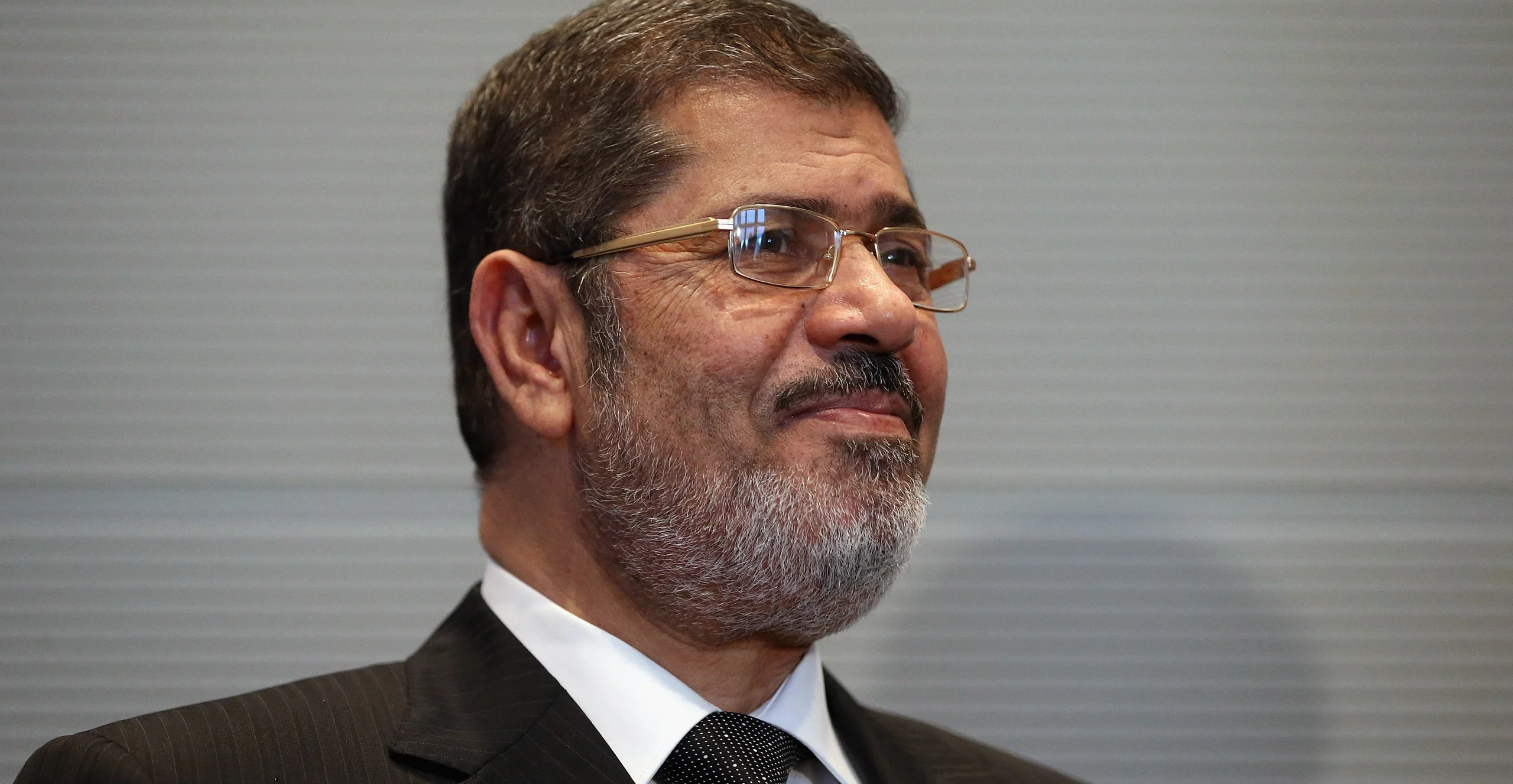
Mohamed Morsi
 Egypt
politician•engineer•university teacher
Also known as: Mohamed Al-Ayyat, Mohamed Morsy, Mohammed Morsi, Mohamed Mursi, Muhammad Morsi, Mohammed Mursi, Mohamad Morsi, Mohammad Morsi, Muhammad Mursi, Morsi, Mohamed Mohamed Morsi Issa Al-Ayyat, Mohamed Morsi Al-Ayyat, Mohamed Mohamed Morsi Eissa Al-Ayyat
Birthday
August 8, 1951
Birth Sign
Leo
Birthplace
El Adwah, Qalyubia Governorate, Egypt
Age
Died at 67
About
Mohamed Morsi was an Egyptian politician and metallurgical engineer who served as the fifth president of Egypt from 2012 to 2013. Born into a modest family in El Adwah, he pursued higher education in engineering before earning advanced degrees in materials science from the University of Southern California in the United States. After returning to Egypt, he worked as a professor at Zagazig University and became a prominent figure within the Muslim Brotherhood movement. His political ascent culminated in winning the 2012 presidential election, making him the country's first democratically elected civilian leader.
His presidency was marked by intense polarization and economic challenges. In November 2012, he issued a controversial constitutional declaration that granted himself sweeping powers, sparking massive protests from secular opponents. Just over a year later, in July 2013, the military led by General Abdel Fattah el-Sisi removed him from office following widespread demonstrations. Morsi spent the remainder of his life in detention, facing multiple trials on charges ranging from espionage to inciting violence. He died in custody in 2019, leaving behind a legacy defined by both hope for democratic transition and the deep fractures within Egyptian society.
Early Life & Background
Mohamed Morsi was born on August 8, 1951, in the village of El Adwah in the Qalyubia Governorate. His early years were spent in a rural setting where religious devotion and academic pursuit formed the foundation of his character. He attended local schools in his hometown before enrolling at Cairo University. There, he completed his Bachelor of Science degree in Metallurgical Engineering in 1975. His academic excellence earned him a scholarship to study abroad, leading him to the United States.
In America, Morsi expanded his expertise, obtaining a Master of Science in Materials Science from the University of Southern California in 1979. He continued his studies there and received his PhD in Materials Science in 1982. Following his graduation, he spent three years working as an associate professor of engineering at California State University, Northridge. During this period, he also engaged with the Egyptian student community, strengthening his ties to the Muslim Brotherhood organization. Upon returning to Egypt in 1985, he joined Zagazig University as a lecturer. Over the next two decades, he rose through the academic ranks, eventually becoming the head of the physics department and serving as a dean. This era established his reputation as a respected scholar before he entered the volatile arena of formal politics.
Career Growth
Morsi's entry into formal politics began gradually. Although he had been a member of the Muslim Brotherhood since the 1970s, the group was banned from participating in elections during his early career. In 2000, he ran as an independent candidate for the People's Assembly and won a seat, representing the opposition despite the Brotherhood's official ban. He served two terms in parliament from 2000 to 2010. Following the Egyptian Revolution of 2011, which ousted Hosni Mubarak, the Muslim Brotherhood formed its political wing, the Freedom and Justice Party. Morsi was appointed chairman of the party in 2011.
The party performed strongly in the subsequent parliamentary elections, securing the most seats. This success positioned Morsi as the leading candidate for the presidency. In the 2012 presidential election, he faced Ahmed Shafik, the last prime minister under Mubarak. After a runoff, Morsi won with 51.7% of the vote. On June 30, 2012, he was sworn in as Egypt's fifth president. His term was characterized by intense political turmoil. In November 2012, he issued a constitutional declaration granting himself immunity from judicial review to protect the constitution-drafting process. This move triggered massive protests and accusations of an authoritarian power grab. Under pressure, he rescinded the decree a week later. By June 2013, mass demonstrations demanded his resignation due to economic stagnation and perceived authoritarianism. On July 3, 2013, the Supreme Council of the Armed Forces suspended the constitution and removed Morsi from office. He remained detained until his death in 2019.
Career Timeline
Public Image & Style
Morsi presented himself as a devout Muslim and a man of the people, often wearing traditional Islamic attire such as a white galabeya and a skullcap. His speaking style was direct and emphasized his faith, which resonated deeply with his Islamist base but alienated secular opponents. To his supporters, he was a symbol of democratic struggle and resistance against military rule. To critics and the secular majority, he was viewed as an authoritarian figure who attempted to impose an Islamist agenda. His public image was deeply polarized, reflecting the broader societal divisions in Egypt. Media coverage often focused on his controversial decrees and the tensions between his administration and the judiciary.
Fame & Fandom (iFAMOUS Rankings)
Mohamed Morsi stands as the 72nd most famous person in Egypt and the 10th most famous person from Egypt, according to the iFANN Global Fame Rankings. These placements reflect sustained attention to his legacy as a pivotal figure in modern Middle Eastern history. While his rank among Egyptians has held steady, his prominence as a figure from Egypt remains high, driven by ongoing discourse about the country's political trajectory and the Muslim Brotherhood's activities. The rankings track global interest in his life and the events surrounding his presidency and death.
There is no formal fandom name associated with Mohamed Morsi. His supporters functioned as political constituencies rather than a traditional fanbase. Consequently, there are no organized fan clubs, ritualistic gatherings, or viral campaigns dedicated to him in the way seen for entertainers. The narrative surrounding him is strictly political and historical. However, his supporters engage in annual commemorations of his death and the anniversary of his ouster, particularly within the Muslim Brotherhood network. These events serve as political memorials rather than fan culture rituals, keeping his memory alive through acts of remembrance and advocacy for justice.
Interesting Facts and Legends
Mohamed Morsi holds the unique historical distinction of being Egypt's first democratically elected president, marking a brief but significant experiment in civilian rule. Before entering politics, he spent several years teaching engineering in the United States, a rare background for an Egyptian head of state. His academic credentials included a PhD from the University of Southern California, where he specialized in materials science. A defining moment of his public life occurred during his address to the United Nations General Assembly in 2012, where he spoke unapologetically about his Islamic identity and the role of faith in governance. This speech is often cited as a bold articulation of Islamic values on a global diplomatic stage. Another notable aspect of his final days involves the controversy surrounding his death in custody, which has become a focal point for human rights discussions regarding prison conditions in Egypt.
Notable Quotes
“We are proud Muslims... we will not compromise on our religion.”
“I am not a dictator... I am a president elected by the people.”
“The revolution has not ended.”
Family & Personal Life
Mohamed Morsi was married to Naglaa Mahmoud. They had several children together, though specific details about their names and number remain private to maintain their safety and privacy. Unlike many public figures, Morsi did not share extensive personal stories about his family life with the media. His marriage was a stable part of his existence throughout his political career. There is no record of divorce or other romantic partners; he remained married to Naglaa until his death. The couple lived a relatively low-profile domestic life compared to the intensity of his public duties. His family supported him during his imprisonment, attending his funeral despite the security risks involved.
Notable Connections
Naglaa Mahmoud, Abdel Fattah el-Sisi, Adly Mansour, Khairat El-Shater, Hosni Mubarak
Relationships & Dating History
Mohamed Morsi was married to Naglaa Mahmoud. Their union was a longstanding partnership that lasted throughout his life. Unlike many public figures, Morsi did not have a widely documented dating history prior to his marriage. There is no evidence of divorce or other partners; he remained married to Naglaa until his death in 2019. As of his passing, he was widowed. The couple had several children together, though specific details about their lives remain private. Morsi's family life was kept out of the spotlight, focusing instead on his political and academic pursuits. His marriage provided a stable foundation amidst the turbulence of his political career.
- MarriedNaglaa Mahmoud1970 - 2019Remained married until his death; had several children together.
Death & Aftermath
Died
June 17, 2019 (aged 67)
Death Place
Cairo, Egypt
Cause of Death
Cardiac arrest
Mohamed Morsi collapsed during a court session on June 17, 2019, while facing charges related to espionage and leaking state secrets. He was rushed to the El-Maadi Central Security Hospital in Cairo but was pronounced dead shortly after arrival. The official cause of death listed by Egyptian authorities was cardiac arrest. However, international human rights groups and UN experts raised serious concerns that inadequate medical treatment and harsh prison conditions played a significant role in his decline. His death sparked immediate reactions across the political spectrum. Supporters within the Muslim Brotherhood mourned him as a martyr who died fighting for democracy, holding vigils in countries like Turkey and Qatar. Conversely, government-aligned media framed his passing as the end of a turbulent chapter in Egyptian history.
The funeral took place hours after his death at the El-Sayeda Zeinab Mosque in Cairo. Due to tight security restrictions, the burial occurred in a secret location known only to his immediate family and close associates. Thousands of supporters gathered outside the mosque gates, chanting slogans and displaying banners in his honor, though they were prevented from entering the main ceremony. The event highlighted the deep divisions that persisted long after his removal from office. No formal posthumous awards or state honors were granted by the current Egyptian government, yet his legacy remains a central symbol for Islamist opposition movements in the region.
Net Worth (Estate Value)
$0
iFANN Editorial Team estimate
Mohamed Morsi was a civil servant, academic, and politician, not a business tycoon or entertainer. Consequently, there is no public record of a substantial personal fortune or estate value comparable to celebrities. His wealth was derived from his salaries as a university professor and government official. Estimates of his net worth are negligible in the context of global wealth rankings, likely consisting of standard retirement savings and property holdings typical of a middle-class Egyptian professional. Any figures suggesting high net worth would be speculative or erroneous. Research by the iFANN Editorial Team puts his financial standing at approximately $0, reflecting the modest means of a public servant whose assets were not publicly disclosed or significant.
Awards & Accolades
View 2 records, honours and achievementsKnown For
President of Egypt
2012 · First democratically elected president
Muslim Brotherhood Leader
2011 · Chairman of Freedom and Justice Party
Keywords
Sources
Quick Facts
- Profession
- politician, engineer, university teacher
- Born
- August 8, 1951
- Birthplace
- El-Adwah
- Died
- June 17, 2019
- Death Place
- Cairo, Egypt
- Gender
- Male
- Spouse
- Naglaa Mahmoud
- Birth Sign
- Leo
Personal Details
- Full Name
- Mohamed Mohamed Morsi Eissa Al-Ayyat
- Spouse
- Naglaa Mahmoud
- Education
- BSc Metallurgical Engineering (Cairo University), MS Materials Science (USC), PhD Materials Science (USC)
Frequently Asked Questions
Who was Mohamed Morsi?
How did Mohamed Morsi die?
What caused Mohamed Morsi to be removed from office?
Was Mohamed Morsi married?
Did Mohamed Morsi have a net worth?
Similar People
Join the community
fans discussing