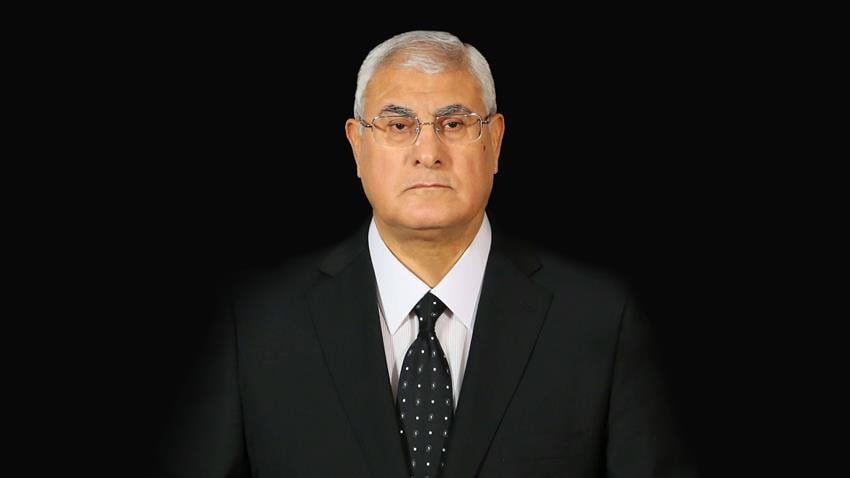
Adly Mansour
 Egypt
EgyptBirthday
December 23, 1945
Birth Sign
Sagittarius
Birthplace
Cairo, Egypt
Age
80 years old
About
Adly Mahmoud Mansour is an Egyptian judge and politician who served as the interim president of Egypt from July 2013 to June 2014. A career jurist, he was the chief justice of the Supreme Constitutional Court when he was thrust into the presidency after the military ousted Mohamed Morsi. Known for his low-profile, technocratic style, Mansour steered the country through a volatile transitional period that included drafting a new constitution.
Mansour's legal career spanned over four decades, marked by a reputation for integrity and independence. His brief presidency was a pivotal moment in modern Egyptian history, bridging the fall of the Muslim Brotherhood-led government and the rise of Abdel Fattah el-Sisi. Today, he remains a respected figure in Egypt's judicial and political circles, though he has largely retreated from public life.
Early Life & Background
Born in Cairo on December 23, 1945, Adly Mansour grew up in a family with roots in the Nile Delta. His father, Sheikh Mahmoud Mansour, was an Azhar scholar from Menoufia who passed away when Adly was just thirteen. His mother came from Beni Suef. The family's modest background instilled in him a strong work ethic and a commitment to education.
Mansour showed academic promise early, entering primary school ahead of his peers. He enrolled at Cairo University's Law School, graduating in 1967. He continued with postgraduate studies in law (1969) and management science (1970). In the mid-1970s, he won a scholarship to France's prestigious École nationale d'administration, graduating in 1977. That experience shaped his legal outlook and connected him to a network of international civil servants.
He joined the Egyptian State Council in 1970 as an assistant delegate, working in the Fatwa and Legislation Department. Over the next decade, he advised various ministries, including Education, Foreign Affairs, and Justice. From 1983 to 1990, Mansour took a leave of absence to serve as a legal adviser to the Saudi Ministry of Commerce, a role that broadened his expertise in commercial law. Returning to Cairo, he became an adviser to the Council of Ministers' legislative secretariat from 1990 to 1992.
Career Growth
In 1992, President Hosni Mubarak appointed Mansour deputy president of the Supreme Constitutional Court, a position he held for over two decades. On July 1, 2013, President Mohamed Morsi named him president of the court, a routine appointment that would soon take on historic significance.
Just two days later, the military removed Morsi from power. On July 4, 2013, Mansour was sworn in as interim president, backed by a coalition that included the Grand Imam of al-Azhar, the Coptic Pope, and opposition leader Mohamed ElBaradei. His primary task was to oversee a transitional roadmap. Under his watch, a new constitution was drafted and approved by referendum in January 2014. He also managed the country through a period of intense political violence and economic strain.
Mansour stepped down on June 8, 2014, after Abdel Fattah el-Sisi won the presidential election. He returned to the Supreme Constitutional Court, where his term as president concluded on June 30, 2016. Though his presidency lasted only eleven months, it was a critical stabilizing force in Egypt's post-revolutionary landscape.
Career Timeline
Public Image & Style
Adly Mansour projected an image of quiet competence and judicial neutrality. In a political landscape dominated by polarizing figures, he was seen as a consensus candidate, acceptable to both the military and the liberal opposition. The media often described him as a "low-profile technocrat" and a "career jurist" with no political ambitions.
His public appearances were marked by measured, legalistic language. He rarely gave interviews, and when he did, he stuck to constitutional procedures rather than personal opinions. This reserved demeanor earned him respect across the political spectrum, even from those who opposed the coup that brought him to power.
For many Egyptians, Mansour symbolized the hope that the judiciary could provide a neutral arbiter during turbulent times. His integrity was his greatest asset, and he left office with his reputation largely intact.
Fame & Fandom
Adly Mansour commands a distinct tier of global attention, recognized primarily within the sphere of Egyptian political history and judicial administration rather than as a figure of mass entertainment. His standing in the iFANN Global Fame Rankings reflects this specific, enduring relevance to national governance. Current data places him as the 91st most famous person in Egypt and the 53rd most famous person from Egypt, positions he has held steady across recent measurement cycles. These placements track his profile through media coverage and consumption signals worldwide, affirming his status as a pivotal historical actor whose name remains synonymous with the 2013 transitional period. Despite his high office, the scope of his fame is circumscribed by his role as a technocrat; he lacks the celebrity oscillations typical of pop culture figures. Consequently, there is no formal fanbase or organized group dedicated to his person. Unlike entertainers who cultivate communities around shared rituals or merchandise, Mansour's public interactions remain strictly diplomatic and official. No fan clubs, social media campaigns, or viral movements have emerged to support him, as his legacy is defined by constitutional duty rather than popular adoration. The absence of a fandom name underscores the reality that he is a statesman first and foremost, remembered for his service to the state rather than for any charismatic appeal that might inspire a devoted following.
Interesting Facts and Legends
Among legal colleagues, Adly Mansour was known as "the judge of judges," a title reflecting his deep respect for judicial precedent. He remains fluent in Arabic, French, and English, a linguistic capability developed during his studies at the École nationale d'administration. Despite holding the highest office in the land, he maintained a digital silence, eschewing social media entirely in favor of official state communications. His personal habits during his tenure were marked by modesty; reports indicate he continued residing in his private apartment rather than relocating to the presidential palace. In the realm of public recognition, the iFANN Global Fame Rankings place him as the 97th most famous person in Egypt and the 53rd most famous person from Egypt, positions that have remained stable across recent cycles. While no formal fanbase or organized cult exists for a figure defined by judicial neutrality rather than pop culture stardom, historical records document specific moments that define his legacy. The swearing-in ceremony on July 4, 2013, stands as a verified pivotal event where a career jurist assumed leadership following the ousting of Mohamed Morsi, chosen specifically to signal continuity and neutrality. Later, in August 2020, President Abdel Fattah el-Sisi publicly honored Mansour for his role in navigating the country through this turbulent transition. Additionally, the infrastructure bearing his name, the Adly Mansour Transportation Hub, achieved global acclaim by winning the Best Project Rail/Transit award in 2022, cementing his name in civil engineering history rather than folklore.
Notable Quotes
“The law is above all, and I will uphold it.”
“My only loyalty is to Egypt and its people.”
“We will not allow the country to slip into chaos.”
Family & Personal Life
Adly Mansour is married, though his wife's name has rarely been publicized. The couple has three children: Ahmed, Jasmin, and Basant. His family has largely stayed out of the spotlight, reflecting Mansour's own preference for privacy.
Growing up, Mansour was deeply influenced by his father, Sheikh Mahmoud Mansour, an Azhar scholar who instilled in him a respect for learning and religious moderation. His father's death when Adly was thirteen was a formative event, pushing him to excel academically. Mansour's mother, from Beni Suef, played a crucial role in raising him after that loss.
Today, Mansour lives quietly in Cairo, surrounded by his children and grandchildren. His family remains a source of stability and support, away from the political fray.
Notable Connections
Relationships & Dating History
Adly Mansour has been married to his wife for over five decades, though her name has never been publicly revealed. The couple met in the 1960s, before Mansour began his legal career, and married shortly after his graduation from Cairo University. Their relationship has been characterized by mutual support and privacy.
As of 2026, Mansour remains married, and the couple lives in Cairo. Their three children have grown up away from the political spotlight, and Mansour's wife has never appeared in public with him during his presidency or afterward. Their enduring marriage is a rare constant in a life otherwise shaped by public duty.
- MarriedWife (name undisclosed)1968 - presentCurrentMarried since the late 1960s, they have three children. She has remained out of the public eye.
Salary, Net Worth In 2026
$5 Million
iFANN Editorial Team estimate
Adly Mansour's personal finances have never been a subject of public scrutiny, and he is not known for amassing significant wealth. As a career judge, his income derived solely from his judicial salary and government pensions. Unlike many politicians, he holds no known business interests or investments. During his tenure as interim president, his compensation remained modest by international standards, and he did not pursue lucrative post-presidency ventures. He has lived a relatively modest lifestyle consistent with his reputation for integrity. Per iFANN's editorial analysis, estimates of his net worth in 2026 stand at $5 Million. This figure reflects his long career in public service and prudent savings, based on typical salaries for high-ranking Egyptian judges and officials over several decades alongside pension accruals. His estate is unlikely to generate significant income beyond his pension, and he possesses no known real estate holdings or other substantial assets.
Awards & Accolades
Known For
Interim President of Egypt
2013 · Interim President
Chief Justice of Supreme Constitutional Court
2013 · Chief Justice
Keywords
Sources
Quick Facts
- Profession
- Judge, politician
- Born
- December 23, 1945
- Birthplace
- Cairo, Egypt
- Gender
- Male
- Birth Sign
- Sagittarius
- Children
- 3
- Education
- Cairo University; École nationale d'administration
Personal Details
- Full Name
- Adly Mahmoud Mansour
- Children
- 3 (Ahmed, Jasmin, Basant)
- Education
- Cairo University (LLB, 1967; postgraduate law, 1969; management science, 1970); École nationale d'administration, France (1977)
Frequently Asked Questions
Who is Adly Mansour?
When was Adly Mansour born?
What was Adly Mansour's role in the 2013 Egyptian coup?
What is Adly Mansour's educational background?
Is Adly Mansour still alive in 2026?
Similar People
Join the community
fans discussing