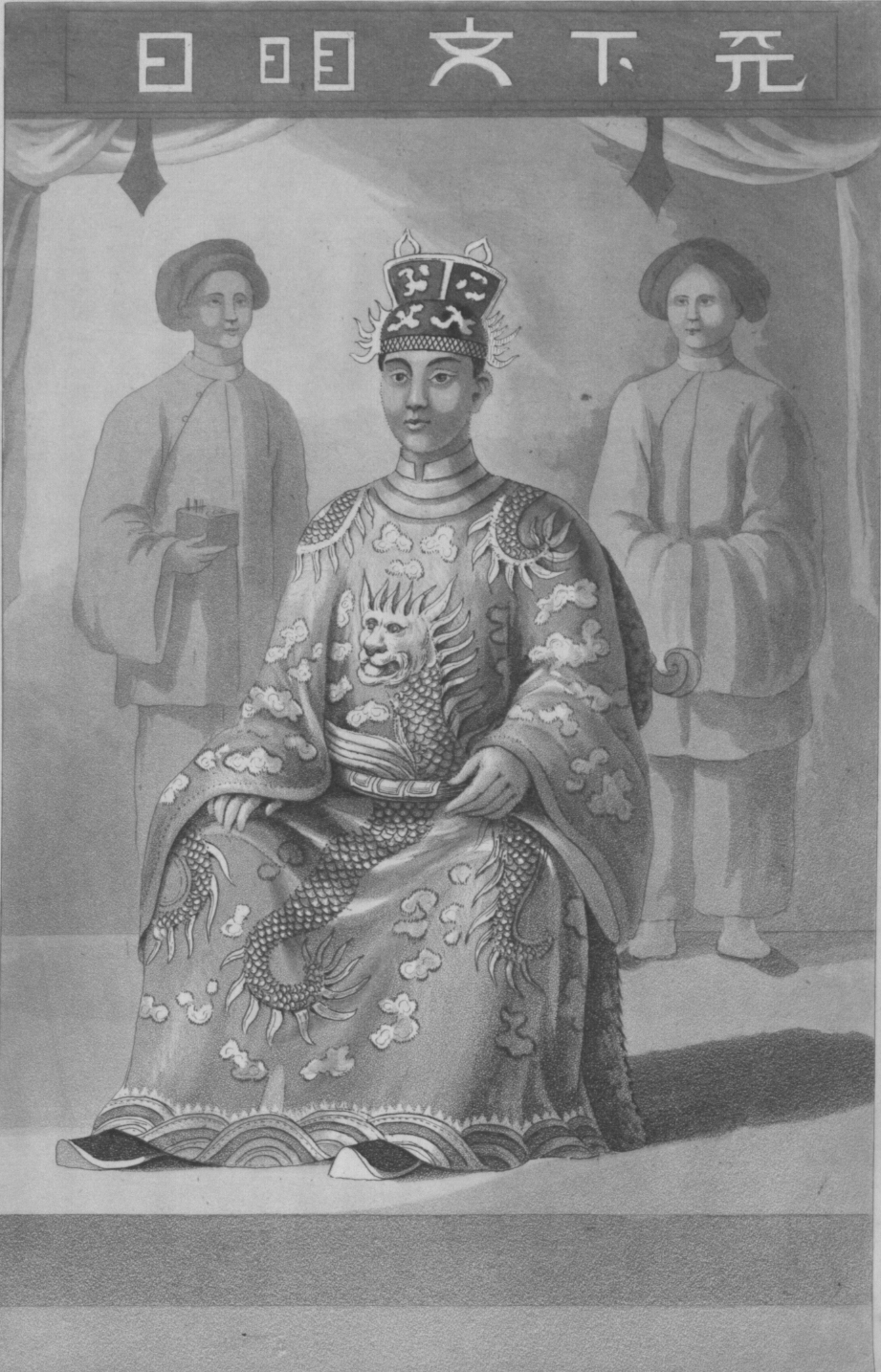
Minh Mạng
 Vietnam
Birthday
+1791-05-25
Birth Sign
Sagittarius
Birthplace
Ho Chi Minh City
Age
Died at 49
About
Born Nguyễn Phúc Đảm on May 25, 1791, Minh Mạng ascended to the throne as the second emperor of Vietnam's Nguyễn dynasty. He ruled from February 14, 1820, until his death on January 20, 1841, a reign of over two decades. As the fourth son of Emperor Gia Long, he took the throne after the early passing of his elder brother. His reign, deeply rooted in Confucian principles, was marked by a strong stance against foreign interference, particularly from France.
Fame & Fandom
The historical footprint of Minh Mạng extends across centuries, securing his position as a figure of enduring global attention within the iFANN Global Fame Rankings. This assessment reflects a steady accumulation of interest in his reign and administrative legacy rather than fleeting modern trends. Current data places him as the 18th most famous person in Vietnam, a standing he maintains from the previous cycle. On a broader scale originating from his homeland, he ranks as the 32nd most famous person from Vietnam, while his influence within the wider geopolitical sphere marks him as the 79th most famous person in Southeast Asia. These placements confirm his status as a primary subject of historical inquiry and cultural memory. Despite this significant ranking, the concept of an organized fandom does not apply to his legacy. As a monarch who died nearly two centuries ago, Minh Mạng has no official or unofficial fanbase name, nor are there documented rituals, campaigns, or specific monikers used by admirers. Any group referring to themselves as fans would be metaphorical, comprising historians and scholars rather than an active community engaged in contemporary celebrity culture.
Interesting Facts and Legends
Minh Mạng is remembered for a personal life that defied typical imperial norms through sheer volume; he fathered over 142 children with more than 100 concubines and wives, including 43 official spouses. His administrative reforms were so thorough that he centralized power to expand Đại Nam to its maximum territorial extent before his death. A notable chapter in his posthumous history involves the return of his gold seal, which was auctioned in France and successfully repatriated to Vietnam following negotiations completed in November 2022. His mausoleum in Huế remains a site of architectural significance and traditional reverence, frequently featured in cultural festivals such as the Huế Áo Dài Week. Historians also cite his decisive actions during the destruction and assimilation of the Cham kingdom between 1832 and 1835 as a defining moment of his rule. Furthermore, his reign oversaw the establishment of Vietnam's sovereignty over the Paracel and Spratly Islands, a topic that continues to appear in recent publications regarding regional history.
Death & Aftermath
Died
+1841-01-20 (aged 49)
Death Place
Huế, Vietnam
Cause of Death
Illness (unspecified)
Minh Mạng spent his final days in Huế, the capital and primary residence of the Nguyễn dynasty, where he succumbed to a prolonged illness recorded in traditional court chronicles. The second emperor passed away on January 20, 1841, at the age of forty-nine, marking the end of a reign defined by Confucian orthodoxy and resistance to foreign influence. Modern forensic analysis or autopsy findings do not exist for this period, as the determination of cause relied entirely on imperial records which noted an unspecified disease rather than a specific pathology. There was no judicial inquiry, legal contestation, or public trial surrounding the event, since the passing of an absolute monarch initiated an immediate dynastic succession handled internally by the royal court. His son, Thiệu Trị, assumed the throne without dispute, ensuring a seamless transfer of power that bypassed the need for external legal review.
Following established Confucian rites, the nation observed a formal mourning period involving court officials and the populace of Huế, though specific details of vigils or public tributes remain absent from the historical record. The deceased was interred shortly after his death in the Hựu Lăng mausoleum located in Thừa Thiên-Huế province, attended by high-ranking mandarins and family members. In modern times, his legacy has been preserved through the designation of the Complex of Huế Monuments as a UNESCO World Heritage site. Cultural reverence was further demonstrated in 2022 when Vietnamese representatives successfully negotiated the repatriation of his personal gold seal and bronze dragon seal from a French auction house.
Awards & Accolades
Keywords
Quick Facts
- Profession
- monarch
- Born
- +1791-05-25
- Birthplace
- Ho Chi Minh City
- Died
- +1841-01-20
- Death Place
- Huế
- Gender
- Male
- Spouse
- Hồ Thị Hoa, Trần Thị Tuyến, Hồ Thị Tùy, Lê Thị Ái, Nguyễn Thị Bảo, Trần Thị Thanh, Lê Thị Lộc, Nguyễn Thị Thúy Trúc, Ngô Thị Chính, Nguyễn Thị Trường, Đỗ Thị Tùng, Đỗ Thị Tâm, Đỗ Thị Cương, Cái Thị Trinh, Nguyễn Thị Khuê, Nguyễn Thị Viên, Bùi Thị San, Nguyễn Thị Bân, Đinh Thị Nghĩa, Nguyễn Thị Tính, Trần Thị Huân, Lương Thị Nguyện, Nguyễn Thị Hạnh, Trần Thị Trúc, Trần Thị Tiền, Trần Thị Tiêm, Đoàn Thị Thụy, Phạm Thị Tuyết, Trần Thị Nghiêm
- Birth Sign
- Sagittarius
Personal Details
- Spouse
- Hồ Thị Hoa, Trần Thị Tuyến, Hồ Thị Tùy, Lê Thị Ái, Nguyễn Thị Bảo, Trần Thị Thanh, Lê Thị Lộc, Nguyễn Thị Thúy Trúc, Ngô Thị Chính, Nguyễn Thị Trường, Đỗ Thị Tùng, Đỗ Thị Tâm, Đỗ Thị Cương, Cái Thị Trinh, Nguyễn Thị Khuê, Nguyễn Thị Viên, Bùi Thị San, Nguyễn Thị Bân, Đinh Thị Nghĩa, Nguyễn Thị Tính, Trần Thị Huân, Lương Thị Nguyện, Nguyễn Thị Hạnh, Trần Thị Trúc, Trần Thị Tiền, Trần Thị Tiêm, Đoàn Thị Thụy, Phạm Thị Tuyết, Trần Thị Nghiêm
Join the community
fans discussing