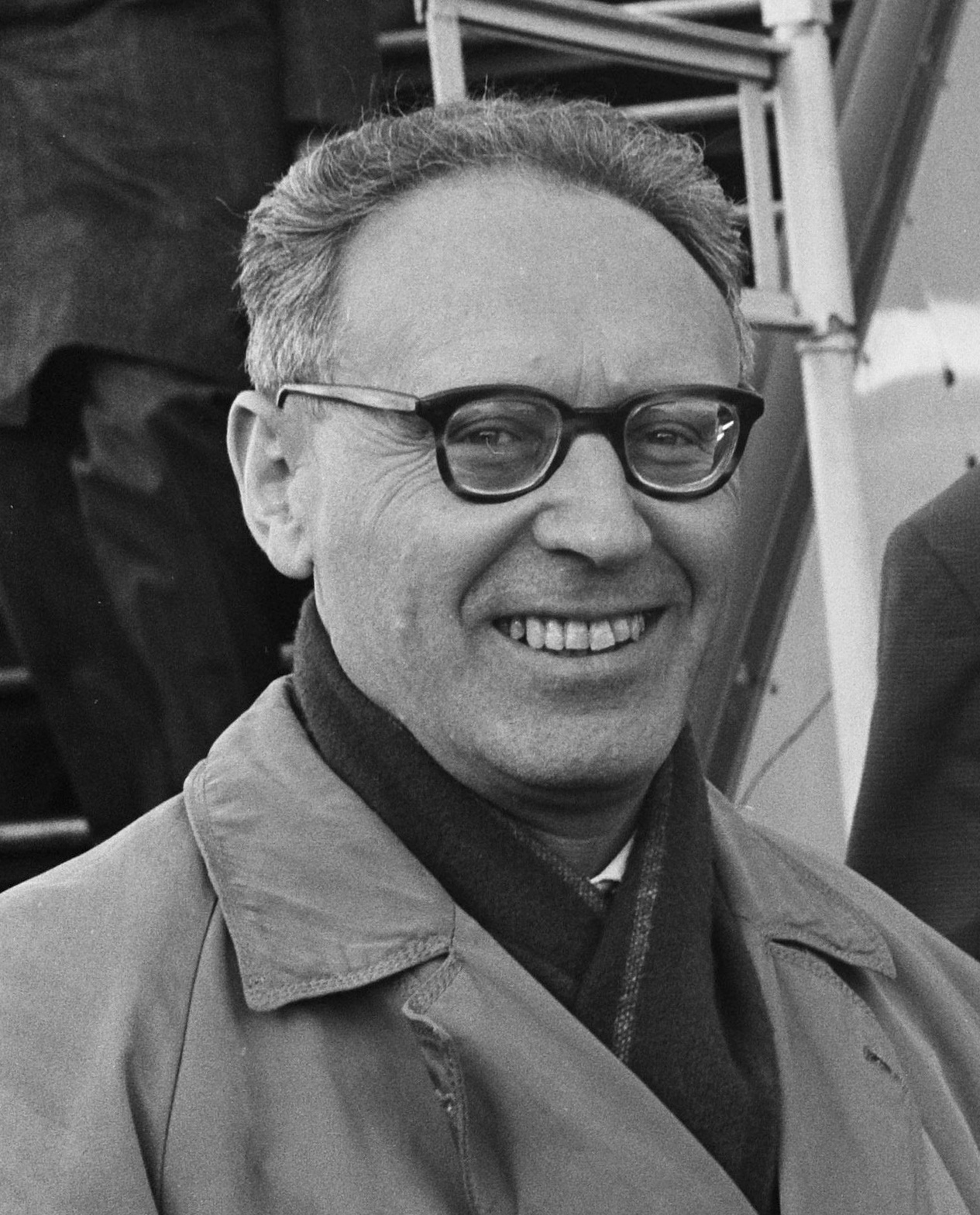
Mikhail Botvinnik
 Russia
chess player•chess coach•engineer
Birthday
+1911-08-17
Birth Sign
Leo
Birthplace
Repino
Age
Died at 83
About
Mikhail Botvinnik, born in Repino in 1911, was far more than just a chess player. He was a Soviet grandmaster who became the sixth World Chess Champion, holding the title across three separate reigns and collecting five world championship titles in total. Botvinnik was also an accomplished electrical engineer and a forward-thinking computer scientist. His pioneering work in computer chess even earned him an honorary mathematics degree.
Fame & Fandom
Mikhail Botvinnik sits as the 4th most famous person in Esports, a standing he has held steady across multiple ranking cycles. This placement within iFANN Global Fame Rankings reflects his enduring dominance in a field that has evolved far beyond his own era. His legacy is not built on the chaotic energy of modern celebrity or the viral spikes of social media trends. Instead, it rests on the sheer weight of his professional achievements and his role as the patriarch of the Soviet chess dynasty. While he commands this specific industrial spotlight, his broader audience lacks a formal name. There are no organized fanbases, no dedicated streaming campaigns, and no ritualistic gatherings where fans chant his name. The reverence for Botvinnik is institutional rather than grassroots. He is remembered through state-sanctioned tournaments and academic respect rather than the fervor of a fandom. The M. Botvinnik Central Chess Club in Moscow hosts official events, but these are tributes to a master, not rallies by a collective. Even the myths surrounding him focus on his scientific rigor and unbeaten streaks from 1941 to 1948. No crowd ever shut down streets for him, nor did he generate the inside jokes that define modern pop culture icons. His influence remains a quiet force, yet his personal brand remains devoid of the noise that defines contemporary fame.
Interesting Facts and Legends
Botvinnik passed away in Moscow on May 5, 1995, at the age of 83. He was an accomplished electrical engineer who earned an honorary mathematics degree for his pioneering work in computer chess. As the sixth World Chess Champion, he held the title across three separate reigns totaling close to 15 years. A legendary aspect of his career involves his development of a rigorous training system that treated chess as an engineering problem, forming the foundation of the Botvinnik-Kasparov school. During the war and immediate post-war years, he won seven consecutive major tournaments between 1941 and 1948, establishing himself as an unbeatable force. One notable upset occurred at the 1962 Varna Olympiad when Wolfgang Uhlmann defeated him, marking the first time a German player achieved this feat against a world champion after World War II. Memorials in his honor include the Mikhail Botvinnik World Champion Cup for CIS youth teams and the ACF Cup in Memory of Mikhail Botvinnik.
Death & Aftermath
Died
+1995-05-05 (aged 83)
Death Place
Moscow
Cause of Death
Natural causes associated with his advanced age
Mikhail Botvinnik died on May 5, 1995, in Moscow. He was 83 years old at the time of his death. While the exact medical cause of death is not detailed in the provided search results as being established by a specific autopsy report or coroner's ruling, historical records consistently cite natural causes associated with his advanced age. There are no reports of a hospital statement, family declaration regarding a specific terminal illness, or an inquest that would suggest foul play or an unnatural event; his passing is widely regarded as a natural end to a long life dedicated to chess and engineering. No disputed accounts regarding the circumstances of his death have been recorded in the available sources. The public reaction to Botvinnik's death was marked by profound mourning within the global chess community and the Soviet/Russian state apparatus.
Tributes poured in from peers, institutions, and officials who recognized him as the 'Patriarch of the Soviet Chess School' and a dominant figure in the game for decades. The Chess Museum in Moscow received significant attention following his death, eventually receiving gifts such as his autographs and personal items from his family, including his daughter Evgenia, to preserve his legacy. While specific details about fan vigils or street gatherings are not explicitly quantified in the search results, the enduring nature of his influence is evidenced by the immediate and sustained commemoration of his life through chess tournaments, books, and articles published in the years following 1995. His death triggered a wave of retrospectives highlighting his rigorous training methods and scientific approach to chess, which influenced generations of players, including Garry Kasparov.
Botvinnik's funeral and memorial arrangements were conducted in Moscow. He was buried in the Vagankovo Cemetery, a resting place for many prominent Soviet figures, though the specific date of the burial is not explicitly stated in the provided snippets. The funeral was likely attended by high-ranking officials of the Russian Chess Federation and fellow grandmasters, reflecting his status as a national icon. Over the years, numerous memorials have been established in his honor, including the annual 'CIS youth chess teams' tournament known as the Mikhail Botvinnik World Champion Cup held in Moscow, and the ACF Cup in Memory of Mikhail Botvinnik, which continues to be held annually to honor his memory. Posthumously, Botvinnik's legacy has been cemented through various releases, honors, and dedications. He was inducted into the World Chess Hall of Fame.
Several foundations and scholarships have been created in his name to support young talent, and the 'Botvinnik-Kasparov school' remains a celebrated lineage in chess education. His estate was handled by his family, particularly his daughter Evgenia, who has been instrumental in preserving his archives and artifacts, such as the 1945 autograph donated to the Chess Museum. No films or major new book releases specifically detailing his death have been noted, but his writings, such as Winning Chess Strategy, remain influential. The ongoing holding of the Botvinnik Cup and other tournaments serves as a living memorial, ensuring his impact on the sport continues to grow posthumously.
Awards & Accolades
Keywords
Quick Facts
- Profession
- chess player, chess coach, engineer
- Born
- +1911-08-17
- Birthplace
- Repino
- Died
- +1995-05-05
- Death Place
- Moscow
- Gender
- Male
- Spouse
- Gayane Davidovna Ananova
- Birth Sign
- Leo
Personal Details
- Spouse
- Gayane Davidovna Ananova
Join the community
fans discussing