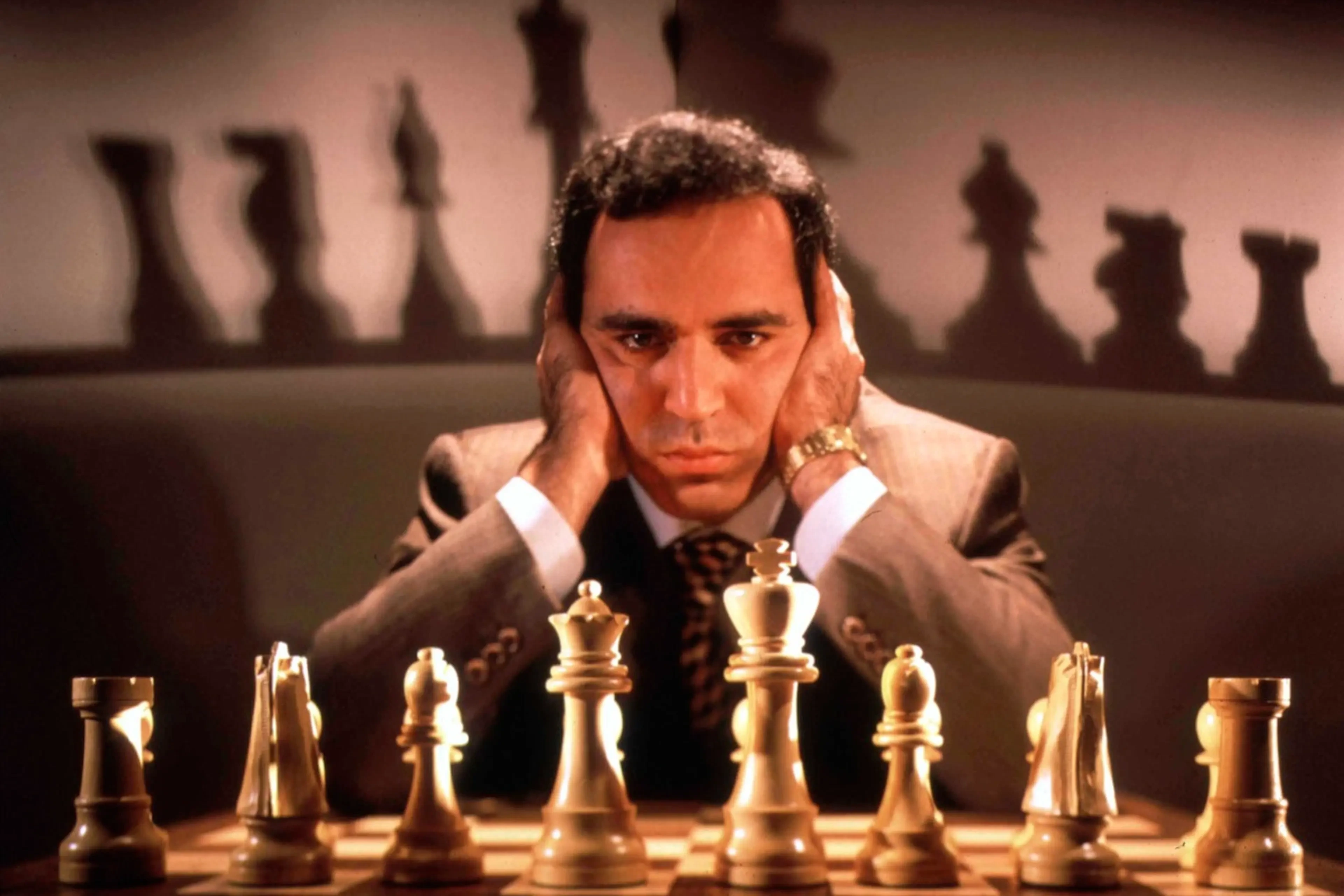
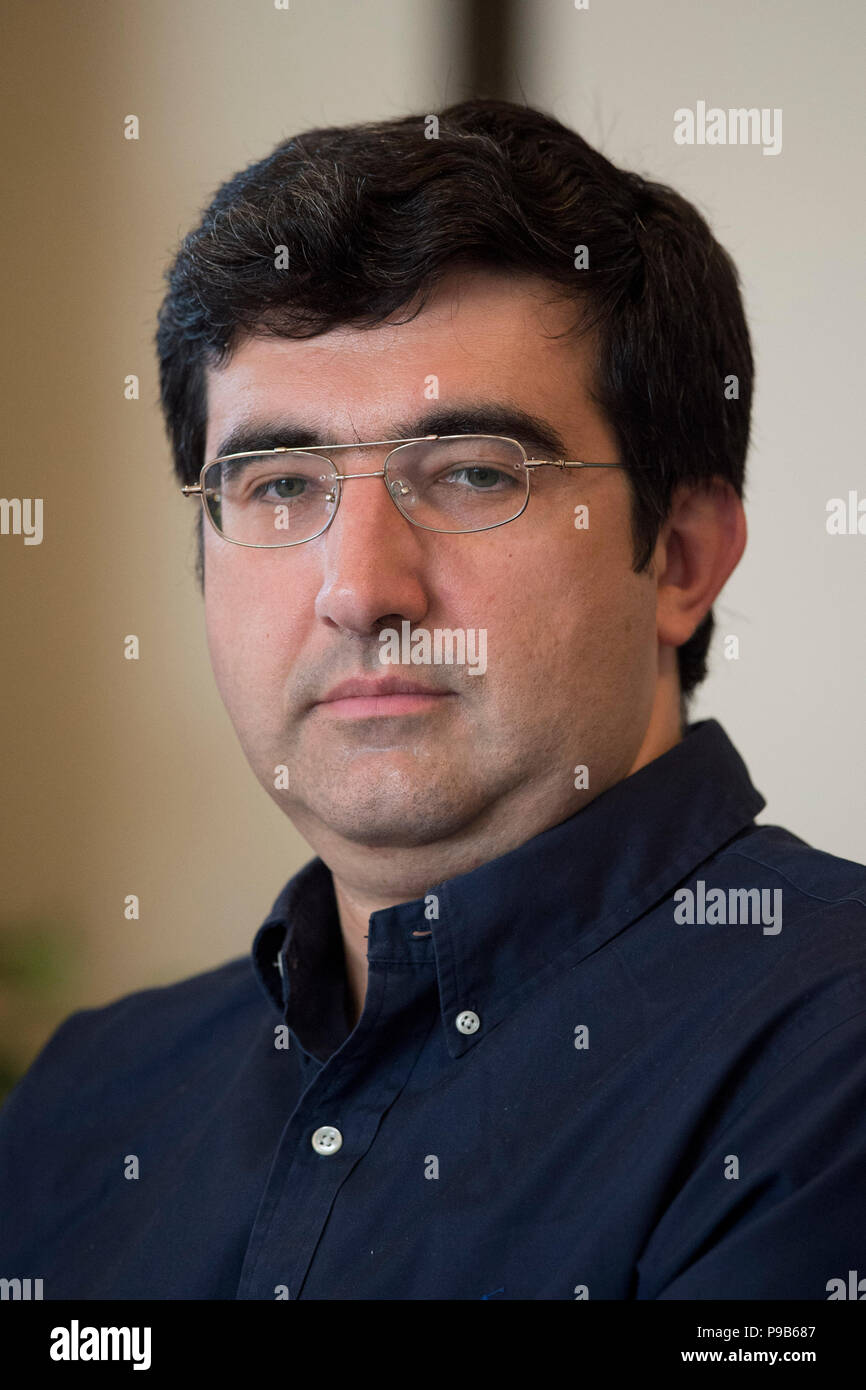
Garry Kasparov
 Russia
Chess Grandmaster•Political Activist•Author
Also known as: Gary Kasparov, Garik Kimovich Weinstein, Garry Kimovich Kasparov
Birthday
April 13, 1963
Birth Sign
Aries
Birthplace
Baku, Azerbaijan SSR, Soviet Union
Age
63 years old
Height
5 ft 9 in (175 cm)
About
Garry Kasparov is a Russian grandmaster widely regarded as one of the greatest chess players in history. He held the World Chess Championship from 1985 to 2000, a reign of fifteen years, and was the world's top-rated player for a record 255 months. His peak rating of 2851, set in 1999, stood as the highest ever for over a decade. Since retiring from professional chess in 2005, he has become a prominent political activist, writer, and commentator on technology and democracy.
Kasparov's post-chess career has been defined by his outspoken opposition to Vladimir Putin and his advocacy for democratic institutions. He founded the Renew Democracy Initiative and co-founded the World Liberty Congress. His books, including "How Life Imitates Chess" and "Winter Is Coming," have reached broad audiences. He remains a frequent voice in global media, warning about authoritarianism and the risks of AI. His distinctive combative style, both at the board and in public discourse, continues to shape his legacy as a champion of free thought.
Early Life & Background
Garry Kasparov was born Garik Kimovich Weinstein on April 13, 1963, in Baku, Azerbaijan SSR, to a Jewish father and Armenian mother. His father, Kim Moiseyevich Weinstein, an engineer and musician, died of leukemia when Garry was seven. His mother, Klara Shagenovna Kasparova, an Armenian engineer, then devoted herself to his chess development. At twelve, he and his mother adopted the surname Kasparov to avoid antisemitic discrimination.
Kasparov learned chess at age five after watching his parents solve a puzzle. He joined the Young Pioneer Palace chess club at ten and caught the attention of former world champion Mikhail Botvinnik, who mentored him. He won the Soviet Junior Championship at twelve and the Sokolsky Memorial at thirteen. By fifteen, he was an international master and qualified for the Soviet Championship, the youngest ever. In 1980, he won the World Junior Championship and earned the grandmaster title. He also studied at the Azerbaijan Institute of Foreign Languages, focusing on English.
In 1981, at eighteen, he became the youngest Soviet Champion. His first Candidates cycle in 1983–84 saw him defeat Alexander Beliavsky, Viktor Korchnoi, and Vasily Smyslov to earn a title match against Anatoly Karpov. The 1984–85 match was halted after five months and 48 games, with Kasparov trailing, a decision he angrily disputed.
Career Growth
In November 1985, at 22, Kasparov defeated Karpov 13–11 to become the youngest undisputed world champion. He defended the title against Karpov in 1986, 1987, and 1990. In 1993, he broke from FIDE to form the Professional Chess Association, beating Nigel Short 12½–7½ for the "Classical" title. He defended it against Viswanathan Anand in 1995 and against Alexei Shirov in 1998.
The 1997 match against IBM's Deep Blue was a watershed. After winning the first match 4–2 in 1996, Kasparov lost the rematch 2½–3½, the first time a reigning champion fell to a computer under standard conditions. He accused IBM of cheating, but no evidence emerged. He lost the Classical title to Vladimir Kramnik in 2000.
Kasparov retired in March 2005 after winning Linares, his 15th consecutive tournament victory. He later coached Magnus Carlsen from 2009 to 2010. Since then, he has focused on writing and activism, with books including "How Life Imitates Chess" (2007), "Winter Is Coming" (2015), and "Deep Thinking" (2017). He won 11 Chess Oscars and set records for highest rating and longest top ranking.
Career Timeline
Public Image & Style
Kasparov's public persona is that of a fierce competitor and uncompromising truth-teller. In his chess days, he was known for aggressive, attacking play and intense psychological warfare. Today, he is equally combative in political commentary, often using social media to challenge autocrats and defend democratic values. His X feed, with over a million followers, mixes chess nostalgia with sharp political analysis. Fans admire his courage and intellect, and he has become a symbol of resistance for many Russians in exile. He is also a sought-after speaker on AI and technology, drawing on his Deep Blue experience. His appearances on major magazine covers, including TIME and Newsweek, have cemented his iconic status.
Fame & Fandom
Garry Kasparov commands a following defined not by stadium chants or fan clubs, but by the intense scrutiny of political dissidents and chess purists. His audience does not gather for autographs; they tune in to his X feed for sharp geopolitical analysis or to his lectures at institutions like the SNF Agora Institute for strategic insight. While he lacks a formal fandom with organized rituals or branded hashtags, his influence permeates global discourse as a symbol of resistance against authoritarianism. The community that rallies around him is a disparate coalition of activists, scholars, and former opponents who respect his intellect more than his celebrity status. There are no subway ads funded by fans or birthday billboards, yet his warnings about Vladimir Putin and his historical battles against artificial intelligence have become modern folklore within intellectual circles. This unique form of fame transcends traditional metrics, rooted in the weight of his ideas rather than the volume of his applause. His legacy is cemented by verified moments, from defeating Anatoly Karpov to becoming the first world champion to lose to a computer under standard time controls, creating a mythos built on achievement and defiance rather than pop culture adulation. Despite the absence of a named fanbase, his digital footprint remains massive, drawing millions to his commentary on democracy and human rights. According to the iFANN Global Fame Rankings, Garry Kasparov is currently the 14th most famous person from Russia and holds the position of the 71st most famous person in Books & Literature, reflecting his enduring impact across both national identity and literary spheres.
Interesting Facts and Legends
Garry Kasparov's original surname was Weinstein; he changed it early in life to avoid antisemitism. His father died when he was seven, leaving his mother to serve as his manager throughout his rise to greatness. The 1984–85 match against Anatoly Karpov lasted 48 games, setting the record for the longest world championship history has ever seen. He made history as the first world champion to lose to a computer under standard time controls during his matches with IBM's Deep Blue. A Guinness World Record recognizes his 255 consecutive months as the world number one player. Kasparov speaks English, Russian, and Azerbaijani fluently and stands approximately 5 feet 9 inches tall. He has been inducted into both the World Chess Hall of Fame and the FIDE Hall of Fame. Beyond these facts, legends persist regarding his 1997 loss to Deep Blue, an event often cited as the turning point where machines first defeated a reigning champion in a six-game match. Another iconic story involves Judit Polgar, who achieved a rare victory over Kasparov, a feat that remains a celebrated milestone in chess history. His political warnings in 2026 about potential Russian incursions into NATO territory have also entered contemporary lore, marking him as a persistent voice of dissent.
Notable Quotes
“Victory for Ukraine is the only chance for change in Russia.”
“Don't believe Trump on U.S. elections. Follow Ukraine.”
“Machines don't guarantee fairness; they amplify the rules we give them.”
Family & Personal Life
Kasparov's mother, Klara Shagenovna Kasparova, was an Armenian engineer who became his manager and constant supporter. His father, Kim Moiseyevich Weinstein, was a Jewish engineer and musician who died of leukemia when Garry was seven. Kasparov has been married three times. He married Masha in 1989, but they divorced in 1990. With his second wife, Yulia Vovk, he had a daughter, Polina, born in 1996. In 2005, he married Daria Tarasova; they have a daughter, Aida (born 2006), and a son, Nikolai (born 2015). The family lives in New York City.
Notable Connections
Garry Kasparov is associated with the Renew Democracy Initiative, the World Liberty Congress, and the Human Rights Foundation. He has collaborated with political figures and activists opposing authoritarianism. In the chess world, his name is linked with Anatoly Karpov, Magnus Carlsen, and IBM's Deep Blue. He has authored books with publishers like PublicAffairs and Bloomsbury.
Relationships & Dating History
Kasparov married Masha in 1989, but the marriage ended in divorce in 1990. In 1996, he married Yulia Vovk, a chess player and economist; they had a daughter, Polina, born that year, and divorced in 2005. Later in 2005, he married Daria Tarasova. They have two children, Aida (born 2006) and Nikolai (born 2015). As of 2026, Kasparov remains married to Daria, and they reside in New York City.
- MarriedMasha Kasparova1989 - 1990Short-lived first marriage; divorced in 1990.
- MarriedYulia Vovk1996 - 2005Second wife; had a daughter, Polina; divorced in 2005.
- MarriedDaria Tarasova2005 - presentCurrentThird wife; mother of Aida and Nikolai; ongoing marriage.
Salary, Net Worth In 2026
$30 Million
iFANN Editorial Team estimate
Per iFANN's editorial analysis, Garry Kasparov's net worth is estimated at $30 million as of 2026. His wealth stems from a combination of chess career earnings, book royalties, speaking fees, and investments. During his championship years, he earned substantial prize money; his 1985 world championship match purse was approximately $1 million, his 1993 match against Nigel Short had a purse of $2.4 million, his 1995 match against Anand was worth $1.5 million, and his 2000 match against Kramnik was worth $2 million. His books, including the bestseller "How Life Imitates Chess," have contributed significantly to his financial standing. He commands speaking fees reportedly between $50,000 and $100,000 per engagement. Kasparov also owns a valuable apartment in New York City, where he has lived since 2013.
Awards Won (19)
Kasparov's trophy case is remarkable. He won the World Chess Championship five times and the Chess Oscar eleven times. He also received the Champion of Liberty Award from Goldman Sachs, the Ambassador of Conscience Award from Amnesty International, and the Freedom Award from Freedom House. In 2008, he was awarded the Prince of Asturias Award for Sports. He has been inducted into the World Chess Hall of Fame and the FIDE Hall of Fame.
1999 · Chess
Chess performance
1997 · Chess
Chess performance
1996 · Chess
Chess performance
1995 · Chess
Chess performance
1994 · Chess
Chess performance
1993 · Chess
Chess performance
1991 · Chess
Chess performance
1990 · Chess
Chess performance
1988 · Chess
Chess performance
1987 · Chess
Chess performance
1986 · Chess
Chess performance
1985 · Chess
Chess performance
1983 · Chess
Chess performance
1982 · Chess
Chess performance
2008 · Sports
Chess career
Known For
World Chess Championship
1985-2000 · Reigning Champion
Deep Blue vs. Kasparov
1997 · Human Challenger
How Life Imitates Chess
2007 · Author
Keywords
Sources
Quick Facts
- Profession
- Chess Grandmaster, Political Activist, Author
- Born
- April 13, 1963
- Birthplace
- Baku, Azerbaijan SSR, Soviet Union
- Gender
- Male
- Birth Sign
- Aries
- Height
- 5 ft 9 in (175 cm)
- Children
- Polina, Aida, Nikolai
- Spouse
- Daria Tarasova
Personal Details
- Full Name
- Garik Kimovich Weinstein
- Height
- 5 ft 9 in (175 cm)
- Spouse
- Daria Tarasova
- Children
- Polina, Aida, Nikolai
- Education
- Azerbaijan Institute of Foreign Languages
Frequently Asked Questions
How old is Garry Kasparov?
What is Garry Kasparov's net worth in 2026?
Is Garry Kasparov still alive?
Why is Garry Kasparov famous?
Who is Garry Kasparov married to?
Join the community
fans discussing