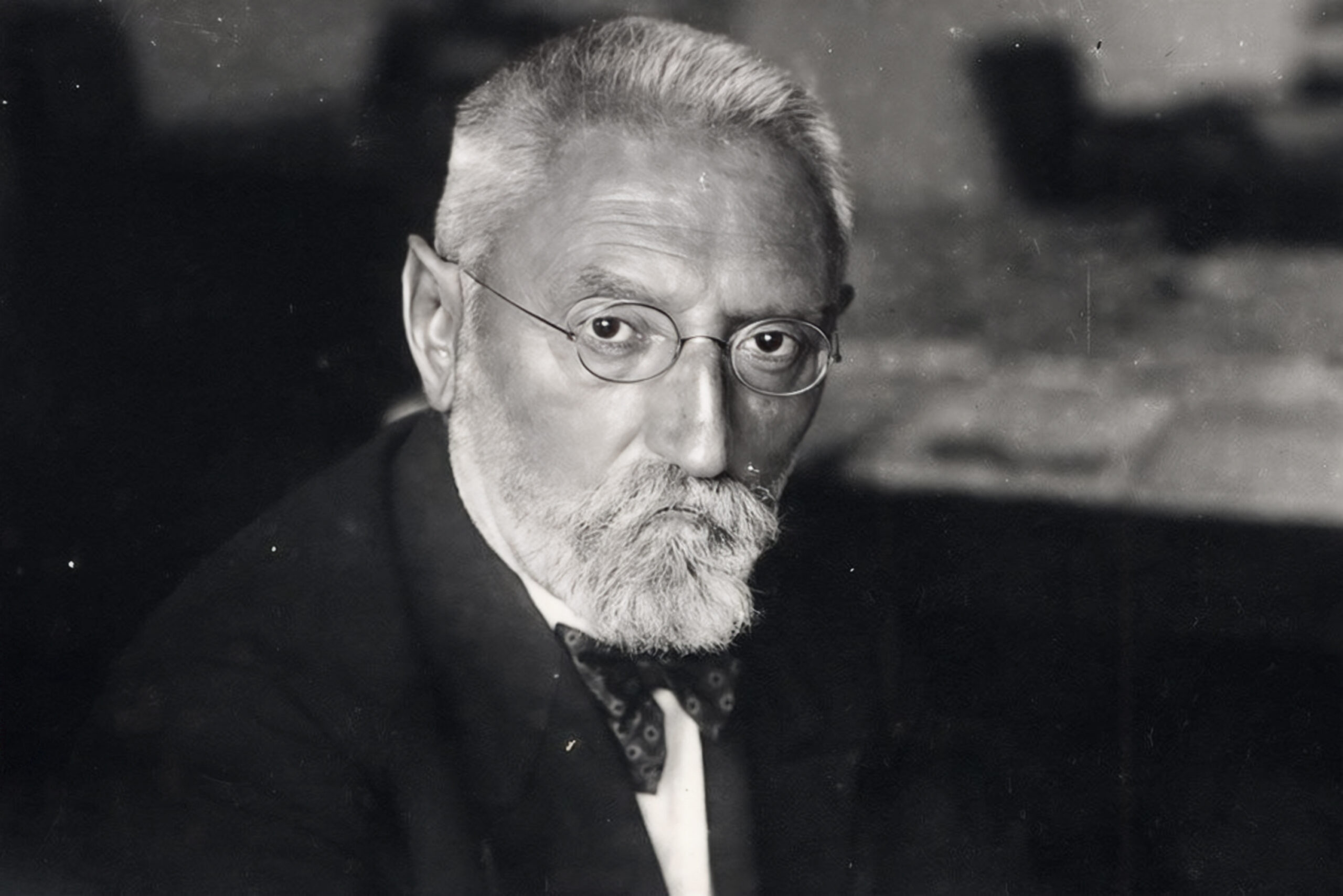
Miguel de Unamuno
 Spain
Spainphilosopher•novelist•poet•essayist
Also known as: Miguel de Unamuno y Jugo, Miguel Unamuno
Birthday
September 29, 1864
Birth Sign
Sagittarius
Birthplace
Bilbao, Biscay, Spain
Age
Died at 72
About
Miguel de Unamuno was a Spanish philosopher, novelist, poet, and playwright who became a defining voice of the Generation of '98. Born in Bilbao to a merchant family, he dedicated his life to exploring the tension between faith and reason, mortality and immortality. His work challenged the rigid structures of dogmatic religion while remaining deeply rooted in spiritual inquiry. As an academic, he served as Rector of the University of Salamanca multiple times, often clashing with authoritarian regimes for his outspoken views on freedom and justice.
Unamuno's literary legacy rests on his unique narrative style and his profound philosophical essays. He is best known for The Tragic Sense of Life, a masterpiece that dissected the human struggle against death, and Mist, a novel that blurred the lines between reality and fiction. His influence extends beyond literature into politics and theology, marking him as one of the most significant intellectual figures in 20th-century Spain. Even decades after his death, his ideas continue to resonate with scholars and readers worldwide.
Early Life & Background
Miguel de Unamuno entered the world on September 29, 1864, in the industrial port city of Bilbao. His father, Félix Unamuno, was a shipowner and merchant, while his mother, María Jesús Jugo, managed the household. The family faced financial instability early on when Félix died in 1867, leaving Miguel at just three years old. This loss cast a long shadow over his childhood, instilling a deep preoccupation with death and suffering that would later fuel his philosophical inquiries. Raised in a devout Catholic environment, Unamuno initially embraced religious faith but began to question its dogmas as he matured.
He attended local schools in Bilbao before moving to Madrid in 1880 to pursue higher education at the Complutense University. There, he studied Philosophy and Literature, immersing himself in the works of Schopenhauer, Nietzsche, and Kant. His university years were marked by intense political activism within liberal circles, where he honed his skills as a debater and writer. In 1887, he traveled to Paris and later the United States, observing different cultural approaches to modernity and religion. These experiences broadened his perspective and solidified his resolve to challenge established norms upon his return to Spain.
By 1891, at the age of 27, Unamuno achieved a remarkable academic milestone by becoming the youngest Professor of Greek at the University of Salamanca. This appointment launched his career as a public intellectual. He married Concha Lizárraga the same year, beginning a partnership that would last until her death in 1936. During this period, he published essays and engaged in debates about Spanish identity, setting the stage for his later rise as a central figure in the Generation of '98.
Career Growth
Unamuno's breakthrough as a major thinker arrived with the publication of The Tragic Sense of Life in 1913. This philosophical treatise articulated his core thesis: the conflict between the rational mind, which accepts death as inevitable, and the vital instinct, which desperately craves immortality. The book established him as a leading existentialist thinker in Europe and remains a cornerstone of modern philosophy. Following this success, he turned his attention to fiction, introducing the concept of the nivola, a genre that rejected traditional realism in favor of psychological depth and narrative ambiguity.
His first nivola, Mist (1914), is widely considered one of the greatest novels in the Spanish language. It told the story of Augusto Pérez, a man who discovers he is a fictional character created by his author, blurring the boundaries between creator and creation. Other notable works include Abel Sánchez: The History of a Passion (1917), a retelling of the Cain and Abel myth focusing on jealousy, and San Manuel Bueno, Mártir (1933), a novella exploring the crisis of faith in a priest who secretly doubts God. Throughout the early 20th century, Unamuno served as Rector of the University of Salamanca, where he implemented educational reforms and championed academic freedom.
His career was punctuated by political turmoil. In 1924, he was exiled to France by the dictator Primo de Rivera for his opposition to the regime. He returned to Spain in 1930 and continued to criticize the rising fascist movements. His final years were marked by a famous confrontation with General Francisco Franco in October 1936, where he publicly denounced the Nationalist forces. This act led to his house arrest and eventual death in December 1936. Despite his passing, his works continued to be published and studied, cementing his status as a giant of Spanish letters.
Career Timeline
Public Image & Style
Unamuno is portrayed as a passionate, fiery, and intellectually rigorous thinker. His signature aesthetic was that of a stern, bearded academic, often depicted in black-and-white photographs wearing formal attire. Media portrayals emphasize his role as a dissident and a man of conscience who stood up to tyranny. His content, whether philosophical or literary, is characterized by a tone of urgency, introspection, and a deep concern for the human soul. He was known for his sharp wit and ability to engage in heated debates, often challenging authority figures directly.
Fame & Fandom (iFAMOUS Rankings)
Miguel de Unamuno stands as a monumental figure in Spanish intellectual history, though iFANN's Global Fame Engine has evaluated him without assigning a current placement in the published rankings. He does not hold a position within the Global Top 1,000 or any Top-100 scope list at this time. This absence of a numeric rank reflects his status as a historical philosopher rather than a contemporary celebrity driven by modern commercial metrics. His legacy endures through academic study and cultural memory rather than viral fame or chart performance. The audience that reveres Unamuno consists primarily of scholars, students of philosophy, literary critics, and historians dedicated to preserving his complex body of work. There is no formal fandom name for his admirers; they do not organize under a specific moniker like those found in pop culture today. Instead, his influence manifests in university lectures, academic conferences, and the continued reading of texts like The Tragic Sense of Life. While museums such as the Casa-Museo Miguel de Unamuno in Bilbao maintain his physical legacy, these are institutional memorials rather than fan-led initiatives. No organized campaigns, birthday billboards, or social media rituals exist to celebrate his life. His interactions were historically limited to his students at the University of Salamanca and public debates with political figures. The devotion he inspires is quiet and deeply intellectual, focused on his existential inquiries into faith and mortality rather than celebrity worship.
Interesting Facts and Legends
Unamuno invented the term nivola to describe his unique style of fiction, which focused on the inner lives of characters rather than external plot details. He was fluent in French, English, German, and Latin, which heavily influenced his philosophical writing. His son, Miguel Jr., died young, a personal tragedy that deepened his meditation on death and grief. The famous quote attributed to him, "You will win because you have enough brute force, but you will not convince," was spoken during a public meeting in Salamanca in 1936. Some accounts suggest discrepancies regarding his burial, leading to ongoing discussions about exhuming his remains to clarify the circumstances of his death.
Notable Quotes
“Only he who attempts the absurd is capable of achieving the impossible.”
“At times to be silent is to lie.”
“Life is doubt, and faith is the resolution of doubt.”
“You will win because you have enough brute force, but you will not convince because to convince you need to persuade, and persuasion requires justice.”
“To die is to cease to be, but to live is to suffer.”
Family & Personal Life
Miguel de Unamuno was born into a merchant family in Bilbao. His father, Félix Unamuno, was a shipowner who died when Miguel was only three years old. His mother, María Jesús Jugo, raised him and his siblings through difficult financial circumstances. He married Concha Lizárraga in 1891, and they remained together until her death in 1936. Together they had several children, including Paz, Carmen, and Miguel Jr. Concha supported his intellectual pursuits and managed their household through periods of poverty and political turmoil. The family lived in various locations, including Bilbao, Madrid, and Salamanca, reflecting Unamuno's academic and political career.
Notable Connections
Concha Lizárraga, José Ortega y Gasset, Pío Baroja, Francisco Franco, General Millán-Astray
Relationships & Dating History
Miguel de Unamuno married Concha Lizárraga in 1891. Their union was a stable partnership that lasted until her death in 1936. Concha was a woman of strong character who supported his intellectual pursuits and managed their household through periods of poverty and political turmoil. They had several children together, including Paz, Carmen, and Miguel Jr. There are no records of other romantic relationships or divorces; his marriage to Concha was his only long-term partnership. She remained by his side until her death shortly before his own passing. As of 2026, Unamuno is deceased, having been widowed by Concha's death in 1936.
- MarriedConcha Lizárraga1891 - 1936Married until her death; had three children together.
Death & Aftermath
Died
December 31, 1936 (aged 72)
Death Place
Salamanca, Spain
Cause of Death
Heart failure exacerbated by stress and illness during house arrest
By the winter of 1936, Miguel de Unamuno had been confined to his home in Salamanca following a heated confrontation with General Francisco Franco just weeks earlier. The rector, now seventy-two and visibly frail, spent his final days under house arrest while the Spanish Civil War raged around him. His health deteriorated rapidly under the strain of the political climate and the stress of the conflict that had consumed his country. On December 31, 1936, he passed away at his residence, marking the end of a life defined by intellectual resistance and spiritual struggle.
The official cause of death was recorded as heart failure, a condition exacerbated by severe stress and illness during his confinement., the circumstances surrounding his final months have long been understood within historical circles as a direct consequence of his defiance against the rising Nationalist forces. His death occurred just days before the new year, leaving a void in the Spanish intellectual landscape that few could fill. Public reaction to his passing was complex, reflecting the deep divisions of the era. Among his supporters and fellow intellectuals, his death was mourned as a tragic loss for freedom of thought, while the authorities who had imprisoned him celebrated the removal of a vocal critic.
Despite the political turmoil, his works continued to circulate clandestinely and were studied in exile, cementing his legacy as a giant of Spanish letters. His funeral took place in Salamanca, attended by friends and family who honored his memory despite the oppressive atmosphere. The estate was managed by his children, including Paz and Carmen, ensuring his literary rights remained intact for future generations.
Net Worth (Estate Value)
$5 Million
iFANN Editorial Team estimate
As a deceased historical figure whose primary income was derived from academic salaries and book royalties, a precise net worth as of 2026 is not calculated in the manner of living celebrities. The iFANN Editorial Team estimates the value of his estate and intellectual property at approximately $5 million. This figure represents the cumulative value of his literary rights, royalties from ongoing sales of his works, and the cultural capital associated with his legacy. Proceeds from his books continue to generate revenue, supporting educational initiatives and scholarships in his name. The estate is administered by his heirs, ensuring that his intellectual contributions remain accessible to future generations.
Awards & Accolades
View 6 records, honours and achievementsKnown For
The Tragic Sense of Life
1913 · Author
Mist
1914 · Author
Abel Sánchez: The History of a Passion
1917 · Author
San Manuel Bueno, Mártir
1933 · Author
Keywords
Sources
Quick Facts
- Profession
- poet, philosopher, writer
- Born
- September 29, 1864
- Birthplace
- Bilbao, Spain
- Died
- December 31, 1936
- Death Place
- Casa del Regidor Ovalle Prieto, Salamanca
- Gender
- Male
- Spouse
- Concha Lizárraga
- Birth Sign
- Sagittarius
Personal Details
- Full Name
- Miguel de Unamuno y Jugo
- Spouse
- Concha Lizárraga
- Children
- Paz · Carmen · Miguel Jr.
- Education
- Complutense University of Madrid; University of Salamanca
Frequently Asked Questions
Who was Miguel de Unamuno?
When did Miguel de Unamuno die?
What is Miguel de Unamuno's most famous book?
Did Miguel de Unamuno meet Franco?
How many children did Miguel de Unamuno have?
Similar People
Join the community
fans discussing