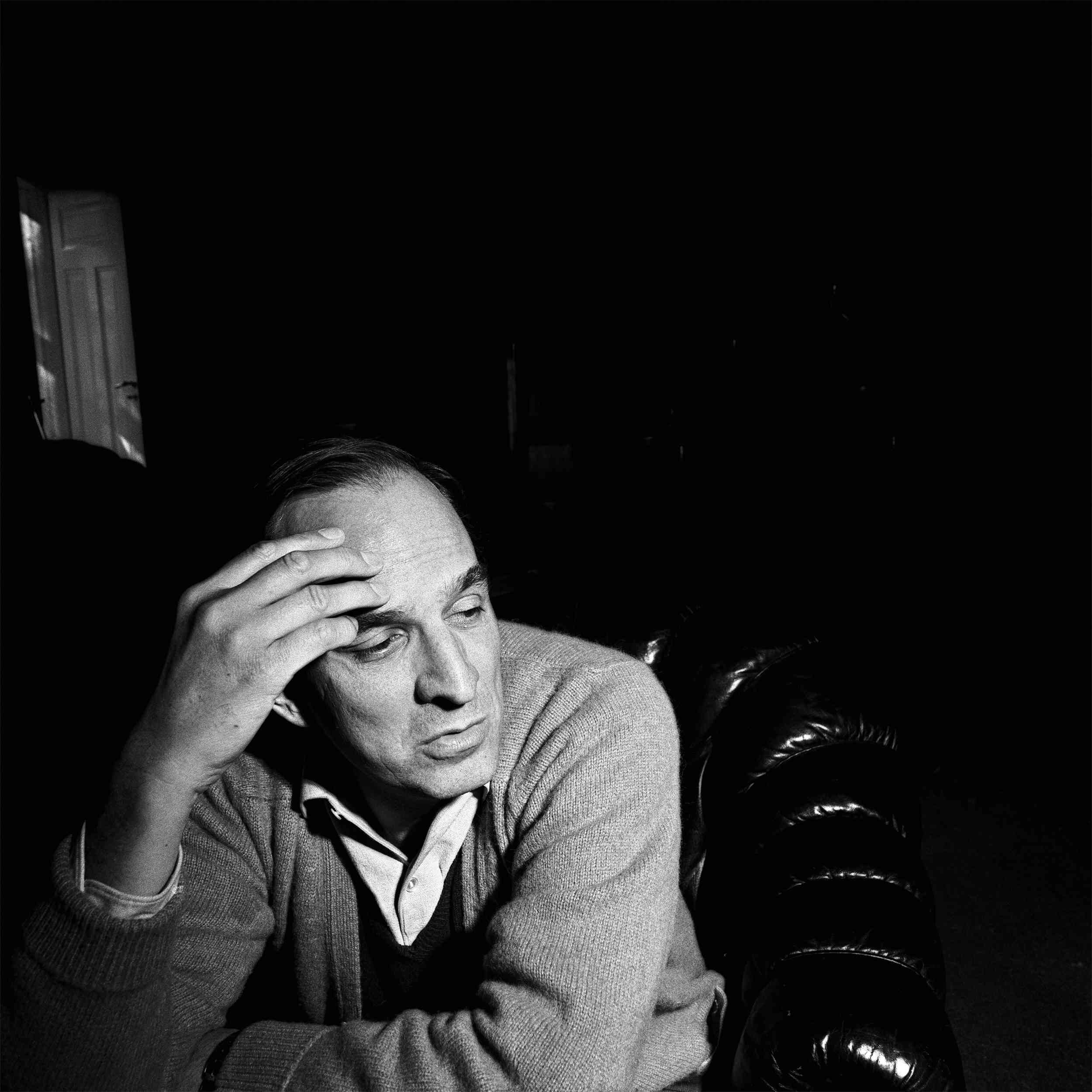
Ingmar Bergman
 Sweden
film director•theatre director•screenwriter
Birthday
July 14, 1918
Birth Sign
Cancer
Birthplace
Uppsala, Sweden
Age
Died at 89
Height
5 ft 9 in (1.75 m)
About
Ernst Ingmar Bergman was a Swedish film and theatre director and screenwriter, widely regarded as one of the most important figures in cinema history. Over six decades, he directed more than 60 films and staged over 170 plays, building a body of work that explored faith, death, and human relationships with unflinching intensity. His films earned three Academy Awards for Best Foreign Language Film, the Irving G. Thalberg Memorial Award, and a place on nearly every greatest-directors list ever compiled.
Bergman's signature style paired stark black-and-white cinematography with extreme close-ups, often shot on the remote island of Fårö where he lived for decades. His recurring ensemble of actors included Liv Ullmann, Max von Sydow, and Bibi Andersson. Today, his estate manages his film rights and properties, with annual royalties from streaming and stage productions continuing to introduce his work to new generations.
Early Life & Background
Ingmar Bergman grew up in Uppsala, Sweden, the son of a strict Lutheran pastor, Erik Bergman, and his wife Karin. The household was dominated by religious severity and frequent punishments, an atmosphere Bergman later described as hellish. A turning point came when his older brother gave him a magic lantern; the device sparked a lifelong obsession with moving images, and he spent hours projecting films onto his bedroom wall.
At Stockholm University College, Bergman studied art and literature but left in 1942 without a degree, drawn instead to student theatre. He began writing plays and landed a job as a script clerk at Svensk Filmindustri. Within a year, he was rewriting scripts and directing his own projects. His big break came in 1944 when he was appointed head of the Helsingborg City Theatre, launching his professional directing career. Two years later, he made his film directorial debut with Crisis (1946), a modest start that led to a string of increasingly ambitious works.
Career Growth
Bergman's international breakthrough arrived in 1957 with two masterpieces: The Seventh Seal, which won the Special Jury Prize at Cannes, and Wild Strawberries, which took the Golden Bear at Berlin. The following decade saw a string of acclaimed films, including the Oscar-winning The Virgin Spring (1960) and the Silence of God trilogy: Through a Glass Darkly (1961), Winter Light (1963), and The Silence (1963). In 1966, he released Persona, a modernist landmark that remains one of the most analyzed films in history.
The 1970s brought Cries and Whispers (1972) and the television series Scenes from a Marriage (1973), both critical and commercial successes. His final triumph was Fanny and Alexander (1982), which won four Academy Awards. Bergman retired from filmmaking after his last TV film, Saraband (2003), and died on July 30, 2007, at age 89.
Career Timeline
Public Image & Style
Bergman's public image is that of a brooding, intensely intellectual artist. His films are known for stark black-and-white cinematography, often by Sven Nykvist, extreme close-ups, and silent, contemplative scenes. The media has long portrayed him as a genius of existentialism, coining the term Bergmanesque to describe his style. His fandom is academic and cinephile-heavy, with no official name. Fan culture revolves around film festivals, academic conferences, and deep-dive analyses of his symbolism. He is often cited as a major influence by directors such as Woody Allen, Andrei Tarkovsky, and David Lynch. He was inducted into the Swedish Academy in 1989 and received the French Légion d'Honneur in 1985.
Fame & Fandom (iFAMOUS Rankings)
The reverence surrounding Ingmar Bergman defies the organized fervor of modern pop culture. There is no unified fan club, no specific terminology for his followers, and no digital rituals that define a collective identity. Instead, his audience exists as a scattered constellation of cinephiles, academics, and pilgrims who treat his work with scholarly devotion rather than casual fandom. The most tangible manifestation of this loyalty is the quiet pilgrimage to Fårö, where admirers still wander the landscapes he immortalized, searching for traces of the director's soul in the silence of the island. This site remains a focal point of veneration decades after his passing, drawing international students and enthusiasts to his former summer house and grave. While the 2026 stage adaptation of Persona starring Cate Blanchett and Nina Hoss reignited debates about his iconic imagery, the engagement remains rooted in the "cult of the auteur" rather than a grassroots movement. Legends persist regarding his intense directing style and the emotional toll exacted on his collaborators, stories that have become foundational folklore in film schools. Recent discussions also revisit controversial claims about his political past, framing these narratives as cautionary tales within cinema history. His legacy endures not through viral moments or fan campaigns, but through the profound, unsettling impact of films like The Seventh Seal and Fanny and Alexander. These works continue to provoke visceral reactions, cementing his status as a cinematic deity whose influence spans generations. According to the iFANN Global Fame Rankings, Ingmar Bergman holds the position of the 1st most famous person in Sweden. This placement confirms his enduring dominance in his home country, holding steady from the previous cycle.
Interesting Facts and Legends
Bergman directed more than 170 plays during his career, surpassing his output of over 60 films. He resided on the remote island of Fårö for more than four decades, constructing a private cinema known as The Cinema there. A nervous breakdown in the 1960s led to his hospitalization, and he famously refused to accept the Academy Award for Fanny and Alexander in person, sending a representative instead. His father was a strict Lutheran pastor, leading Bergman to describe his childhood as hell, while a deep-seated fear of death permeates his entire body of work. Standing 5 feet 9 inches tall, he was also honored with an asteroid named after him. Legends surrounding his life include the ongoing pilgrimage to Fårö, where admirers still search for 'Bergman's soul' amidst the landscapes he immortalized. In 2026, a stage adaptation of Persona starring Cate Blanchett and Nina Hoss reignited debates about the film's iconic imagery, cementing its status as a timeless cultural touchstone. Some historical accounts also revisit controversial claims about his relationship with authoritarianism, framing these narratives as cautionary tales within film history.
Notable Quotes
“Film as dream, film as music. No art passes our conscience in the way film does, and goes directly to our feelings, deep down into the dark rooms of our souls.”
“I am a professional director. I am not a philosopher. I am not a poet. I am a craftsman.”
“The only thing I am convinced of is that I am a bad human being. But I am a very good director.”
Family & Personal Life
Bergman was born on July 14, 1918, in Uppsala, Sweden, to a strict Lutheran pastor, Erik Bergman, and his wife Karin (née Åkerblom). His upbringing was marked by severe religious atmospheres, frequent punishments, and a fascination with the magic lantern—a gift that sparked his lifelong obsession with moving images. He had an older brother who gave him the lantern. Bergman's household on Fårö included a collection of pets, and he often worked from his study overlooking the Baltic Sea. He had nine children: Lena (with Else Fisher), Eva and Jan (with Ellen Bergman), Mats, Anna, and Ingmar Jr. (with Gun Bergman), Daniel (with Käbi Laretei), Maria (with Ingrid von Rosen), and Linn (with Liv Ullmann). His family life was often tumultuous, directly influencing his work.
Notable Connections
Bergman worked with a recurring ensemble including actors Liv Ullmann, Max von Sydow, Bibi Andersson, Gunnar Björnstrand, Erland Josephson, and Ingrid Thulin. His key cinematographers were Sven Nykvist and Gunnar Fischer. Composers included Erik Nordgren and Lars Johan Werle.
Relationships & Dating History
Bergman was married five times. His first marriage was to choreographer Else Fisher from 1943 to 1945; they had daughter Lena. He then married choreographer Ellen Bergman (1945–1950), with whom he had Eva and Jan. His third wife was journalist Gun Bergman (1951–1959), mother of Mats, Anna, and Ingmar Jr. He then married pianist Käbi Laretei (1959–1969), with whom he had son Daniel. During that marriage, he began a famous relationship with actress Liv Ullmann, which lasted from 1965 to 1970 and produced daughter Linn. After divorcing Laretei, he married Ingrid von Rosen in 1971; they had daughter Maria and remained together until her death from cancer in 1995. Bergman also had affairs with actresses including Bibi Andersson. As of 2026, Bergman is deceased, having been widowed from his fifth wife.
- MarriedElse Fisher1943 - 1945Choreographer and dancer; had one daughter Lena.
- MarriedEllen Bergman1945 - 1950Choreographer and film director; had two children Eva and Jan.
- MarriedGun Bergman1951 - 1959Journalist; had three children Mats, Anna, and Ingmar Jr.
- MarriedKäbi Laretei1959 - 1969Estonian-Swedish concert pianist; had son Daniel.
- DatedLiv Ullmann1965 - 1970Norwegian actress; met on set of Persona; had daughter Linn.
- MarriedIngrid von Rosen1971 - 1995Married until her death from cancer; had daughter Maria.
Death & Aftermath
Died
July 30, 2007 (aged 89)
Death Place
Fårö, Sweden
Cause of Death
Kidney failure
On the island of Fårö, Ingmar Bergman spent his final years in quiet seclusion within a home overlooking the Baltic Sea, focusing on writing and occasional theatrical work until declining health forced him to stop. He passed away peacefully at that residence on July 30, 2007, at the age of 89. Official statements from his family confirmed the cause as kidney failure resulting from a long-term illness. Tributes poured in immediately from across the globe, including a statement of deep sorrow from King Carl XVI Gustaf honoring Bergman's contribution to Swedish culture. The Academy of Motion Picture Arts and Sciences held moments of silence during subsequent galas, while major festivals like Cannes and Venice paused their opening ceremonies.
Fans gathered spontaneously in Stockholm and on Fårö to pay respects, leading to memorial markers near his former home and the local church. A private funeral service took place on August 4, 2007, at Fårö Church, attended by close family members Daniel and Mats Bergman along with select colleagues. Following the ceremony, Bergman was cremated, and his ashes were interred in the churchyard. His legacy continues to flourish through the Ingmar Bergman Foundation, which preserves archives and supports emerging filmmakers, while new editions of his books and re-releases of films remain staples in film studies curricula.
Net Worth (Estate Value)
$20 Million
iFANN Editorial Team estimate
iFANN currently estimates the estate of Ingmar Bergman at $20 Million as of 2026. The estate's primary assets consist of the rights to his extensive filmography and theatrical works, alongside his property on the island of Fårö. Annual royalties generate between $1–2 million through streaming deals with the Criterion Channel and Netflix, DVD sales, and stage productions of his plays. The estate also licenses his name and image for documentaries and exhibitions. Following his death in 2007, the Ingmar Bergman Foundation, managed by his daughter Linn Ullmann, has overseen the restoration and digitization of his films to ensure a steady revenue stream. The estate has experienced modest growth recently due to renewed interest in his catalog via curated box sets and international retrospectives. The foundation maintains a website and Facebook page with approximately 50,000 followers.
Awards Won (93)
Bergman won three Academy Awards for Best Foreign Language Film: The Virgin Spring (1961), Through a Glass Darkly (1962), and Fanny and Alexander (1984). He also received the Irving G. Thalberg Memorial Award in 1971. His films earned additional Oscars for cinematography and art direction. He won the Cannes Special Jury Prize for The Seventh Seal (1957), the Golden Bear at Berlin for Wild Strawberries (1958), and a Career Golden Lion at Venice (1971).
1984 · Best Foreign Language Film
Fanny and Alexander
1971 · Irving G. Thalberg Memorial Award
Lifetime Achievement
1962 · Best Foreign Language Film
Through a Glass Darkly
1961 · Best Foreign Language Film
The Virgin Spring
1959 · Best Foreign Film
The Seventh Seal
Known For
The Seventh Seal
1957 · Director, Writer
Wild Strawberries
1957 · Director, Writer
Persona
1966 · Director, Writer
Fanny and Alexander
1982 · Director, Writer
Cries and Whispers
1972 · Director, Writer
Keywords
Quick Facts
- Profession
- film director, theatre director, screenwriter
- Born
- +1918-07-14
- Birthplace
- Uppsala, Sweden
- Died
- +2007-07-30
- Death Place
- Fårö parish, Sweden
- Gender
- Male
- Spouse
- Else Fisher, Ellen Bergman, Gun Bergman, Käbi Laretei, Ingrid von Rosen
- Birth Sign
- Cancer
Personal Details
- Full Name
- Ernst Ingmar Bergman
- Height
- 5 ft 9 in (1.75 m)
- Spouse
- Else Fisher, Ellen Bergman, Gun Bergman, Käbi Laretei, Ingrid von Rosen
- Children
- Lena Bergman, Eva Bergman, Jan Bergman, Mats Bergman, Anna Bergman, Ingmar Bergman Jr., Daniel Bergman, Linn Ullmann, Maria von Rosen
- Education
- Stockholm University College (1937–1942, did not graduate)
Filmography
62
Total
55
Film
7
TV
Frequently Asked Questions
Why is Ingmar Bergman so important?
Did Ingmar Bergman have a relationship with Liv Ullmann?
What is Bergman's most famous film?
How many times was Ingmar Bergman married?
What awards did Ingmar Bergman win?
Social Media
Join the community
fans discussing