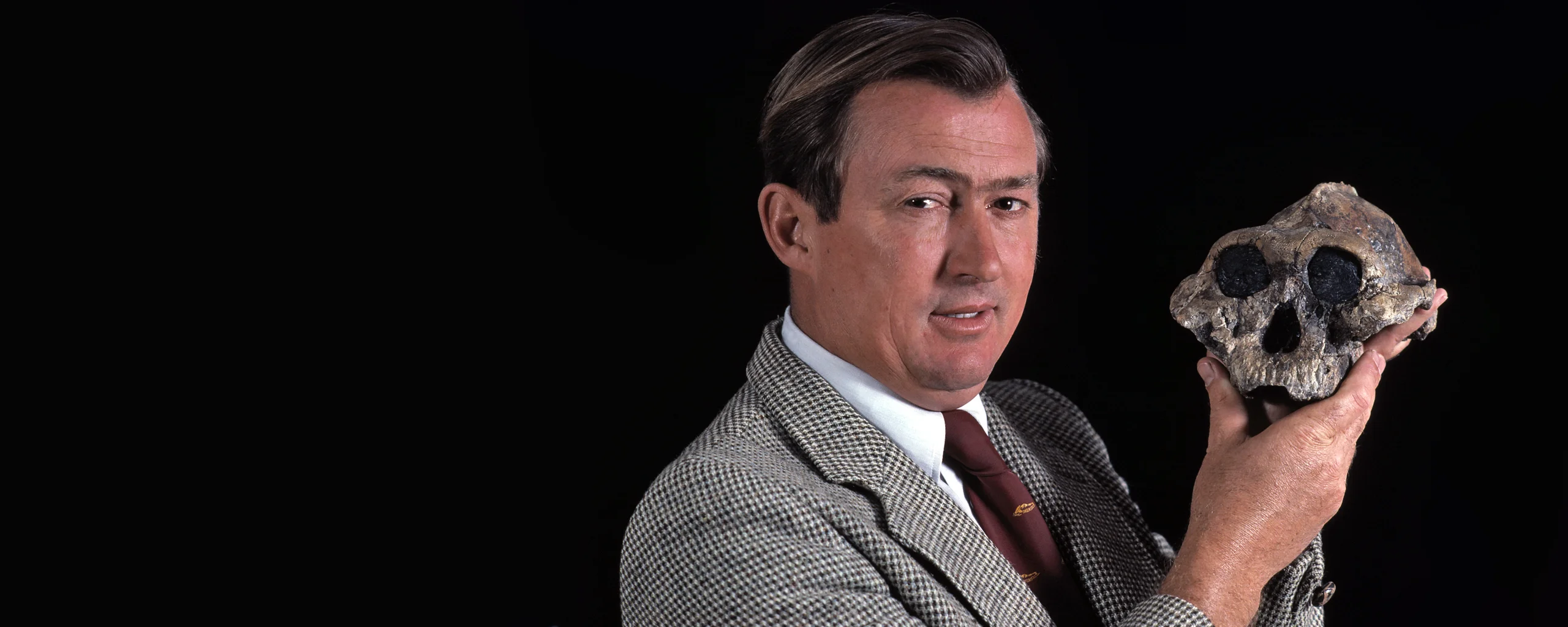
Meave Leakey
 Kenya
Kenyapaleoanthropologist•evolutionary biologist•paleontologist
Also known as: Meave G. Leakey, M. G. Leakey
Birthday
July 28, 1942
Birth Sign
Sagittarius
Birthplace
London, England
Age
84 years old
About
Born Meave Epps in London on July 28, 1942, Meave Leakey is a distinguished British paleoanthropologist whose career has illuminated the complex story of early human evolution. She holds Doctor of Philosophy and Doctor of Science degrees from Stony Brook University, where she serves as a research professor. Her professional life centers on the Turkana Basin in Kenya, where she coordinates Plio-Pleistocene research at the Turkana Basin Institute.
Leakey entered a world defined by scientific discovery through her lineage. She married Richard Leakey, son of legendary paleoanthropologists Louis and Mary Leakey, becoming a central figure in the third generation of the family's fossil-hunting legacy. For over six decades, she has dedicated herself to uncovering the origins of humanity, transitioning from working alongside her husband to leading independent expeditions that reshaped evolutionary theory.
Early Life & Background
Meave Epps was born in London in 1942, entering a family environment deeply intertwined with the emerging field of paleoanthropology through marriage rather than blood. While specific details about her childhood upbringing prior to her marriage remain private, her path shifted dramatically when she met Richard Leakey while he studied at Cambridge University. They bonded over a shared passion for paleontology and married in 1965, launching a partnership that would span nearly six decades.
Before achieving fame as a lead discoverer, Meave immersed herself in the rigorous demands of fieldwork in Kenya. She learned the intricacies of stratigraphy and fossil excavation under the mentorship of her mother-in-law, Mary Leakey, and her husband. Her early career focused on the Koobi Fora region, where she contributed to extensive surveys of the Lake Turkana area. This period involved long hours in the harsh Kenyan bush, mastering the skills required to locate and preserve ancient fossils. These formative years laid the groundwork for her future role as an independent leader in the search for human ancestors.
Career Growth
Meave Leakey’s career is marked by a transition from supporting roles to leading groundbreaking, independent expeditions. In the 1990s, she led a team that discovered Australopithecus anamensis fossils at Kanapoi and Allia Bay in northern Kenya. This find pushed back the timeline of hominin evolution significantly, providing crucial evidence of earlier ancestors.
Her most famous breakthrough occurred in 1999 when she led the team that discovered Kenyanthropus platyops, or the flat-faced man of Kenya, near Lake Turkana. This 3.5-million-year-old skull challenged the prevailing linear view of human evolution, suggesting a more complex branching of species co-existing during the Pliocene epoch. The discovery forced scientists to reconsider the family tree of humanity.
Since the 2000s, she has continued to direct field projects at the Turkana Basin Institute. Recent work in the 2020s has focused on the ecological context of these fossils, analyzing vegetation changes and the environment in which early hominids lived. Reports from late 2025 and early 2026 confirm her ongoing involvement in analyzing new fossil finds, including specimens showing strong grip dexterity in ancient relatives like Paranthropus boisei.
Career Timeline
Public Image & Style
Meave Leakey is portrayed as a rugged, determined, and intellectually rigorous scientist. Media depictions often highlight her presence in the harsh Kenyan bush, contrasting her academic stature with the physical demands of fieldwork. She is known for her advocacy against Eurocentric biases in paleoanthropology, famously stating, "Definitely, Africa is where it all began." Her style typically involves practical field attire like boots, hats, and khakis mixed with academic formal wear for lectures and conferences.
Fame & Fandom (iFAMOUS Rankings)
Meave Leakey commands a global audience defined by academic rigor rather than popular spectacle, with her recognition concentrated within the scientific community and among students of human evolution. Her public profile remains distinct from that of entertainment figures or pop culture icons, as her influence is measured by peer-reviewed contributions rather than mass media consumption metrics. In September 2026, the iFANN Global Fame Engine evaluated her standing and determined that she does not currently hold a placement in the published rankings, including the Global Top 1,000 or any Top-100 scope list. Consequently, no specific ordinal rank or numerical score can be assigned to her current fame status.
Regarding her fanbase, there is no documented name associated with supporters of Meave Leakey. Unlike celebrity figures who cultivate organized followings with formal titles, Leakey's admirers consist of researchers, paleoanthropology students, and readers of scientific literature who do not operate under a unified banner or official designation. This absence of a named fandom reflects the nature of her career, which prioritizes fieldwork and data over public persona. There are no records of fan campaigns, birthday tributes, or collective rituals dedicated to her person. Her interactions remain strictly professional, occurring through university lectures, museum affiliations, and interviews regarding fossil discoveries.
Interesting Facts and Legends
Meave Leakey is often cited for her famous quote stating, "Definitely, Africa is where it all began," a sentiment she expressed in a 2020 interview with The Guardian. She is known for her practical approach to fieldwork, often recounting anecdotes of bathing with baby hippos in Lake Turkana to illustrate her fearless immersion in the wild environment she studies.
Her memoir, titled The Sediments of Time, offers a personal account of her life and career, detailing the challenges and triumphs of six decades in the field. Beyond her scientific achievements, she is recognized for advocating against Eurocentric biases in paleoanthropology, ensuring that African contributions to human history are centered in the narrative.
Recent discoveries attributed to her team include a skull described as a "head-scratcher" due to its unique combination of features, further highlighting the complexity of human evolution in East Africa. Her work continues to be referenced in textbooks and documentaries as a pivotal moment in proving that human evolution was a bush rather than a ladder.
Notable Quotes
“Definitely, Africa is where it all began.”
“We are looking for a much more complex picture than just a straight line.”
“My grandmother, Mary Leakey, was a giant... I am trying to stand on her shoulders.”
Family & Personal Life
Meave Leakey was married to Richard Leakey from 1965 until his death on May 22, 2022. Their union produced three children who have all followed paths related to science and conservation. Louise Leakey has become a prominent paleoanthropologist in her own right, continuing her parents' work in the Turkana Basin. Philip Leakey focuses on conservation efforts, while Samuel Leakey is also involved in conservation and science.
The Leakey family legacy is one of intense dedication to the study of human origins. Meave has managed the continuation of this joint legacy following Richard's passing, maintaining a close relationship with her children and their respective scientific endeavors. The family home and their research sites in Kenya serve as the backdrop for a life dedicated to uncovering the past.
Notable Connections
Richard Leakey, Louis Leakey, Mary Leakey, Louise Leakey, Tim White, Kermit Pattison.
Relationships & Dating History
Meave Leakey's romantic life is defined by her long-standing marriage to Richard Leakey. They met while Richard was studying at Cambridge University, bonding over their shared passion for paleontology before marrying in 1965. The couple worked side-by-side for decades, building a legacy of fossil discovery in East Africa together. Their partnership lasted until Richard's death on May 22, 2022, in Nairobi, Kenya, following a long battle with cancer.
Following Richard's passing, Meave remained active in the scientific community, managing the continuation of their joint legacy. As of 2026, she is widowed. There are no public records of subsequent romantic relationships or dating history after Richard's passing; her public focus remains entirely on her scientific duties and the preservation of the Leakey legacy.
- MarriedRichard Leakey1965 - 2022Married until his death; had three children together.
Salary, Net Worth In 2026
$2 Million
iFANN Editorial Team estimate
As a scientist rather than a commercial entertainer, Meave Leakey does not have a publicly tracked net worth derived from box office sales, music royalties, or endorsement deals. Her wealth is derived from academic salaries, research grants, book royalties, and speaking engagements. Research by the iFANN Editorial Team puts her fortune at around $2 million.
This estimate is based on her salary from Stony Brook University, grants from the National Science Foundation and other research bodies, royalties from books including her memoir The Sediments of Time, and fees from international lectures. As of 2026, she continues to manage her affairs actively, with no posthumous estate valuation required. Her financial trajectory reflects the steady income of a senior academic researcher with a distinguished international reputation.
Awards & Accolades
View 3 records, honours and achievementsKnown For
Kenyanthropus platyops
1999 · Lead Discoverer
Australopithecus anamensis
1994 · Lead Discoverer
The Sediments of Time
2020 · Author
Keywords
Sources
Quick Facts
- Profession
- paleontologist, paleoanthropologist, evolutionary biologist
- Born
- July 28, 1942
- Birthplace
- London, England
- Gender
- Female
- Spouse
- Richard Leakey (deceased)
- Birth Sign
- Sagittarius
Personal Details
- Full Name
- Meave Epps
- Spouse
- Richard Leakey
- Children
- Louise Leakey, Philip Leakey, Samuel Leakey
- Education
- PhD and DSc from Stony Brook University
Frequently Asked Questions
Is Meave Leakey still alive in 2026?
Who is Meave Leakey married to?
What is Meave Leakey's biggest discovery?
Where does Meave Leakey work?
How many children does Meave Leakey have?
Similar People
Join the community
fans discussing