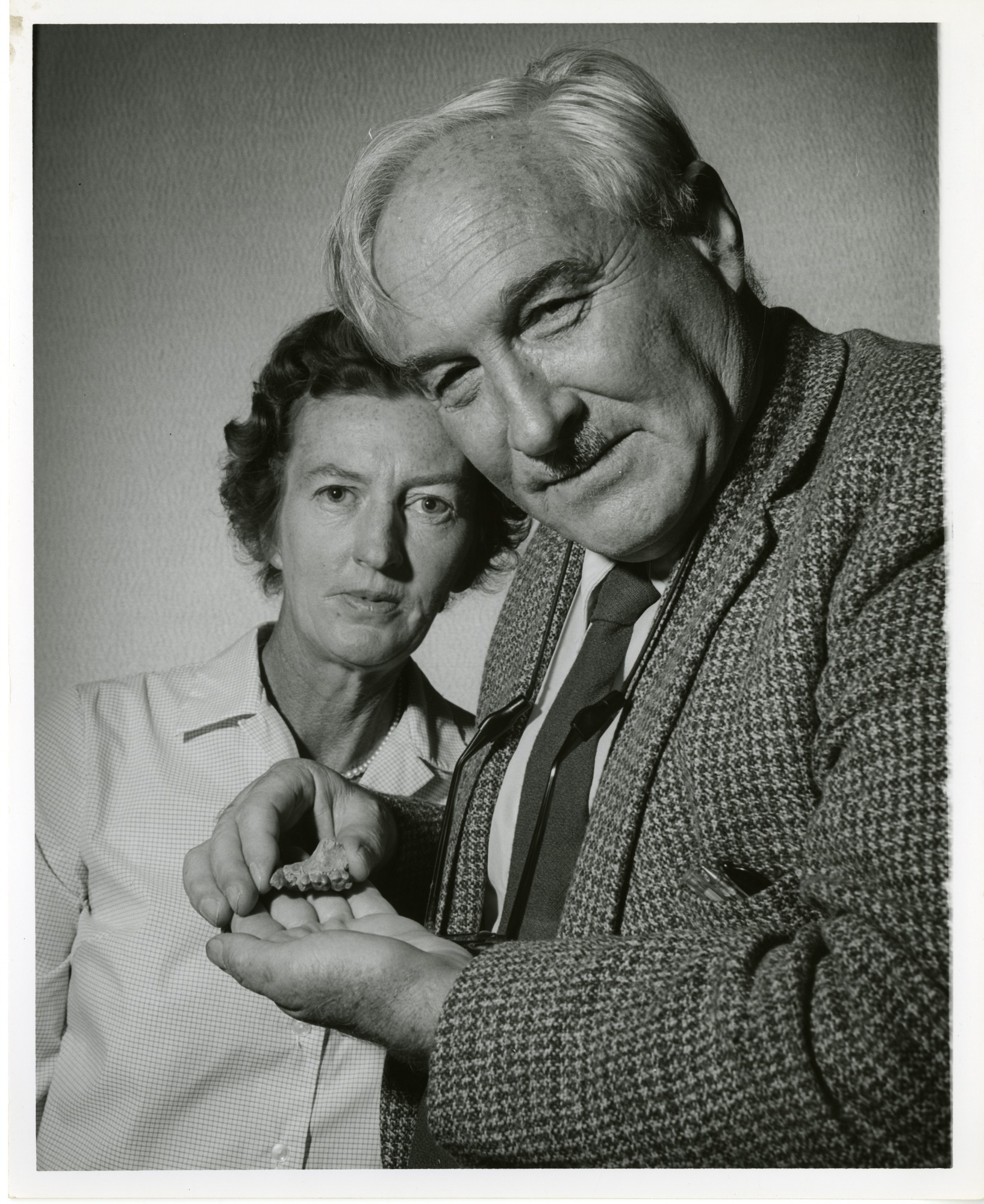
Louis Leakey
 Kenya
Kenyaanthropologist•archaeologist•prehistorian
Birthday
+1903-08-07
Birth Sign
Leo
Birthplace
Nairobi
Age
Died at 69
About
Louis Seymour Bazett Leakey, born on 7 August 1903 in Nairobi, was a Kenyan-British palaeoanthropologist and archaeologist whose tireless fieldwork reshaped our understanding of human origins. Alongside his wife, Mary Leakey, he made pivotal discoveries at Olduvai Gorge that helped prove humans evolved in Africa, a radical idea at the time. Leakey's vision extended beyond his own digs; he built a lasting research program in eastern Africa and inspired countless students and family members to carry the torch. His children, including Richard Leakey, became prominent scholars in their own right, continuing the family's profound impact on the field. Leakey's second great legacy came from his conviction that studying living primates was key to understanding human evolution. He mentored three remarkable women, Jane Goodall, Dian Fossey, and Birutė Galdikas, whom he affectionately called "The Trimates." Each went on to become a leading primatologist, transforming our knowledge of chimpanzees, gorillas, and orangutans. Leakey also championed numerous PhD candidates, particularly from the University of Cambridge, and played a crucial role in founding organizations dedicated to African research and wildlife conservation. He passed away on 1 October 1972, leaving behind a legacy that still guides paleoanthropology and primatology today.
Fame & Fandom
Global attention to Louis Leakey remains anchored in the enduring resonance of his scientific contributions rather than the fleeting currents of celebrity culture, a distinction that places his fame within a specific historical and academic context. His standing is quantified by the iFANN Global Fame Rankings, which track global attention across media coverage, search, and consumption signals worldwide. In this authoritative measure, he holds the 17th most famous person from Kenya, a ranking documented as stable over recent cycles. This placement reflects a consistent recognition of his role in reshaping the narrative of human origins, though it lacks the volatile fluctuations seen in entertainment sectors. The fanbase associated with his legacy does not possess a formal name; while the term 'Leakey's Angels' exists, it refers strictly to his protégés Jane Goodall, Dian Fossey, and Birutė Galdikas, who carried forward his research methods rather than a collective of admirers. With the passing of Goodall in October 2025 and Galdikas in early 2026, the active circle of direct associates has diminished, leaving the general public's engagement with Leakey to manifest through institutional memory and the continued work of the Leakey Foundation. No organized fan campaigns, birthday tributes, or ritualistic gatherings are recorded for him, distinguishing his posthumous presence from figures whose fame is sustained by active, named fandoms. His reputation rests on the quiet authority of discovery rather than the clamor of mass appeal.
Interesting Facts and Legends
Louis Leakey passed away in 1972, yet his influence persists through the institutions he founded and the scholars he mentored. A pivotal moment in his career occurred in July 1959 at Olduvai Gorge, where his wife, Mary Leakey, uncovered the skull of Zinjanthropus boisei, now classified as Paranthropus boisei. This discovery served as the catalyst for shifting the global consensus on human evolution toward Africa, challenging the prevailing Eurocentric views of the time. Another significant event often cited in the history of paleoanthropology involves the Laetoli footprints discovered in Tanzania in 1978, which provided physical evidence of bipedalism in early hominins under the leadership of the Leakey team. While Louis was the patriarch of this work, the specific discovery is frequently attributed to his field team. Unlike modern celebrities, Leakey did not face crowds shutting down streets or fainting fans; instead, his prominence was marked by intense scientific debate and criticism from peers who initially resisted his theories. The story of his three female students, known as 'Leakey's Angels,' remains a central legend of his mentorship, particularly following their recent deaths in 2025 and 2026, which underscored the fragility and continuity of his scientific lineage.
Death & Aftermath
Died
+1972-10-01 (aged 69)
Death Place
Nairobi, Kenya
Cause of Death
Complications from a heart attack
In the weeks preceding his final days, Louis Leakey remained bedridden in Nairobi after a prolonged illness that prevented him from traveling to Olduvai Gorge or attending public events. He had spent his final months overseeing operations for the Leakey Foundation and advising on excavations while confined to his home before succumbing to his condition at the Kenyatta National Hospital. The anthropologist passed away on October 1, 1972, at the age of sixty-nine following complications arising from a myocardial infarction, a ruling confirmed by hospital physicians through clinical symptoms and immediate post-mortem assessment. The global scientific community responded with profound grief, issuing tributes from major institutions including the Royal Society, the Smithsonian Institution, and the University of Nairobi.
His wife Mary Leakey publicly mourned him as the patriarch of their shared life's work, noting that his death marked the end of an era in African paleoanthropology. Colleagues and students gathered at the Leakey Foundation offices in Nairobi and the British Museum in London to honor his contributions, while moments of silence were observed at academic conferences immediately following the news. A private funeral service took place on October 4, 1972, three days after his death, attended by close family members including his wife Mary and children Richard, Philip, and Meave, alongside key colleagues such as Jane Goodall. The burial occurred at the Mombasa Road Cemetery in Nairobi, where eulogies highlighted his role as a pioneer who brought international attention to human evolution in Africa.
Posthumously, the Leakey Foundation continued its operation to provide grants for research into human origins and conservation, while his books including The Antecedents of Man and Africa's Vanishing Wild remain in print and are frequently cited in academic literature. Several films and documentaries such as The Search for Human Origins feature his work, and he was posthumously inducted into the American Academy of Arts and Sciences. The estate was managed by his widow Mary Leakey until her own death in 1996, ensuring the foundation remained the primary vehicle for his intellectual property and financial assets.
Awards & Accolades
Keywords
Quick Facts
- Profession
- anthropologist, archaeologist, prehistorian
- Born
- +1903-08-07
- Birthplace
- Nairobi
- Died
- +1972-10-01
- Death Place
- London
- Gender
- Male
- Spouse
- Mary Leakey, Henrietta Leakey
- Birth Sign
- Leo
Personal Details
- Spouse
- Mary Leakey, Henrietta Leakey
Join the community
fans discussing