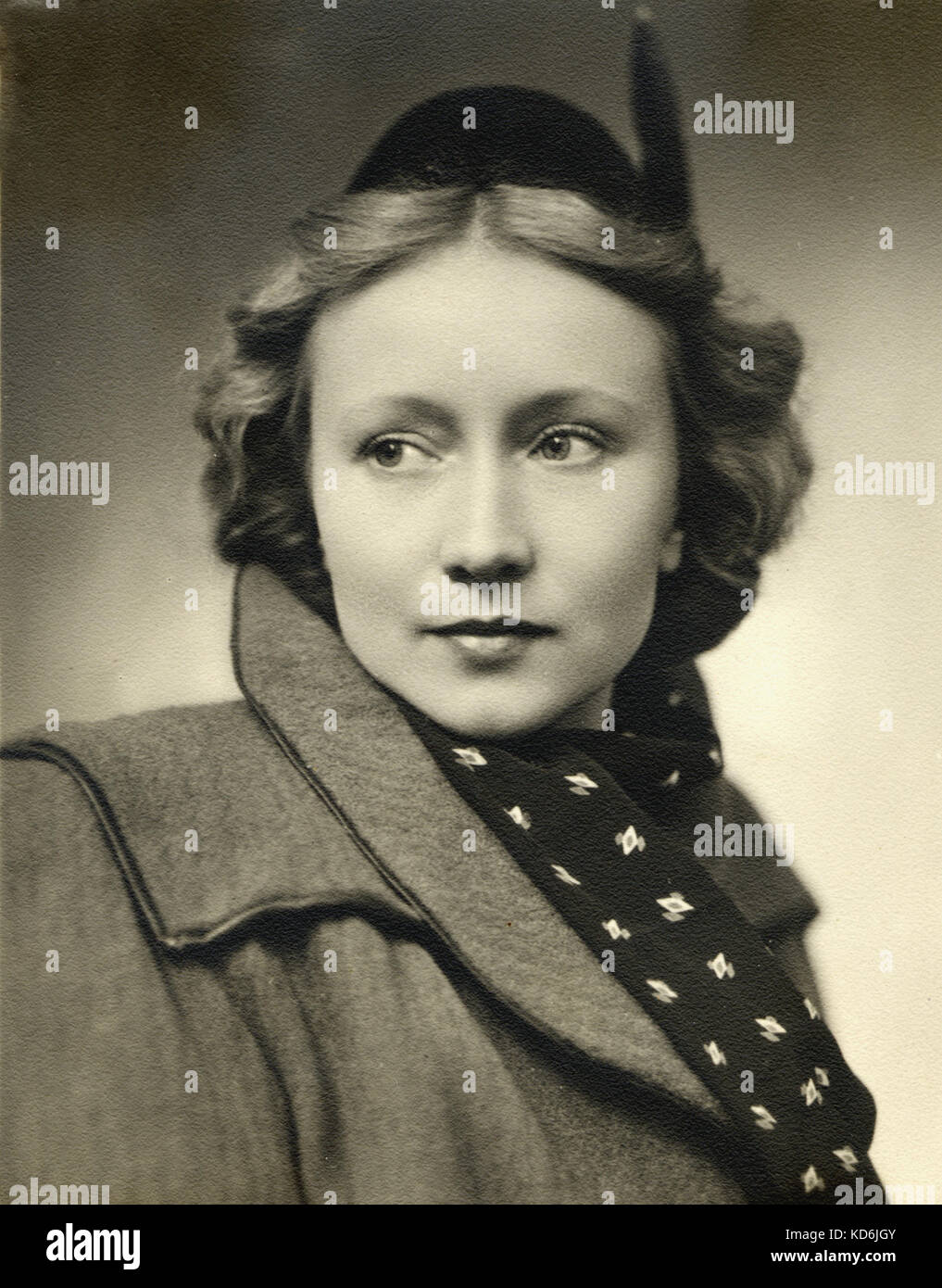
Galina Ulanova
 Russia
ballet dancer•choreographer•actor
Birthday
January 8, 1910
Birth Sign
Capricorn
Birthplace
Saint Petersburg, Russian Empire
Age
Died at 88
About
Galina Ulanova was a Soviet prima ballerina, widely regarded as one of the greatest ballet dancers of the 20th century. Born in Saint Petersburg in 1910, she spent her career at the Kirov and Bolshoi Theatres, becoming the first prima ballerina assoluta of the Soviet Union. Her performances in Giselle, Romeo and Juliet, and Swan Lake set a standard for lyrical and dramatic dance, and her name became synonymous with the Bolshoi's golden era.
Ulanova's artistry earned her the adoration of audiences and the highest state honors, including four Stalin Prizes, the Lenin Prize, and two titles of Hero of Socialist Labour. After retiring from the stage in 1960, she coached a new generation of dancers at the Bolshoi, passing on her profound understanding of character and emotion. Her legacy endures through her films, her students, and the continued reverence of ballet lovers worldwide.
Early Life & Background
Galina Sergeyevna Ulanova was born on 8 January 1910 in Saint Petersburg, the only daughter of Sergei Nikolayevich Ulanov and Maria Fyodorovna Romanova, both solo dancers at the Mariinsky Theatre who had performed with Anna Pavlova. Despite this artistic lineage, young Galina was a boisterous child who dreamed of becoming a sailor and openly protested her first ballet lessons, declaring she did not like dancing. She feared the artist's life of hard labour and sleeplessness, a prescient worry given her future career.
At age nine, her parents enrolled her as a boarder at the Theatre School on Rossi Street, part of the Mariinsky Theatre Choreographic College. For six years she trained in her mother's class, then spent three years under the legendary Agrippina Vaganova. In 1928, she graduated and joined the Kirov Theatre (now the Mariinsky) in Leningrad, where she quickly caught the eye of choreographers with her purity of technique and emotional depth.
Career Growth
Ulanova's breakthrough came in 1934 when she created the role of Maria in Rostislav Zakharov's The Fountain of Bakhchisaray, a performance that established her as a dramatic ballerina of rare insight. In 1940, she premiered the title role in Leonid Lavrovsky's Romeo and Juliet, set to Prokofiev's score, a role she would dance for decades and which became her signature.
Her fame reached Joseph Stalin, who arranged her transfer to the Bolshoi Theatre in Moscow in 1944, where she became prima ballerina assoluta, a position she held for sixteen years. In 1945, she danced the lead in the premiere of Prokofiev's Cinderella. She appeared in several films, including Russian Ballerina (1947), The Grand Concert (1951), Stars of the Russian Ballet (1954), and Romeo and Juliet (1955). After retiring from dancing in 1960, she became a ballet mistress at the Bolshoi, coaching dancers such as Yekaterina Maksimova in Giselle, and served on juries of international ballet competitions.
Career Timeline
Public Image & Style
Ulanova was celebrated for her profound emotional depth, lyricism, and purity of technique, embodying the Soviet school of ballet. Her performances were marked by a rare dramatic intensity that made her the idol of several generations of spectators. She was considered the embodiment of the Soviet ballerina, and her name became a byword for artistic integrity. No official fandom name exists, but her influence permeates ballet training worldwide.
Fame & Fandom (iFAMOUS Rankings)
Galina Ulanova, the Soviet prima ballerina assoluta, remains a towering figure in the history of ballet, her reputation undiminished by time. As of August 2026, iFANN's Global Fame Engine has evaluated her legacy, but she does not currently hold a placement in the published rankings, whether the Global Top 1,000 or any Top-100 scope list. This absence, however, speaks less to her fame than to the nature of her renown, a fame built on state honors, critical consensus, and the adoration of ballet audiences, rather than on the modern metrics of media buzz and streaming numbers that dominate contemporary celebrity. Her status as one of the greatest dancers of the 20th century is not folklore but a verified critical consensus, often framed in quasi-religious terms as the 'soul of Russian ballet.' Her fanbase, though lacking a formal name, was and remains extraordinarily influential, organized through state channels rather than grassroots fan clubs. Her funeral in 1998 was a state occasion, and her Moscow apartment was reopened as a museum in 2018, preserving her legacy for public visitation. A dedicated website, galinaulanova.com, continues to serve as a digital archive and fan resource. Her fans were the broader Soviet and international ballet-going public, and her interaction with them was primarily through her art, as she was famously reclusive and rarely gave interviews. Her teaching career after retirement extended her influence to a new generation of dancers, ensuring her legacy endures.
Interesting Facts and Legends
Ulanova was cast as a boy in a clog dance in her school production of La Fille Mal Gardée, rather than as the dainty peasant girl. Her legs were so thin that stagehands warned her father they might break. She was 46 when she was finally allowed to perform outside Russia; British critics called her London appearances the biggest triumph for any dancer since Anna Pavlova. Her book The Bolshoi Ballet Story was published in English, and a Russian 3-ruble postage stamp was issued in her honor in 2000. Among the legends that surround her, the most sensational is the alleged affair with Prince Philip, Duke of Edinburgh, popularized by the Netflix series The Crown (Season 2, 2017). This story is not verified and is widely considered folklore; historians have found no evidence, and the timeline makes it implausible. A more grounded legend is her breakthrough performance as Maria in The Fountain of Bakhchisarai (1934), which transformed her from a promising dancer into a national icon, with audiences reportedly reduced to tears. She was the first and unique student of Agrippina Vaganova at the Leningrad Ballet School, and her approach to ballet, famously described as 'with childlike wonder,' remains a cornerstone of her artistic philosophy.
Notable Quotes
“Belief comes so easily in childhood. And what a pity it is that this belief in what is happening on the stage…is so difficult to preserve afterwards, and that one has to work so hard, sometimes so painfully, before one can 'get into the skin' of a role and believe in it so utterly that the audience will believe in it too.”
Family & Personal Life
Galina was the only child of Sergei Nikolayevich Ulanov and Maria Fyodorovna Romanova, both solo dancers at the Mariinsky Theatre who had danced with Anna Pavlova. Her father later became a director, and her mother taught ballet, serving as Galina's first teacher. She had no children from either of her marriages.
Notable Connections
Ulanova's career was shaped by her teacher Agrippina Vaganova and her mother Maria Romanova. She was married to set designer Vadim Rindin and later to theatre director Yuri Zavadsky. She coached Yekaterina Maksimova in Giselle, and her dance partner in Romeo and Juliet was Yuri Zhdanov. Composer Sergei Prokofiev wrote the ballets that defined her legacy.
Relationships & Dating History
Galina Ulanova married twice. Her first husband was Vadim Rindin, a prominent Soviet set designer; the marriage ended in divorce. In 1941, she married Yuri Zavadsky, a theatre director and actor, but that marriage also ended in divorce. She had no children from either union. At the time of her death in 1998, she was divorced.
- MarriedVadim RindinFirst husband, a set designer; marriage ended in divorce.
- MarriedYuri Zavadsky1941 - presentSecond husband, a theatre director; marriage ended in divorce.
Death & Aftermath
Died
March 21, 1998 (aged 88)
Death Place
Moscow
Cause of Death
Natural causes related to age and frailty
The centennial of Galina Ulanova's birth prompted a Russian Ballet Icons Gala in 2011, celebrating the legacy of the dancer who defined the Bolshoi's golden era. Archival footage and documentaries released by organizations such as the Imperial Classical Ballet ensured her artistic contributions remained accessible to new generations, while rare interview clips shared by organizations like the Russian Ballet Summer Camp kept her performance history alive. This enduring recognition followed a quiet end for the Soviet Union's first Prima Ballerina Absoluta, who passed away on March 21, 1998, in Moscow at the age of 88. Her final days were spent out of the public eye after decades of retirement from the stage, concluding a life marked by a long-term illness consistent with natural causes associated with advanced age.
Tributes poured in from peers, institutions, and officials upon news of her death, marking the end of an era for both the Bolshoi Ballet and the Mariinsky Theatre. The funeral served as a significant event attended by fellow dancers, choreographers, and government officials, reflecting her high standing in Russian society. She was laid to rest at the Novodevichy Cemetery, a resting place shared by many other cultural icons, though the specific date of the burial remains unrecorded in available sources. Regarding her estate, it is not publicly known whether it was handled via a will, trust, or state inheritance.
Net Worth (Estate Value)
As a Soviet-era ballerina, Galina Ulanova did not accumulate personal wealth in the Western sense. Her estate, managed by Russian cultural institutions, holds the rights to her image and archive, but no public financial figures exist. Her legacy is preserved through the official website galinaulanova.com and ongoing recognition in ballet history.
Awards Won (12)
Galina Ulanova was the most decorated ballerina in Soviet history. She won four Stalin Prizes (1941, 1946, 1947, 1950), the Lenin Prize (1957), and was twice named Hero of Socialist Labour (1974, 1980). She also received four Orders of Lenin and was named People's Artist of the USSR in 1951.
1951 · National Honor
1980 · National Honor
1974 · National Honor
Known For
Giselle
1932 · Giselle
Romeo and Juliet
1940 · Juliet
Swan Lake
1945 · Odette/Odile
Cinderella
1945 · Cinderella
Keywords
Sources
Quick Facts
- Profession
- ballet dancer, choreographer, actor
- Born
- January 8, 1910
- Birthplace
- Saint Petersburg, Russian Empire
- Died
- March 21, 1998
- Death Place
- Moscow, Russia
- Gender
- Female
- Spouse
- Yuri Zavadsky
- Birth Sign
- Capricorn
- Height
- Not documented
Personal Details
- Full Name
- Galina Sergeyevna Ulanova
- Spouse
- Yuri Zavadsky
- Education
- Mariinsky Theatre Choreographic College (graduated 1928)
Filmography
5
Total
5
Film
0
TV
Frequently Asked Questions
Was Galina Ulanova married?
How old was Galina Ulanova when she died?
Why is Galina Ulanova famous?
Where was Galina Ulanova born?
What awards did Galina Ulanova win?
Similar People
Join the community
fans discussing