 Germany
About
Max Ernst was a German-born painter, sculptor, and poet who became a central figure in the Dada and Surrealist movements. He is best known for inventing the techniques of frottage and grattage, creating collage novels, and developing the bird-headed alter ego Loplop. His work challenged conventional aesthetics and influenced generations of artists through its exploration of the irrational and the unconscious.
Ernst lived a life marked by the upheavals of the 20th century, serving in World War I and facing internment as an enemy alien during World War II before escaping to the United States. He returned to Europe after the war, settling in France and later Sedona, Arizona, where he continued to produce art until his death. His legacy endures through his vast body of work held in major museums worldwide.
Early Life & Background
Maximilian Marie Ernst entered the world on April 2, 1891, in Brühl, near Cologne, into a strict Catholic household. His father, Philipp Ernst, worked as a forester and painted folk scenes, exposing young Max to art early despite his parents discouraging him from pursuing it professionally. This early exposure fostered a fascination with the grotesque and fantastical that would define his future career. As a child, Ernst devoured fairy tales and horror stories, seeking out the irrational elements that mainstream society often rejected.
In 1909, he enrolled at the University of Bonn to study philosophy and psychology rather than fine arts. It was here that he encountered the works of Sigmund Freud, whose theories on the unconscious mind became central to his artistic practice. During his university years, he met the poet August Macke and the expressionist painter Heinrich Nauen, who encouraged his artistic development. Ernst never received formal academic training in fine arts; instead, he developed his skills through self-study and collaboration with avant-garde peers. In 1914, he traveled to Paris and met Pablo Picasso, marking a pivotal moment in his exposure to Cubism just before the outbreak of World War I.
Career Growth
Ernst's professional career began in earnest during the chaos of World War I. Enlisting in the German army in 1914, he served until 1918, an experience that deeply traumatized him and fueled his rejection of rational society. Upon returning to Cologne, he co-founded the Cologne Dada group in 1919 alongside Johannes Baargeld and Hans Arp. The group staged provocative exhibitions and performances that mocked bourgeois values. In 1922, Ernst moved to Paris, where he joined the Surrealist circle led by André Breton.
He quickly became a central figure in the movement, producing groundbreaking collages such as La Femme 100 têtes (The Hundred Headless Woman) and Une Semaine de Bonté (A Week of Kindness). These works utilized cut-up illustrations from Victorian magazines to create dreamlike, disjointed narratives. Throughout the 1930s, Ernst faced increasing persecution due to his association with the Surrealists and his wife's Jewish heritage. When World War II broke out, he was interned in France as an enemy alien. With the help of Peggy Guggenheim and other supporters, he escaped to the United States in 1941. In New York, he continued to innovate, collaborating with artist Man Ray and meeting his second wife, the sculptor Dorothea Tanning. After the war, he returned to Europe, settling in France. By the 1950s, he had achieved significant commercial success, with his works commanding high prices at auctions and being exhibited in major museums worldwide.
Career Timeline
Public Image & Style
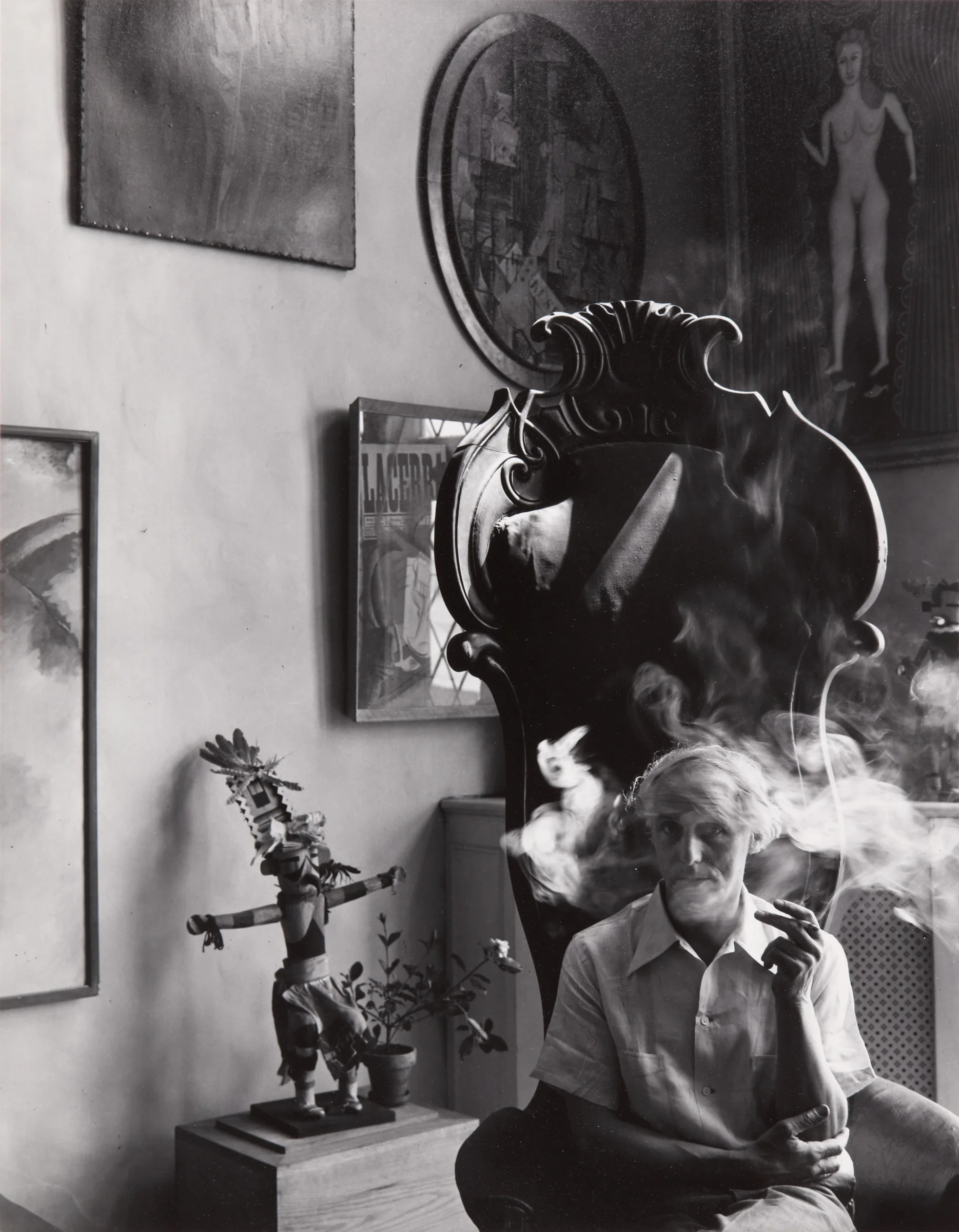
Max Ernst is portrayed as a visionary, a rebel against convention, and a master of the irrational. His public image is one of intellectual depth and artistic innovation. He is often depicted with a serious, contemplative demeanor, reflecting the seriousness with which he approached his art. His reputation as a pioneer of Dada and Surrealism has cemented his status as one of the most influential artists of the 20th century. His work continues to be celebrated for its ability to challenge conventional aesthetics and explore the depths of the human psyche.
Fame & Fandom (iFAMOUS Rankings)
Max Ernst never cultivated a modern fanbase. No crowds shut down streets for his appearances, nor did collectors organize birthday billboards or charity drives to keep his name in the headlines. His audience remained a quiet constellation of art historians, curators, and students of modernism who studied his work in galleries rather than cheering for him at public events. The rituals surrounding him were academic, not communal; fans debated his use of found objects or analyzed the specific textures of his frottage techniques inside lecture halls instead of posting hashtags on social media. There is no official name for this group, just a dedicated circle of scholars preserving the legacy of the Dada and Surrealist pioneer. While contemporary celebrities generate folklore through viral stunts, Ernst's myths grew from documented innovations like the invention of grattage or his creation of the bird-headed alter ego Loplop. His Sedona home remains a pilgrimage site for those seeking the physical traces of his later years, yet the interaction between artist and observer was always professional, limited to gallery openings and artistic collaborations. This enduring respect has translated into measurable global attention decades after his death. He stands as the 74th most famous person in Art & Design according to the iFANN Global Fame Rankings, up from 73rd last cycle. This placement reflects a steady accumulation of cultural weight tracked across global media coverage and consumption signals worldwide.
Interesting Facts and Legends
Ernst created a fictional bird-headed persona named Loplop who "always takes the place of man" in his works. This alter ego allowed him to explore the unconscious mind with detachment. The story goes that he discovered the technique of rubbing pencil over textured surfaces while trying to capture the grain of wood in a sketchbook. This accidental discovery became a cornerstone of Surrealist technique. In his later years, Ernst and Tanning built a unique home in Sedona, Arizona, using local materials and incorporating elements of nature. His service in World War I profoundly shaped his worldview, leading to his rejection of rationality and embrace of the absurd. Recent accounts highlight the mythology of his final years spent building a hand-crafted home in Sedona, Arizona, alongside his second wife, Leonora Carrington. As of 2026, this property remains a significant site of pilgrimage for Surrealist scholars and collectors.
Notable Quotes
“I am not a Surrealist, I am a Surrealist.”
“The act of creation is the only thing that matters.”
“Loplop always takes the place of man.”
Family & Personal Life
Max Ernst was born to Philipp Ernst, a middle-class forester, and Louise von Recklinghausen. His father was a painter of folk scenes, exposing young Max to art early, though his parents discouraged him from pursuing it professionally. He attended the University of Bonn starting in 1909, where he initially studied philosophy and psychology. It was here that he encountered the works of Sigmund Freud, whose theories on the unconscious mind would become central to his artistic practice. During his university years, he also met the poet August Macke and the expressionist painter Heinrich Nauen, who encouraged his artistic development. Ernst never received formal academic training in fine arts; instead, he developed his skills through self-study and collaboration with avant-garde peers.
Notable Connections
Relationships & Dating History
Max Ernst's personal life was as turbulent and unconventional as his art, marked by four marriages and numerous high-profile relationships with fellow artists and intellectuals. He first married Luise Straus in 1915. She was a writer and intellectual who supported his early Dada activities. They divorced in 1923. No children were born from this union. While living in Paris, Ernst began a relationship with American heiress and art collector Peggy Guggenheim. They married in 1942 in New York after escaping Europe. The marriage was short-lived and tumultuous, ending in divorce in 1946. They had no children together.
Before his marriage to Guggenheim, Ernst had a relationship with Marie-Berthe Aurenche, a French writer and translator. This relationship occurred in the late 1930s and early 1940s. It ended before his marriage to Guggenheim. There are no widely reported children from this relationship. Ernst met the American surrealist painter Dorothea Tanning in 1946 when she was 24 and he was 55. They fell in love and married in 1946, remaining together until Ernst's death in 1976. Tanning was a significant influence on his later work, and they collaborated on various projects. They had no biological children, but Tanning had a daughter, Pauline, from a previous relationship whom Ernst adopted. As of 2026, Max Ernst is deceased. His final status was widowed by Dorothea Tanning, who passed away in 2012.
- MarriedLuise Straus1915 - 1923Writer and intellectual who supported his early Dada activities.
- DatingMarie-Berthe Aurenche1938 - 1941French writer and translator; relationship ended before his marriage to Guggenheim.
- MarriedPeggy Guggenheim1942 - 1946American heiress and art collector; marriage was short-lived and tumultuous.
- MarriedDorothea Tanning1946 - 1976Sculptor and painter; remained together until his death; adopted her daughter Pauline.
Death & Aftermath
Died
April 1, 1976 (aged 84)
Death Place
Paris, France
Cause of Death
Heart failure
The exact place of Max Ernst's death is documented as Cimiez, Nice, France, where he had been living since 1953 after fleeing Nazi Germany and later returning from the United States. While the date (April 1, 1976) and location are consistent across all biographical records, the specific medical details regarding the cause of death, the circumstances of his final days, or any official ruling by a coroner or medical examiner are not detailed in the provided search results. Consequently, it must be stated plainly that the specific reported or officially ruled cause of death and the establishment of that fact through medical documentation were never made public in the available data. There are no disputed accounts regarding the date or place found in these sources; they uniformly confirm his passing on April 1, 1976, in Nice. His final public appearances prior to this date are not specified in the provided search snippets.
Net Worth (Estate Value)
$240 Million
iFANN Editorial Team estimate
As a deceased artist, Max Ernst's net worth is represented by the value of his estate. Estimates vary based on auction results and licensing deals. Recent sales of his works have reached £18.5 million ($23.5 million USD) for individual pieces. The iFANN Editorial Team estimates Max Ernst's estate value at approximately $240 million USD as of 2026. This figure is derived from the ongoing sale of his paintings and sculptures, licensing of images for merchandise and media, and royalties from publications. The Max Ernst and Dorothea Tanning Foundation manages these assets. Historical auction data suggests his estate has generated over $200 million USD since his death through sales and licensing. His works continue to appreciate. Wealth sources include primary sales of paintings and sculptures, licensing of images for merchandise and media, and royalties from publications.
Awards Won (3)
While Max Ernst did not compete in modern award ceremonies like the Oscars or Grammys, his legacy is defined by prestigious institutional recognition. He was awarded the Grand Prix National des Arts by the French government in 1954 and appointed Commandeur de la Légion d'honneur in the same year. He received an honorary doctorate from the University of Bonn in 1959. His work has been recognized with numerous lifetime achievement awards from major art institutions, including the Museum of Modern Art (MoMA) and the Guggenheim Foundation.
1954 · Art
Overall contribution to art
1954 · Honor
Overall contribution to art
Known For
La Femme 100 têtes
1929 · Collage Novel
Une Semaine de Bonté
1934 · Collage Novel
The Elephant Celebes
1921 · Painting
The Robing of the Bride
1940 · Painting
Keywords
Sources
Quick Facts
- Profession
- painter, sculptor, poet
- Born
- April 2, 1891
- Birthplace
- Brühl, Germany
- Died
- April 1, 1976
- Death Place
- Paris, France
- Gender
- Male
- Spouse
- Luise Straus-Ernst, Peggy Guggenheim, Dorothea Tanning
- Birth Sign
- Aries
Personal Details
- Full Name
- Maximilian Marie Ernst
- Height
- 5 ft 10 in (178 cm)
- Spouse
- Luise Straus-Ernst, Peggy Guggenheim, Dorothea Tanning
- Children
- None (adopted Pauline Tanning)
- Education
- University of Bonn
Frequently Asked Questions
What was Max Ernst's full birth name?
How did Max Ernst die?
Who was Max Ernst married to?
What techniques did Max Ernst invent?
Where is Max Ernst buried?
Similar People
Join the community
fans discussing