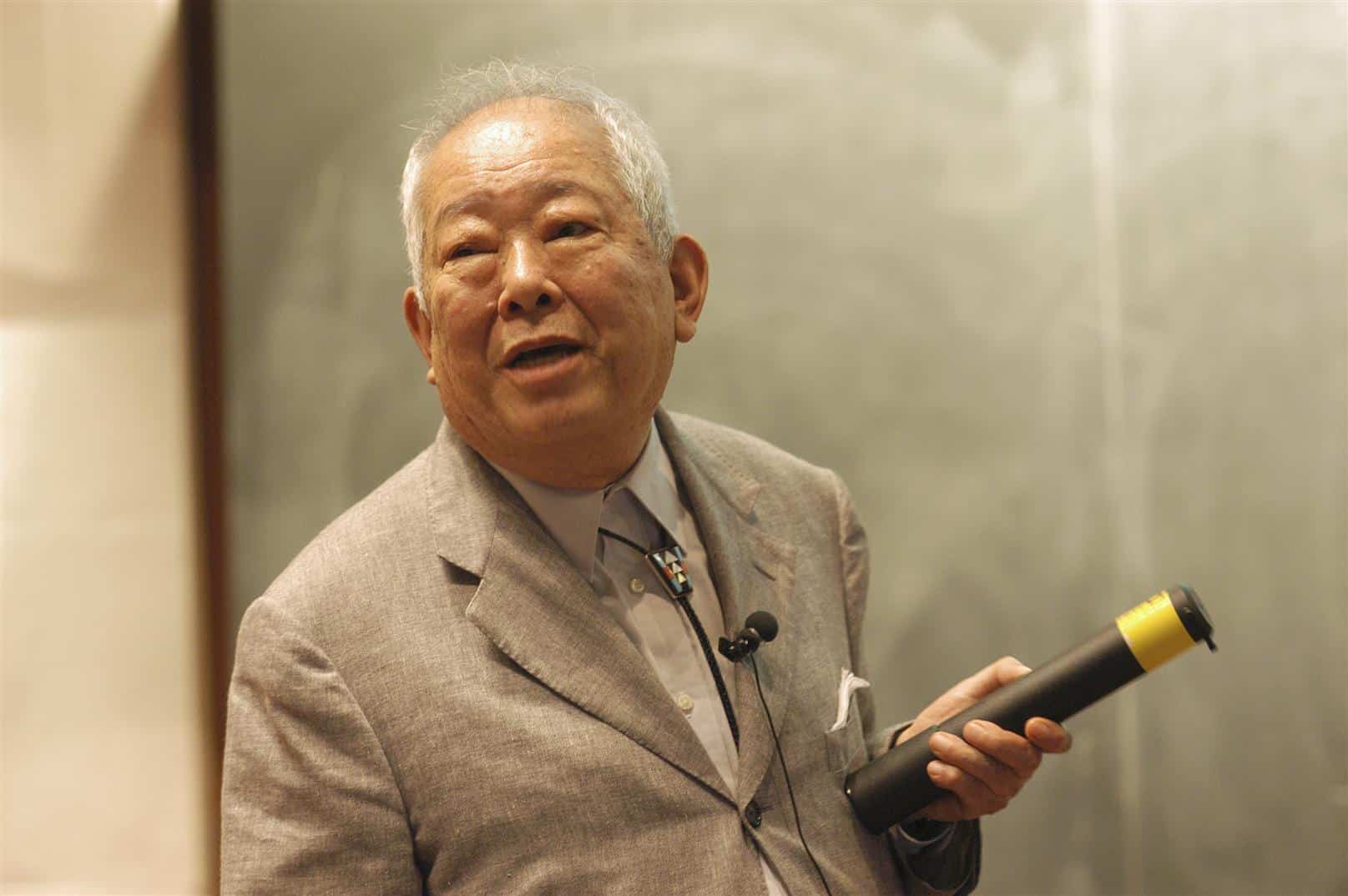
Masatoshi Koshiba
 Japan
Japanphysicist•professor•researcher
Also known as: 小柴昌俊, M. Koshiba
Birthday
September 19, 1926
Birth Sign
Virgo
Birthplace
Toyohashi, Aichi Prefecture, Japan
Age
Died at 94
About
Masatoshi Koshiba was a preeminent Japanese experimental physicist widely recognized as the father of neutrino astronomy. Born in Toyohashi, he transformed from a student who initially struggled with physics into a global scientific icon who proved that the universe could be observed through subatomic particles. He served as a professor at the University of Tokyo and later Tokai University, where he led groundbreaking experiments involving massive underground water Cherenkov detectors. His work earned him the 2002 Nobel Prize in Physics, shared with Raymond Davis Jr. and Riccardo Giacconi.
Koshiba passed away on November 12, 2020, leaving behind a legacy that fundamentally reshaped astrophysics. His development of the Kamiokande and Super-Kamiokande detectors allowed for the first direct detection of solar and atmospheric neutrinos. This achievement opened an entirely new window for observing cosmic events, including supernovae, and provided definitive evidence that neutrinos have mass. His influence extended beyond his discoveries to mentor generations of physicists who continue to explore the mysteries of the subatomic world.
Early Life & Background
Masatoshi Koshiba was born on September 19, 1926, in Toyohashi, a city in Aichi Prefecture, Japan. He grew up during a period of rapid industrialization and war, which shaped the resilience he would later display in his scientific pursuits. Unlike many prodigies, Koshiba's academic journey was not marked by immediate brilliance. He famously considered himself a "so-so" student in physics during his undergraduate years at the University of Tokyo, often recounting how he barely passed his physics courses. This narrative of overcoming early academic mediocrity has become a central part of his legend, illustrating that persistence often outweighs initial aptitude.
He pursued his undergraduate studies at the University of Tokyo, graduating in 1951. He continued his research there, earning his Doctor of Science degree in 1953. A pivotal moment in his early career occurred when he traveled to the United States to conduct postdoctoral research at the University of Chicago under the guidance of Leon Lederman. This experience exposed him to the cutting-edge particle physics of the time and solidified his interest in cosmic rays and neutrinos. Upon returning to Japan in 1959, he joined the faculty at the University of Tokyo, where he began laying the groundwork for his future experiments.
Career Growth
Koshiba's career is a chronicle of technological innovation and theoretical breakthroughs. From 1959 to 1962, he worked as a senior researcher at the University of Chicago, collaborating with Leon Lederman on cosmic ray research. In 1963, he became a professor at the University of Tokyo, leading the Cosmic Ray Laboratory. During this period, he initiated the concept of using water Cherenkov detectors to observe neutrinos, a radical idea at the time.
The construction and operation of the Kamiokande detector began in 1983. Located deep underground in the Mozumi Mine near Kamioka, Gifu Prefecture, this project involved building a tank containing 3,000 tons of ultra-pure water lined with photomultiplier tubes. In 1987, Kamiokande successfully detected neutrinos from Supernova 1987A, marking the birth of neutrino astronomy. Following this success, Koshiba moved to Tokai University in 1987. In 1996, the Super-Kamiokande detector, a massive upgrade featuring 50,000 tons of water and 11,000 photomultiplier tubes, began operations. Under his direction, it provided definitive evidence for neutrino oscillation, proving that neutrinos have mass. He was awarded the Nobel Prize in Physics in 2002 for these pioneering contributions. He continued to serve as a senior scientist and mentor until his death in 2020.
Career Timeline
Public Image & Style
Koshiba is portrayed as a humble, dedicated, and persistent scientist. Media coverage emphasizes his quiet demeanor, his focus on the unseen universe, and his belief in the power of basic research. He is often described as a "gentle giant" of science, whose influence was felt more through his discoveries than his public persona. His image as a former "so-so" student who achieved greatness through perseverance resonated deeply with educators and students alike. He was known for his patience and meticulous attention to detail in designing complex experiments that required decades of planning and execution.
Fame & Fandom (iFAMOUS Rankings)
Masatoshi Koshiba holds no current placement in the iFANN Global Top 1,000 or any Top-100 scope list. The iFANN Global Fame Engine has evaluated his standing, yet he remains unranked among the world's most famous figures as of August 2026. His legacy rests not on viral metrics but on the profound silence of the deep underground where he first heard the universe whisper through neutrinos. Unlike pop icons who command organized legions, Koshiba never cultivated a formal fandom name. His audience was the global scientific community, a dispersed network of physicists and students rather than a mobilized crowd with rituals or campaigns. There were no fan-funded billboards, no subway ads, and no chart pushes driven by devotees. Instead, his influence rippled through academic halls at the University of Tokyo and Tokai University, where mentors shaped future generations. Tributes appeared in journals like Science and major newspapers, marking his passing with professional reverence rather than celebratory frenzy. This absence of a named fanbase underscores the nature of his fame: it was earned through discovery, not performance. While entertainers rely on constant public engagement to maintain their status, Koshiba's impact grew from the quiet accumulation of data that reshaped astrophysics. His recognition came from institutions and peers who understood the weight of detecting cosmic particles, a feat that required decades of patience and precision. Even in death, there is no organized movement bearing his name, only the enduring respect of those who study the stars and the subatomic shadows they cast.
Interesting Facts and Legends
Masatoshi Koshiba often recounted how he was barely passing physics in college, attributing his later success to hard work and curiosity rather than innate genius. His team detected 11 neutrinos from Supernova 1987A, a feat that only two other groups worldwide achieved, confirming the core-collapse theory of supernovae. He spent decades working in the deep underground laboratories of the Kamioka mine, living in close proximity to the rock overburden to shield detectors from cosmic rays. When he first went to the US, he faced language barriers but quickly adapted, eventually becoming fluent in English to collaborate with international teams. The story of his transformation from a mediocre student to a Nobel laureate serves as an inspiration to students worldwide.
Notable Quotes
“I am not a genius. I just worked harder than anyone else.”
“Neutrinos are the messengers from the universe. They tell us things that light cannot.”
“Science is a journey of curiosity. If you lose your curiosity, you lose everything.”
Family & Personal Life
Public records and biographical sources do not contain detailed information about Masatoshi Koshiba's romantic relationships, dating history, or specific family dynamics beyond his professional legacy. There are no documented accounts of marriages, divorces, or children in the public domain, nor are there reports of high-profile flings or engagements. As a figure whose life was dedicated almost entirely to the rigorous demands of experimental physics and academic administration, his personal life remained largely out of the public eye. Consequently, there is no verified data on partners, dates, or offspring. His family maintained a low profile, keeping his private affairs separate from his public scientific achievements.
Notable Connections
Relationships & Dating History
Public records and biographical sources do not contain detailed information about Masatoshi Koshiba's romantic relationships, dating history, or specific family dynamics beyond his professional legacy. There are no documented accounts of marriages, divorces, or children in the public domain, nor are there reports of high-profile flings or engagements. As a figure whose life was dedicated almost entirely to the rigorous demands of experimental physics and academic administration, his personal life remained largely out of the public eye. Consequently, there is no verified data on partners, dates, or offspring. At the time of his death in 2020, he had no recorded spouse or partner mentioned in major obituaries or biographical entries. The absence of such details reflects his choice to keep his private affairs separate from his public scientific achievements.
Death & Aftermath
Died
November 12, 2020 (aged 94)
Death Place
Tokyo, Japan
Cause of Death
Natural causes related to old age
Masatoshi Koshiba died peacefully on November 12, 2020, at a hospital in Tokyo at the age of 94. The reported cause was natural causes associated with advanced age, and no investigation or legal proceedings followed his passing. His death marked the end of a career that fundamentally reshaped astrophysics by proving the universe could be observed through subatomic particles. Tributes poured in from the global scientific community immediately after the announcement. The American Physical Society, Science magazine, and the University of Rochester issued statements honoring his pioneering contributions to neutrino astronomy. The New York Times published a detailed obituary titled "Masatoshi Koshiba, 94, Dies; Nobel Winner Tracked Ghostly Neutrinos," highlighting his journey from a struggling student to a laureate.
A private funeral service was held consistent with Japanese customs for prominent scientists. Posthumous recognition included a special issue of Progress of Theoretical and Experimental Physics dedicated to his memory in December 2022 and a retrospective in APS News the following year. Institutions renamed labs and held symposia to celebrate his legacy. There were no public estate disputes or major financial settlements reported, as his assets remained modest and tied to academic salaries and pensions. His family kept a low profile, allowing the scientific community to focus on the enduring impact of his work on neutrino mass and oscillation research.
Net Worth (Estate Value)
$1 Million
iFANN Editorial Team estimate
As a university professor and researcher, Masatoshi Koshiba did not accumulate wealth through commercial ventures, endorsements, or business holdings in the manner of entertainers or entrepreneurs. His financial status was typical of a high-ranking academic in Japan during the mid-to-late 20th century. Research by the iFANN Editorial Team puts his fortune at around $1 million, primarily derived from lifetime earnings, government pensions, and the Nobel Prize money. The Nobel Prize award was approximately $1 million split between the three laureates, contributing significantly to his total assets. Since his death, there is no public record of a large estate managed for heirs. The value of his estate is unknown, but given his profession, it was likely minimal compared to public figures in other industries. His financial trajectory remained stable throughout his life, reflecting the modest compensation structure of academia in Japan during that era.
Awards Won (8)
Masatoshi Koshiba received numerous prestigious awards throughout his career. He won the Nobel Prize in Physics in 2002 for pioneering contributions to astrophysics. He also received the Order of Culture in 1997, one of Japan's highest honors. Other notable awards include the Wolf Prize in Physics in 1995, the Fermi Award in 2001, and the Humboldt Research Award in 1982. He was also honored with the Asahi Prize in 1986 and the Japan Academy Prize in 1983. These accolades recognize his transformative work in neutrino astronomy and his dedication to advancing scientific knowledge.
2002 · Physics
Pioneering contributions to astrophysics, in particular for the detection of cosmic neutrinos
1997 · Cultural Contribution
Distinguished cultural and academic contributions
Known For
Nobel Prize in Physics
2002 · Laureate
Kamiokande
1987 · Detector Creator
Super-Kamiokande
1996 · Lead Scientist
Keywords
Sources
Quick Facts
- Profession
- physicist, professor, researcher
- Born
- September 19, 1926
- Birthplace
- Toyohashi, Aichi Prefecture, Japan
- Died
- November 12, 2020
- Death Place
- Tokyo, Japan
- Gender
- Male
- Birth Sign
- Virgo
Personal Details
- Full Name
- Masatoshi Koshiba
- Children
- Education
- University of Tokyo (B.S., 1951; Ph.D., 1953)
Frequently Asked Questions
What did Masatoshi Koshiba win the Nobel Prize for?
When did Masatoshi Koshiba die?
Was Masatoshi Koshiba a good student in school?
What is the significance of the Kamiokande detector?
Did Masatoshi Koshiba have any children?
Similar People
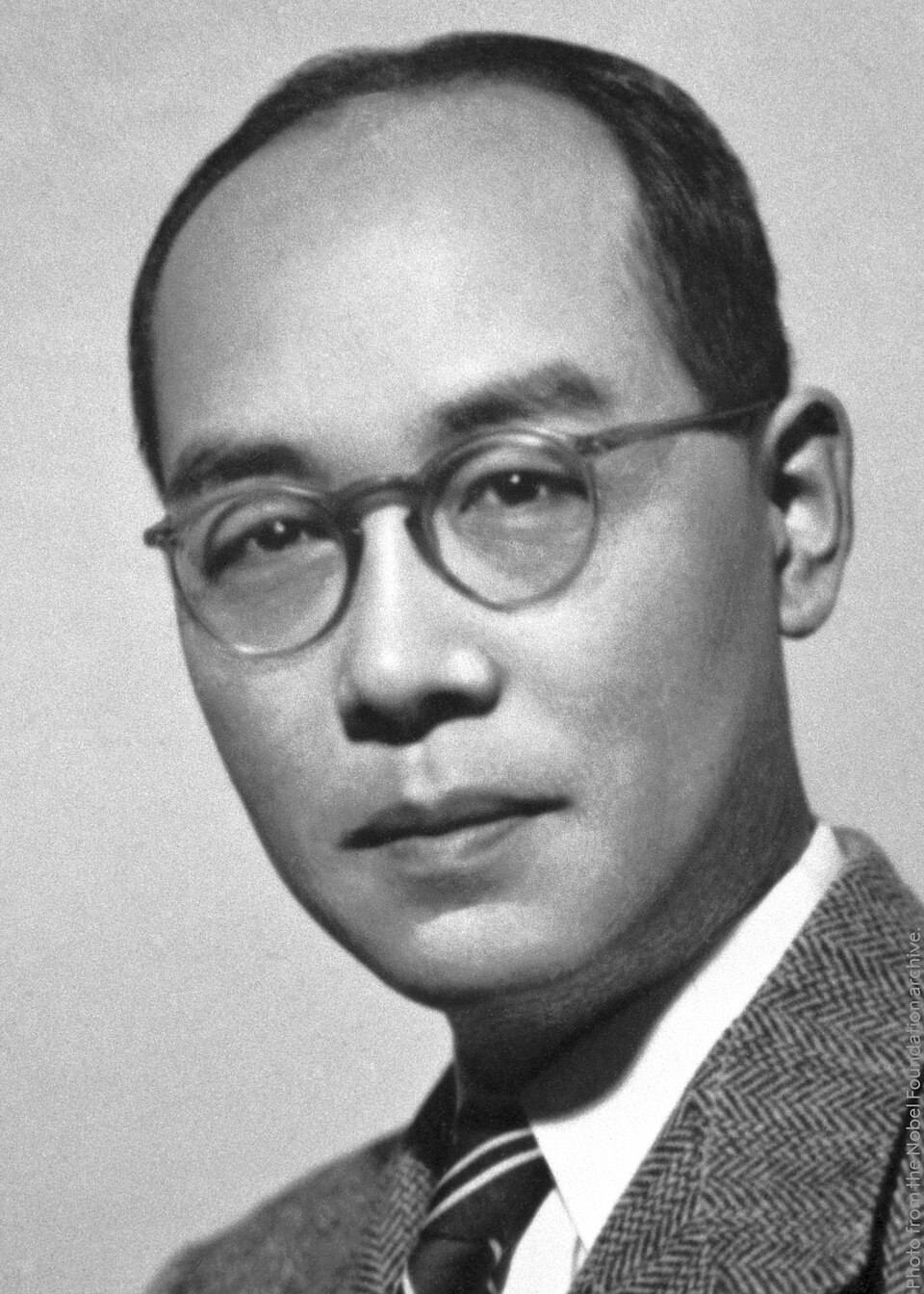
Join the community
fans discussing