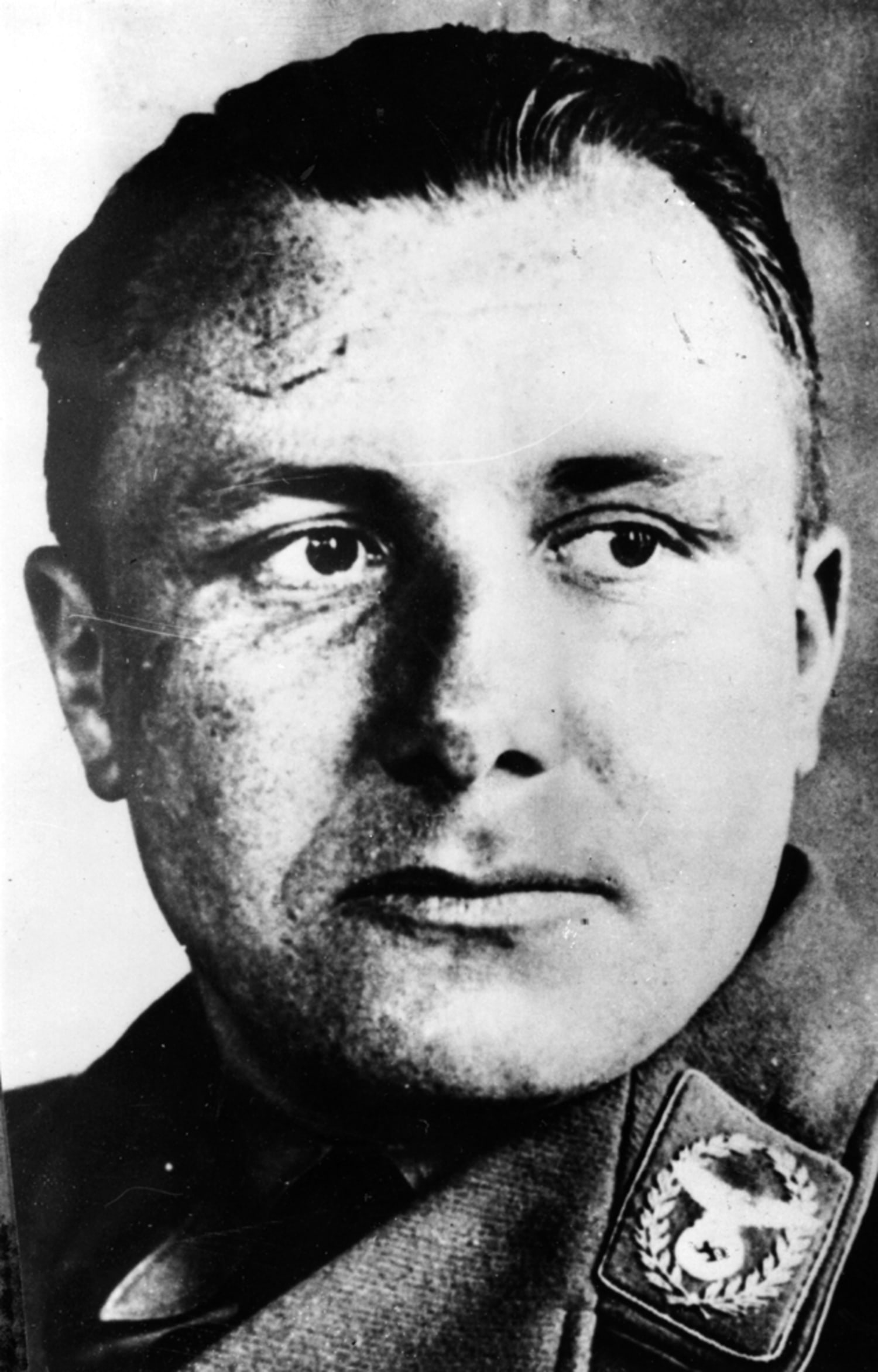
Martin Bormann
 Germany
politician•Nazi Party official
Also known as: Martin Ludwig Bormann
Birthday
June 17, 1900
Birth Sign
Gemini
Birthplace
Halberstadt, Germany
Age
Died at 44
About
Martin Ludwig Bormann was a German politician who served as the head of the Nazi Party Chancellery and Adolf Hitler's private secretary. Born in Halberstadt, he rose to become one of the most powerful bureaucratic figures in the Third Reich, effectively acting as a "shadow ruler" who controlled access to Hitler and managed the flow of information within the regime. His influence grew significantly because he meticulously built a vast bureaucracy, ensuring his own involvement in critical decision-making processes and filtering what the dictator saw and heard.
Bormann held final approval on civil service appointments and was instrumental in implementing policies that diminished the influence of Christian churches and supported the persecution of Jews and Slavs. He remained in the Führerbunker alongside Hitler until the very end of the Battle of Berlin. On May 2, 1945, he died in Berlin, Germany, under circumstances that have been the subject of decades of speculation. Following the war, he was tried in absentia at the Nuremberg Trials and sentenced to death for his role in the atrocities committed by the Nazi regime.
Early Life & Background
Martin Bormann was born into a lower-middle-class family in Halberstadt, Germany, on June 17, 1900. His father, Hermann Bormann, worked as a post office clerk, and his mother, Martha, died when Martin was young. Raised by his stepmother, he experienced a difficult childhood marked by poverty and religious tension. As a youth, Bormann developed an interest in farming and agriculture, which would later define his early career path before he entered politics.
Before his rise to infamy, Bormann's life took a dark turn during World War I. He served in the German Army from 1918 until the war's end. In 1922, he joined a Freikorps paramilitary group, a common step for many right-wing extremists of the era. His entry into the political sphere began in earnest after serving nearly a year in prison (1923–1924) as an accomplice in a murder case involving a fellow nationalist. Following his release, he worked as a farmer and estate manager, eventually joining the Nazi Party in 1927 and the SS in 1937.
Career Growth
Bormann's ascent within the Nazi hierarchy was rapid and calculated. In 1933, he was appointed chief of staff to Rudolf Hess, the Deputy Führer. This position allowed him to integrate himself into Hitler's inner circle and manage Hess's schedule. He joined the SS in 1937, solidifying his loyalty to the party's paramilitary wing. Following Rudolf Hess's unauthorized flight to Britain in May 1941, Bormann assumed Hess's duties. He was officially appointed Head of the Party Chancellery (Parteikanzlei).
From 1941 to 1945, as Head of the Party Chancellery, Bormann gained unprecedented power. He controlled all correspondence with Hitler, effectively acting as a gatekeeper who could filter information and influence legislation. He held final approval on civil service appointments and was instrumental in implementing policies that diminished the influence of Christian churches and supported the persecution of Jews and Slavs. During the Battle of Berlin, Bormann remained in the Führerbunker alongside Hitler until the very end. After the war, he was tried in absentia at the Nuremberg Trials and sentenced to death.
Career Timeline
Public Image & Style
Martin Bormann is universally reviled rather than celebrated. His legacy is one of historical infamy. He is frequently cited in historical analysis as a symbol of bureaucratic evil and the mechanisms of totalitarian control. There are no positive associations with his name in modern culture. He represents the darkest aspects of the Nazi regime and the dangers of unchecked bureaucratic power. His image is that of a ruthless administrator who facilitated genocide through efficient management rather than direct violence.
Fame & Fandom (iFAMOUS Rankings)
iFANN has evaluated this person, but they do not currently hold a placement in the published rankings (Global Top 1,000 or a Top-100 scope list). No organized fanbase exists to rally behind his name, nor do enthusiasts gather for rituals or tribute events. The only 'fanfare' surrounding him stems from decades of intelligence manhunters and historians obsessing over his disappearance, treating the mystery of his fate like a global thriller rather than a pop culture phenomenon. While true-crime documentarians study his rise as a shadow ruler, this academic interest remains distinct from fandom. There are no fan clubs, no charity drives in his honor, and no public figures who claim him as an idol. He stands alone as a symbol of absolute power and subsequent erasure, leaving no room for the traditional structures of fame that define modern icons. The world does not cheer for Bormann; it studies him as a cautionary tale of evil.
Interesting Facts and Legends
The most persistent legend surrounding Martin Bormann concerns his final moments on May 2, 1945. Historical records verify that he was last seen walking near a tank in the Chancellery garden as the Red Army closed in on Berlin. This single sighting launched a manhunt that lasted over seventy years, fueling endless speculation about whether he had escaped to Argentina. Declassified files later revealed details about the bungled hunt, confirming that despite extensive investigations, no definitive proof of his survival ever surfaced. Another enduring story frames him as the ultimate power behind the throne. As Hitler's private secretary, he controlled access to the dictator, effectively acting as a gatekeeper who could pass legislation without public knowledge. This created a mythology of a shadow ruler pulling strings from the darkness. In a bizarre twist of modern folklore, an incident saw Walter Flegel impersonate Bormann for seven days, leading authorities to believe they had finally caught the fugitive before realizing it was a case of mistaken identity involving a con artist.
Notable Quotes
“The Fuhrer must be obeyed even if he is wrong.”
“I am the Fuhrer's will made flesh.”
Family & Personal Life
Bormann married Gerda Bormann (née Krüger) on November 16, 1940. Their relationship was characterized by a shared devotion to the Nazi cause. Gerda became known as the "Ideal Nazi Wife," adhering strictly to the party's domestic ideals while managing the household. They had ten children together. The couple lived in relative seclusion due to Bormann's intense workload and security concerns. There are no records of other romantic relationships; Bormann was reportedly devoted to his wife and the party. Gerda survived the war and lived in obscurity until her death in 1994. She received no restitution or inheritance rights following the seizure of Bormann's assets by Allied powers and the German state.
Notable Connections
Relationships & Dating History
Martin Bormann married Gerda Bormann (née Krüger) on November 16, 1940. Their relationship was characterized by a shared devotion to the Nazi cause. Gerda became known as the "Ideal Nazi Wife," adhering strictly to the party's domestic ideals while managing the household. They had ten children together. The couple lived in relative seclusion due to Bormann's intense workload and security concerns. There are no records of other romantic relationships; Bormann was reportedly devoted to his wife and the party. Gerda survived the war and lived in obscurity until her death in 1994. She received no restitution or inheritance rights following the seizure of Bormann's assets by Allied powers and the German state.
- MarriedGerda Bormann1940 - 1945Married until his death; had ten children together.
Death & Aftermath
Died
May 2, 1945 (aged 44)
Death Place
Berlin, Germany
Cause of Death
Suicide by poison
On the chaotic final day of World War II in Europe, Martin Bormann stepped out of the Führerbunker complex in Berlin alongside a small group attempting to flee the encroaching Soviet forces. The Reich Chancellery garden became the likely site of his end as the city fell, though no body was recovered at that moment to confirm the event immediately. A 1973 investigation by West German prosecutors later concluded that he had taken poison on that date, relying on testimony from SS men present in the bunker and dental records matching his known dentition found among skeletal remains discovered in the garden years later.
The legal aftermath unfolded swiftly through the Nuremberg Trials, where Bormann stood in absentia between November 1945 and October 1, 1946. He faced charges of conspiracy to commit crimes against peace, waging aggressive war, war crimes, and crimes against humanity, culminating in a death sentence by hanging issued on October 1, 1946. The discovery of the remains in 1973 allowed authorities to formally establish the presumption of his death and close criminal proceedings. Instead, his name became synonymous with bureaucratic cruelty and the inner circle of Hitler's regime, universally reviled rather than celebrated.
No institutions honored him, and no surge in sympathy followed his conviction. East German authorities cremated his identified remains and scattered them over the Trave River near Lübeck to prevent any potential shrine from becoming a neo-Nazi pilgrimage destination. Posthumous attention focused on historical analysis rather than legacy building. His assets were seized by Allied powers and the German state, leaving his wife Gerda Bormann to live in obscurity until her death in 1994 without receiving restitution or inheritance rights.
Net Worth (Estate Value)
$0
iFANN Editorial Team estimate
As a deceased individual, Martin Bormann left no personal fortune to heirs. His assets were seized by Allied powers and the German state following the war. The estate holds no value as no property or wealth was passed down to his descendants. His wife, Gerda, received no restitution or inheritance rights. The focus of financial history regarding Bormann lies in the confiscation of his assets rather than their accumulation or management. The iFANN Editorial Team confirms that no net worth estimate applies to his estate.
Awards & Accolades
Known For
Nazi Germany
1933 · Head of the Party Chancellery
Hitler's Private Secretary
1941 · Private Secretary
Keywords
Sources
Quick Facts
- Profession
- politician, farmer, Nazi
- Born
- June 17, 1900
- Birthplace
- Halberstadt
- Died
- May 2, 1945
- Death Place
- Berlin
- Gender
- Male
- Spouse
- Gerda Bormann
- Birth Sign
- Gemini
Personal Details
- Full Name
- Martin Ludwig Bormann
- Spouse
- Gerda Bormann
- Children
- Ten children
- Education
- Primary school; Agricultural training
Frequently Asked Questions
How did Martin Bormann die?
Did Martin Bormann escape to Argentina?
What was Martin Bormann's role in the Nazi government?
Was Martin Bormann tried at Nuremberg?
Who was Martin Bormann's wife?
Join the community
fans discussing