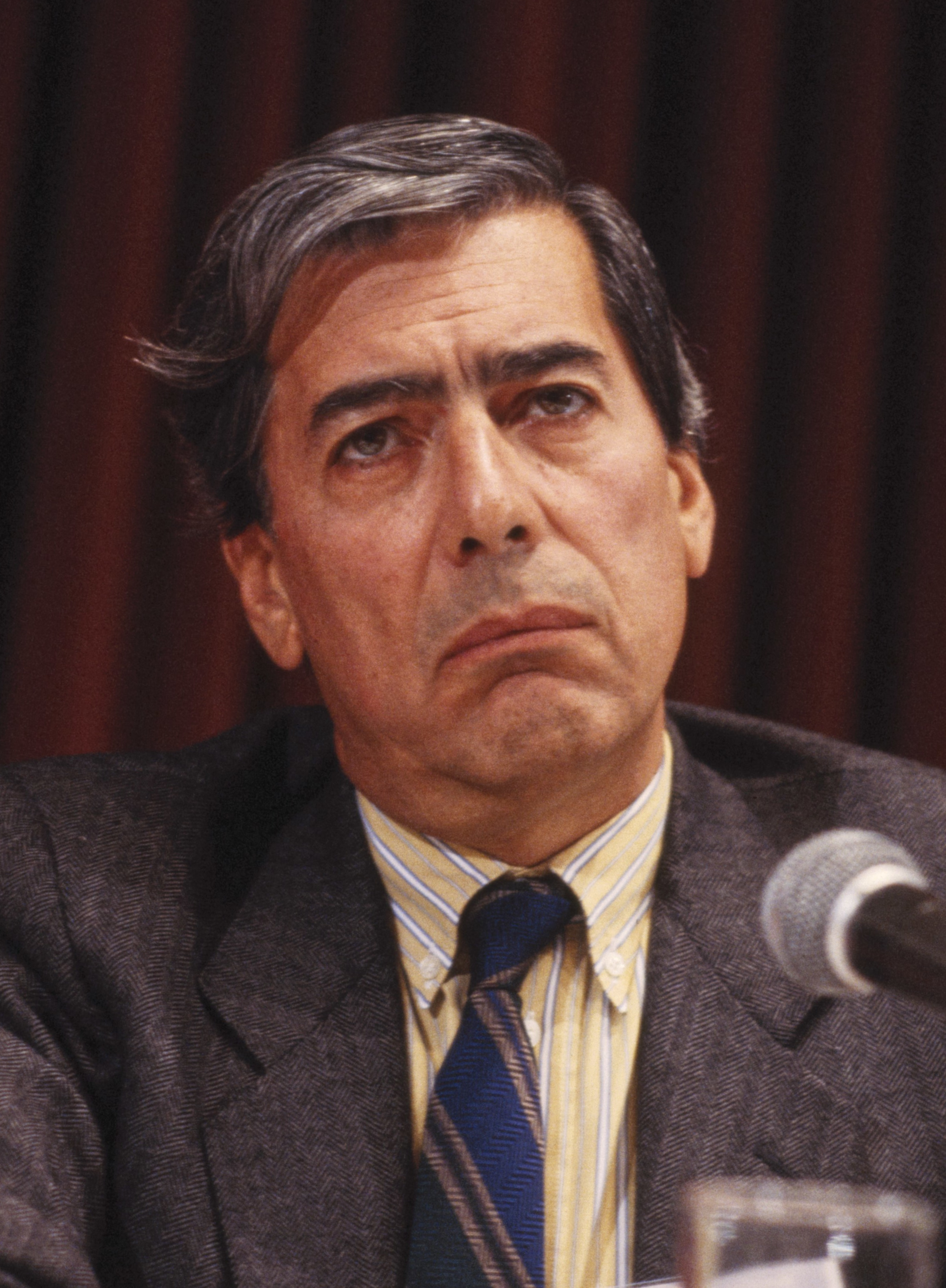
Mario Vargas Llosa
 Spain
Spainnovelist•dramaturge•politician
Birthday
+1936-03-28
Birth Sign
Sagittarius
Birthplace
Arequipa
Age
Died at 89
About
Mario Vargas Llosa, born Jorge Mario Pedro Vargas Llosa on March 28, 1936, in Arequipa, Peru, was a towering figure in world literature. A novelist, essayist, journalist, and politician, he became one of the most influential voices of the Latin American Boom, a generation of writers who reshaped the literary landscape in the 1960s and 1970s. Critics often placed him above his peers in terms of global reach and impact. In 2010, he received the Nobel Prize in Literature, an honor that recognized his sharp dissection of power structures and his vivid portrayal of individual resistance and rebellion. Vargas Llosa's literary career took off in the early 1960s with the publication of The Time of the Hero (1963), a novel based on his experiences at a Peruvian military academy. He followed with The Green House (1965) and the monumental Conversation in the Cathedral (1969), works that solidified his reputation. Over the decades, he explored a wide range of genres, from historical fiction to political thrillers, and his books often drew on his Peruvian roots. Several were adapted into films, including Captain Pantoja and the Special Service and Aunt Julia and the Scriptwriter. His output was prolific, and he also wrote influential essays criticizing nationalism across the globe. Politics ran deep in Vargas Llosa's life. He initially supported Fidel Castro's Cuban revolution but grew disillusioned after the imprisonment of poet Heberto Padilla in 1971. This shift pushed him toward classical liberalism and anti-leftist views. In 1990, he ran for the presidency of Peru with the center-right Democratic Front, advocating for liberal reforms, but lost decisively to Alberto Fujimori. After that defeat, he continued to write and support right-leaning causes internationally, while his literary accolades piled up: the Rómulo Gallegos Prize in 1967, the Prince of Asturias Award in 1986, the Miguel de Cervantes Prize in 1994, and the Jerusalem Prize in 1995. In 2011, Spain's King Juan Carlos I made him Marquess of Vargas Llosa, and in 2021, he was elected to the Académie Française. He died on April 13, 2025, at the age of 89, leaving behind a body of work that continues to be read and studied worldwide.
Fame & Fandom
Mario Vargas Llosa never courted the adulation reserved for pop idols or sports dynamos. His audience gathered in lecture halls and quiet study rooms, drawn by the sharp intellect of a man who traded the novelist's solitude for the chaotic arena of Peruvian politics. There were no fan clubs bearing his name, no midnight vigils outside Lima homes, and no organized campaigns to place his face on billboards. The relationship between this giant of letters and his readers was defined by the weight of his words rather than the spectacle of his presence. He spoke to the world through essays on power and novels of rebellion, leaving behind a legacy built on intellectual rigor rather than viral moments. Even as crowds flocked to celebrate the 2010 Nobel Prize, the reverence remained rooted in the text itself. Decades after his final campaign against Alberto Fujimori, the story of his political ascent remains a defining chapter in his biography, yet it stands apart from the feverish rituals of modern fandom. No formal group claims him as their own, and no specific moniker identifies those who revere his work. His fame endures not because of a cult following, but because his dissection of authority resonated across generations. In August 2026, the iFANN Global Fame Rankings confirm that he remains the 70th most famous person in Spain, holding steady from the previous cycle.
Interesting Facts and Legends
Mario Vargas Llosa passed away on April 13, 2025, in Lima at the age of 89, concluding a life that spanned nearly nine decades of intense literary and political engagement. A widely retold story from his career involves his 1990 presidential campaign, where he transformed from a celebrated author into a serious contender advocating for liberal pluralism and free markets against incumbent Alberto Fujimori. This period remains a defining moment in Latin American political folklore, illustrating his rare willingness to risk his reputation for public office. Critics later scrutinized his personal life, with biographers describing his relationships through a Freudian lens and noting accusations of selfishness that added complexity to his public image. His final novel, I Give You My Silence, arrived as a posthumous swan song described as a love letter to Peru, focusing deeply on national music and identity. Gerald Martin's forensic biography further complicated his legend by revealing private dimensions often hidden behind the mask of the public intellectual. These narratives have cemented his status not just as a writer, but as a figure whose life played out like one of his own intricate plots.
Death & Aftermath
Died
+2025-04-13 (aged 89)
Death Place
Peru
Cause of Death
Reported as natural causes associated with old age
The family of Mario Vargas Llosa announced his passing on April 13, 2025, confirming the death of the Nobel laureate at age 89. He died peacefully in Peru. The event was characterized as a natural conclusion to a long existence. The literary world responded with immediate reverence, with institutions and peers hailing him as a giant who reshaped the cultural landscape of the region. Tributes poured in from major publications like The New York Times and The Guardian, reflecting on his complex evolution from leftist intellectual to liberal reformist and his run for the Peruvian presidency in 1990.
Critics began a re-evaluation of his oeuvre even as they mourned, noting how his final novel, I Give You My Silence ( Te doy mi silencio ), published posthumously in February 2026, served as a swan song exploring themes of art and Peruvian identity. A comprehensive biography by Gerald Martin arrived later that summer, described as erudite and deeply researched, cementing his legacy for future generations. While details of the funeral service remain private and unreported, the release of his final work signaled a continued engagement with his voice long after his last breath.
Awards & Accolades
Keywords
Quick Facts
- Profession
- novelist, dramaturge, politician
- Born
- +1936-03-28
- Birthplace
- Arequipa
- Died
- +2025-04-13
- Death Place
- Lima
- Gender
- Male
- Spouse
- Julia Urquidi Illanes, Patricia Llosa Urquidi
- Birth Sign
- Sagittarius
Personal Details
- Spouse
- Julia Urquidi Illanes, Patricia Llosa Urquidi
Join the community
fans discussing