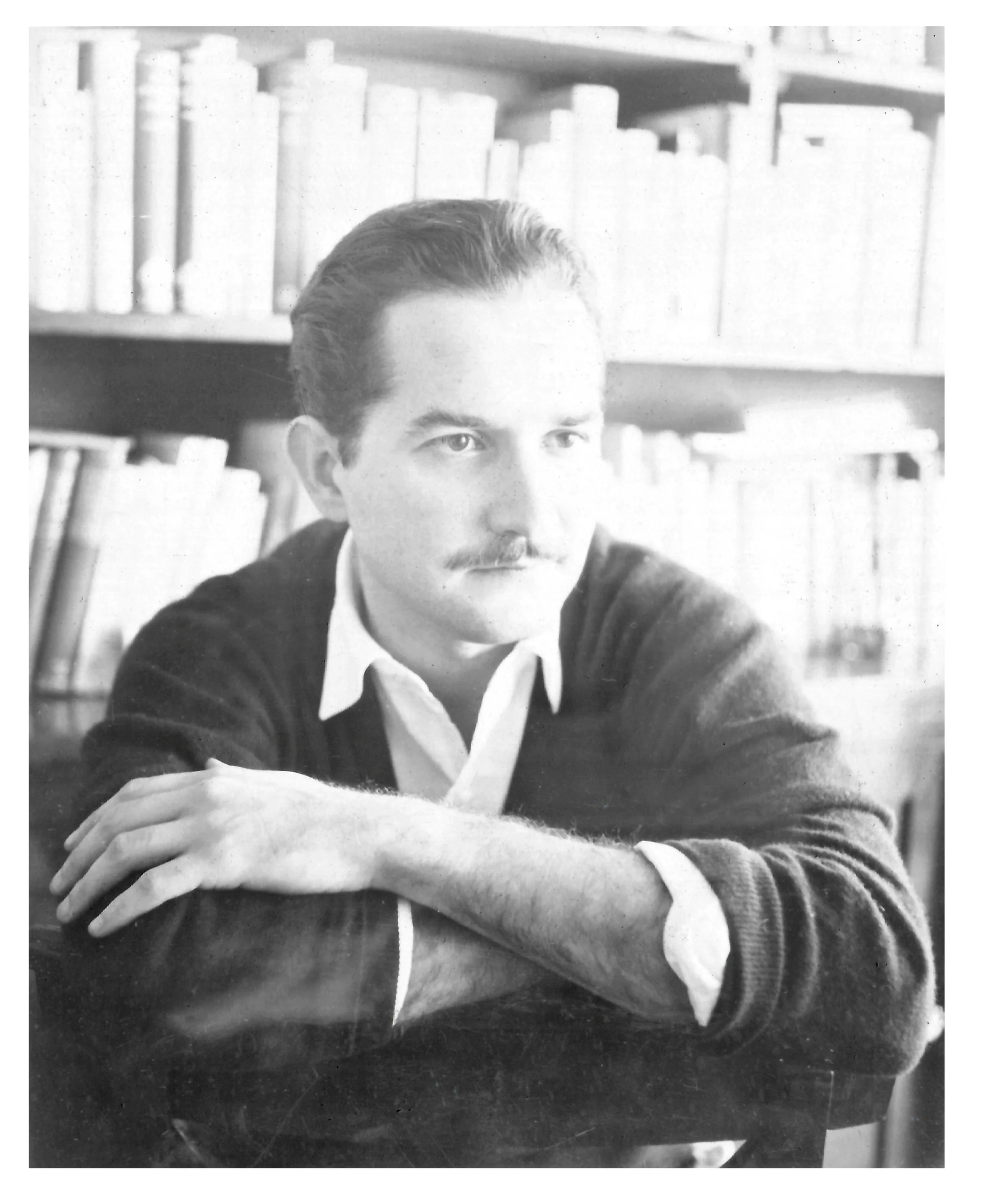
Carlos Fuentes
 Mexico
Also known as: Carlos Fuentes Macías
Birthday
November 11, 1928
Birth Sign
Scorpio
Birthplace
Panama City, Panama
Age
Died at 83
About
Carlos Fuentes was a Mexican novelist, essayist, and diplomat, widely regarded as one of the most important figures in Latin American literature. Born in Panama City to Mexican parents, he spent his childhood across the Americas due to his father's diplomatic career, an experience that shaped his critical perspective on the region. Fuentes became a leading voice of the Latin American Boom, a literary movement that brought global attention to the region's writers in the 1960s and 1970s.
His works, including The Death of Artemio Cruz and The Old Gringo, explored Mexican identity, history, and politics with a distinctive narrative complexity. Fuentes also served as Mexico's ambassador to France and held professorships at several major universities. He died on May 15, 2012, in Mexico City, leaving behind a legacy of more than sixty published works that continue to be studied and admired worldwide.
Early Life & Background
Carlos Fuentes was born on November 11, 1928, in Panama City, to Berta Macías and Rafael Fuentes, a Mexican career diplomat. Because of his father's postings, he spent his early years in various Latin American capitals, including Santiago, Chile, and Washington, D.C., where he learned English at age four. This itinerant childhood gave him a sense of being an outsider, a perspective he later credited for his critical view of Latin America.
While in Washington from 1934 to 1940, Fuentes began writing, creating a homemade magazine to share with neighbors. Despite his early ambition to become a writer, his parents insisted he study law, and he enrolled at the National Autonomous University of Mexico (UNAM). He later studied at the Graduate Institute of International Studies in Geneva, Switzerland. In 1943, he witnessed a military coup in Buenos Aires that nearly aligned Argentina with the fascist bloc, an event that profoundly influenced his political thinking.
Before his literary breakthrough, Fuentes worked as a secretary to the Mexican representative to the UN International Rights Commission and joined the Secretariat of Foreign Affairs in 1954. His first short-story collection, Los días enmascarados, was published in 1954 and included the now-famous story "Chac Mool." He also served on the Mexican delegation to the International Labour Organization in Geneva from 1950 to 1952 and held cultural posts at the University of Mexico and the ministry.
Career Growth
Fuentes's first novel, Where the Air Is Clear (1958), a fragmented portrait of Mexico City, established him as a serious writer and allowed him to leave the foreign service. His breakthrough came with The Death of Artemio Cruz (1962), a powerful examination of a revolutionary turned corrupt politician, and the novella Aura, both published that year. Over the next decades, he produced a steady stream of acclaimed works, including Terra Nostra (1975), an ambitious reimagining of Spanish and Mexican history.
In 1975, Fuentes was appointed Mexico's ambassador to France, a post he held until 1977. His 1985 novel The Old Gringo, inspired by Ambrose Bierce's disappearance, became the first Mexican book to appear on the New York Times bestseller list and was adapted into a 1989 Hollywood film starring Gregory Peck and Jane Fonda. He continued to publish prolifically, with works such as Christopher Unborn (1987) and Diana: The Goddess Who Hunts Alone (1994). Fuentes also lectured at Harvard, Princeton, Brown, and Columbia, and received the Miguel de Cervantes Prize in 1987.
Career Timeline
Public Image & Style
Fuentes was perceived as a sharp, incisive speaker who loved to shine and dominate his audience, often with malicious wit delivered in the very Mexican spirit that every conversation is a duel to be taken seriously, then forgotten over a drink. He was consistently generous in praising and supporting younger Latin American writers. His writing employed a postmodern sensibility, using multiple voices to explore Mexican identity, history, and culture, reflecting a "cosmopolitan dialogue" between Mexican culture and others. He was regarded as a key leader of "El Boom," helping Latin American literature gain global recognition. The New York Times described him as "one of the most admired writers in the Spanish-speaking world," and The Guardian called him "Mexico's most celebrated novelist."
Fame & Fandom (iFAMOUS Rankings)
The literary community surrounding Carlos Fuentes lacks a formalized collective name or organized fan clubs, as his legacy rests within academic study and the appreciation of high literature rather than the grassroots activism typical of pop culture. His influence is institutionalized through university curricula and critical analysis of his contributions to the Latin American Boom, with no record of fan-funded projects, viral campaigns, or street gatherings dedicated to his memory. While he remains a towering figure in Spanish-speaking letters, his public persona was that of an elegant statesman of words rather than a celebrity commanding chaotic adoration. Despite the absence of a specific fandom moniker, his global standing remains significant according to the iFANN Global Fame Rankings. Current data places him as the 59th most famous person in Mexico, holding steady from the previous cycle. He also ranks as the 79th most famous person from Mexico and stands as the 49th most famous person in Latin America, both holding steady from the previous cycle. These placements reflect a sustained resonance with readers and scholars decades after his passing, confirming his enduring status as a Grand Man of Letters whose works continue to define regional identity.
Interesting Facts and Legends
Carlos Fuentes learned English at age four while residing in Washington, D.C., where he produced a homemade magazine for his neighbors. His father initially questioned the viability of a writing career in Mexico and urged him to pursue law instead. During the military coup in Buenos Aires in 1943, Fuentes witnessed political upheaval that deeply influenced his later views. He characterized Mexico as an enigmatic nation that kept its inhabitants perpetually alert to decipher its mysteries. Known for his sharp wit, he often treated conversations as duels to be taken seriously before being forgotten over a drink. He was consistently generous in supporting younger Latin American writers. A verified legend of his life involves his death on May 15, 2012, in Mexico City, an event described by the New York Times as the closing of an era for Spanish-language literature. Retrospectives from 2026 have dubbed him "Mexico's James Joyce" due to the experimental complexity of works like Aura and Terra Nostra. The publication of The Death of Artemio Cruz in 1962 remains a cornerstone moment that cemented his international reputation and established the foundations of the Latin American Boom alongside contemporaries like Gabriel García Márquez.
Notable Quotes
“Our political life is fragmented, our history shot through with failure, but our cultural tradition is rich.”
“It's a very enigmatic country, and that's a good thing because it keeps us alert, makes us constantly try to decipher the enigma of Mexico.”
Family & Personal Life
Fuentes was married twice. His first wife was Mexican actress Rita Macedo, whom he married in 1959; they had one daughter, Cecilia, born in 1962. The marriage ended in a public split in 1973. In 1976, he married journalist Silvia Lemus, with whom he had two children: Carlos, born in 1973, and Natasha, born in 1974. Both children tragically predeceased him: Carlos, a hemophiliac, died in 1999 from complications related to blood transfusions, and Natasha died of a heart attack in 2005. Fuentes was survived by his wife Silvia and his daughter Cecilia. The family lived in Mexico City, and Fuentes also maintained ties to Paris, where he is buried.
Notable Connections
Fuentes was closely associated with the Latin American Boom writers, including Julio Cortázar and Alejo Carpentier. His first wife was actress Rita Macedo, and his second wife was journalist Silvia Lemus. He had a well-known affair with actress Jean Seberg, which he fictionalized in Diana. His novel The Old Gringo was adapted into a film starring Gregory Peck and Jane Fonda, and was inspired by the disappearance of author Ambrose Bierce.
Relationships & Dating History
Fuentes's first marriage was to Mexican actress Rita Macedo in 1959. They had one daughter, Cecilia, before their very public split in 1973. Around 1970, he had a high-profile affair with American actress Jean Seberg, which he later fictionalized in Diana: The Goddess Who Hunts Alone (1994). In 1976, he married journalist Silvia Lemus. They had two children, Carlos and Natasha, both of whom tragically predeceased him. Fuentes remained married to Silvia until his death in 2012.
- RumouredJean Seberg1970 - 1971High-profile affair that Fuentes fictionalized in his novel 'Diana'.
- MarriedRita Macedo1959 - 1973Mexican actress; they had one daughter, Cecilia. The marriage ended in a public split.
- MarriedSilvia Lemus1976 - 2012CurrentJournalist; married until his death. They had two children, Carlos and Natasha.
Death & Aftermath
Died
May 15, 2012 (aged 83)
Death Place
Mexico City
Cause of Death
Complications from cancer
Carlos Fuentes Macías passed away on Tuesday, May 15, 2012, at his home in the Chapultepec neighborhood of Mexico City at the age of 83. The official cause of death was reported as complications from cancer, a condition diagnosed several years prior that required chemotherapy treatment while he continued to write and engage in public life until shortly before his final days. His final days were spent in private at home surrounded by family, with the cause established through family and hospital statements rather than a legal investigation. The literary community responded immediately with tributes across Latin America and internationally. The New York Times characterized him as "Mexico's elegant public intellectual and grand man of letters," while President Enrique Peña Nieto issued a statement honoring Fuentes as a pillar of national culture.
A funeral service attended by prominent figures from the arts, politics, and academia took place in Mexico City shortly after his death. Fuentes was cremated, and his ashes were interred at the Panteón Civil de Dolores, a resting place reserved for many notable Mexican figures. Posthumously, his legacy has been maintained through the continued publication of collected works and new editions of his novels, including The Death of Artemio Cruz and Aura, which saw a surge in sales following his passing. His estate remains under the management of his widow, Delia Zapata Infante, who oversees the preservation of his literary contributions.
Net Worth (Estate Value)
$10 Million
iFANN Editorial Team estimate
The estate of the late Carlos Fuentes is managed by his surviving family, primarily his widow Silvia Lemus. The value of this estate derives from ongoing royalties generated by his extensive literary catalog, which encompasses more than sixty novels, short stories, essays, and plays. His works remain published and studied internationally, ensuring a consistent flow of income for his heirs. Rights to film adaptations also contribute significantly to the total, most notably following the release of the 1989 movie The Old Gringo. Per iFANN's editorial analysis, the estate is estimated to be worth around $10 Million as of 2026.
Awards Won (2)
Fuentes received the Miguel de Cervantes Prize in 1987, the most prestigious award in Spanish-language literature, and Mexico's Belisario Domínguez Medal of Honor in 1999. He was frequently mentioned as a contender for the Nobel Prize in Literature, though he never won it.
1987 · Literature
Body of work
1999 · Civic Honor
Lifetime achievement
Known For
The Death of Artemio Cruz
1962 · Author
The Old Gringo
1985 · Author
Terra Nostra
1975 · Author
Aura
1962 · Author
Keywords
Sources
Quick Facts
- Profession
- writer, screenwriter, diplomat
- Born
- November 11, 1928
- Birthplace
- Panama City, Panama
- Died
- May 15, 2012
- Death Place
- Mexico City, Mexico
- Gender
- Male
- Spouse
- Rita Macedo, Silvia Lemus
- Birth Sign
- Scorpio
- Education
- UNAM; Graduate Institute of International Studies, Geneva
Personal Details
- Full Name
- Carlos Fuentes Macías
- Spouse
- Rita Macedo (1959–1973), Silvia Lemus (1976–2012)
- Children
- Cecilia Fuentes Macedo, Carlos Fuentes Lemus, Natasha Fuentes Lemus
- Education
- Universidad Nacional Autónoma de México (UNAM); Graduate Institute of International Studies, Geneva
Frequently Asked Questions
Was Carlos Fuentes married?
How many children did Carlos Fuentes have?
Did Carlos Fuentes win the Nobel Prize?
What is Carlos Fuentes' most famous book?
Where is Carlos Fuentes buried?
Social Media
Join the community
fans discussing