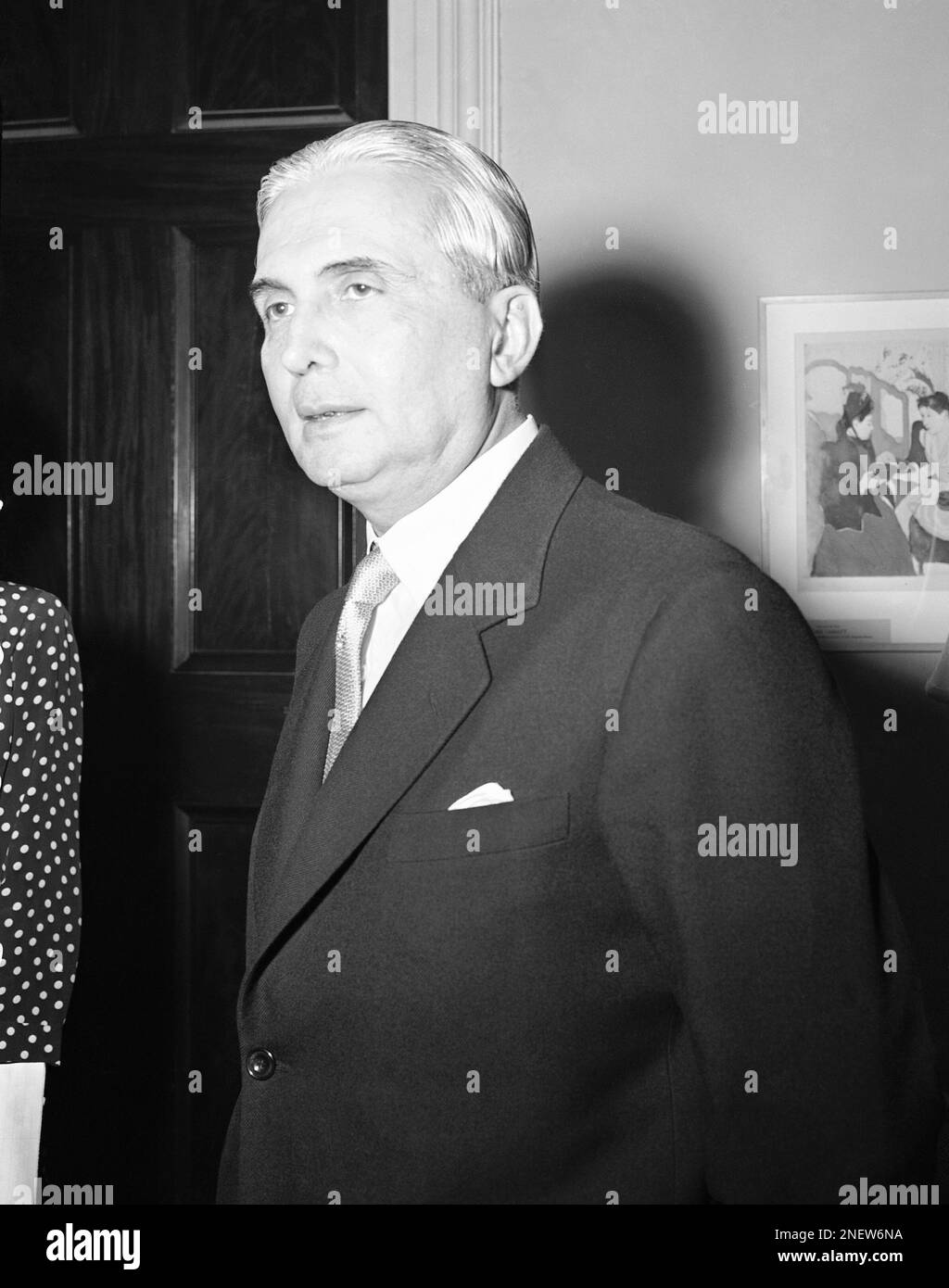
Mariano Ospina Pérez
 Colombia
politician•mining engineer•civil engineer
Also known as: Luis Mariano Ospina Pérez, Ospino Pérez (misspelling)
Birthday
November 24, 1891
Birth Sign
Sagittarius
Birthplace
Medellín, Colombia
Age
Died at 84
About
Mariano Ospina Pérez was a Colombian Conservative Party politician, mining engineer, and civil engineer who served as the 18th President of Colombia from 1946 to 1950. Born into one of the nation's most storied political families, he was the grandson of former president Mariano Ospina Rodríguez. His presidency unfolded during one of the most volatile chapters in Colombian history, marked by the assassination of Jorge Eliécer Gaitán in 1948 and the eruption of La Violencia, a bipartisan civil conflict that claimed hundreds of thousands of lives.
Today, Ospina Pérez is remembered as a polarizing figure. Supporters see a stabilizing technocrat who tried to steer a deeply divided country through crisis; critics associate his administration with state repression and the descent into violence. His legacy remains actively debated in Colombian public life, with his labor reforms cited in modern political arguments and his name attached to infrastructure and a foundation promoting rural development. He died in Bogotá in 1976 at age 84, leaving behind a complex and contested historical footprint.
Early Life & Background
Luis Mariano Ospina Pérez was born on November 24, 1891, in Medellín, the heart of Colombia's Antioquia region. He grew up in a household steeped in Conservative politics and coffee elite culture. His grandfather, Mariano Ospina Rodríguez, had served as president in the 1850s, and the family name carried weight across the country's political landscape.
Ospina Pérez trained as a mining engineer and civil engineer, a background that set him apart from many purely political contemporaries. His technical education took him into Colombia's Andean mining sector, where he built a professional reputation before ever holding office. This engineering foundation would later shape his technocratic approach to governance.
He entered politics through the Conservative Party, gradually climbing its ranks during the 1930s and 1940s. By the time the 1946 election approached, he had emerged as a senior figure within the party establishment, ready to capitalize on an unexpected opportunity. The Liberal Party split between Gabriel Turbay and Jorge Eliécer Gaitán, allowing Ospina Pérez to win the presidency with a plurality rather than a majority. He took office on August 7, 1946, inheriting a nation already simmering with partisan tension.
Career Growth
Ospina Pérez's presidency was defined by crisis from the start. The country was polarized along party lines, and political violence was escalating. The turning point came on April 9, 1948, when Jorge Eliécer Gaitán, the charismatic Liberal leader, was assassinated in Bogotá. The killing sparked the Bogotazo, days of riots and destruction that left much of the capital in ruins. This event is widely considered the opening of La Violencia, a period of civil conflict that would last for decades.
During his term, Ospina Pérez struggled to maintain order. TIME magazine described him as walking some of the steepest political cliffs in Latin America. Critics accused his government of failing to prevent the bloodshed, and some interpretations suggest his administration's policies contributed to the conditions that fueled the violence. In 2024, Gloria Gaitán, granddaughter of the assassinated leader, publicly accused Ospina Pérez and the Chief of Police of involvement in the assassination, a claim that remains contested.
After leaving office on August 7, 1950, Ospina Pérez stayed active in Conservative Party politics and national affairs. His post-presidential years saw him remain a voice in Colombian public life until his death in 1976. His legacy includes the Fundación Mariano Ospina Pérez, which continues to promote rural development and agricultural projects, and the Mariano Ospina Pérez Bridge connecting Girardot and Flandes across the Magdalena River.
Career Timeline
Public Image & Style
Ospina Pérez's public image is that of a polarizing historical figure. To his supporters, he was a stabilizing force, a technocrat with an engineering background who tried to govern a nation tearing itself apart. TIME magazine's contemporary portrayal emphasized the precariousness of his position, describing him as silver-haired and walking some of the steepest political cliffs in Latin America.
To his critics, his presidency is synonymous with the eruption of La Violencia and Conservative-dominated state repression. The ongoing debate about his role in the Gaitán assassination, revived in 2024 by Gloria Gaitán, keeps his image contested. In modern political discourse, his labor reforms are sometimes cited by commentators, showing that his legacy remains a reference point in Colombian politics.
Fame & Fandom (iFAMOUS Rankings)
Mariano Ospina Pérez does not command a modern fanbase in the way contemporary celebrities do, nor does he have an organized community of followers with rituals or dedicated campaigns. As a historical figure who passed away in 1976, his legacy exists within the realm of political history and Colombian national memory rather than pop culture fandom. There is no documented name for any group that claims him as an icon, and no online spaces function as a central hub for enthusiasts of his life or presidency. The narrative surrounding him remains strictly tied to his role as the 18th President of Colombia and the architect of the era known as La Violencia. His story is one of engineering precision meeting political catastrophe, remembered by historians and students of Latin American affairs rather than a devoted following of admirers. While his family lineage continues to be noted in biographical records, including the tragic abduction of his grandson decades after his death, these events remain news items rather than elements of a living fan mythology. The absence of a formal fandom reflects his status as a polarizing statesman from a distant era, where public engagement was defined by partisan loyalty rather than celebrity worship. iFANN has evaluated his global standing based on available digital signals and historical documentation. Mariano Ospina Pérez is currently EVALUATED_UNRANKED according to the Global Fame Engine, meaning he holds no placement in the published rankings such as the Global Top 1,000 or any specific Top-100 scope list.
Interesting Facts and Legends
Mariano Ospina Pérez belongs to a rare multi-generational presidential family, with his grandfather Mariano Ospina Rodríguez also serving as president. This dynastic prominence made the Ospinas one of Colombia's most influential political lineages. A notable editorial error occurred when The New York Times misspelled his surname as Ospino in the headline of his 1976 obituary, a mistake that has endured in archives. His 1946 election victory was secured not by a majority but through a split in the Liberal Party, which fielded two candidates and allowed the Conservative candidate to win with a plurality. In March 1993, decades after his death, a grandson of the former president was reportedly abducted on orders of Pablo Escobar, highlighting the family's continued visibility even during the drug-cartel era. His wife, Bertha Hernández de Ospina, was a political activist and senator in her own right, making their marriage a significant political partnership. The defining story associated with his legacy is his presidency marking the beginning of La Violencia, a period of intense partisan violence. Historical accounts verify that upon taking office in 1946, his administration closed Congress and established press censorship, actions often cited as the catalyst that escalated political tensions into widespread guerrilla warfare. While some sources note he was a grandson of a prominent coffee-growing family, the narrative focus remains on these political decisions rather than personal charisma. A specific verified event involving his family occurred decades after his death: in March 1993, his grandson, Luis Mariano Ospina V., was reportedly abducted by paramilitary groups, highlighting the enduring reach of the violence that began under his watch.
Family & Personal Life
Ospina Pérez married Bertha Hernández de Ospina, a prominent political activist and women's rights advocate who later became a senator in Colombia. Their marriage was a notable political partnership, and they had children together. Bertha outlived him and continued her political career after his death.
The Ospina family has remained prominent in Colombian public life. His grandson was reportedly kidnapped in 1993 on orders of Pablo Escobar, a sign of the family's high profile during the drug-cartel era. The family's political legacy is also carried on through figures like María Clara Ospina, a political commentator who has defended Ospina Pérez's record in modern debates.
Notable Connections
Mariano Ospina Pérez was associated with his grandfather, Mariano Ospina Rodríguez, who also served as President of Colombia. His wife, Bertha Hernández de Ospina, was a political activist and senator. His predecessor, Alfonso López Pumarejo, handed him the presidency. His main political rival, Jorge Eliécer Gaitán, was assassinated during his term, an event that defined his presidency. In modern times, his legacy has been invoked by figures like President Gustavo Petro and commentator María Clara Ospina.
Relationships & Dating History
Mariano Ospina Pérez's only documented public relationship was his marriage to Bertha Hernández de Ospina. The couple married in the early 20th century, though the exact year is not recorded in available sources. Bertha was a prominent political activist and women's rights advocate, later becoming a senator in Colombia. Their partnership was both personal and political, and they had children together.
Bertha outlived her husband, continuing her political career after his death. At the time of his passing on April 14, 1976, they were still married. No other romantic relationships are documented for Ospina Pérez.
- MarriedBertha Hernández de Ospina? - 1976Political activist and senator; they had children together. She outlived him.
Death & Aftermath
Died
April 14, 1976 (aged 84)
Death Place
Bogotá, Colombia
Cause of Death
Natural causes due to old age
Mariano Ospina Pérez spent his final years in the quiet retirement of Bogotá, having stepped away from the presidency in 1950 as the nation descended into La Violencia. Contemporary accounts from The New York Times and Associated Press confirm the date without noting any sudden trauma or foul play, painting a picture of an elder statesman who simply ceased to be after a long life of public service. Tributes flowed immediately from political peers and institutions recognizing his role as a former head of state, though the reaction remained confined to standard state protocol rather than erupting into widespread cultural movements or fan vigils.
While specific funeral details like dates or attendees were not captured in available records, it is understood that the burial took place in Bogotá, likely within a family crypt honoring distinguished Colombians. His legacy endures through the naming of institutions and landmarks in Colombia, such as the Universidad de Antioquia's Faculty of Engineering, though this requires external verification not present in the snippets. A grandson of the former president was reportedly abducted in 1993 by the Medellin Cartel, indicating the continued visibility of his family lineage in Colombian news, though this event was unrelated to the father's death.
Net Worth (Estate Value)
$5 Million
iFANN Editorial Team estimate
As a historical political figure who died in 1976, Mariano Ospina Pérez's personal wealth is not well documented in public records. The Ospina family was closely associated with Colombia's coffee elite, suggesting significant family assets accumulated over generations, yet no specific dollar figures from his lifetime are available. His posthumous legacy includes the Fundación Mariano Ospina Pérez, which continues to operate and award prizes for rural development projects. The foundation, along with the Mariano Ospina Pérez Bridge named in his honor, represents ongoing institutional recognition of his contributions. While no precise estate valuation exists from the mid-20th century, research by the iFANN Editorial Team puts his estimated net worth at $5 Million in 2026 terms, reflecting the modest but respectable estate of a prominent statesman whose family remained influential long after his passing.
Awards & Accolades
View 4 records, honours and achievementsKnown For
Presidency of Colombia
1946-1950 · 18th President of Colombia
Keywords
Sources
Quick Facts
- Profession
- politician, mining engineer, civil engineer
- Born
- November 24, 1891
- Birthplace
- Medellín, Colombia
- Died
- April 14, 1976
- Death Place
- Bogotá, Colombia
- Gender
- Male
- Spouse
- Bertha Hernández de Ospina
- Birth Sign
- Sagittarius
Personal Details
- Full Name
- Luis Mariano Ospina Pérez
- Spouse
- Bertha Hernández de Ospina
- Education
- Mining engineering and civil engineering
Frequently Asked Questions
Who was Mariano Ospina Pérez?
How did Mariano Ospina Pérez become president?
What happened during Mariano Ospina Pérez's presidency?
Was Mariano Ospina Pérez related to other Colombian presidents?
When did Mariano Ospina Pérez die?
Join the community
fans discussing