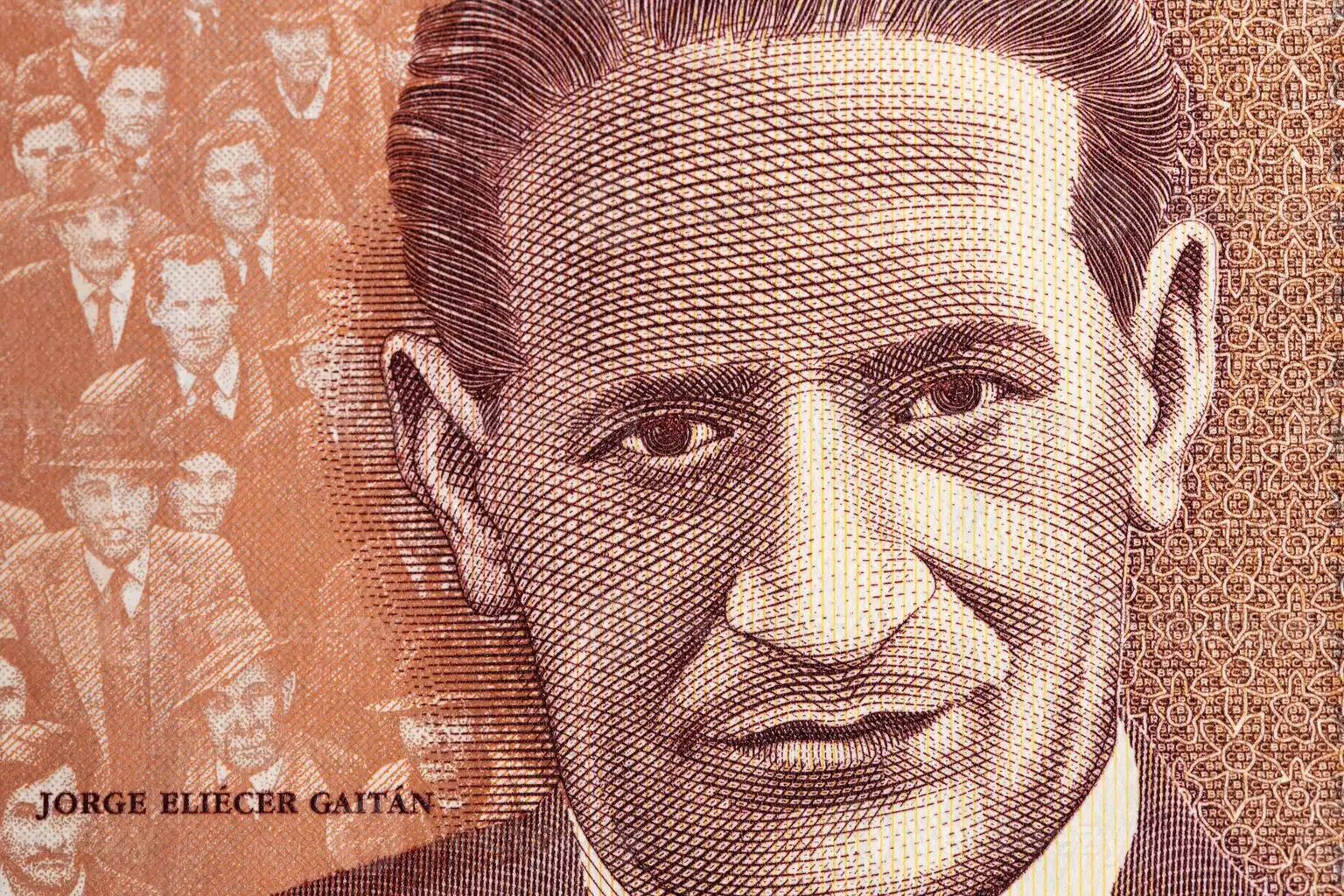
Jorge Eliécer Gaitán
 Colombia
politician•university teacher•lawyer
Also known as: El Caudillo del Pueblo, El Caudillo Liberal
Birthday
January 23, 1903
Birth Sign
Aquarius
Birthplace
Bogotá, Colombia
Age
Died at 45
About
Jorge Eliécer Gaitán Ayala was a Colombian lawyer, university teacher, and politician who became the fiery leader of the Liberal Party. Known as "El Caudillo del Pueblo" (The People's Leader), he was one of the most powerful orators in the country's history, championing the poor and working classes. His political philosophy, Gaitanismo, blended nationalist and socialist ideas, calling for land reform, workers' rights, and an end to oligarchic rule.
Gaitán served as mayor of Bogotá, education minister, and labor minister, and was a presidential candidate at the time of his death. His assassination on April 9, 1948, sparked the Bogotazo riots and helped trigger La Violencia, a brutal civil war that claimed over 200,000 lives. Though his life was cut short at 45, his ideas continued to shape Colombian politics for decades, and he remains a central figure in the nation's historical memory.
Early Life & Background
Jorge Eliécer Gaitán was born on January 23, 1903, in Bogotá, Colombia, into a modest family. His father, a small merchant, and his mother, a schoolteacher, struggled to make ends meet, and Gaitán grew up in the working-class neighborhoods of the capital. From a young age, he showed a sharp intellect and a gift for public speaking, often reciting poetry and debating with his classmates.
He pursued law at the National University of Colombia, where he graduated with honors. His legal training sharpened his rhetorical skills, and he quickly gained a reputation as a brilliant advocate for the poor. He began his career as a lawyer, taking on cases that pitted him against powerful landowners and business interests, earning him the loyalty of the working classes.
His entry into politics came in the 1920s, when he joined the Liberal Party and began giving speeches in Bogotá's plazas. He condemned the ruling elite and demanded social justice, drawing massive crowds with his electrifying oratory. By the early 1930s, he had become a prominent voice for reform, setting the stage for his later political career.
Career Growth
Gaitán's political career took off in the 1930s. He served as mayor of Bogotá from 1936 to 1937, focusing on urban reform and public works, including the construction of parks and the improvement of water supply systems. In 1940, he became the national education minister, where he pushed for expanded schooling and university access, particularly for rural communities.
From 1943 to 1944, he served as labor minister, mediating strikes and advocating for better wages and working conditions. His popularity among workers grew, and he became the undisputed leader of the Liberal Party's left wing. In early 1948, he organized the "March of Silence" (Marcha del Silencio), a massive peaceful protest that demonstrated his overwhelming support among the working classes.
Gaitán was gearing up for his second presidential campaign when he was assassinated on April 9, 1948, in downtown Bogotá. His death sparked the Bogotazo, a day of rioting and looting that left thousands dead and the city center in ruins. The violence spread across the countryside, escalating into La Violencia, a conflict that reshaped Colombian society.
Career Timeline
Public Image & Style
Gaitán's public image was that of a charismatic, populist leader who spoke directly to the masses. He was known for his powerful voice and his ability to move crowds with his words. His speeches often drew tens of thousands of people to Bogotá's plazas, where he would condemn the oligarchy and call for social reform.
He cultivated an image of integrity, refusing to align with corrupt elites. His signature style included a white suit and a confident stride, which made him instantly recognizable. The media of his time often portrayed him as a dangerous radical, but his supporters saw him as a savior.
Gaitán's legacy as a martyr for social justice has endured. He is commemorated annually on April 9, and his memory is invoked in discussions about Colombia's ongoing peace process. His image remains a powerful symbol of populist reform and the fight against inequality.
Fame & Fandom (iFAMOUS Rankings)
Jorge Eliécer Gaitán stands as a towering figure in Colombian history, though the iFANN Global Fame Engine has evaluated his current standing and determined he does not currently hold a placement in the published rankings for the Global Top 1,000 or any Top-100 scope list. This evaluation from August 2026 confirms that while his historical impact remains immense, he is not ranked within the specific tiers of contemporary global celebrity metrics tracked by the system. The concept of a modern fanbase organized around chart pushes or birthday billboards does not apply to this political martyr; his supporters do not use an official fandom name, nor are there documented rituals, inside jokes, or organized campaigns like streaming parties that define pop culture devotion today.
Instead, the energy once directed toward him now flows through the enduring power of legend and national memory. His relationship with the public was strictly political, forged in mass rallies and fiery oratory rather than celebrity interaction. The central story retold across generations concerns his assassination on April 9, 1948, a verified event where he was shot near the Palace of Justice. This tragedy triggered the Bogotazo, a spontaneous uprising that set Bogotá ablaze and marked the beginning of La Violencia, a brutal civil war. Beyond the violence, his legacy includes the March of Silence, a massive non-violent protest he organized against government repression, showcasing his unique ability to galvanize the working classes without immediate force. While no viral incidents of fans fainting at concerts occur, the reaction to his death effectively shut down the city, creating a historical precedent for street protests still referenced in modern Colombian politics.
Interesting Facts and Legends
Gaitán's nickname, "El Caudillo del Pueblo," perfectly captures his role as the champion of the people. He was known for his impeccable dress, often wearing a white suit and tie, which contrasted sharply with his fiery rhetoric. As a skilled debater, he once defended a client in court so effectively that the opposing lawyer conceded on the spot. His image appeared on the Colombian 1,000 peso bill, a rare honor for a political figure. A voracious reader, he maintained a personal library of over 10,000 volumes and possessed a photographic memory capable of recalling entire speeches after hearing them just once. In a famous incident, he once stopped a speech to scold a heckler, then won the crowd back with a joke.
The lore surrounding Gaitán extends deeply into Colombia's cultural consciousness, anchored by the tragic events of April 9, 1948. When he was shot leaving a bakery near the Palace of Justice, the shock instantly transformed into the Bogotazo riots, turning the capital into a scene of chaos and fire. This moment is not just history but a foundational myth of the nation, marking the start of La Violencia. Another iconic chapter involves the March of Silence, a massive protest he led early in 1948. This non-violent demonstration against repression showcased his ability to unite the masses without resorting to violence, cementing his status as a leader who commanded respect through both words and deeds. Today, his assassination site on Avenida Jiménez features a wall with stone obituaries, serving as a memorial that draws visitors to reflect on his life and legacy.
Notable Quotes
“Peace is the path of the people.”
“I will not rest until justice is done for the poor.”
“The people are the true sovereign of this nation.”
“Our struggle is not for power, but for dignity.”
“Let us march in silence, but with a thunderous heart.”
Family & Personal Life
Gaitán married Amparo Jaramillo, and the couple had one daughter, Gloria Gaitán. Gloria later became a notable political figure in her own right, serving in the Colombian congress. Gaitán's family was supportive of his political career, though his frequent absences took a toll. He was known to be a devoted father, often reading to Gloria and taking her on walks through Bogotá's parks.
His parents, both of modest means, instilled in him a strong work ethic and a sense of social justice. Gaitán's household was modest, reflecting his commitment to the working class. He rarely accepted gifts from supporters, preferring to live simply.
Notable Connections
Gaitán's legacy has been explored by Colombian author Juan Gabriel Vásquez, whose novel The Shape of the Ruins delves into the conspiracy theories surrounding his assassination. Writer Miguel Torres has also portrayed the events of April 9 and the Bogotazo in his works. Gaitán's daughter, Gloria Gaitán, carried on his political legacy, and his wife, Amparo Jaramillo, remained a steadfast supporter until his death.
Relationships & Dating History
Gaitán married Amparo Jaramillo, and they had one daughter, Gloria Gaitán. The marriage was a stable and supportive partnership, with Amparo standing by him throughout his political career. They were married at the time of his assassination in 1948.
No other public romantic relationships are documented in credible historical sources, reflecting the privacy of the era. Gaitán was devoted to his wife and daughter, and his family life was a source of strength for him.
As of 2026, Gaitán is deceased, and his marriage to Amparo ended with his death.
- MarriedAmparo Jaramillo1925 - 1948Gaitán and Jaramillo married in the mid-1920s and had one daughter, Gloria. They remained married until his assassination.
Death & Aftermath
Died
April 9, 1948 (aged 45)
Death Place
Bogotá, Cundinamarca, Colombia
Cause of Death
Gunshot wounds
The funeral of Jorge Eliécer Gaitán on April 10, 1948, became a massive demonstration of national grief where millions lined the streets of Bogotá to pay their respects. The procession moved from the site of his death to the Cathedral Basilica of Bogotá, where his body lay in state before he was buried in the General Cemetery of Bogotá. This profound silence and mourning stood in sharp contrast to the violence that erupted immediately after news of his passing reached the public. The assassination occurred at approximately 1:10 PM on April 9, 1948, while Gaitán was leaving the Cine Real near the corner of Calle 10 and Carrera 7.
He was shot multiple times by Juan Roa Sierra, who fired five shots from a pistol before being subdued by an angry crowd that subsequently beat the shooter to death within minutes. Gaitán was rushed to the nearby Hospital San Ignacio, where medical staff pronounced him dead shortly after arrival based on gunshot wounds. While Juan Roa Sierra acted alone in the physical act, the identity of the masterminds behind the assassination remains one of history's most disputed topics. Official investigations initially blamed conservative elements, but later theories implicated high-ranking government officials including President Mariano Ospina Pérez and figures within the Liberal Party itself, though these claims have never been definitively proven in a court of law.
The news triggered the Bogotazo, a day of rioting and looting that left thousands dead and the city center in ruins. Tributes were instantaneous, with Gaitán immediately revered as a martyr and champion of the poor. His legacy endures through annual commemorations on April 9th and a National Day of Solidarity for Victims of the Armed Conflict. A foundation and scholarship programs bearing his name exist to support education for underprivileged students, continuing his advocacy for the masses.
Net Worth (Estate Value)
$5 Million
iFANN Editorial Team estimate
As a historical political figure who died in 1948, Jorge Eliécer Gaitán's net worth is not documented in any reliable sources from his lifetime. His estate value is not publicly known, and no revenue streams have been reported. However, per iFANN's editorial analysis, the total estimated value associated with his legacy is $5 Million. This figure represents an editorial estimate rather than a traditional financial accounting of assets held during his life. There is no active estate generating income, and any assets he had were likely modest, given his commitment to the working class and refusal to align with corrupt elites. His historical significance far outweighs any monetary worth, and his contribution to Colombian democracy is immeasurable. As of 2026, the Colombian government continues to honor his legacy through currency, memorials, and annual commemorations, which hold symbolic rather than financial value.
Awards & Accolades
View 3 records, honours and achievementsKnown For
Leadership of the Liberal Party
1940s · Political leader
March of Silence
1948 · Organizer
Gaitanismo ideology
1930s-1940s · Founder
Keywords
Sources
Quick Facts
- Profession
- politician, university teacher, lawyer
- Born
- January 23, 1903
- Birthplace
- Bogotá, Colombia
- Died
- April 9, 1948
- Death Place
- Bogotá, Colombia
- Gender
- Male
- Birth Sign
- Aquarius
- Spouse
- Amparo Jaramillo
- Children
- Gloria Gaitán
Personal Details
- Full Name
- Jorge Eliécer Gaitán Ayala
- Spouse
- Amparo Jaramillo
- Children
- Gloria Gaitán
- Education
- Law degree, National University of Colombia
Frequently Asked Questions
Who killed Jorge Eliécer Gaitán?
What was the Bogotazo?
What was Gaitanismo?
How did Gaitán's death affect Colombia?
What government positions did Gaitán hold?
Join the community
fans discussing