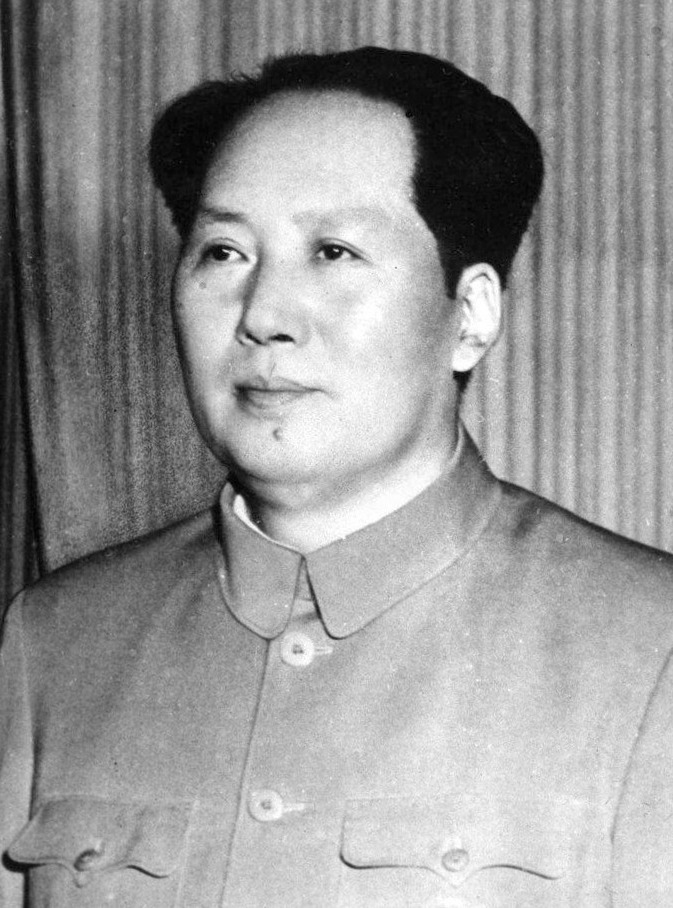
Mao Dun
 China
Chinanovelist•translator•literary critic•journalist
Also known as: Shen Dehong, Shen Yanbing
Birthday
July 4, 1896
Birth Sign
Cancer
Birthplace
Tongxiang, Zhejiang, China
Age
Died at 84
About
Shen Dehong, better known by his pen name Mao Dun, was a Chinese novelist, translator, and cultural critic who shaped modern Chinese literature. Born in 1896 in Tongxiang, Zhejiang, he rose to prominence as the leading realist writer of the republican era. His masterpiece, Midnight, published in 1932, remains a landmark portrait of Shanghai's social and economic turmoil. Mao Dun also served as the People's Republic of China's first Minister of Culture from 1949 to 1965, placing him at the center of the nation's cultural policy.
Beyond fiction, Mao Dun was a pioneering translator and editor. He helmed the influential Fiction Monthly magazine and was a key figure in the League of Left-Wing Writers, where he befriended Lu Xun. His pen name, meaning "contradiction," reflected his view of revolutionary ideology's paradoxes. He died in Beijing in 1981, and his legacy endures through the Mao Dun Literature Prize, China's most prestigious award for novels.
Early Life & Background
Mao Dun was born into a family in Tongxiang, a town in Zhejiang province known for its literary heritage. His father, a progressive thinker for the time, valued modern education and encouraged his son's intellectual development. From an early age, Mao Dun showed a keen interest in books, devouring both classical Chinese texts and Western works in translation.
He went on to study at Peking University, where he immersed himself in European literature. This academic grounding gave him a deep understanding of Western literary traditions, which he would later bring to Chinese readers through his translations and critical essays. His time at the university also exposed him to new political ideas, including socialism, which would shape his worldview and his writing.
After leaving university, Mao Dun began his career in journalism and publishing. He joined the Commercial Press in Shanghai, where he worked on literary magazines and eventually took the helm of Fiction Monthly. In the 1920s, he transformed the magazine into a platform for new literature, introducing Chinese readers to Western authors and promoting emerging Chinese writers. It was during this period that he adopted his famous pen name, reflecting the contradictions he saw in the revolutionary fervor of the time.
Career Growth
Mao Dun's breakthrough came with the publication of Midnight in 1932. The novel, set in Shanghai, follows the struggles of a capitalist, Wu Sunfu, against the backdrop of economic depression and political unrest. It was an instant critical success, cementing his reputation as a master of social realism. The book's vivid depiction of the city's business world and its underbelly made it a touchstone of modern Chinese literature.
During the 1930s, Mao Dun was an active member of the League of Left-Wing Writers, where he worked alongside Lu Xun and other progressive authors. He continued to write prolifically, producing novels, short stories, and essays that examined the social conditions of his time. His works often focused on the struggles of ordinary people caught in the tides of history.
After the founding of the People's Republic in 1949, Mao Dun was appointed the first Minister of Culture, a position he held until 1965. In this role, he oversaw the country's cultural institutions and promoted socialist realism in the arts. However, during the Cultural Revolution of the late 1960s, he came under criticism and was sidelined. He spent his final years in Beijing, where he died in 1981.
Career Timeline
Public Image & Style
Mao Dun is remembered as a serious, committed realist writer who documented the social upheavals of early 20th-century China. His public image is that of an intellectual deeply engaged with the political and social issues of his time, yet his works are celebrated for their literary merit rather than mere propaganda.
His writing style is marked by a keen observation of economic forces and social conditions, particularly in urban settings. Midnight stands as his most famous work, often studied in universities worldwide. He is consistently described by scholars as the leading realist novelist of republican China, a reputation that has endured.
While he lacks a contemporary fandom in the modern sense, his readership includes academics and literary enthusiasts who appreciate his nuanced portrayals of Chinese society. His legacy is also kept alive through the Mao Dun Literature Prize, which continues to shape the landscape of Chinese fiction.
Fame & Fandom (iFAMOUS Rankings)
The legacy of Mao Dun lives not in the frenzied campaigns of modern pop culture, but within the hallowed halls of academic study and the enduring prestige of state-sanctioned literary awards. While contemporary idols might boast organized fan clubs or viral social media movements, Mao Dun's devoted following consists of scholars, students of Chinese literature, and readers who return to his works as foundational texts. The primary vehicle for this reverence is the Mao Dun Literature Prize, established shortly after his death in 1982, which stands as China's highest honor for long-form fiction. This institution ensures that his name remains a beacon for aspiring writers, even if no specific fandom name exists to organize public adoration. There are no subway billboards funded by fans or chart pushes; instead, his influence is measured by the inclusion of novels like Midnight in university curricula and the continued circulation of his critical essays.
In August 2026, the iFANN Global Fame Engine evaluated his standing among historical figures and cultural icons. Mao Dun is currently EVALUATED_UNRANKED, meaning he does not hold a placement in the published Global Top 1,000 or any Top-100 scope list at this time. This absence from the ranked lists reflects his status as a historical figure rather than a current celebrity, yet it does not diminish the profound scale of his impact on global literary history. His work has generated massive consumption signals through decades of academic analysis and state-endorsed reading programs across China, creating a quiet but immense footprint in the world of letters.
The narrative surrounding him focuses on his survival of political upheavals and his role as a bridge between revolutionary ideals and the new People's Republic. Though he never interacted with fans via social media, his presence was felt through his tenure as Minister of Culture and his meticulous revisions of manuscripts. Today, the preservation of his former residences serves as the closest equivalent to fan pilgrimage sites, maintained by the state rather than grassroots organizations.
Interesting Facts and Legends
Mao Dun's pen name is a clever play on words derived from the characters for contradiction, combining symbols for spear and shield. His friend Ye Shengtao altered the first character to mean thatch to soften the edge while preserving the original meaning. He served as a key translator of Sir Walter Scott into Chinese, and his critical biography helped popularize the Scottish novelist's work across the nation. A co-founder of the Chinese Communist Party, he often prioritized his literary output over direct political activism. His former residence in Beijing, where he lived from 1974 until his death, is now a preserved landmark accessible via the city's subway Line 5. Known for his meticulous attention to detail, he frequently revised his manuscripts multiple times before publication.
Among the most iconic moments in his life was the 1932 publication of Midnight, a masterpiece that defined modern Chinese realism by depicting the economic turmoil of Shanghai through the eyes of the tycoon Wu Sun-fu. Another legendary aspect of his career involves his tenure as the first Minister of Culture from 1949 to 1965, where he navigated complex political landscapes while maintaining his intellectual stature. His ability to survive the Cultural Revolution and live until 1981 added to the lore of a writer who remained central to national policy despite the era's turbulence. The story of his death in March 1981 was reported internationally as the passing of a major literary giant who had also shaped the government's cultural direction.
Family & Personal Life
Details about Mao Dun's family remain scarce in historical records, as Chinese biographical sources of his era focused on public achievements rather than private life. He was born as Shen Dehong in Tongxiang, Zhejiang, to a family that valued education. His father, a forward-thinking man, encouraged his studies, though specific names and occupations are not well documented.
Mao Dun was married, but information about his wife and children is not prominently recorded in available sources. He lived a relatively private family life, especially during his later years. After his death, his family played a role in preserving his legacy, though their identities remain largely out of the public eye.
Notable Connections
Mao Dun was closely associated with Lu Xun, the celebrated writer and intellectual, through their work in the League of Left-Wing Writers. He also had a notable friendship with Ye Shengtao, who suggested the alteration of his pen name. His translations and critical works connected him to Western authors like Sir Walter Scott, whose popularity in China he helped boost.
Relationships & Dating History
Historical records offer little detail about Mao Dun's romantic life, as traditional Chinese biographical sources of his era prioritized literary and political achievements. He was married, and his wife's name and the date of their marriage are not prominently recorded in the available sources. There are no documented accounts of divorces or extramarital relationships.
Mao Dun's private life remained largely out of the public eye, reflecting the cultural norms of his time. He passed away in 1981, and at the time of his death, he was married, though further specifics are unavailable.
- MarriedUnknown? - 1981Mao Dun was married, but details about his spouse are not documented.
Death & Aftermath
Died
March 27, 1981 (aged 84)
Death Place
Beijing, China
Cause of Death
Unknown
The establishment of the Mao Dun Literature Prize in 1981 immediately cemented his legacy as a towering figure in Chinese letters, creating an enduring honor that remains one of the nation's highest distinctions for full-length novels. This institutional tribute arrived just months after his passing, ensuring his influence would shape literary standards for decades to come through awards distributed every four years. The prize stands as the primary vehicle for his posthumous impact, keeping his name central to cultural discourse long after he left the public stage. Shen Dehong, known universally by his pen name Mao Dun, passed away on March 27, 1981, at his residence on Zhangzizhong Lu in Beijing.
He was 84 or 85 years old, concluding a life that spanned from the late Qing dynasty into the modern era. While he had served as the first Minister of Culture and faced periods of criticism during the Cultural Revolution, his final days were spent quietly in the capital where he had lived since 1974. Available records confirm the date and location but do not specify the medical cause, leaving the exact nature of his illness unrecorded in public accounts. Public reaction centered on high-level tributes from government officials and literary institutions rather than spontaneous street memorials.
The New York Times noted his dual role as a major writer and former minister, acknowledging the complexities of his career including his time under political scrutiny. His hometown of Wuzhen later transformed into a site of pilgrimage with dedicated museums, while his former Beijing home became a recognized historical landmark. Decades later, his family successfully protected his intellectual property by suing an auction house in 2018 over unauthorized manuscript sales, demonstrating their continued stewardship of his estate.
Net Worth (Estate Value)
As a historical figure who passed away in 1981, Mao Dun's personal net worth is not documented. He lived in a socialist state where individual wealth was not a focus of public record. His income came from his government salary as Minister of Culture and royalties from his books, but these figures are not available.
His literary estate, however, continues to generate value through the ongoing publication of his works, particularly Midnight, which remains in print. The Mao Dun Literature Prize, established in his honor, also carries his name forward, though it is not a source of personal income.
Awards & Accolades
View 3 records, honours and achievementsKnown For
Midnight
1932 · Author
Fiction Monthly
1920 · Editor
Keywords
Sources
Quick Facts
- Profession
- novelist, translator, literary critic, journalist
- Born
- July 4, 1896
- Birthplace
- Tongxiang, Zhejiang, China
- Died
- March 27, 1981
- Death Place
- Beijing, China
- Gender
- Male
- Birth Sign
- Cancer
Personal Details
- Full Name
- Shen Dehong
- Education
- Peking University
Frequently Asked Questions
Why is Mao Dun called 'Mao Dun'?
What is Mao Dun famous for?
What is the Mao Dun Literature Prize?
Where is Mao Dun's former residence?
When did Mao Dun die?
Similar People
Join the community
fans discussing