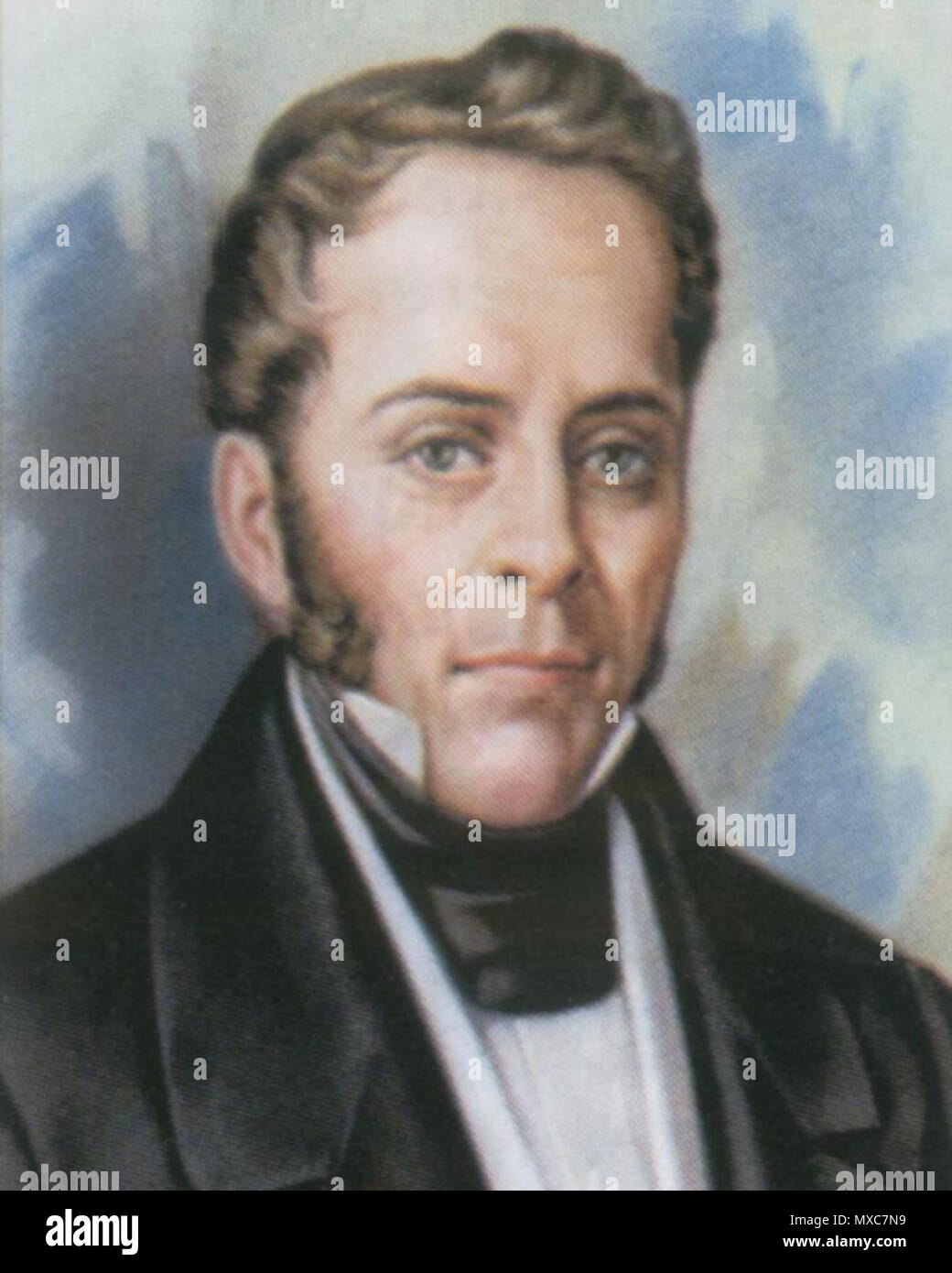
Manuel Gómez Pedraza
 Mexico
Also known as: Manuel Gomez Pedraza
Birthday
April 22, 1789
Birth Sign
Taurus
Birthplace
Santiago de Querétaro, Mexico
Age
Died at 62
About
Manuel Gómez Pedraza y Rodríguez was a Mexican general and statesman who served as president of Mexico during a turbulent period in the nation's early republic. Born in Santiago de Querétaro on April 22, 1789, he rose through military and political ranks to become one of the central figures of his era. His presidency, though brief, marked a turning point in the consolidation of the First Mexican Republic.
Gómez Pedraza is remembered for his role in the disputed 1828 election, which forced him into exile, and his eventual return to power in 1832. He held office from December 24, 1832, to March 31, 1833, navigating a country still defining its political identity. Today, he is recognized as a key transitional leader whose career reflected the instability and promise of early independent Mexico.
Early Life & Background
Manuel Gómez Pedraza was born into a prominent family in Santiago de Querétaro, a city that would later become a cradle of Mexican independence. His early years were shaped by the upheaval of the wars of independence, and he initially fought for the royalist cause, as did many conservatives of his time. This early allegiance placed him on the opposite side of the insurgent movement led by figures like Miguel Hidalgo.
By the 1820s, Gómez Pedraza had transitioned from royalist to a supporter of the newly independent Mexican state. He built a career in the military and politics, gaining experience that would prove crucial in the chaotic years of the First Republic. In 1824, he served as governor and military commander in the State of Puebla, a position that demonstrated his administrative and leadership abilities.
His political ascent continued through the late 1820s, aligning him with the moderate faction that sought stability through constitutional governance. This period of service laid the groundwork for his eventual bid for the presidency, though the path would be anything but smooth.
Career Growth
Gómez Pedraza's breakthrough came in 1828 when he won the presidential election, but the victory was immediately contested by supporters of Vicente Guerrero. Riots erupted in Mexico City, and Gómez Pedraza was forced to flee the country, leaving Guerrero to take power. This exile lasted several years, during which he watched Mexican politics from abroad.
In 1832, a rebellion against President Anastasio Bustamante created an opening. Gómez Pedraza returned from exile and, with the support of insurgent leaders, was elevated to the presidency on December 24, 1832. His term was short, lasting only until March 31, 1833, but it was a crucial period of transition. He oversaw the end of the Bustamante government and the beginning of a new era under Antonio López de Santa Anna.
After leaving office, Gómez Pedraza continued to serve in various political and military capacities, though he never again held the presidency. He remained a respected elder statesman until his death in 1851.
Career Timeline
Public Image & Style
Manuel Gómez Pedraza is generally portrayed as a moderate and pragmatic figure in Mexican history, caught between more radical factions. His willingness to step aside after the disputed 1828 election and his later return to power are often seen as evidence of his commitment to constitutional order.
Historians view him as a transitional leader who helped maintain stability during a volatile period. Unlike some of his contemporaries, he is not remembered with strong partisan fervor, but rather as a steady hand in a chaotic time.
In modern Mexico, his name appears on streets and in historical texts, but he does not hold the same iconic status as figures like Santa Anna or Juárez. Still, his contributions to the early republic are acknowledged by scholars.
Fame & Fandom (iFAMOUS Rankings)
Manuel Gómez Pedraza never commanded a stadium full of screaming supporters or a digital army rallying behind a specific hashtag. His legacy is confined to history books and academic archives rather than the vibrant, chaotic energy of a modern fanbase. There is no organized group calling themselves his fans, nor are there birthday billboards in Mexico City or charity drives fueled by public adoration. He remains a figure studied by political scientists and historians, not celebrated by a cult of personality. This absence of a dedicated following reflects his status as a transitional leader from the early 19th century who navigated a nation defining its identity rather than entertaining a global audience. In August 2026, the iFANN Global Fame Engine evaluated his standing and determined that he does not currently hold a placement in the published rankings, including the Global Top 1,000 or any scope-specific top lists. The system confirms that while his historical footprint is significant, it does not translate into the contemporary fame metrics required for a ranked position. Consequently, Manuel Gómez Pedraza is currently unranked on the global stage, with no documented score or ordinal position assigned by the engine. The lack of a fandom name further underscores this reality; no community has emerged to claim him as their own icon. His influence persists through educational exhibitions and government records rather than viral moments or social media engagement. While other figures dominate the cultural conversation with active fan projects, his story remains a chapter in the broader narrative of Mexican independence and republic formation.
Interesting Facts and Legends
A quiet street in San Pablo Autopan, Toluca, bears his name and was recently paved during a local infrastructure push, offering a tangible link to his past. Despite his role as president, he remains surprisingly obscure in English-language biographies compared to his contemporaries. History remembers him as one of the few First Republic leaders who initially fought for the royalists before switching sides to support independence, a detail that highlights the fluid loyalties of the era. His presidency lasted just over three months, serving as a stark example of the instability plaguing Mexico's first decades. Beyond the textbooks, his tenure is often called the "Ghost Presidency" because he assumed office in December 1832 only to resign in March 1833, handing power to his vice president. This brief rule cemented his reputation as a constitutional stabilizer caught between radical factions. Historians note that his willingness to step aside after the disputed 1828 election proved his commitment to order over personal ambition. Even today, institutions like the Museo de las Constituciones UNAM commemorate his death annually, ensuring his transition from general to statesman is not forgotten.
Family & Personal Life
Little is recorded about Manuel Gómez Pedraza's family life. He was born into a prominent family in Santiago de Querétaro, but details about his parents and siblings are scarce in historical records. No information is available about his spouse or children, and it appears he left no direct descendants who have been documented.
His personal life remains largely a mystery to historians, overshadowed by his public career. This lack of detail is common for many figures of his era, where personal correspondence and family records were not always preserved.
Notable Connections
Manuel Gómez Pedraza was a contemporary of many key figures of early Mexican politics, including presidents Anastasio Bustamante and Vicente Guerrero. His political career intersected with that of Antonio López de Santa Anna, who succeeded him as president. He was also part of the generation that shaped the First Mexican Republic.
Relationships & Dating History
Death & Aftermath
Died
May 14, 1851 (aged 62)
Death Place
Mexico City, Mexico
Cause of Death
Oquedad pulmonar (pulmonary cavitation)
Tributes from government officials and peers acknowledged Manuel Gómez Pedraza's service as a general, politician, and former president following his passing in the capital. The former head of state died on May 14, 1851, at the age of sixty-two within Mexico City while serving as the Director General of the National Monte de Piedad. Historical records from the Memoria Política de México attribute his death to oquedad pulmonar, a term historically used to describe advanced tuberculosis or severe lung disease. Contemporary official reports established this cause, coroner ruling, or medical examiner statement being preserved for later review.
Public reaction focused on formal acknowledgments of his career rather than public vigils or memorial murals, which were not characteristic of mid-19th-century state funerals for political figures. He was buried in Mexico City with government officials and colleagues attending the ceremony given his status as a respected elder statesman. Posthumously, he has been honored through historical documentation including entries in Wikipedia, Encyclopedia.com, and the Instituto Nacional de Antropología e Historia, which recognize his role as a governor of Puebla and a key figure in the early Mexican Republic.
Net Worth (Estate Value)
$0
iFANN Editorial Team estimate
Per iFANN's editorial analysis, Manuel Gómez Pedraza's net worth is estimated at $0. As a historical figure who died in 1851, his financial status falls outside the scope of modern wealth tracking systems. No surviving records document the size of his personal fortune or specific land holdings beyond general knowledge of his military salary. His estate holds no significant financial value today, and there are no known revenue streams generated from his legacy. Unlike living celebrities whose assets are audited annually, Gómez Pedraza's economic life remains a matter of historical speculation rather than verified accounting.
Awards & Accolades
Known For
President of Mexico
1832-1833 · President
Keywords
Sources
Quick Facts
- Profession
- politician, diplomat, minister
- Born
- April 22, 1789
- Birthplace
- Santiago de Querétaro, Mexico
- Died
- May 14, 1851
- Death Place
- Mexico City, Mexico
- Gender
- Male
- Birth Sign
- Taurus
Personal Details
- Full Name
- Manuel Gómez Pedraza y Rodríguez
Frequently Asked Questions
When was Manuel Gómez Pedraza born?
What did Manuel Gómez Pedraza do as president of Mexico?
How did Manuel Gómez Pedraza die?
Why is Manuel Gómez Pedraza famous?
What was Manuel Gómez Pedraza's role in the 1828 election?
Join the community
fans discussing